AI Search Redefines Brand Visibility as Marketers Navigate Generative Engine Optimization


2 Sources
[1]
The New Rules of Brand Visibility in AI Search | MIT Sloan Management Review
As LLM-driven search grows, brands are facing two distinct challenges: visibility and accuracy. For AI search, SEO is now entwined with GEO, generative engine optimization. As zero-click LLM responses replace direct links on search result pages, new metrics are replacing traditional traffic
[2]
Brands Have A New Mission: How To Get AI To Say Your Name
"Have you ever clicked your mouse HERE? You will." That was the text accompanying the first banner ad on the internet, launched by telecommunications company AT&T on HotWired.com in 1994. The ad reportedly clocked a 44% click-through rate in its first four months, a figure that would be
Share
Copy Link
As AI assistants replace traditional search, brands confront dual challenges of visibility and accuracy in AI-generated answers. Generative Engine Optimization emerges as the new frontier, forcing marketers to rethink strategies as zero-click answers reshape consumer discovery and attribution becomes increasingly complex.
AI Search Disrupts Traditional Marketing Playbook
Brand Visibility in AI Search is undergoing a fundamental transformation as Large Language Models reshape how consumers discover products and services. The shift from traditional search engines to AI assistants like ChatGPT, Gemini, and Perplexity is forcing marketers to confront an entirely new paradigm where Generative Engine Optimization has emerged as a critical strategic imperative alongside conventional SEO practices
1
.The stakes are considerable. What began as a $90 billion SEO industry built on keywords, backlinks, and search rankings is now fragmenting into uncharted territory where AI-driven search introduces two distinct challenges: ensuring brands appear in AI-generated answers and guaranteeing those answers are factually accurate
2
. For the first time, brands must optimize not just for visibility, but for truthfulness in machine-generated responses.Real-World Impact: When AI Gets It Wrong
The consequences of inaccurate AI-generated answers became starkly apparent when Stakewise, a New Zealand investment platform, audited how ChatGPT described their services to potential customers. Despite seeing referral traffic from ChatGPT grow to roughly 700 sessions monthly by mid-2025, with lower bounce rates and higher page views than other referral sources, the team discovered systematic inaccuracies in AI responses
1
.ChatGPT incorrectly stated the platform offered five funds instead of seven in its KiwiSaver product, mischaracterized fee structures, described protective investment safeguards as restrictive, and conflated features from separate products. For a financial services provider, this meant prospective customers received misleading information precisely when researching retirement savings options. Conventional analytics revealed traffic arriving but provided no visibility into the conversations happening before the click, exposing a critical blind spot in AI Search attribution.

Source: MIT Sloan
The Rise of Answer Engine Optimization
Answer Engine Optimization, also known as Generative Engine Optimization, represents the marketing industry's response to this fundamental shift in consumer discovery. Growing numbers of consumers now bypass traditional search entirely, instead asking AI assistants for recommendations on everything from accounting software to smartphones under specific price points
2
.Unlike SEO's established playbook, there is no single platform to optimize for, no standard ranking system, and no clear way to measure success in the AI-first marketing landscape. Marketers are tracking brand mentions, citations, and recommendations across ChatGPT, Gemini, Perplexity, and Google's AI-powered search products while attempting to understand why one company surfaces over another. Much like early SEO practices, agencies are still figuring out what works.
Attribution Challenges in AI-Driven Search
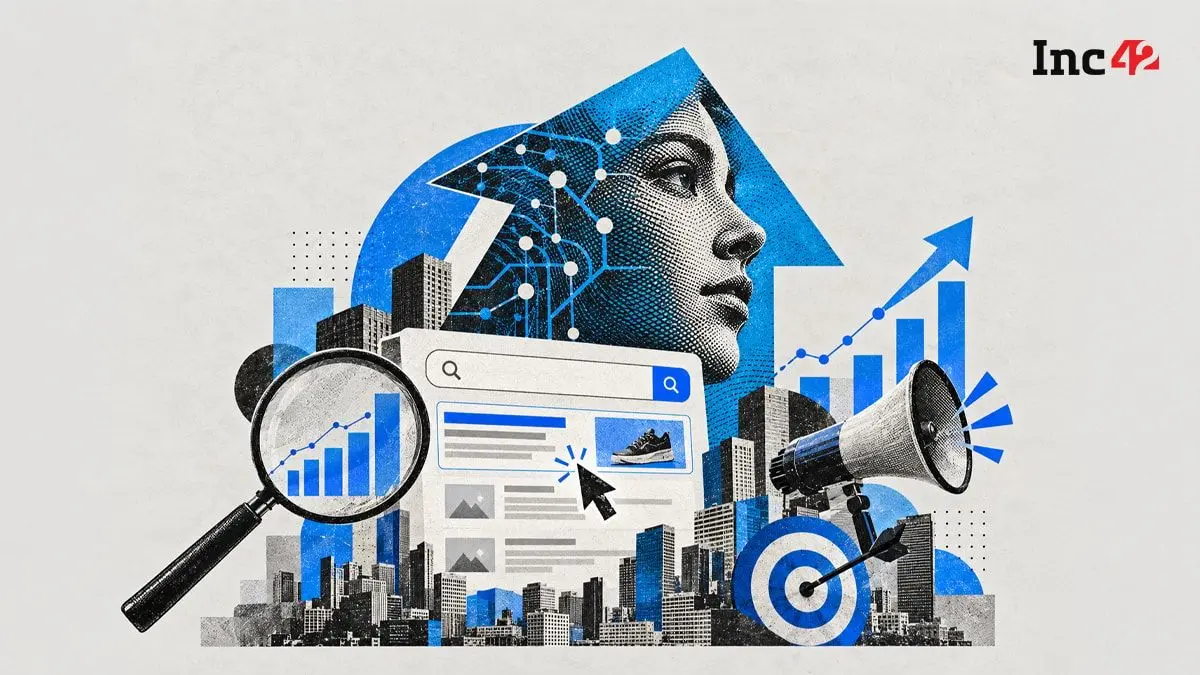
The shift to AI Search introduces attribution complexity that dwarfs traditional marketing measurement. Google historically provided detailed visibility through Search Console and keyword-level paid search data, but this model proves considerably harder to replicate when consumers interact with AI assistants through multi-step conversations
2
.A user may start with a broad question, ask several follow-ups, compare products, and only then arrive at a purchase decision. For Marketers, identifying which interaction influenced that journey is harder than attributing a click to a specific search query. AI platforms currently offer limited visibility into the prompts driving discovery, creating a measurement gap that threatens traditional ROI calculations.
Source: Inc42
Zero-Click Answers Reshape Traffic Dynamics
Zero-click answers represent perhaps the most disruptive element of the AI Search landscape. AI platforms can answer user questions without sending them to external websites, potentially convenient for consumers but problematic for brands relying on website traffic
2
. Even when AI Search leads to a sale, tracing that purchase back to a specific interaction can be difficult, as consumers may discover a brand through an AI assistant, research it elsewhere, and make a purchase days later.Traditional last-click attribution models fail to capture the role AI assistants played in that journey. As new metrics replace traditional traffic analytics, brands must develop entirely new frameworks for measuring success in an environment where referral traffic patterns differ fundamentally from conventional search behavior
1
.Related Stories

Building Consistent Information Ecosystems
Organic visibility remains inconsistent across AI platforms. For queries around "best" or "top" products and services, AI models may rely heavily on third-party publishers, reviews, and user-generated content rather than brand websites. This reality forces brands to build consistent information ecosystems across websites, ads, influencers, and third-party platforms
2
.According to Rishabh Mahendru, senior vice president of client success and growth at AdLift, "It becomes a lot more important to produce content in the broader ecosystem. We often ask brands to be consistent with their communication." This approach addresses both Brand Accuracy and visibility simultaneously, ensuring AI models encounter consistent information regardless of source.
OpenAI's Advertising Experiments Signal Industry Direction
OpenAI is exploring geo-based ad experiments and brand-suitability pilots to give advertisers more insight into where their ads appear and how they perform. With ChatGPT Ads rolling out in India to users on Free and Go tiers, while Plus, Pro, Business, Enterprise and Education users maintain ad-free experiences, the company is bringing sponsored messages directly into AI conversations in one of its largest markets
2
.This development matters because it establishes precedent for how AI assistants might monetize while providing brands with structured visibility opportunities. However, brands also risk appearing alongside Misinformation, hate speech, or polarizing content in AI-generated responses, creating brand safety concerns that require new guardrails and monitoring approaches.
What Brands Should Monitor
Leaders must watch how AI platforms evolve their citation practices, as changes in how models reference sources can make organic visibility unpredictable. The balance between zero-click answers and referral traffic will determine whether AI Search complements or cannibalizes traditional web traffic. Brands should also track whether standardized measurement frameworks emerge across AI platforms, as current fragmentation makes cross-platform optimization nearly impossible. The role of third-party content in shaping brand perception within AI responses deserves particular attention, as consumer discovery increasingly happens through synthesized information rather than direct brand communication.
References
Summarized by

Navi
Related Stories
76% of Brands Invisible in AI Search as Generative Engine Optimization Becomes Critical
02 Jun 2026•Business and Economy
AI Search Transforms Brand Visibility as Generative Engine Optimization Replaces Traditional SEO
03 Dec 2025•Technology

Marketers Shift Budgets to AI Search as Generative Engine Optimization Overtakes Traditional SEO
04 Aug 2026•Technology

Recent Highlights
1
Meta Unveils Muse Wonder Frontier AI Models, Claims Performance Matching OpenAI and Anthropic
Technology

2
Microsoft and Nvidia Launch Surface Laptop Ultra: A $2,599 AI-Ready PC With RTX Spark Chip
Technology

3
Meta Muse AI Agent Surges to 6.6M Downloads Despite Privacy and Security Controversies
Technology

Recent Highlights
Today's Top Stories







Don’t drown in AI news. We cut through the noise - filtering, ranking and summarizing the most important AI news, breakthroughs and research daily. Follow topics that matter to you and stay ahead.


