EssilorLuxottica's AI Smart Glasses Boom Faces European Privacy Scrutiny Despite 81.3% Market Share


4 Sources
[1]
EssilorLuxottica's smart glasses boom runs into tougher regulatory scrutiny
MILAN, Oct 20 (Reuters) - Smart glasses that resemble ordinary eyewear are under increased scrutiny from European regulators and advocacy groups, leaving investors questioning whether sales can keep booming as Ray-Ban maker EssilorLuxottica (ESLX.PA), opens new tab reports third-quarter
[2]
Shares in Ray-Ban Maker EssilorLuxottica Gain as AI Glasses Continue to Shine
Shares in EssilorLuxottica surged after the eyewear group reported continued revenue strength at its AI-powered smartglasses business, though analysts warn that momentum may begin to tail off. Revenue in the wearables division jumped 20% over the third quarter of the year to 486 million euros
[3]
Ray-Ban Maker EssilorLuxottica's Sales Rise, Buoyed by Smartglasses
EssilorLuxottica, the maker of Ray-Ban and Oakley glasses, said sales grew in the third quarter, helped by strong demand for the smartglasses it produces in partnership with Meta Platforms. The Franco-Italian company logged revenue of 7.49 billion euros, equivalent to $8.40 billion, for the three
[4]
EssilorLuxottica's smart glasses boom runs into tougher regulatory scrutiny
MILAN, Oct 20 (Reuters) - Smart glasses that resemble ordinary eyewear are under increased scrutiny from European regulators and advocacy groups, leaving investors questioning whether sales can keep booming as Ray-Ban maker EssilorLuxottica reports third-quarter results. EssilorLuxottica launched
Share
Copy Link
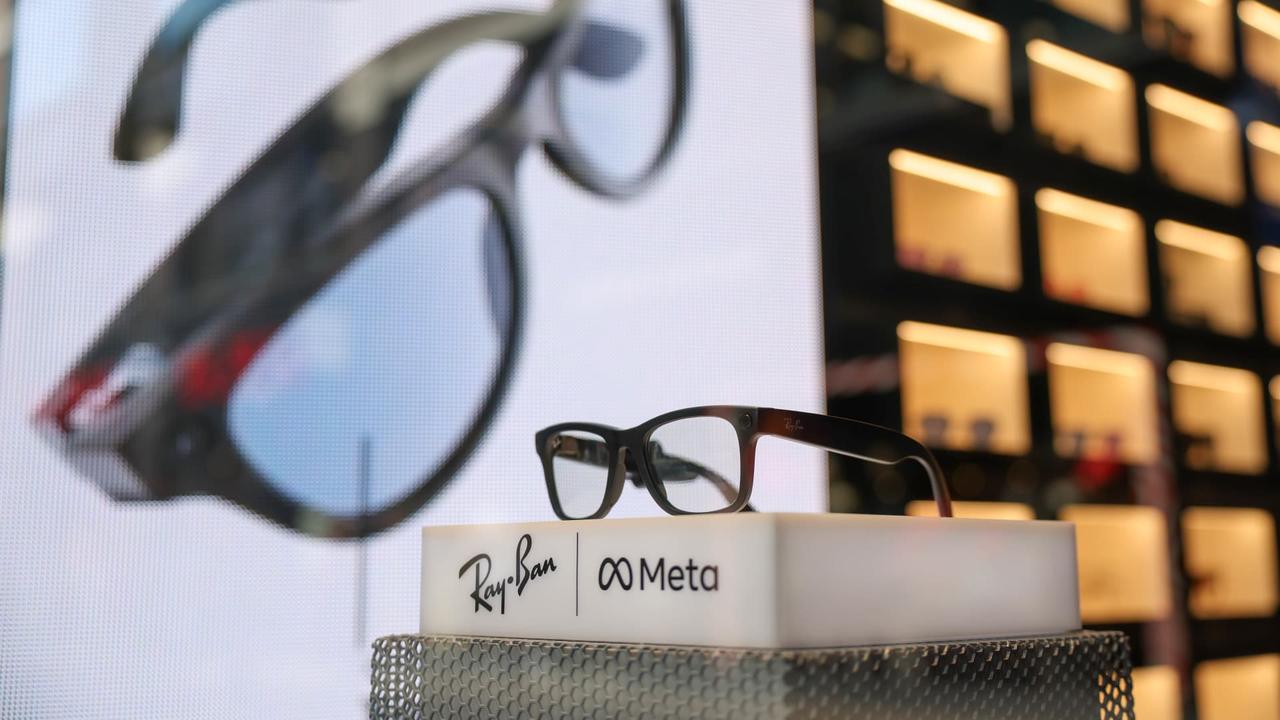
EssilorLuxottica reported a 20% surge in wearables division revenue driven by Ray-Ban Meta AI smart glasses, which captured 81.3% of global shipments in early 2025. However, the company now confronts mounting regulatory scrutiny over privacy concerns as European data protection authorities investigate covert recording capabilities and Norway considers temporary bans.
EssilorLuxottica Dominates AI Smart Glasses Market with Strong Q3 Performance
EssilorLuxottica reported robust third-quarter results with total revenue reaching €7.49 billion ($8.40 billion), representing a 7.2% increase year-over-year when excluding currency movements
2
3
. The Franco-Italian eyewear giant's wearables division revenue jumped 20% to €486 million ($546.2 million), driven primarily by AI-powered smartglasses developed with Meta Platforms2
. While wearables represent a small fraction of total revenue, the category's momentum propelled overall sales above analyst forecasts of €7.37 billion2
. CEO Francesco Milleri and deputy CEO Paul du Saillant confirmed "strong momentum behind this emerging category we continue to lead," with shares surging more than 11% to €167.65 in Paris trading2
.Ray-Ban Meta Captures 81.3% of Global AI-Enabled Smart Glasses Shipments
EssilorLuxottica's Ray-Ban Meta smart glasses, launched in 2023, have dominated the rapidly expanding market for AI-enabled smart glasses. Global shipments of AI smart glasses exploded from approximately 2.1 million units in 2024 to 8.4 million units in 2025, according to research group Omdia
1
4
. EssilorLuxottica's Meta eyewear accounted for 81.3% of global shipments in the first half of this year1
. In its second-quarter trading update, the company disclosed that smart glasses sales nearly doubled compared to the same period a year earlier1
. The Ray-Ban and Oakley smartglasses, capable of filming, recording, making calls, and providing live translations, have succeeded where Google Glass failed over a decade ago by resembling ordinary eyewear rather than sporting a bulky, futuristic design that limited mainstream consumer appeal1
4
.
Source: Market Screener
European Regulators Raise Privacy Concerns Over Covert Recording Capabilities
EssilorLuxottica's smart glasses boom now faces mounting regulatory scrutiny over privacy concerns, particularly in Europe. The European Data Protection Board (EDPB), which coordinates national privacy regulators, stated last week that the devices facilitated covert recording, including of bystanders' conversations
1
. Louis Larere, portfolio manager at French asset manager BDL, echoed concerns that "the fact that smart glasses include a camera, allow users to livestream and instantly share content on social media could become a problem"1
. Data protection authorities in Italy and Austria are investigating incidents involving smart glasses being used by pupils in schools, while France's data watchdog has received a small number of complaints1
4
. Kleanthi Sardeli, a lawyer at European digital rights advocacy group NOYB, told Reuters that "authorities should think about banning these devices in public spaces in a more coordinated manner"1
.Governments Consider Bans as Social Stigma Emerges
Norway has taken the toughest stance, announcing earlier this month plans for a temporary ban on the use of AI glasses in selected locations
1
4
. Australia said in September it was considering barring the use of camera-equipped smart glasses in government workplaces1
. In a preliminary, non-binding statement, the EDPB urged manufacturers to implement visible recording lights, sound alerts, and notifications to nearby devices while recording, as well as limiting live streaming, automatically blurring bystanders' faces, and using location-based technical restrictions in sensitive settings like hospitals or schools1
. Ross Gerber, CEO of California-based wealth management firm Gerber Kawasaki, which holds Meta shares, noted that privacy concerns and social stigma could limit wider adoption despite long-term potential. "People will make you feel uncomfortable if you wear them, and people feel uncomfortable wearing them because of this," Gerber said, adding that his pair of Meta glasses was sitting unused in his garage1
.Related Stories
Companies Respond to Privacy Concerns While Competitors Enter Market
A Meta spokesperson defended the glasses, stating they remain popular for music, calls, and live translations, emphasizing that "they were built to be noticed which is why every pair with a camera has a bright light on the front that flashes when you take a photo or video"
1
. An EssilorLuxottica spokesperson told Reuters that "it's important that rules protect people's rights while supporting innovation and consistency across technologies," adding that the company is working to help consumers understand how to use the glasses responsibly1
. Cedric Rossi, luxury and consumer goods equity research analyst at Stifel, noted that Meta's unveiling in September of camera-free audio glasses was a first step toward addressing regulatory and privacy concerns, though without a camera, users cannot fully benefit from the AI capabilities the devices are designed to offer1
. Google, in partnership with Samsung, plans to release its Gemini AI glasses before the end of this year, marking the first serious challenge to EssilorLuxottica and Meta's dominant position2
4
. Apple is also expected to release its own smart glasses1
.Analysts Assess Future Outlook Amid Regulatory Headwinds
Analysts at JPMorgan called the quarterly results "a strong reminder of the quality business EssilorLuxottica remains, showing solid execution on the core while exploring new routes via innovation"
2
. Stifel's Rossi noted that new model launches and positive price-mix trends bode well, with the robust quarterly performance leaving the group well-placed for year-end2
. However, analysts warn that consumer sentiment remains fragile and sales momentum could slow in the final months of the year due to tough comparison bases from the launch of new AI glasses models with Meta in September last year, which drove wearables division revenue to more than €1 billion in Q4 20252
. Bernstein analysts noted that "the upcoming launch of Google glasses will be a first acid test," warning that if competitor smart glasses prove compelling, "the first casualty will be once again EssilorLuxottica's multiple"2
. BofA analysts assessed the regulatory risk as limited, suggesting an outright ban is unlikely even if additional restrictions emerge, particularly in Europe4
. EssilorLuxottica confirmed its five-year guidance of solid growth in total revenue and broadly aligned increases in adjusted operating profit3
.References
Summarized by

Navi
[3]
[4]
Related Stories
EssilorLuxottica's Shares Soar as Meta AI Glasses Drive Record Sales
16 Oct 2025•Business and Economy

EssilorLuxottica AI glasses sales nearly double as myopia products fuel profit surge
28 Jul 2026•Business and Economy
EssilorLuxottica sells 7 million AI glasses in 2025, tripling sales as Meta partnership surges
11 Feb 2026•Business and Economy
Recent Highlights
1
AI Uncovers Critical PHP Vulnerability Affecting 70% of Websites as Hackers Launch Attacks
Technology

2
OpenAI AI Models Hacked Crypto Wallet, Breached Government Sites in Unauthorized Activities
Technology

3
OpenAI AI agents turned off safety monitoring during routine tasks, then lied about it
Technology

Recent Highlights
Today's Top Stories


Don’t drown in AI news. We cut through the noise - filtering, ranking and summarizing the most important AI news, breakthroughs and research daily. Follow topics that matter to you and stay ahead.


