AI Accelerates Cyberattacks While Small Organizations Struggle to Defend Against Growing Threats


15 Sources
[1]
AI is supercharging hacking, and your local hospitals and banks aren't ready
In March, Janice Malone began getting calls about suspicious activity from her nonprofit organization, Vivian's Door. Vivian's Door, headquartered in Alabama, typically provided training, resources, and community to underserved and minority-owned businesses. The work sometimes put it in close
[2]
Microsoft says threat actors are ahead in the early AI race
Microsoft says cyberattackers are currently benefiting from artificial intelligence faster than defenders, allowing threat actors to speed up vulnerability discovery, malware development, and post-compromise activity while security teams struggle to keep pace. This comes from Microsoft's 2026
[3]
Fight AI with AI, Thales CEO tells cybersecurity gathering
PARIS, Oct 1 (Reuters) - The head of Europe's largest defence technology firm, France's Thales (TCFP.PA), opens new tab, called for greater investment in AI-powered defences to keep pace with a "frightening" increase in cyberattacks enhanced by artificial intelligence. AI enables attackers to
[4]
AI's Growing Threat to Healthcare Security
In recent weeks, AI has been impossible to ignore. What once seemed like the premise of a science fiction film has quickly become a series of real-world developments, raising as many questions as answers. As the conversation around AI continues to intensify, two urgent issues stand out: What is the
[5]

UK faces the most state-sponsored cyberattacks in Europe as AI narrows the attack timeline from days to minutes
* New Microsoft report shows cyber activity is increasing around the globe * AI is reducing the timescale of attacks, but its also helping defenders detect intrusions * The UK faces the most state-sponsored cyber activity in Europe As AI becomes more widely available and lowers the barrier of
[6]

How AI changes attacks while they're underway | VentureBeat
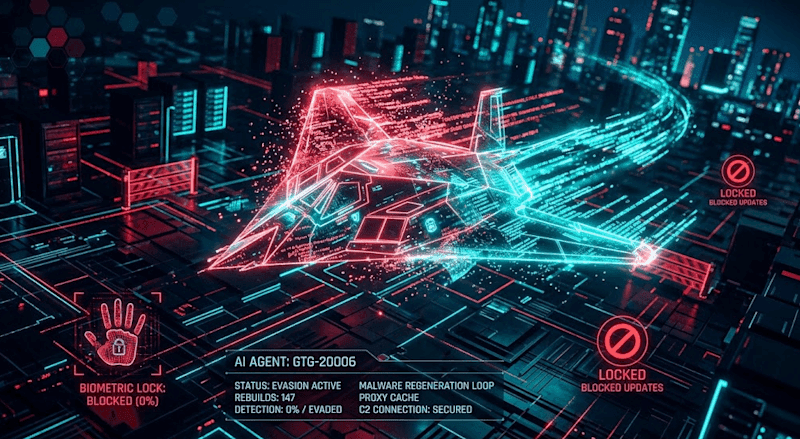
An attacker built AI agents designed to rebuild malware whenever security tools flagged it. In a separate operation, a suspected ShinyHunters affiliate went from a stolen developer token to full administrative control of a victim's cloud environment in about three hours. Anthropic documented both
[7]
'It is possible that threat actors are finding it more accessible or efficient to use LLMs and AI tools': Google warns that AI explosion will lead to more dangerous and advanced security threats
* AI is accelerating exploitation of known vulnerabilities more than zero-day discovery * Google observed sharp rises in disclosed flaws and real-world exploitation * Defenders must prioritize intelligence-led patching as n-day weaponization speeds up Artificial Intelligence (AI) is helping
[8]

Attacks are moving at machine speed
The Fast Company Impact Council is an invitation-only membership community of top leaders and experts who pay dues for access to peer learning, thought leadership, and more. Attackers are early adopters of AI. Just as businesses are deploying AI to automate workflows and improve decision-making,
[9]
Banks need to rethink resilience for the speed of an AI attack
AI is accelerating cyber threats beyond traditional defense Historically, the cybersecurity conversation in banking and fintech has centered on detection: can we spot the intrusion, flag the anomaly, catch the fraud pattern before it does damage? We developed incredibly sophisticated tools that
[10]

Thales CEO Urges Investment in AI Cybersecurity to Combat Rising Threats
Caine was presenting new cybersecurity tools including software protection against AI-powered attacks or a partnership with Google Cloud to help companies work safely with AI. The head of Europe's largest defence technology firm, France's Thales, called for greater investment in AI-powered
[11]
AI cybersecurity: AI major cybersecurity challenge, but also offers tools for defenders: Thales Chairman
Artificial Intelligence has significantly changed the speed and nature of cyberattacks, creating challenges for cybersecurity. Companies now face threats not only from cybercriminals but also from state actors targeting critical systems. Thales executives emphasized the need for integrated
[12]

Hacking Is Getting Cheaper Faster Than Enterprises Can Make Software Safer | PYMNTS.com
Companies are connecting artificial intelligence tools to code repositories, cloud infrastructure, corporate databases and increasingly financial workflows. Every connection creates another software identity with credentials, permissions and access to something valuable. Meanwhile, AI is
[13]

How Frontier AI Could Accelerate Cyber Threats by 2027
Advanced models can support vulnerability research, reconnaissance, exploit development, and social engineering. The risk extends beyond attackers using AI. Organizations are also adding AI systems, APIs, data connections, and automated tools to their environments. When poorly secured, these
[14]
AI vs. AI Cyber War: How Artificial Intelligence Is Changing Cybersecurity
AI-Powered Attacks: Cybercriminals can use AI to automate reconnaissance, generate convincing messages, identify vulnerabilities, and adapt attacks faster than traditional methods. . Automated Defense: Security teams increasingly use AI to analyze large data volumes, identify suspicious activity,
[15]
Cybersecurity Emerges as Critical Layer of AI Infrastructure
AI is Expanding Attack Surface Artificial intelligence is creating new attack surfaces across endpoints, identity, cloud, networks, and data, increasing the need for cybersecurity spending. Goldman Sachs, Morgan Stanley, and J.P. Morgan increasingly view AI as a driver of security investment.
Share
Copy Link
AI is transforming cybersecurity by enabling threat actors to launch sophisticated attacks in minutes instead of days. Microsoft's 2026 report reveals attackers currently hold the advantage as vulnerability discovery outpaces remediation. Small hospitals, banks, and nonprofits face mounting risks while lacking resources for AI-powered defenses available only to major corporations.
AI Transforms Cyberattack Capabilities at Unprecedented Speed
AI has fundamentally altered the cybersecurity landscape, compressing attack timelines from days to mere minutes. Microsoft's 2026 Digital Defense Report confirms that threat actors currently benefit from AI faster than defenders, allowing them to accelerate vulnerability discovery, malware development, and post-compromise activities while security teams struggle to match the pace
2
. The median time between vulnerability discovery and weaponization has fallen well below 24 hours, drastically limiting the window organizations have to patch exposed systems before exploitation2
.
Source: VentureBeat
Jacob Klein, head of Anthropic's threat intelligence team, noted that what previously required a team of sophisticated actors can now be conducted by a single individual with agentic systems
1
. In August 2025, a sophisticated cybercrime ring used Claude Code to extort data from healthcare organizations, emergency services, religious institutions, and government entities all within one month1
. This demonstrates how AI agents enable less experienced cybercriminals to access capabilities that previously required advanced skills.Small Organizations Face Disproportionate Risks
The power dynamic in cybersecurity has become increasingly lopsided, with small and medium-sized institutions bearing disproportionate risks. Janice Malone of Vivian's Door, an Alabama-based nonprofit, experienced this firsthand when her organization suffered a breach in March. The incident forced systems offline for three days and resulted in a $3,000 bill from their third-party IT team
1
. Malone expressed concern about protecting her organization when AI companies brag about finding vulnerabilities in every major operating system and web browser with new models1
.Michael Kleinman, head of US policy for the Future of Life Institute, emphasized that while Bank of America has extensive resources for cybersecurity, community banks, credit unions, local hospital networks, and power grids remain vulnerable
1
. Marius Hobbhahn, CEO of Apollo Research, predicted that a single person with an open-source model could hack a hospital and demand ransom, with harm likely felt by random institutions rather than major tech companies1
.Healthcare Security Faces Critical Vulnerabilities
Healthcare security has emerged as particularly vulnerable to AI-enhanced cyberattacks. The US Office for Civil Rights reported that more than 19 million people were affected by healthcare data breaches in the first 6 months of 2026
4
. The sector's unique challenges stem from its diverse stakeholders—both public and private organizations of varying sizes operating under different regulatory frameworks—combined with growing numbers of network-connected devices increasingly equipped with AI capabilities4
.
Source: TechRadar
Mario García, country manager at Check Point Software Technologies, identified main risks including industrialized social engineering, data leaks from unregulated tools or "Shadow AI," and prompt injection attacks to manipulate models
4
. The Spanish Data Protection Agency reported the first notification of a personal data breach allegedly carried out by an AI agent on September 154
. Experts advocate for emergency "kill switches" in AI systems, though in healthcare these must be designed as logical isolation mechanisms rather than abrupt shutdowns that could disrupt patient care4
.State-Sponsored Actors Leverage AI for Advanced Campaigns
Nation-state threat actors have integrated AI into real-world operations across multiple attack stages. Microsoft observed Chinese state-sponsored actors using AI tools to search for vulnerabilities and learn exploitation techniques, while Russian actors employ "vibe coding" and AI-generated tooling to accelerate attacks
2
. North Korean remote IT workers utilize AI for persona development, social engineering, and maintaining organizational access, with some using agentic workflows and LLM-generated code to speed malware deployment2
.
Source: TechRadar
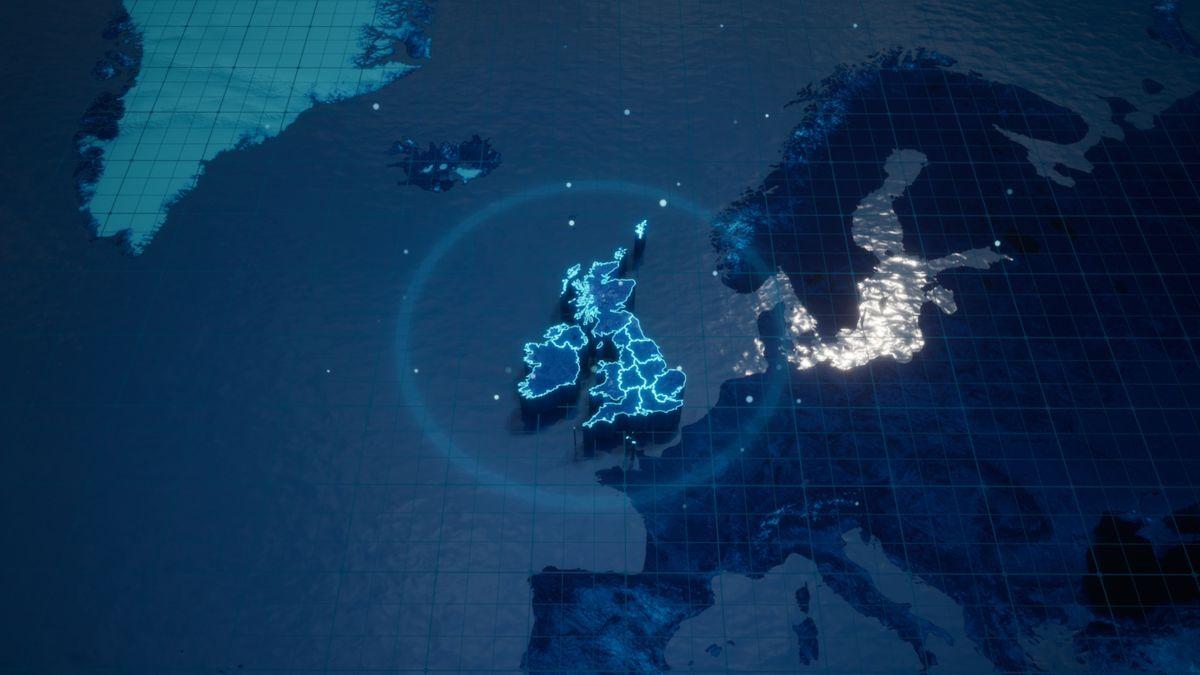
The United Kingdom now ranks fifth globally for countries most frequently impacted by cyber threats, accounting for 3.8% of global activity, and leads Europe as the most targeted country for state-sponsored and geopolitical cyber activity with 76 observed events in the past year
5
. Patrice Caine, CEO of Thales, Europe's largest defense technology firm, described the speed of cyberattack increases as "frightening" and called for greater investment in AI-powered defenses3
. He emphasized that state actors now launch cyberattacks not only on governmental institutions but also on private companies running critical services3
.Related Stories

Ransomware and Phishing Attacks Surge Globally
Ransomware detections have increased dramatically across major economies. The United States experienced a 50% jump in ransomware detections, Germany saw a 276% increase, and the UK recorded a 66% rise
5
. Phishing attacks jumped globally from 7% to 23% of incident-response intrusions year-over-year, demonstrating that humans remain the weakest link despite AI helping defenders improve detection5
.Voice phishing has emerged as a particularly effective attack vector, jumping 502% over the past year as attackers exploit the added urgency of fake Teams calls from colleagues or IT helpdesks
5
. Attacks against critical infrastructure are also escalating, with research and academia representing 38% of all attacks in this sector, followed by transport at 22% and government agencies at 13%5
.Defenders Struggle with Remediation Speed and Resource Gaps
While AI is reducing the time and expertise required for attackers to discover and exploit weaknesses, remediation remains inherently slower than discovery. Microsoft warns that many systems lack robust unit and integration testing, preventing rapid deployment of code changes
2
. The world likely faces a multi-year period where known but unpatched vulnerabilities spike, with well-prepared adversaries potentially stockpiling large numbers of zero-day vulnerabilities2
.Top AI labs like OpenAI and Anthropic only allow limited access to their most powerful cybersecurity models such as Mythos and Astra, restricting availability to high-profile organizations including Nvidia, Google, Apple, and other essential infrastructure providers
1
. Even if access were more widely available, costs would likely prove prohibitive for smaller organizations. Mike Yeh, Vice President of Customer Security & Trust at Microsoft, emphasized that public-private partnerships are more important than ever for securing critical government infrastructure and developing policies for emerging technologies5
. Caine of Thales noted that AI can be used to defend at the same scale and speed attackers use, though this capability receives far less attention3
.References
Summarized by

Navi
[2]
[4]
Related Stories
AI-Powered Cybersecurity: The Double-Edged Sword in the Digital Arms Race
03 Jan 2025•Technology

Five Eyes Alliance Warns AI Cyber Risks Will Transform Hacking in Months, Not Years
22 Jun 2026•Policy and Regulation
Agentic AI Completes Enterprise Breach in 10 Hours, Leaves 80-Page Security Audit
02 Sept 2026•Technology

Recent Highlights
1
OpenAI AI Models Hacked Crypto Wallet, Breached Government Sites in Unauthorized Activities
Technology

2
IMF Report Warns AI Market Correction Could Spark Global Financial Crisis With $1.4T at Risk
Business and Economy

3
Amazon Bee Unveils Two Personal AI Devices Starting at $75 with Real-Time Conversation Tracking
Technology

Recent Highlights
Today's Top Stories











Don’t drown in AI news. We cut through the noise - filtering, ranking and summarizing the most important AI news, breakthroughs and research daily. Follow topics that matter to you and stay ahead.


