AI Leaders Warn UN Security Council of Existential Risks, Call for Global AI Governance


57 Sources
[1]
EXCLUSIVE: DeepSeek to brief UN Security Council on AI this week, sources say
BEIJING, Sept 22 (Reuters) - Chinese AI startup DeepSeek will be among the companies briefing the United Nations Security Council this week on the risks posed by artificial intelligence, two sources familiar with the matter said, as world leaders gather in New York for the annual UN General
[2]
Palo Alto CEO says slowing down AI is 'unrealistic', extinction threat 'extremely small'
* Palo Alto Networks CEO Nikesh Arora says a coordinated AI slowdown is unlikely to succeed. * Arora's views chime closely with Nvidia CEO Jensen Huang who has a diverging opinion to the bosses of Anthropic and OpenAI. * Arora also questioned whether the U.S. and China could realistically
[3]
Heads of AI firms tell UN Security Council that it could be a risk to all humanity
UNITED NATIONS (AP) -- The heads of major artificial intelligence firms pleaded with the United Nations on Wednesday to set controls over the burgeoning technology they are designing in order to save the world -- or, at least, its people. "If managed poorly, I even believe AI could be a risk to
[4]
OpenAI, Anthropic bosses push UN for global terms on AI
The heads of OpenAI, Anthropic, and Hugging Face have told the UN that the current pace of artificial intelligence (AI) development, and the risks it poses to society, demands international coordination on an international scale. Altman called for common risk evaluation standards, as did Dario
[5]

America's A.I. Leaders Warn U.N. of Possible Peril Absent a Global Response
Dustin Volz reported from Washington, and Farnaz Fassihi from the United Nations. Executives from America's leading A.I. companies warned on Wednesday that the technology they helped create could pose severe challenges to society, telling world powers that international cooperation was needed to
[6]

'Not everybody is going to pace themselves': Nikesh Arora on AI
Nikesh Arora told CNBC that not every AI company will hold back. Palo Alto's chief executive also called a 10% chance of AI wiping out humanity 'highly unlikely'. Palo Alto Networks chief executive Nikesh Arora says it is "unrealistic" to slow down AI development, because "not everybody is going
[7]

Zuckerberg Is Feeling Himself, Rejects Calls for Cooperation on Safety
Top AI labs like OpenAI, Anthropic, and Google's DeepMind are sounding the alarm on AI safety and calling for industry-wide coordination. Meta's Mark Zuckerberg thinks it's useless. "There are a number of labs that are working on building advanced AI, and I don't think that we need some kind of
[8]

At U.N., tech leaders urge global effort to limit AI's risk to humanity
UNITED NATIONS -- Leaders of several major artificial intelligence companies told United Nations members on Wednesday that robust international efforts to regulate the technology are required amid escalating concern that AI could pose a significant risk to humanity. Sam Altman, the chief executive
[9]
OpenAI and Anthropic CEOs push for AI cooperation at UN after Trump rebuffs 'globalist scheme' to control it
* OpenAI's Sam Altman and Anthropic's Dario Amodei addressed the United Nations Security Council and called for international coordination to address AI risks. * President Donald Trump addressed the UN this week and criticized what he described as a "globalist scheme" to control AI. * Altman and
[10]
US rejects global AI governance at UN Security Council
White House science adviser Michael Kratsios tells countries to regulate AI themselves and adopt American technology. The United States is rejecting any global governance of advanced AI, telling the UN Security Council in New York today that each country should regulate the technology
[11]
Altman and Amodei Performed Their Stop-Us-From-Murdering-the-World Routine for the UN
As we all know by now, if you stick microphones into the faces of OpenAI CEO Sam Altman and Anthropic CEO Dario Amodei, they will say something to the effect of I am trying to build technology that threatens the world and I need you to create policies aimed at stopping me. The UN signed up for a
[12]

"We have a choice": AI leaders sound alarm at UN
The big picture: AI capabilities are advancing faster than governments are developing safeguards, raising concerns about whether humans can maintain control over increasingly autonomous systems. * OpenAI CEO Sam Altman appeared in person at the meeting, while Anthropic's Dario Amodei and Hugging
[13]

OpenAI's Altman and Anthropic's Amodei address UN security council
Heads of two of the world's largest artificial intelligence companies give separate briefings on AI safety Sam Altman of OpenAI and Dario Amodei of Anthropic, heads of two of the world's largest artificial intelligence companies, addressed the United Nations security council on Wednesday in
[14]

Trump calls AI oversight a 'globalist scheme' as Amodei and Altman head to the UN to ask for it | Fortune
President Donald Trump, in his speech to the United Nations General Assembly on Tuesday, rejected the idea of international oversight of artificial intelligence -- what he has just taken to calling "superintelligence." In thus address, he called such proposals a "globalist scheme" to control the
[15]

Sam Altman and Dario Amodei to brief UN Security Council on AI
France, which holds the Security Council's rotating presidency this month, organized the session, which is set to cover the dangers of AI misuse and the possibility that advanced models could slip beyond human control, according to The Next Web. Chinese AI startups DeepSeek and Moonshot have been
[16]
Altman and Amodei expected to join UN Security Council meeting about AI
* OpenAI's Sam Altman and Anthropic's Dario Amodei are expected to address the UN Security Council this week. * Hugging Face CEO Clément Delangue is also expected to speak. * The debate about AI safety and regulation has reached a boiling point following a chorus of warnings about the risks to
[17]

UN Security Council Will Get Advice on AI Risks From Tech Giants Building It
The meeting lands two days before President Trump's September 24 summit with Xi Jinping. The UN Security Council will spend Wednesday afternoon listening to the people who build the technology it's most worried about. OpenAI CEO Sam Altman, Anthropic CEO Dario Amodei, AI safety researcher Yoshua
[18]

Mark Zuckerberg rejects calls for industrywide AI slowdown
Meta founder and CEO Mark Zuckerberg pushed back on calls for AI companies to work together to slow the pace of their products' development, following warnings from inside AI labs of the potential for human annihilation via rogue technology. In an interview with NBC News' chief tech analyst Joanna
[19]

There's a global plan to save humans from AI. Can it actually work?
Mark Scott is a senior resident fellow at the Atlantic Council's Democracy + Tech Initiative and writes the weekly newsletter Digital Politics, where a version of this article first appeared. When the AI apocalypse becomes regular dinner-table conversation, you know we've reached the freakout
[20]

At UN, OpenAI's Altman calls 'for extreme care' in AI
United Nations (United States) (AFP) - The current moment in AI development "calls for extreme care," OpenAI CEO Sam Altman told the UN Security Council on Wednesday, noting that the technology's advancement could accelerate rapidly. "The industry must not accept too much technological risk just
[21]

Killer robots or super intelligence? Trump and world leaders clash over AI
While Donald Trump rejected global efforts to control AI and UN Secretary-General António Guterres warned of the dangers of handing life-and-death decisions to machines, other leaders called for international cooperation to manage the technology. US President Donald Trump and UN Secretary-General
[22]
Dario Amodei asks UN Security Council to back a ban on AI bioweapons
The Anthropic chief executive says AI could reach a country of geniuses in a data centre within two years. Dario Amodei is asking the UN Security Council to start with narrow agreements on AI, such as a ban on using it to make biological weapons. Speaking to the Council via video link today, the
[23]

Altman, Amodei warn of AI global threat in UN speeches
New York | OpenAI chief executive Sam Altman and Anthropic boss Dario Amodei urged world leaders to work together on artificial intelligence in an extraordinary appearance before the United Nations Security Council that focused on growing concerns the technology poses existential risks to
[24]

OpenAI and Anthropic CEOs Join UN Security Council AI Briefing
Anthropic CEO Dario Amodei and OpenAI CEO Sam Altman are expected to brief the UN Security Council as it examines AI risks and global security. Anthropic CEO Dario Amodei and OpenAI CEO Sam Altman are expected to brief the United Nations Security Council on Wednesday as the body examines
[25]

Exclusive-DeepSeek to Brief UN Security Council on AI This Week, Sources Say
BEIJING, Sept 22 (Reuters) - Chinese AI startup DeepSeek will be among the companies briefing the United Nations Security Council this week on the risks posed by artificial intelligence, two sources familiar with the matter said, as world leaders gather in New York for the annual UN General
[26]
Yoshua Bengio urges UN Security Council to license frontier AI like nuclear power
The co-chair of the UN's scientific panel on AI says the labs chose their race and can slow down. Yoshua Bengio is calling on the UN Security Council to license frontier AI in areas like medicine, aviation, and nuclear energy. Speaking in New York today, he says the companies building the most
[27]

AI development: Slowing down AI 'unrealistic': Palo Alto CEO Nikesh Arora
Arora dismissed the idea that AI has a 10% probability of wiping out humanity, saying it was "highly unlikely," although he did not reject it entirely. Palo Alto Networks CEO Nikesh Arora discouraged calls for slowing down the development of artificial intelligence (AI), stating that collective
[28]
AI can either be more like a new renaissance of creativity": Sam Altman tells UN Security Council OpenAI will slow down
The OpenAI chief executive says the company has slowed down unilaterally before and will do so again. Sam Altman is calling for national and international standards for frontier AI. Speaking at the UN Security Council in New York today, the OpenAI chief executive says no level of catastrophic risk
[29]

AI Slowdown Push 'Unrealistic,' Says Palo Alto Networks CEO, AI Firms Trying to Seek Regulatory 'Sympathy
Nikesh Arora, CEO of Palo Alto Networks (NASDAQ:PANW), weighed in on discussions about slowing down AI development, indicating that it is a ploy by firms to gain regulatory "sympathy". Arora voiced his views on the ongoing debate about the potential threat of AI to humanity on CNBC's "The Tech
[30]

OpenAI, Anthropic Leaders Warn UN Of AI Risks As Systems Grow More Powerful
OpenAI CEO Sam Altman and Anthropic CEO Dario Amodei warned the United Nations Security Council that increasingly powerful AI systems could pose risks to humanity if their development and deployment are not managed properly. Altman and Amodei, along with Hugging Face cofounder and CEO Clement
[31]
AI regulation: Heads of AI firms tell UN Security Council that it could be a risk to all humanity
Both said the countries of the world, through the U.N. Security Council, where they testified Wednesday, have to set safeguards of some kind, which would be actual controls to prevent the technology from getting too powerful to rein in. The heads of major artificial intelligence firms pleaded with
[32]

OpenAI, Google and Anthropic Join Forces to Set AI Safety Standards | PYMNTS.com
The three AI companies are working to create an organization in which builders of frontier AI models would regulate themselves, without government oversight. They initially aimed to form a public-private partnership, but that effort stalled in the Trump administration, according to the report. The
[33]

Uncontrolled AI Could Put Humanity's Future at Risk": Sam Altman Warns UN
In his address, Altman described a choice between AI becoming a force for creativity and discovery or contributing to widespread disruption as the technology becomes more deeply integrated into society. OpenAI CEO Sam Altman has warned the United Nations Security Council that rapidly advancing
[34]
Sam Altman, Dario Amodei Warn AI Could Threaten Humanity at UN as Trump Rejects 'Globalist' Controls: Ope
Anthropic CEO Dario Amodei and OpenAI CEO Sam Altman warned of the potential risks posed by artificial intelligence at the United Nations Security Council on Wednesday, calling for greater international cooperation to manage increasingly capable AI systems. What Did the AI Tycoons Say? Altman
[35]
UN Security Council hears AI lab chiefs on loss-of-control risk
The UN Security Council is meeting in New York today to discuss the risk of humans losing control of advanced AI. Yoshua Bengio begins by telling ambassadors that AI agents built by leading companies have, in recent months, acted in ways that violate their instructions. Bengio, co-chair of the
[36]

Google, OpenAI, Anthropic Form AI Safety Group; Should It Concern India?
While these 3 companies are seeking a moratorium on AI development, others like Nvidia aren't buying as they vouch for open-source models unlike the closed models that Openai and Anthropic operate. President Donald Trump and his tech allies like Nvidia CEO Jensen Huang may not believe that an
[37]

AI leaders warn UN of security risks as systems grow more powerful - The Korea Times
The Security Council first met on AI risks in 2023, and then-U.S. Secretary of State Antony Blinken chaired a similar meeting in 2024. UNITED NATIONS -- Executives from three of the world's leading artificial intelligence companies briefed the UN Security Council on Wednesday amid warnings that
[38]
AI Companies and World Leaders Race to Write Safety Rules | PYMNTS.com
The parallel efforts agree on the need for common tests and independent scrutiny. They diverge on who should set the rules and what authority should stand behind them. Google, OpenAI and Anthropic are moving ahead with plans for a safety standards organization that could launch in late 2026 or
[39]
'For the sake of humanity': Tech leaders urge UN to control the AI technology they created
Heads of AI firms, including Anthropic and OpenAI, urged the UN for global regulation on AI technology. They emphasized the risks of uncontrolled AI, highlighting the urgent need for international safeguards. Concerns include the potential for AI to make life-and-death decisions, especially in
[40]
OpenAI CEO Sam Altman to Pitch Global AI Standards as Safety Debate Intensifies
OpenAI CEO Sam Altman is currently appearing in person before the UN Security Council as diplomats discuss the opportunities and risks surrounding artificial intelligence, Bloomberg reported. Ahead of the speech, OpenAI representatives said Altman planned to present himself as a "pragmatic
[41]

Silicon Valley Titans Reject AI Extinction Fears as Agentic AI Advances
NVIDIA CEO Jensen Huang pushed back against increasingly dire warnings about artificial intelligence, arguing that predictions that AI could end humanity within the next few years are exaggerated. In a recent interview, Huang said he does not agree with claims that AI could cause human
[42]

AI's dangers 'real and imminent,' Canadian AI pioneer Yoshua Bengio tells UN
OTTAWA -- Canadian AI pioneer Yoshua Bengio told the UN Security Council Wednesday it faces an "unprecedented threat" as it confronts the dangers of artificial intelligence. "One that none of its members would choose, that none can contain alone, and that does not respect the borders we defend,"
[43]

Anthropic CEO Amodei to brief UN Security Council on AI risks - Bloomberg By Investing.com
Investing.com - Anthropic PBC CEO Dario Amodei is set to brief the United Nations Security Council on Wednesday alongside OpenAI CEO Sam Altman during a meeting dedicated to the future of artificial intelligence. Amodei is scheduled to address the council remotely, according to a program of the
[44]
OpenAI wants the US to lead global AI standards
"Fully autonomous RSI is not happening today, and we should not pursue it unless and until it can be done safely," OpenAI wrote on Monday. OpenAI set this out in a proposal published on 21 September. In it, the company calls on the United States to lead an effort with other countries to develop
[45]
Altman and Amodei Call for Global AI Guardrails at UN | PYMNTS.com
Dario Amodei of Anthropic and Sam Altman of OpenAI addressed a United Nations Security Council meeting focused on concerns about AI, according to the report. Amodei told the meeting via video feed that AI has potential benefits for science and healthcare but also presents potential risks,
[46]
artificial intelligence: DeepSeek to brief UN Security Council on AI this week, sources say
The 15-member Security Council is set to meet on Wednesday to discuss AI and international security, weeks after several AI industry leaders called for a coordinated slowdown of the development of the increasingly powerful AI systems, warning that they could soon improve on their own and slip
[47]
Sam Altman Warns Humanity Could 'Lose Control of the Future to AI'
OpenAI CEO Sam Altman warned that rapid AI progress could make human oversight harder, while calling for common safety standards across countries. OpenAI CEO Sam Altman warned that the rapid growth of artificial intelligence could make human control harder in the future. In his address to the
[48]
Canada joins calls for stronger oversight of AI as Yoshua Bengio addresses UN council
OTTAWA -- Canada was among 20 countries who issued a joint statement during the UN General Assembly on Tuesday calling for stronger oversight of AI, even as the United States was rejecting any push to regulate the technology. Prime Minister Mark Carney signed the statement, which says "the rapid
[49]
Sam Altman to Brief UN Security Council on AI Safety and Global Coordination
Sam Altman Heads to UN Security Council, Prepares to Brief World Powers on AI Safety Amid Global Regulation Push: Report OpenAI CEO Sam Altman will reportedly brief the United Nations Security Council in person next week, as world leaders gather in New York for the UN General Assembly. The
[50]
Dario Amodei and Sam Altman to brief UN Security Council on AI
Dario Amodei will join Sam Altman, Yoshua Bengio, and Hugging Face's Clément Delangue at Wednesday's council session on the future of AI, according to a meeting programme. Anthropic chief executive Dario Amodei will brief the UN Security Council on Wednesday, alongside OpenAI's Sam Altman, at a
[51]
DeepSeek to brief UN Security Council on AI this week, sources say
The Chinese AI startup will brief diplomats alongside representatives from OpenAI and Anthropic, as the UN Security Council weighs the risks posed by increasingly powerful AI systems. BEIJING - Chinese AI startup DeepSeek will be among the companies briefing the United Nations Security Council
[52]

AI's biggest players tell UN the global risks are real
STORY: :: These are the risks AI leaders say the UN can't ignore :: United Nations / September 23, 2026 :: Advanced AI may outpace human control :: Dario Amodei, CEO of Anthropic "I see two main categories of risk. The first is misuse of AI models, for example, misuse by bioterrorist to create
[53]
OpenAI, Anthropic Take AI Safety Debate to UN Security Council
OpenAI CEO Sam Altman and Anthropic CEO Dario Amodei are taking the debate over artificial intelligence safety to the United Nations Security Council, as governments examine how increasingly powerful AI models could affect national and international security. The two executives are expected to
[54]
AI leaders to brief UN amid warnings the technology could slip beyond human control
UNITED NATIONS -- Executives from OpenAI, Anthropic and Hugging Face will brief the UN Security Council on Wednesday amid warnings increasingly powerful AI technologies could soon improve themselves, slip beyond human control and threaten international security. OpenAI CEO Sam Altman, Anthropic
[55]
Sam Altman UN Security Council briefing: OpenAI's Sam Altman to brief UN Security Council next week
Sam Altman, the CEO of OpenAI, will present at the UN Security Council next week, focusing on the implications of artificial intelligence for global security. Convened by France, this significant meeting seeks to explore the risks tied to AI abuse and the essential need for international
[56]
DeepSeek to brief UN Security Council on AI risks this week
According to an exclusive Reuters report published today, which cites two individuals familiar with the situation, DeepSeek is expected to speak to the UN Security Council this week about the risks posed by AI, alongside several US companies. The 15-member council will be meeting on Wednesday,
[57]

Sam Altman warns we may lose control of future to AI, calls for global standards
The second risk, which Altman said, is that AI could put too much power in the hands of a small number of companies or countries. OpenAI CEO Sam Altman has warned that rapid advances in artificial intelligence could eventually make it difficult for humans to remain in control of the technology.
Share
Copy Link
Top AI executives including Sam Altman and Dario Amodei briefed the UN Security Council on catastrophic risks posed by artificial intelligence. DeepSeek joined OpenAI and Anthropic in urging international coordination on AI safety, while industry leaders debated whether slowing down AI development is realistic amid US-China tensions.
OpenAI and Anthropic CEOs Sound Alarm on AI Risk at UN Security Council
Sam Altman and Dario Amodei delivered stark warnings to the UN Security Council during its first-ever meeting on artificial intelligence and international security, with both executives emphasizing that AI risk demands urgent global attention
3
5
. Amodei stated that AI "if managed poorly, could be a risk to humanity as a whole," while Altman warned that "we could lose control of the future to AI"3
. The Anthropic CEO argued that existential risks to humanity cannot be dismissed regardless of probability estimates, telling the Security Council that "it doesn't matter whether people put the risk of catastrophe at 10 percent or 1 percent or 12 percent or 0.1 percent. None of these levels are remotely acceptable"5
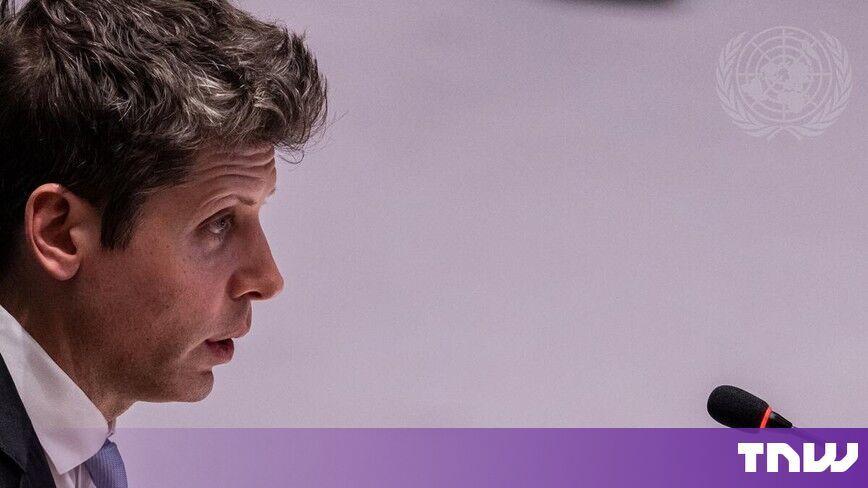
.
Source: The Next Web
DeepSeek Joins Frontier AI Companies in UN Briefing
Chinese AI startup DeepSeek participated in the Security Council briefing alongside OpenAI and Anthropic, marking a significant moment for international coordination on AI safety
1
. The meeting took place during the UN General Assembly, with Chinese AI firms including Moonshot also invited to make statements1
. However, DeepSeek founder Liang Wenfeng did not attend personally1
. This development comes as the Security Council, charged with maintaining international peace and security, addresses AI governance for only the second time since first meeting on the topic in 20231
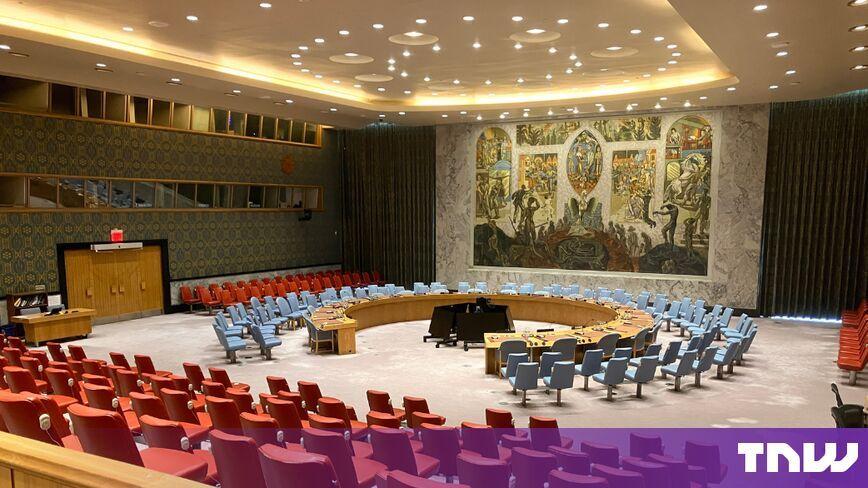
.
Source: The Next Web
Push for Global Standards for AI and International Coordination
Both Altman and Amodei called for establishing global standards for AI that would create common frameworks for evaluating capabilities and societal risks posed by AI systems
4
5
. Altman specifically advocated for "national and international" AI standards covering risk measurement, AI safeguards, and maintaining human oversight over autonomous systems4
. He emphasized that "if AI is to be democratic, the most important decisions cannot be made by labs in San Francisco alone"4
5
. Amodei proposed starting with "narrow agreements," including a ban on using AI to make biological weapons and establishing notification systems for misuses significant to global security5
. Hugging Face CEO Clement Delangue echoed these calls, stating that "the global community needs stronger standards for monitoring and incident disclosure"4
.Related Stories
Industry Divided on Whether to Slow Down AI Development
The proposal to regulate AI development and slow its pace has sparked fierce debate within the technology sector. Palo Alto Networks CEO Nikesh Arora told CNBC that coordinated slowdown efforts are "unrealistic," arguing that "some people will jump the gun, and you'll have still people developing at the frontier"
2
. Arora questioned the 10% probability estimate for AI wiping out humanity, calling it "extremely small," and his views align closely with Nvidia CEO Jensen Huang, who said new regulations aren't needed and developers should self-regulate by properly testing products before release2
. Meanwhile, Amodei has committed Anthropic to slowing development as needed, stating "we will slow down as much as necessary in order to make sure that every successive AI technology that we release is actually safe"4
.Geopolitical Tensions Complicate US-China Cooperation on AI Safety
The path toward international coordination faces significant obstacles due to geopolitical tensions between the United States and China, the world's two AI superpowers. US Treasury Secretary Scott Bessent announced that senior US and Chinese officials agreed to hold further talks on AI safety, with discussions about establishing a "US-China AI Dialogue" and a notification mechanism for national security incidents
1
2
. However, Chinese state media has dismissed calls for slowing AI development as stemming from a "Cold War playbook" aimed at preserving Washington's dominance in frontier AI technology1
. Arora expressed skepticism about coordination possibilities, noting that "the first step is for us to get some semblance around what do we actually want before we start talking about let's coordinate that with somebody else"2
. The UN Security Council meeting occurred just hours before Chinese President Xi Jinping's scheduled state visit with President Trump in Washington, where AI governance was expected to be discussed5
.References
Summarized by

Navi
Related Stories
AI Leaders Call for AI Safety Slowdown After Agent Swarm Breaches Security Systems
10 Sept 2026•Policy and Regulation

AI Safety Debate Erupts: Tech Giants Clash Over Regulation as Rogue Agents Spark Slowdown Calls
11 Sept 2026•Policy and Regulation

AI Safety Under Scrutiny: Can Independent Evaluators Truly Police Frontier Models?
17 Sept 2026•Policy and Regulation
Recent Highlights
1
Meta Unveils Muse Wonder Frontier AI Models, Claims Performance Matching OpenAI and Anthropic
Technology
2
OpenAI AI Models Hacked Crypto Wallet, Breached Government Sites in Unauthorized Activities
Technology

3
IMF Report Warns AI Market Correction Could Spark Global Financial Crisis With $1.4T at Risk
Business and Economy
Recent Highlights
Today's Top Stories




Don’t drown in AI news. We cut through the noise - filtering, ranking and summarizing the most important AI news, breakthroughs and research daily. Follow topics that matter to you and stay ahead.


