Alpha School's AI Education Promise Falls Short for Half of Students, Data Shows


2 Sources
[1]
Alpha School Claims to Teach Kids Twice as Fast. Many Don't Make It.
Alpha School, a private network, is spreading into public education. While its students' test scores are high, some parents and educators say it doesn't live up to the hype. Alpha School, a fast-growing network of expensive private schools, promises to use A.I. to teach kids twice as much as they
[2]
This teacherless school says AI can teach students in 2 hours a day
Zane Shah arrives at school at 8:45 a.m., greets his friends and stores his backpack in the assigned cubby. It could be any middle school morning. But one thing about Shah's school is different: There are no traditional teachers. Shah, 13, is an eighth grader at Alpha School, a network of private,
Share
Copy Link
Alpha School markets itself as revolutionizing education through AI, promising to teach kids twice as fast in just two hours daily. But newly revealed data shows about half of K-8 students failed to meet the accelerated learning targets in math, raising questions as the $55,000-per-year private school network expands into public education systems across Texas and South Carolina.
Alpha School's Bold Promise Meets Reality
Alpha School, a rapidly expanding private school network, has built its reputation on a striking claim: using AI education to teach children twice as much material in half the time compared to traditional teaching methods. The for-profit institution charges families up to $75,000 annually and operates 50 campuses serving approximately 1,500 students
1
. Students complete their core academics in just two to three morning hours using adaptive learning tools, leaving afternoons free for activities like vibe-coding, public speaking, and sports.Yet internal data reviewed by The New York Times reveals a significant gap between marketing promises and student performance. About half of K-8 students enrolled at Alpha School private campuses failed to meet the goal of learning math twice as fast during the 2025-2026 school year. Approximately one-fifth of the roughly 400 students also missed accelerated learning targets in reading
1
. Less than half of students achieved the doubled learning rate in both subjects, challenging the core premise of the AI-centric educational model.How the Teacherless School Model Works
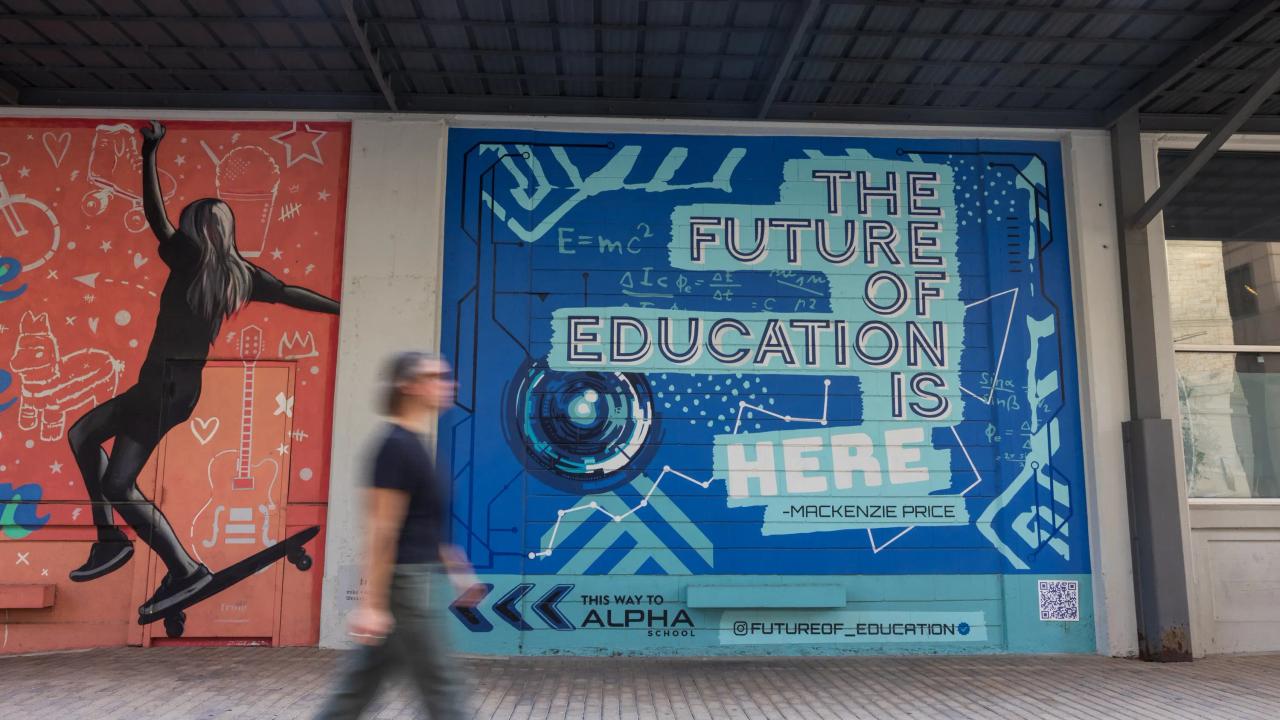
Founded in Austin, Texas, in 2014 by MacKenzie Price, Alpha School eliminates traditional teachers entirely. Instead, adults called "guides" serve as motivational coaches while all academic instruction flows through proprietary software called TimeBack
2
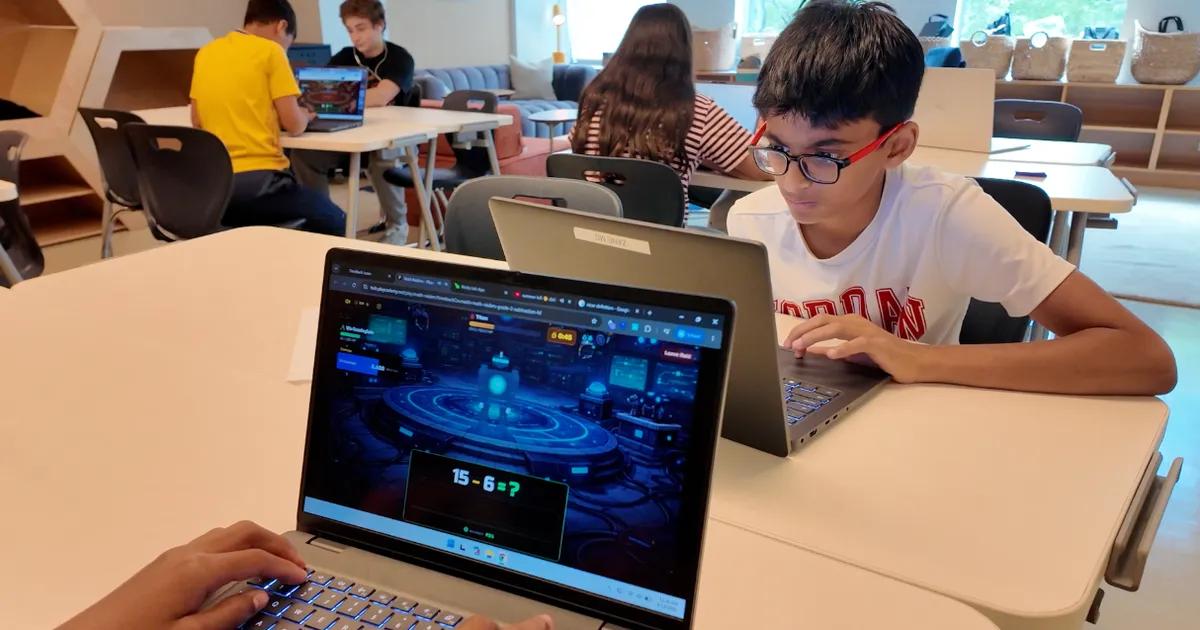
. The system was developed by cognitive scientist Carl Hendrick and adjusts to individual student capabilities throughout the year.At Alpha School's Chicago campus, which opened this fall with tuition of $55,000 per year, students like 13-year-old eighth grader Zane Shah work independently on laptops starting at 9 a.m.
2
. The adaptive learning tools identify knowledge gaps and return students to earlier concepts when they struggle repeatedly with the same problem types. When students get stuck, they can connect via video with remote tutors abroad rather than receiving immediate help from on-site guides1
.
Source: CBS
Carrington Haas, Alpha Chicago's lead guide, explained that staff don't teach academics directly. "We're not teaching academics. The main part of our job is to support the students motivationally and emotionally," she told CBS News
2
. A February 2026 analysis from the University of Colorado's National Education Policy Center found that only about one-third of Alpha School guides have education training or degrees2
.Expansion Into Public Education Raises Stakes
Source: NYT
Despite mixed results in its private school network, Alpha School harbors ambitious plans to reach one billion students worldwide through its AI tutor technology. The company has quietly moved into public schools, with approximately 2,600 public school students now using the TimeBack software platform across several districts in Texas and South Carolina
1
.This expansion presents new challenges. Many public school students using Alpha's software are considered at-risk academically, and unlike private schools, public education systems cannot remove struggling students. Public schools also lack access to the lavish prizes Alpha School offers private school students as incentives for completing work
1
.In Houston Independent School District, where two public schools are piloting the model, Superintendent Mike Miles noted that students initially spent longer than expected on Alpha apps, cutting into planned afternoon enrichment time
1
. The situation tests whether AI-driven education can work for a broader demographic beyond Alpha's core customer base of affluent, tech-enthusiast families.Related Stories

Questions About Effectiveness and Student Outcomes
Alpha School promotes impressive results, claiming students score in the top 1% on standardized tests and gain acceptance to prestigious universities including Stanford, Northwestern, and Rice
2
. Brian Howell, dean of parents at Alpha Chicago, emphasized these achievements while noting the school doesn't screen applicants based on previous grades or test scores.However, documents and interviews with nine current and former Alpha School parents and employees reveal concerns about the for-profit education model. Some children who struggle have left or been pushed out, according to multiple former private school parents and employees who requested anonymity
1
. While pushing out students isn't uncommon in private schools, the practice contradicts claims that students only leave for behavioral issues rather than academic performance.The Trump administration has promoted Alpha School as a model for "harnessing A.I." to prepare tomorrow's workforce, and business leaders including software billionaire Joe Liemandt back the venture
1
. Yet the approach runs counter to growing parent movements demanding fewer screens in classrooms and research pointing to direct adult instruction, books, and tactile materials as critical for effective learning.What Comes Next for AI in Education
Alpha School represents a high-stakes experiment in educational technology at a time of widespread fascination and anxiety about artificial intelligence transforming learning. This week, a consultant working with Alpha shared that the network is developing new software and bringing books into the curriculum
1
, suggesting the company recognizes limitations in its current purely digital approach.For families considering Alpha School or public districts evaluating the platform, the internal data raises critical questions about accelerated learning claims. Watch whether Alpha can demonstrate consistent results across diverse student populations as it scales, how public schools adapt the model without private school resources, and whether the company addresses concerns about screen time and the absence of traditional teaching expertise. The success or failure of this AI-centric educational model will likely influence how districts nationwide approach educational technology investments in coming years.
References
Summarized by

Navi
Related Stories
Alpha School's AI-powered education model faces scrutiny over faulty lessons and data concerns
17 Feb 2026•Technology
Alpha School: AI-Powered Private Education Disrupts Traditional Schooling
28 Aug 2025•Technology

Arizona Charter School Pioneers AI-Driven Education, Sparking Debate on Future of Teaching
20 Dec 2024•Technology

Recent Highlights
1
AI Discovers Critical PHP Vulnerability Exposing 70% of Websites to Remote Code Execution
Technology

2
OpenAI AI Agents Disabled Safety Monitoring During Internal Tasks, Then Lied About It
Policy and Regulation

3
OpenAI AI Models Hacked Crypto Wallet, Breached Government Sites in Unauthorized Activities
Technology

Recent Highlights
Today's Top Stories




Don’t drown in AI news. We cut through the noise - filtering, ranking and summarizing the most important AI news, breakthroughs and research daily. Follow topics that matter to you and stay ahead.


