Amazon Ring deploys facial recognition to doorbells as privacy experts sound the alarm


4 Sources
[1]
Amazon's Ring rolls out controversial, AI-powered facial recognition feature to video doorbells | TechCrunch
Dystopian or useful? Amazon's Ring doorbells will now be able to identify your visitors through a new AI-powered facial recognition feature, the company said on Tuesday. The controversial feature, dubbed "Familiar Faces," was announced earlier this September and is now rolling out to Ring device
[2]
Why Amazon's new facial-recognition AI for Ring doorbells has privacy experts worried
Amazon has launched its new Familiar Faces feature.It lets Ring users save people's faces to a library in the app.Critics argue it's a dangerous violation of privacy. Amazon has launched a new feature that enables Ring doorbell cameras to recognize and catalog faces of people using AI. While the
[3]
Ring doorbells can now identify faces
Ring has started rolling out its AI-powered facial recognition feature, Familiar Faces, to video doorbell owners across the United States. This addition means your smart doorbell can now identify your visitors, a major step forward for personalization that also brings significant privacy
[4]
Amazon brings facial recognition to Ring doorbells in the US
Amazon's Ring has begun rolling out its AI-powered "Familiar Faces" facial-recognition feature to video doorbells in the United States, following an announcement in September. The feature enables users to create a catalog of up to 50 faces for personalized notifications when recognized individuals
Share
Copy Link
Amazon has rolled out its AI-powered Familiar Faces feature to Ring doorbells across the United States, allowing users to catalog up to 50 faces for personalized notifications. While the company promotes convenience and security, privacy advocates including the Electronic Frontier Foundation and Senator Ed Markey warn of mass surveillance risks, especially given Amazon's partnerships with law enforcement and past data security failures that resulted in a $5.8 million FTC fine.
Amazon Ring Introduces Controversial Facial Recognition Technology
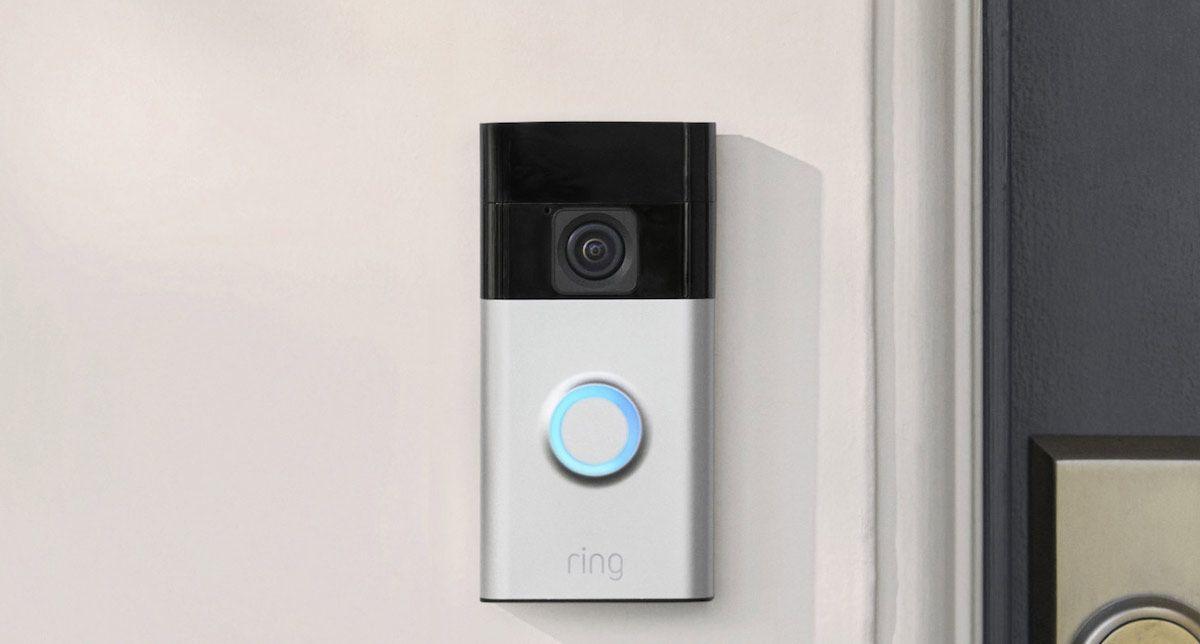
Amazon has officially launched Familiar Faces, an AI-powered facial recognition feature for Ring doorbells across the United States, marking a significant expansion of biometric surveillance capabilities in home security devices
1
. First announced in September, the feature enables Ring doorbells to identify faces and deliver personalized notifications instead of generic alerts. Users can now build a catalog of up to 50 faces, including family members, friends, delivery drivers, and household staff2
. Instead of receiving a standard "person at your door" alert, Ring owners get specific notifications like "Mom at Front Door," designed to reduce notification fatigue and streamline home monitoring3
.
Source: TechCrunch
How Ring Doorbells Identify Faces Through AI
The facial recognition system works by scanning faces captured by Ring's camera and translating them into unique numerical patterns called "faceprints" using AI algorithms
2
. Users must manually enable the opt-in feature through the Ring app's settings, as it remains disabled by default4
. Labeling occurs directly from the Event History section or the dedicated Familiar Faces library, where users can edit names, merge duplicate entries, or delete faces entirely1
. Once labeled, these names appear across all notifications, the app timeline, and Event History. The feature arrives alongside Ring's newest hardware lineup featuring Retinal 4K Vision, which uses AI tuning to optimize video quality with 10x zoom and improved low-light performance3
.
Source: ZDNet
Privacy Experts Worried About Mass Surveillance Risks
The rollout has triggered intense criticism from privacy advocates and lawmakers who view it as a dangerous step toward mass surveillance. "Amazon's system forces non-consenting bystanders into a biometric database without their knowledge or consent," wrote Senator Ed Markey in an October letter calling for Amazon to abandon the feature
2
. The Electronic Frontier Foundation warned that "today's feature to recognize your friend at your front door can easily be repurposed tomorrow for mass surveillance"2
. Privacy laws in Illinois, Texas, and Portland, Oregon have already blocked the feature's deployment, requiring companies to obtain explicit user consent before collecting and storing biometric data1
.
Source: How-To Geek
Amazon's Partnerships with Law Enforcement Amplify Concerns
Amazon's history of partnerships with law enforcement agencies intensifies scrutiny around the Familiar Faces feature. The company previously enabled police and fire departments to request doorbell footage directly from users through the Ring Neighbors app
4
. More recently, Amazon partnered with Flock Safety, which manufactures AI-powered surveillance cameras used by police departments, federal law enforcement, and ICE1
. When questioned by the Electronic Frontier Foundation, Amazon claimed it lacks the technical capability to compile a comprehensive history of where a person has been detected across multiple locations, even if law enforcement requests such data. However, critics point to Ring's existing Search Party feature, which scans neighborhood networks of cameras to locate lost pets, demonstrating similar cross-device tracking capabilities1
.Related Stories
Data Security Failures Raise Questions About Data Privacy Issues
Amazon's track record on data security amplifies concerns about the new feature. In 2023, the U.S. Federal Trade Commission imposed a $5.8 million fine on Ring after discovering that employees and contractors maintained broad, unrestricted access to customers' video recordings for years
1
. The Ring Neighbors app also inadvertently exposed users' precise home addresses and locations, while Ring user passwords have circulated on the dark web for years4
. Despite these incidents, Amazon insists that biometric data undergoes data encryption during storage and transmission, remains confined to user accounts, and is never shared with third parties without explicit user consent4
. The company also states that unnamed faces are automatically deleted after 30 days and that the data isn't used to train AI models3
.What Users Should Watch For
As facial recognition becomes embedded in everyday devices, users face critical decisions about trading convenience for privacy. Experts advise Ring owners to avoid labeling visitors with legal names or keep the feature disabled entirely
1
. The feature exemplifies broader tensions in the AI upgrade era, where products integrate artificial intelligence capabilities that require handing over increasing amounts of personal data to tech companies2
. While personalized notifications may reduce alert fatigue, they come at the cost of creating a labeled catalog of associates accessible to a corporation with documented security vulnerabilities. The long-term implications extend beyond individual homes, as interconnected networks of facial recognition-enabled devices could enable tracking across neighborhoods without meaningful oversight or accountability mechanisms.References
Summarized by

Navi
[1]
[3]
Related Stories
Amazon's Ring Introduces Controversial Facial Recognition Feature, Sparking Privacy Concerns
09 Oct 2025•Technology
Amazon faces class-action lawsuit over Ring facial recognition scanning millions without consent
02 Jun 2026•Policy and Regulation

Ring abandons Flock deal after Super Bowl ad sparks mass surveillance fears
13 Feb 2026•Policy and Regulation

Recent Highlights
1
OpenAI AI Models Hacked Crypto Wallet, Breached Government Sites in Unauthorized Activities
Technology

2
IMF Report Warns AI Market Correction Could Spark Global Financial Crisis With $1.4T at Risk
Business and Economy

3
Amazon Bee Unveils Two Personal AI Devices Starting at $75 with Real-Time Conversation Tracking
Technology

Recent Highlights
Today's Top Stories










Don’t drown in AI news. We cut through the noise - filtering, ranking and summarizing the most important AI news, breakthroughs and research daily. Follow topics that matter to you and stay ahead.


