11 Sources
[1]
Amazon-owned Ring should pay Americans for scanning their faces, lawsuit says
A lawsuit against Amazon is seeking financial damages for millions of Americans whose faces may have been recorded by Ring cameras since the Familiar Faces feature was rolled out late last year. Plaintiff Charles Sigwalt yesterday filed a class action suit that aims to represent all people in the US "who had their facial recognition data collected, retained, and otherwise used by the Familiar Faces feature created and implemented by Defendant." The lawsuit will seek "far" more than $5 million, but the $5 million figure was given in the complaint because US district courts have jurisdiction for civil actions seeking at least that amount. "Here, there are millions of Americans who have walked by Ring cameras which have activated the Familiar Faces feature... the damages in this action far exceed $5,000,000.00 when calculating the statutory damages that may be owed to each Class member in addition to the actual damages caused by the aggregate loss of value of biometric information," the lawsuit said. Ring's Familiar Faces feature is designed to identify people who appear at one's door and provide alerts to the owner of the camera. Amazon says Familiar Faces is not enabled by default but that owners of Ring cameras can turn it on. Ring camera users can create a "personal directory of up to 50 familiar faces" so they can be alerted when one comes to the door. Sigwalt lives in Virginia and filed the suit in US District Court for the Western District of Washington, where Amazon is headquartered. He proposes a nationwide class of all people in the US whose faces were scanned and a subclass for Virginia residents. "Familiar Faces uses facial recognition technology to scan the face of all guests and passersby before categorizing who they are using artificial intelligence," the lawsuit said. "AI then collects a 'face print' of the respective person and translates it into a unique patchwork of numbers that allows Ring to re-identify who that person is each time Familiar Faces deploys facial recognition on them." "Violates basic notions of consumer privacy" The complaint notes that Familiar Faces isn't available everywhere in the US because some areas have stricter privacy laws than others: Ring clearly has the ability to follow biometric privacy laws with respect to the Familiar Faces feature -- but it deliberately chooses not to. Specifically, Ring told The Washington Post that Familiar Faces will not be available in Texas, Illinois, or Portland, Oregon because each jurisdiction has strict laws banning this type of biometric facial recognition surveillance. However, the rest of the country, including Plaintiff and Class members do not get the same respect. The lawsuit argues that Amazon's conduct is illegal even in parts of the US without specific laws banning this type of facial recognition. The lawsuit pointed to a Federal Trade Commission policy statement that businesses "engaging in surreptitious and unexpected collection or use of biometric information" may violate the FTC Act's prohibition on deceptive and unfair trade practices. "Ring's collection, retention, and use of biometric information without adequate consent demonstrates that Ring violates Section 5 of the Federal Trade Commission Act -- which protects against deceptive and unfair trade practices," the complaint said, adding that "Ring's collection of facial recognition [data] violates basic notions of consumer privacy in the United States." Lawsuit seeks injunction and payouts The lawsuit further alleges violations of Virginia state laws, such as one prohibiting the use of people's pictures for purposes of trade without their consent. "Defendant knowingly violated this provision of the Virginia code by using personal data, photographs, and likenesses in the form of pictures and biometric information of Plaintiff and Class members without their written consent for the purposes of trade," the lawsuit said. Other allegations include intrusion upon seclusion, negligence, and unjust enrichment. The complaint says Amazon did not compensate class members for the use and retention of their biometric data despite "increased sales due to the Familiar Faces feature of Ring cameras." It seeks an injunction to change Amazon's behavior, financial payouts to compensate class members for privacy violations, and disgorgement of profits. Amazon declined to comment on the lawsuit when contacted by Ars today. The Electronic Frontier Foundation (EFF) wrote in November that Ring's Familiar Faces will scan "many people who have not consented to a face scan, including friends and family, political canvassers, postal workers, delivery drivers, children selling cookies, or maybe even some people passing on the sidewalk." The EFF said Amazon seems to be "try[ing] to unload some consent requirements onto individual camera owners themselves" with messages reminding customers to comply with applicable laws. "But Amazon -- as a company itself collecting, processing, and storing this biometric data -- could have its own consent obligations under numerous laws," the EFF said, urging regulators to "investigate, protect people's privacy, and test the strength of their laws." Senator urged Amazon to end Familiar Faces US Sen. Ed Markey (D-Mass.) has urged Amazon to discontinue the Familiar Faces feature. Markey sent Amazon a letter in October 2025 asking how Familiar Faces works, and summarized Amazon's responses in a February 2026 letter that repeated his call to end Familiar Faces. Markey said that Amazon revealed in its response to his first letter "that Ring's privacy protections apply only to device owners who may 'opt in' to the Familiar Faces feature, while providing no comparable consent mechanism for individuals unknowingly subjected to facial recognition, leaving members of the public with no right to consent to a facial scan and no control over their biometric data." According to Markey's follow-up letter, Amazon also revealed that "individuals seeking deletion of their biometric data [must] request removal from each individual Ring device owner, forcing people to make separate deletion requests for every home they visit," and "that the number of law enforcement agencies on its Neighbors Public Safety Service has grown from 2,161 in 2022 to 2,723 today." Amazon last year introduced an AI-powered "Search Party" feature advertised as being useful for finding lost pets, which led to backlash after a Super Bowl ad. Amazon subsequently ended a deal with Flock Safety that would have sent Ring customer videos to Flock, which is used by police departments. Ring posed privacy risks before the Familiar Faces and Search Party features were launched. In 2023, the FTC filed a lawsuit accusing Ring of invading users' privacy by "allowing thousands of employees and contractors to watch video recordings of customers' private spaces." Amazon did not admit any wrongdoing but agreed in a settlement to pay $5.8 million for customer refunds, delete certain types of data, and implement privacy and security controls.
[2]
Amazon faces class action lawsuit over Ring facial recognition feature
Amazon was sued on Monday over alleged privacy violations from its Ring doorbell cameras. The class action lawsuit, filed in Seattle by Virginia resident Charles Sigwalt, claims that Ring's Familiar Faces feature stores images of passersby without consent. Ring announced the Familiar Faces feature last September and faced pushback from consumer protection organizations like the EFF, as well as Senator Ed Markey (D-MA). But the company moved forward with its plans to launch the feature in December. Familiar Faces lets Ring users identify people who regularly come to their home through AI facial recognition. That way, if a regular guest, like a family member, mail carrier, or neighbor, comes to the door, the device will be able to recognize them and deliver more specific notifications like "Dad is at the door," rather than "a person is at the door." Ring users have to opt in to this feature, but privacy advocates noted that the people who walk past these Ring doorbells have not consented to these facial recognition scans. That same concern is at the center of this class action lawsuit. According to the lawsuit, "Millions of other Americans passed by a Ring security camera and unknowingly had their facial recognition information collected." Amazon did not immediately respond to a request for comment. At the time the feature was released, the company stated that face data is encrypted and never shared; unidentified faces are automatically removed after 30 days. Amazon's Ring has a record of concerning behaviors regarding user privacy. In 2023, Amazon settled with the FTC and paid a $5.8 million fine over allegations that the company's staff and contractors had improperly accessed private videos from women customers; the FTC's complaint said that every employee had full access to every customer video, even if the worker had no need to access that footage. Ring has also maintained relationships with law enforcement and once granted police the ability to request Ring footage from users without a warrant. After airing a Super Bowl ad to introduce Search Party, an AI-powered feature that uses Ring footage to find lost pets, the company faced similar backlash. Days later, Ring cancelled its plans to partner with video surveillance company Flock Safety, which has reportedly given footage to ICE and other federal agencies. When Ring founder Jamie Siminoff spoke with TechCrunch after Ring cancelled its arrangement with Flock Safety, he indicated that the deal would've created too much of a "workload."
[3]
Amazon Ring Sued for Facial Recognition Technology: Here's Why It May Violate Privacy Laws
Expertise Smart home | Smart security | Home tech | Energy savings | A/V On Monday, a Virginia man filed a class-action lawsuit against Amazon Ring, claiming its facial recognition feature violated his privacy and that of millions of other Americans. The lawsuit, filed by Charles Sigwalt in Seattle federal court, seeks at least $5 million from the retail giant. The case focuses on a Ring feature that uses AI to detect and remember the faces of friends and family. The feature, which arrived on Ring security cameras and video doorbells in 2025, is available only to Ring subscribers who opt into both Familiar Faces and smart alerts on their Ring device. When Familiar Faces is activated, Ring sends personalized phone alerts that identify people by name (based on the profiles users create) when those individuals approach a home. The problem is that the facial recognition software scans and categorizes everyone who passes by the camera, not just family and friends who might have profiles. Ring can also detect the faces of nearby drivers, mail carriers and strangers, potentially even people walking down a nearby street (aided by the newest 2K and 4K resolution devices Ring released, which can gather finer details farther away). Sigwalt's lawsuit focuses on consent and the storage of biometric data. Although laws can vary by state and haven't always kept pace with this new technology, recording faces without consent could violate privacy rights. In Washington state, where Amazon has one of its headquarters, consumers have some control over access to their personal data. Another sticking point is that the Ring app doesn't automatically delete the faces it captures but keeps them for 30 days. While Ring says this face data is encrypted and stored so users can take their time creating face profiles, it's unclear whether the data can be used to train its AI features or for other purposes. Digital rights groups like the Electronic Frontier Foundation highlight the risks of Ring's Familiar Faces feature, noting that your biometric data, including a faceprint, "are some of the most sensitive pieces of data that a company can collect." Facial recognition software has long been associated with mass surveillance and discrimination and could also pose security risks, like being leaked in a data breach. This lawsuit follows numerous controversies about Ring's privacy policies and data-sharing practices, particularly with law enforcement. Earlier this year, a Super Bowl ad for Search Party, an AI feature marketed as being able to automatically recognize lost dogs, sparked tremendous backlash, leading some users to smash their Ring cameras on social media. Amazon Ring declined to comment on this story. Ring is just one company using face recognition The use of AI in facial recognition technology for home security cameras goes far beyond Amazon's line. Google Nest, for example, has had its own Familiar Face technology for years, which works very similarly to Ring's feature, with a Face Library you can add to when it recognizes a new face. Arlo has an optional Person Recognition feature that uses multiple data inputs to identify specific people. A number of smart lock brands, like SwitchBot, have also begun adopting facial recognition technology. So far, no notable lawsuits have succeeded in arguing that this technology violates broad privacy laws because security cameras are typically located on private property and designed to look out into public areas like sidewalks, where there's not really an expectation of privacy. That's one argument Flock surveillance cameras also rely on. But some legislation has proven effective. Cities like Portland, Oregon, and states like Illinois have adopted strict biometric privacy laws that make it legally difficult to offer facial-recognition technology in home security devices. Google Nest and other companies have disabled familiar-face features there to avoid legal problems like the Ring lawsuit. It's unclear how this suit will play out, but it could change how Ring addresses its security features going forward. If you're concerned about surveillance, I have a full guide on how to turn off unpopular Ring features.
[4]
Ring gets buzzed by class action for collecting visitors' faces without consent
Perhaps you stopped by a friend's house and rang their Ring doorbell. Or maybe you walked past a neighbor's front door on your way somewhere else. According to a new class action lawsuit, Ring's Familiar Faces feature may have captured your face and generated facial-recognition data from it without your knowledge. A Virginia man is now suing Amazon and its home security subsidiary, alleging violations of state laws. Charles Sigwalt claims that Ring's Familiar Faces, an AI-powered facial-recognition feature that identifies frequent visitors and creates profiles for them, collects biometric data from people without their knowledge or consent. Launched in December 2025 in the US, and April 2026 in the UK, Familiar Faces allows customers to create up to 50 profiles belonging to frequent visitors, allowing their doorbell to tell them who exactly is at their door, rather than just telling them that someone, anyone, pressed the buzzer. In Ring's product marketing, under a "Built with Privacy in Mind" heading, it clearly states that Familiar Faces is an opt-in feature. It is not enabled by default. However, Sigwalt argues in his lawsuit that the functionality subjects anyone within the doorbell's field of view to facial recognition tech, potentially having their facial-recognition information stored on Amazon's servers without their consent. This includes everyone from family members to postal workers, all the way to passersby who don't even approach the Ring user's property. Sigwalt, who is personally aggrieved at being subjected to the company's facial recognition himself, claimed that to ensure Familiar Faces runs properly, Ring would take a "faceprint" of each subject, similar to that of a fingerprint. The complaint alleges that Familiar Faces converts facial images into mathematical templates, or "faceprints," that can later be used to recognize the same person. Those profiles and related facial-recognition data are stored in Amazon's cloud rather than on the device itself. Citing an Electronic Frontier Foundation (EFF) blog, Sigwalt argued that biometric identifiers collected for facial recognition could be repurposed for broader surveillance. The complaint does not allege that Ring has used Familiar Faces for mass surveillance, and Ring has said it would not be technically capable of identifying every camera that had detected a particular individual. The complaint [PDF] goes on to allege that even though face prints are only stored for 30 days in the case of unrecognized faces, and 180 days for those with saved profiles, the data retention extends beyond these timeframes, since saved profiles return to Ring accounts after unsubscribing from the service. Sigwalt added that "Ring clearly has the ability to follow biometric privacy laws ... but chooses not to," referring to the company's confirmation that it won't operate Familiar Faces in Illinois, Texas, and Portland, Oregon. According to the complaint, those laws are the reason Ring does not make Familiar Faces available in those jurisdictions. Illinois and Texas impose consent requirements for certain biometric data collection, while Portland restricts the use of facial-recognition technology in public accommodations. In addition to alleging violations of several Virginia laws related to consumer protection, computer crimes, and privacy, Sigwalt argues that Ring's conduct runs afoul of standards outlined by the Federal Trade Commission. He cited a 2023 policy statement outlining possible violations in cases where a company engages in "surreptitious and unexpected collection or use of biometric information," and others. The lawsuit seeks to stop Ring from using facial recognition in its current form, award damages to class members, require the Amazon subsidiary to transfer profits into a constructive trust, and cover the plaintiffs' legal fees. Amazon did not immediately respond to our request for comment. The company previously sought to ease concerns about Familiar Faces in October 2025, before its US launch, by publicly responding to a series of questions put to it by the EFF. Spokesperson Emma Daniels stated that it does not use the data collected for the feature to train any AI models or algorithms. She added that Ring would not be technically capable of responding to a law enforcement request if an agency demanded it to identify all the cameras by which a given individual had been detected. The EFF likened Familiar Faces to Search Party, a similar AI-powered feature launched to help locate lost pets, which has also been met with concerns about data privacy. ®
[5]
Amazon's Ring sued over facial recognition feature, latest privacy concern for doorbell maker
SAN FRANCISCO, June 2 (Reuters) - Amazon (AMZN.O), opens new tab was sued on Monday by a Virginia resident over what he said were privacy violations after the company's Ring doorbell cameras at friends and family members' homes collected and stored images of his face using facial recognition software. The plaintiff, Charles Sigwalt, who is seeking class-action status, sued Amazon in federal court in Seattle alleging a feature known as "Familiar Faces" retains images of passersby without their consent. He is seeking at least $5 million in damages for the class. Familiar Faces, which is optional, uses artificial intelligence to identify and remember people so that when they return to a home or a business, notifications can include specific names. Those affected "did not consent to have their privacy rights violated at the entrance way," according to the suit. "Millions of other Americans passed by a Ring security camera and unknowingly had their facial recognition information collected." Amazon declined to comment. The suit, which seeks unspecified damages for those impacted, is just the latest in a string of controversies around Amazon's Ring, the unit that makes the eponymous smart doorbells and security systems. Ring, which Amazon bought in 2018 for $1 billion, in February faced a backlash over a service that it advertised during the Super Bowl that it said helps people find lost dogs by activating its neighborhood network of cameras. Users and privacy advocates were concerned the cameras could be deployed to surveil whole neighborhoods or areas. Following the criticism, Ring in February ended an unrelated partnership with Flock Safety, which deploys license plate readers and cameras for law enforcement use. In 2023, the U.S. Federal Trade Commission reached a $5.8 million settlement with Ring over privacy allegations that it said included a former employee spying on female customers in their home bedrooms and bathrooms. The FTC said Ring employees had unrestricted access to customers' sensitive video data, allowing them and contractors to view and download it. Amazon denied any wrongdoing as part of the settlement. U.S. Democratic Senator Ed Markey alleged in 2022 that Ring violated people's privacy through its partnerships with law enforcement, allowing them access to some user footage without proper consent. In the suit filed on Monday, Sigwalt said Amazon's "conduct here represents a profound privacy failure for millions of people who are now being tracked by Amazon." Reporting by Greg Bensinger; Editing by Jamie Freed Our Standards: The Thomson Reuters Trust Principles., opens new tab * Suggested Topics: * Litigation * Constitutional Law * Human Rights * Corporate Counsel * Consumer Protection Greg Bensinger Thomson Reuters Greg Bensinger joined Reuters as a technology correspondent in 2022 focusing on the world's largest technology companies. He was previously a member of The New York Times editorial board and a technology beat reporter for The Washington Post and The Wall Street Journal. He also worked for Bloomberg News writing about the auto and telecommunications industries. He studied English literature at The University of Virginia and graduate journalism at Columbia University. Greg lives in San Francisco with his wife and two children.
[6]
Amazon's Ring is sued over its Familiar Faces facial-recognition feature
A Virginia man says the doorbell maker scans and stores the faces of people who walk past, whether or not they ever agreed to it. mazon was sued on Monday over the facial-recognition feature it recently added to its Ring doorbells, in a complaint that turns on a familiar asymmetry: the person who buys the camera consents to it, and the person walking past the camera does not. Charles Sigwalt, a Virginia resident, filed the proposed class action in federal court in Seattle, alleging that Ring's "Familiar Faces" feature captures and stores images of passersby without their permission. He is seeking at least $5m in damages on behalf of the class, according to Reuters. Familiar Faces is an optional setting that uses AI to recognise people a camera has seen before, so that a notification can say who is at the door rather than simply that someone is. Ring rolled it out late last year as part of a broader AI refresh of its cameras, with users able to label recognised people and the system cataloguing a set number of faces over time. For the homeowner who switches it on, that is the convenience. For the delivery driver, the neighbour, or the stranger cutting across the lawn, the suit argues, it means having a faceprint taken and retained with no say in the matter, and no practical way to opt out of a camera they do not own. That objection is not new, and Amazon's own conduct suggests it anticipated the legal exposure. The company has said Familiar Faces is not available in Illinois or Texas, the two US states with the strictest biometric-privacy laws. Illinois' Biometric Information Privacy Act requires written consent before a company captures someone's face geometry and allows damages of $1,000 for each negligent violation and $5,000 for each intentional one, a structure that has made it the most expensive law in the country to fall foul of. Keeping the feature out of those two states reads, to critics, less like caution than like an answer to a question nobody had to ask out loud. The Sigwalt complaint sits in a longer line of trouble for Ring. The unit has drawn scrutiny for its facial-recognition ambitions for years, as well as for its data-sharing arrangements with police and a 2023 settlement with the US Federal Trade Commission over employee access to customers' video. Amazon, which bought Ring for about $1bn in 2018, has tended to frame the cameras as neighbourhood safety tools. The plaintiffs frame them as a privately owned surveillance network that happens to point at the street. What happens next is procedural. The court has to decide whether the case proceeds as a class action, and Amazon has not yet filed a response to the specific allegations. An earlier biometric suit against Ring survived a motion to dismiss in 2022, which gives the new claim a precedent to lean on, though not a result. For now there is a filing, a damages figure, and a feature that keeps scanning faces while the lawyers argue over whose consent it needed.
[7]
Amazon's Ring cameras track your face without permission, $5M lawsuit says
Amazon is once again in legal hot water over its Ring doorbell cameras -- and for a company with a growing list of privacy controversies, this latest lawsuit may be the most explosive yet. A Virginia resident, Charles Sigwalt, has filed a class action lawsuit in federal court in Seattle, claiming that Ring's AI-powered 'Familiar Faces' feature collected and stored facial recognition data from people passing by Ring-equipped homes without their knowledge or consent. The suit seeks at least $5 million in damages on behalf of the class. It follows a $5.8 million FTC settlement in 2023 over employee spying allegations, and long-running criticism over Ring's law enforcement data-sharing practices. What is the 'Familiar Faces' feature? Ring's optional 'Familiar Faces' feature uses artificial intelligence to identify and remember individuals who appear on camera, sending notifications that include specific names when recognized people approach a property. While the feature is opt-in for Ring device owners, the lawsuit argues that the people being identified and stored in the system: passers-by, neighbors, delivery workers, etc, never agreed to be part of it. According to the suit, those captured "did not consent to have their privacy rights violated at the entrance way." What happens next? The case is currently before federal court in Seattle. No trial date has been set, and Amazon has not yet responded publicly to the allegations. Given Ring's history of privacy settlements, the outcome of this lawsuit will be closely watched by both privacy advocates and the millions of households that use Ring devices across the U.S. We'll keep you updated as the case develops. Follow Tom's Guide on Google News and add us as a preferred source to get our up-to-date news, analysis, and reviews in your feeds. Subscribe to Tom's Guide on YouTube and follow us on TikTok. Finally, you can visit our dedicated Tom's Guide Savings Squad hub for expert help on getting the best products for less.
[8]
Ring has been collecting visitor's facial biometrics without consent, class action lawsuit alleges
* Amazon-owned Ring faces a potential class-action lawsuit, $5m+ in damages sought * Familiar Faces doesn't operate in some states due to privacy protections * "Profound privacy failure" affects millions of Americans Doorbell giant Ring, an Amazon company, now faces a proposed class-action lawsuit in the US over its 'Familiar Faces' feature, which uses AI to identify and label people to arrive at the door. The lawsuit, filed by a Virginia resident, accuses the company of collecting and storing biometric information about him without his consent when he visited friends' and relatives' homes. According to the complaint, the technology collects and stores facial biometrics from anyone who appears within the camera's field of view - regardless of whether they're visiting the house or not. Ring accused of collecting and storing facial biometrics Charles Sigwalt, the Virginia resident behind the class-action complaint, noted that Ring's system creates and stores so-called faceprints from anybody who comes with reach of a supported camera. The complaint is seeking at least $5 million in damages, but this figure could rise if a larger class of affected individuals gets approved. It's worth noting that Familiar Faces is only approved for use in some states - Illinois, Texas and Portland, Oregon are protected by stricter biometric privacy regulations. This isn't the first time that the Amazon-owned company has faced the heat - in 2023 it paid a $5.8 million settlement to the FTC over allegations relating to employees' access to customer videos. The company also faced recent backlash over a Super Bowl-advertised service that used its camera network to help locate lost dogs - critics warned about neighborhood surveillance. In the complaint, the plaintiff concludes that Ring has created a "profound privacy failure for millions of people who are now being tracked by Amazon." Follow TechRadar on Google News and add us as a preferred source to get our expert news, reviews, and opinion in your feeds.
[9]
Amazon faces lawsuit over Ring facial recognition software
Mary Cunningham is a reporter for CBS MoneyWatch. She previously worked at "60 Minutes," CBSNews.com and CBS News 24/7 as part of the CBS News Associate Program. A Virginia resident is suing Amazon for privacy violations after the e-commerce company's Ring video doorbell camera allegedly used facial recognition technology to record and store images of his face without his consent. Charles Sigwalt, who filed a lawsuit on Monday in Seattle federal court, where Amazon has one of its headquarters, alleges that Ring's "Familiar Faces" feature uses facial-recognition software to scan anyone who passes by the doorbell camera and categorizes them using artificial intelligence. The system then collects a "face print" that allows it to re-identify the person, according to his complaint, which seeks class-action status. "When plaintiffs and class members entered the homes and businesses of places which had Ring cameras that deployed Familiar Faces, they did not consent to have their privacy rights violated at the entrance way," the suit alleges. Sigwalt alleges Ring collected his facial recognition data without warning while he was visiting friends' and family members' homes. He believes the company is still storing his biometric data, according to the lawsuit. Amazon declined to comment on the suit. "Familiar Faces" draws criticism Ring introduced the "Familiar Faces" feature in September 2025, billing it as a way for owners of its doorbell camera to receive more personalized alerts when someone arrives at their residence. Instead of seeing "Person at Front Door," for example, they might receive an alert with a name, such as "John at Front Door." "Your camera learns to recognize friends, family and frequent visitors over time," the company says on its website. Users can turn the feature on and off, according to Ring. Groups like the nonprofit Electronic Frontier Foundation have pushed back on the feature, claiming it violates people's privacy. The biometric data could be used for mass surveillance or be leaked in a potential data breach, the group has warned. Senator Edward Markey of Massachusetts has been another vocal opponent of the Familar Faces technology, noting that it could be used to record the biometric data of people who never consented to have their faces scanned. Other Ring backlash Amazon has faced other litigation over its Ring product. In 2023, the Federal Trade Commission filed a suit claiming that the online retailer gave its workers and contractors access to personal videos recorded by Ring and failed to protect customer security, leading to hackers threatening or sexually propositioning Ring owners. Amazon settled the case for $5.8 million. More recently, Amazon abruptly ended a commercial partnership with security technology company Flock Safety after backlash over a Super Bowl commercial for Ring sparked concerns about unwanted surveillance. Amazon bought Ring in 2018 for $1 billion. -- CBS News' Alain Sherter contributed to this report.
[10]
Amazon Ring sued over facial recognition
Amazon was sued Monday by a Virginia man over allegations that facial recognition software in the company's Ring doorbell cameras collected and stored images of his face without his consent. The plaintiff Charles Sigwalt filed the lawsuit in federal court in Seattle, claiming Ring's optional "Familiar Faces" feature violates individuals' privacy rights by retaining images of people without permission. "Millions of other Americans passed by a Ring security camera and unknowingly had their facial recognition information collected," the complaint reads. Sigwalt is seeking class-action status and at least $5 million in damages for the class, though the amount in damage for those also impacted was unspecified. Amazon declined to comment. Ring's "Familiar Faces" feature uses artificial intelligence to identify and remember people seen on the doorbell cameras. When a recognized person returns to a home or business, users can receive notifications identifying them. The suit adds to mounting scrutiny surrounding Ring's surveillance technology and data collection. Privacy advocates have raised concerns about the company's use of camera footage and facial recognition technology, including partnerships with law enforcement agencies and other surveillance entities. Ring ended its partnership with surveillance firm Flock Safety after a controversial advertisement during the Super Bowl featured Ring's Search Party feature, an AI tool allowing users to receive feeds from other cameras in the area based on certain visual cues. Flock Safety has no connection to the Search Party feature, and the ad was not cited as a reason for the joint decision to end the collaboration. The company did, however, face backlash over its nationwide network of cameras, including concerns that data could be accessed by Immigration and Customs Enforcement (ICE) investigators amid the Trump administration's immigration crackdown. Amazon purchased Ring in 2018 for $1 billion. In 2023, the Federal Trade Commission won a $5.8 million settlement against the tech giant over allegations that it risked consumers' privacy by allowing employees and contractors to have improper access to records from the company's security cameras. Amazon also settled a separate privacy claim for $25 million over its Alexa voice assistant.
[11]
Amazon's Ring sued over facial recognition feature, latest privacy concern for doorbell maker
A Virginia resident is suing Amazon for privacy violations, alleging its Ring doorbell cameras, specifically the "Familiar Faces" feature, collect and store facial recognition data of passersby without consent. The class-action lawsuit seeks at least $5 million in damages, highlighting ongoing privacy concerns surrounding Ring's technology and its partnerships. Amazon was sued on Monday by a Virginia resident over what he said were privacy violations after the company's Ring doorbell cameras at friends and family members' homes collected and stored images of his face using facial recognition software. The plaintiff, Charles Sigwalt, who is seeking class-action status, sued Amazon in federal court in Seattle alleging a feature known as "Familiar Faces" retains images of passersby without their consent. He is seeking at least $5 million in damages for the class. Familiar Faces, which is optional, uses artificial intelligence to identify and remember people so that when they return to a home or a business, notifications can include specific names. Those affected "did not consent to have their privacy rights violated at the entrance way," according to the suit. "Millions of other Americans passed by a Ring security camera and unknowingly had their facial recognition information collected." Amazon declined to comment. The suit, which seeks unspecified damages for those impacted, is just the latest in a string of controversies around Amazon's Ring, the unit that makes the eponymous smart doorbells and security systems. Ring, which Amazon bought in 2018 for $1 billion, in February faced a backlash over a service that it advertised during the Super Bowl that it said helps people find lost dogs by activating its neighborhood network of cameras. Users and privacy advocates were concerned the cameras could be deployed to surveil whole neighborhoods or areas. Following the criticism, Ring in February ended an unrelated partnership with Flock Safety, which deploys license plate readers and cameras for law enforcement use. In 2023, the U.S. Federal Trade Commission reached a $5.8 million settlement with Ring over privacy allegations that it said included a former employee spying on female customers in their home bedrooms and bathrooms. The FTC said Ring employees had unrestricted access to customers' sensitive video data, allowing them and contractors to view and download it. Amazon denied any wrongdoing as part of the settlement. U.S. Democratic Senator Ed Markey alleged in 2022 that Ring violated people's privacy through its partnerships with law enforcement, allowing them access to some user footage without proper consent. In the suit filed on Monday, Sigwalt said Amazon's "conduct here represents a profound privacy failure for millions of people who are now being tracked by Amazon."
Share
Copy Link
Virginia resident Charles Sigwalt filed a class-action lawsuit against Amazon, claiming the Ring 'Familiar Faces' feature collected facial recognition data from millions of Americans without their knowledge or consent. The suit seeks at least $5 million in damages and alleges violations of privacy laws, despite Ring making the feature opt-in for camera owners. Amazon declined to comment on the lawsuit.
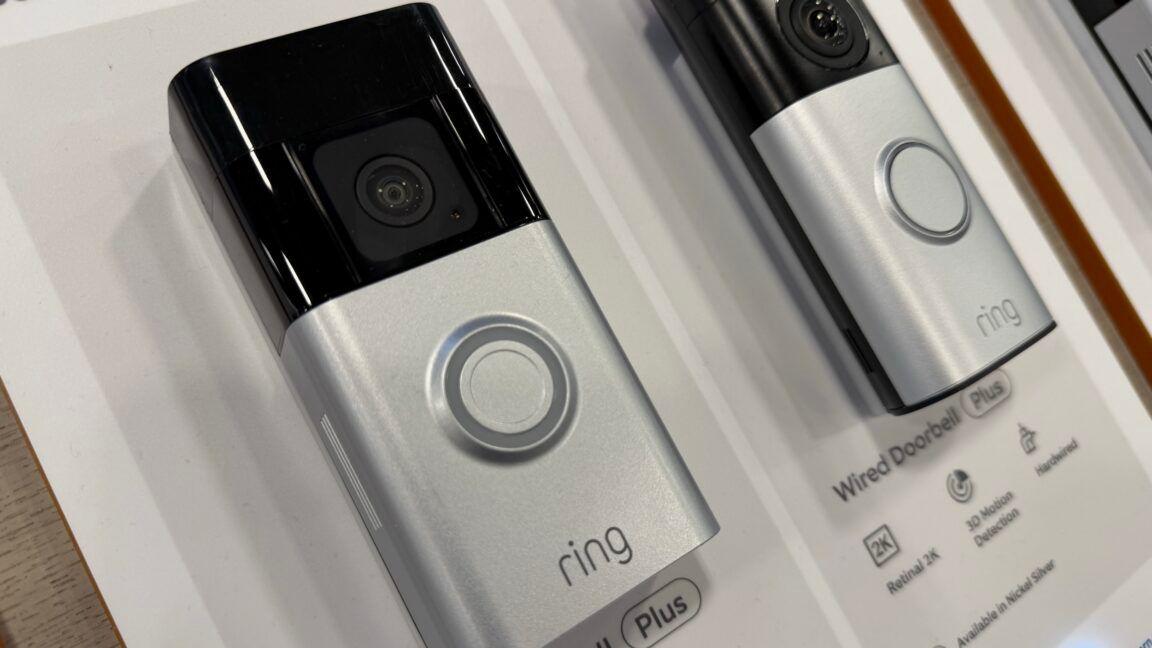
Virginia resident Charles Sigwalt filed a class-action lawsuit against Amazon on Monday, alleging that the company's Ring 'Familiar Faces' feature has subjected millions of Americans to privacy violations through unauthorized biometric data collection
1
2
. The complaint, filed in US District Court for the Western District of Washington where Amazon is headquartered, seeks damages "far" exceeding $5 million for what it describes as widespread collection of facial recognition data without proper consent1
.The lawsuit targets Ring's AI-powered surveillance technology that launched in December 2025, which allows camera owners to create a personal directory of up to 50 familiar faces to receive customized alerts when specific individuals approach their property
4
. While Amazon maintains that Familiar Faces is an opt-in feature not enabled by default, privacy advocates and the lawsuit argue that the technology scans everyone within the camera's field of view, including friends, family, postal workers, delivery drivers, political canvassers, and even passersby on sidewalks1
.According to the complaint, Familiar Faces uses facial recognition technology to scan faces and create a unique "faceprint" of each person, translating facial features into a mathematical template that enables re-identification
1
4
. These profiles and related facial recognition data are stored in Amazon's cloud rather than locally on devices4
. While Amazon states that unidentified faces are automatically removed after 30 days and face data is encrypted and never shared, the lawsuit alleges data retention extends beyond these timeframes since saved profiles return to Ring accounts after users unsubscribe from the service2
4
.Sigwalt's complaint emphasizes that "Ring clearly has the ability to follow biometric privacy laws with respect to the Familiar Faces feature -- but it deliberately chooses not to," pointing to the fact that Ring told The Washington Post the feature would not be available in Texas, Illinois, or Portland, Oregon due to strict biometric privacy laws in those jurisdictions
1
3
. The lawsuit argues this demonstrates Amazon's selective compliance with privacy regulations.The class-action lawsuit against Amazon alleges violations of Section 5 of the Federal Trade Commission Act, which prohibits deceptive and unfair trade practices
1
. The complaint references a 2023 FTC policy statement indicating that businesses "engaging in surreptitious and unexpected collection or use of biometric information" may violate the Act1
4
. The Electronic Frontier Foundation has raised concerns that biometric identifiers collected for facial recognition could potentially be repurposed for broader mass surveillance, though the complaint does not allege Ring has actually used the feature for such purposes4
.Additional allegations include violations of Virginia state laws prohibiting the use of people's pictures for trade purposes without consent, intrusion upon seclusion, negligence, and unjust enrichment
1
. The complaint states Amazon did not compensate class members for the use and retention of their biometric data despite "increased sales due to the Familiar Faces feature of Ring cameras"1
.Related Stories
This lawsuit represents the latest in a series of controversies surrounding Amazon's Ring unit, which the company acquired in 2018 for $1 billion
5
. In 2023, Amazon settled with the FTC and paid a $5.8 million fine over allegations that company staff and contractors improperly accessed private videos from women customers, with the FTC's complaint stating that every employee had full access to every customer video regardless of need2
5
.Earlier this year, Ring faced backlash over a Super Bowl advertisement for Search Party, an AI-powered feature marketed as helping locate lost pets, which raised similar surveillance concerns
2
3
. Following criticism, Ring cancelled plans to partner with video surveillance company Flock Safety, which has reportedly provided footage to ICE and other federal agencies2
. Amazon declined to comment when contacted about the current lawsuit1
5
.Ring is not alone in deploying facial recognition capabilities in home security devices. Google Nest has operated its own Familiar Face technology for years with a Face Library feature, while Arlo offers an optional Person Recognition feature using multiple data inputs
3
. Smart lock brands like SwitchBot have also begun adopting facial recognition technology3
. However, companies including Google Nest have disabled familiar-face features in jurisdictions with strict biometric privacy laws to avoid legal problems similar to those Ring now faces3
.The lawsuit seeks an injunction to change Amazon's behavior, financial payouts to compensate class members for privacy violations, disgorgement of profits, and coverage of legal fees
1
4
. How this case unfolds could significantly impact how Ring and other companies approach facial recognition features in consumer devices, particularly as lawmakers and regulators continue examining the balance between technological innovation and individual privacy rights in an era of expanding AI-powered surveillance technology.Summarized by
Navi
09 Oct 2025•Technology

09 Dec 2025•Technology

13 Feb 2026•Policy and Regulation

1
Technology

2
Policy and Regulation

3
Policy and Regulation