AMD Exceeds AI Energy Efficiency Targets, Achieves 4X Improvement Ahead of 20X Goal by 2030


7 Sources
[1]
AMD claims its 2026 rack-scale AI solution is 4X more energy efficient than its 2024 AI platform -- company says it's pacing ahead of 20X efficiency by 2030
In addition to its normal product and technology roadmaps, AMD has effectively made its 'X-by-year' efficiency programs a recurring engineering roadmap. Back in 2025, the company unveiled its 20x2030 initiative that promised to increase energy efficiency of its rack-scale AI solutions 20 times by
[2]
AMD inches closer to its goal of making AI suck less ... energy
AI's thirst for power remains an ongoing concern, but fear not: AMD says it's making steady progress towards its goal of boosting rack efficiency 20x by the end of the decade. In a blog post published this week, the House of Zen estimates that, as of 2026, its systems are already 4x more efficient
[3]
'Same compute, fewer resources - More compute, same energy': AMD says it is on track to make AI four times more energy efficient
AMD says it is already beating its own energy efficiency goals * AMD says its rack-scale AI systems are now about four times more energy-efficient than its 2024 baseline, beating its own threefold interim target by 33% * The company offers two alternative outcomes for that gain: the same compute
[4]
AMD's 2030 AI racks to match 570 MI300X racks while cutting energy use 20x
AMD has announced significant advancements in energy efficiency for its AI rack-scale offerings, claiming that just two of its AI racks set to launch in 2030 will provide the same performance as 570 of its MI300X racks. This development is part of AMD's strategic goals for 2030, which includes
[5]

AMD on track for a 20X increase in AI rack-scale energy efficiency by 2030
With the exponential performance improvements we've been seeing from AI rack-scale solutions from companies like AMD, demand for power and cooling has increased. With the wider consensus that AI data centers are anything but efficient, AMD has confirmed it's on track to deliver a 20X increase in
[6]

AMD Claims Just Two Of Its 2030 AI Racks Will Match 570 Of Its MI300X Racks, Slashing Electricity Use By 20x
AMD is making big claims today on the rapid efficiency gains that its rack-scale AI offerings continue to scale in pursuit of its lofty 2030 goals, which aim to squeeze the performance footprint of as many as 570 of AMD's MI300X-based racks within just two of its 2030-launching ones. AMD claims
[7]

AMD Achieves 4x AI Energy Efficiency Gain, Surpasses Mid-2026 Target
This progress shows AMD is building momentum toward its 2030 goal to deliver a 20x increase in rack-scale energy efficiency for AI training and inference. It also reflects the work being done by AMD across silicon, systems and software to help customers scale AI workloads more efficiently. AMD has
Share
Copy Link
AMD reports its rack-scale AI systems achieved 4X better energy efficiency than its 2024 baseline, beating its own 3X interim target. The chipmaker's 20x2030 initiative aims to deliver 20X higher AI performance per watt by decade's end, with two 2030 racks matching the compute of 570 MI300X racks while slashing power consumption.
AMD Surpasses Interim Energy Efficiency Targets
AMD has announced that its rack-scale AI systems now deliver approximately 4X better AI energy efficiency compared to its 2024 baseline, exceeding the company's own 3X interim projection by 33%
1
3
. This progress represents more than double the historical industry trendline and positions AMD ahead of schedule in its ambitious 20x2030 initiative, which targets a 20X increase in AI rack-scale energy efficiency by 20302
. The company's approach to measuring efficiency at the rack level rather than individual component levels gives it flexibility in optimizing across compute performance, process technology, memory bandwidth, data movement, interconnects, software, and system-level co-design1
.The Path from MI300X to MI455X and Helios
Source: TweakTown
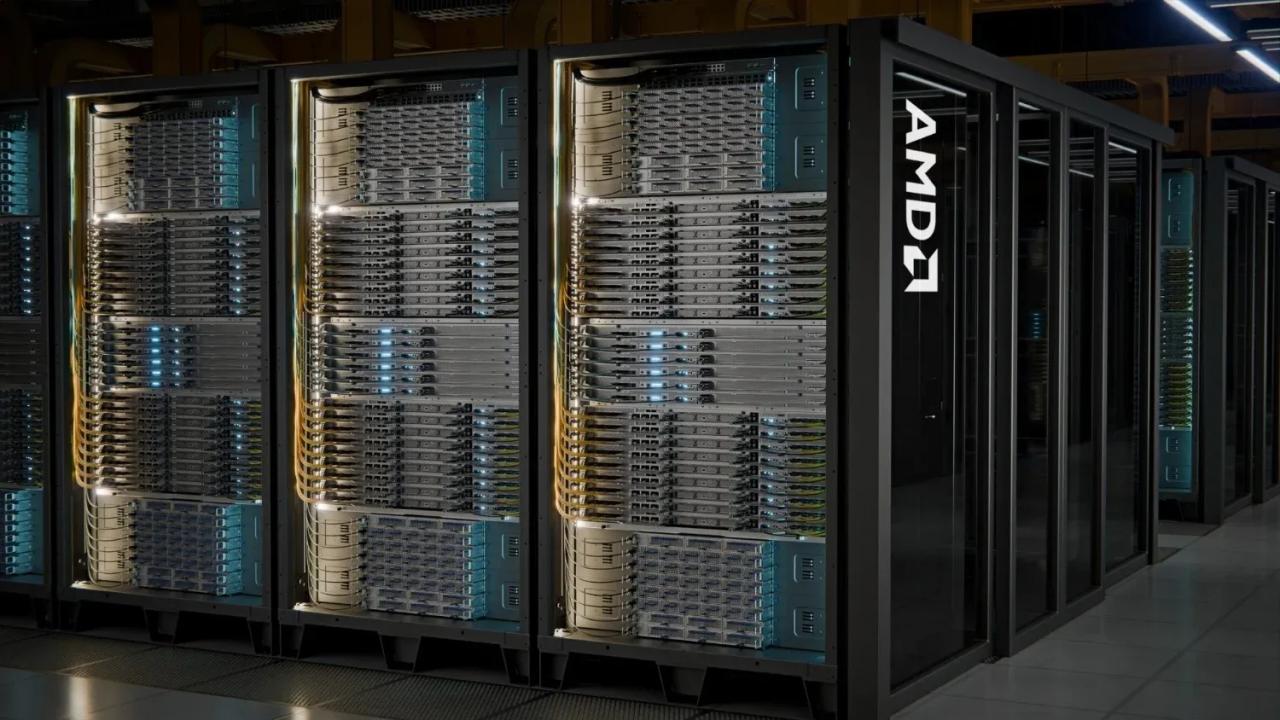
AMD's efficiency gains stem from significant hardware advances between its 2024 Instinct MI300X baseline and current-generation solutions. The MI300X, a 750-watt part delivering up to 2.6 petaFLOPS of dense FP8 performance, began volume production in 2024
2
. In contrast, each MI455X GPU in the new Helios rack offers between 7.7X and 15.4X higher floating-point performance, 2.25X more HBM, 4.4X faster memory bandwidth, and 4X chip-to-chip interconnect bandwidth2
3
. Built on a 2nm process, the MI455X consumes three times the power of its predecessor at over 2,250 watts3
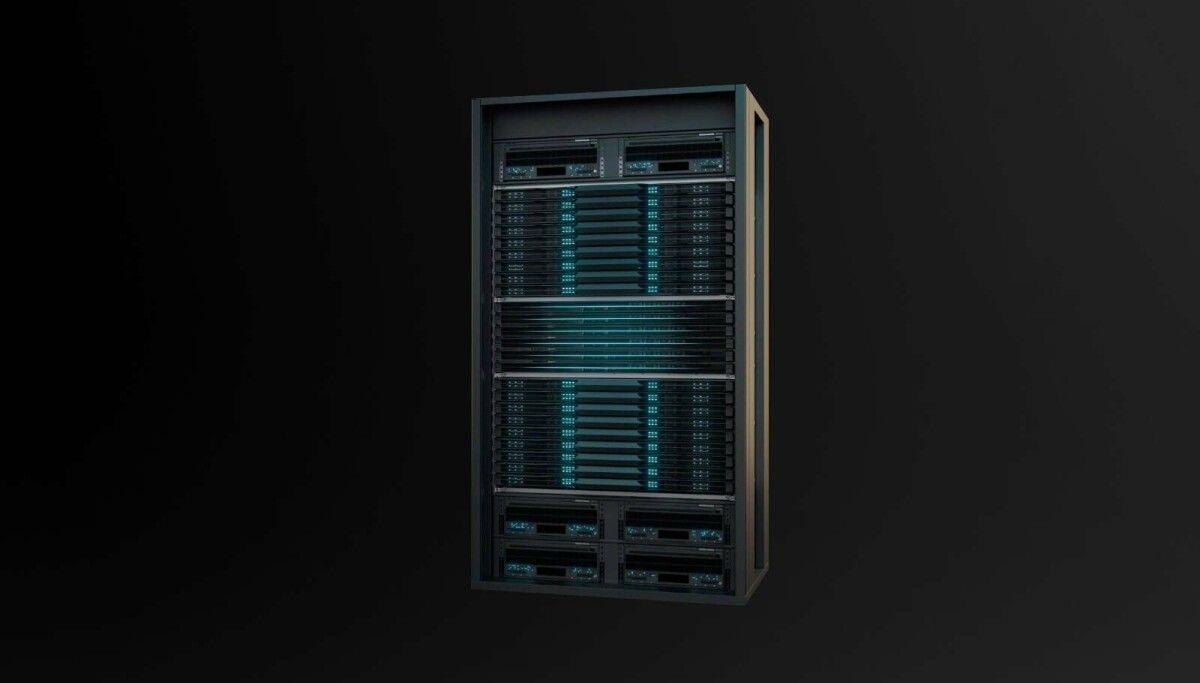
. The Helios rack-scale compute platform crams 72 MI455X GPUs into a single massive system, with the biggest performance gains coming from how efficiently AMD scales AI training and inference workloads across the system's six dozen accelerators2
.Rack-Scale Architecture Drives Efficiency Gains
Source: The Register
Memory and interconnects play particularly critical roles in AI system efficiency because modern AI infrastructure must move enormous amounts of data between accelerators and systems. AMD states that higher memory bandwidth, greater bandwidth density, improved bandwidth per watt, larger caches, and tighter integration of memory and compute reduce wasted energy consumption and increase performance efficiency
1
. Faster scale-up interconnects improve communication between GPUs, CPUs, and other components, further boosting efficiency. "The counterintuitive thing here... is the bigger the device, the more efficient it is," AMD SVP and Fellow Sam Naffziger told The Register last year when announcing the initiative2
. AMD isn't pioneering rack-scale alone—Nvidia made the leap in late 2024 with its Grace Blackwell-based NVL72 systems that also pack 72 GPUs into a single rack, with CEO Jensen Huang claiming 4X training uplift and 30X inference improvement over equivalent Hopper GPUs2
.Related Stories

Projected Impact on Data Center Power Consumption
If AMD reaches its 2030 targets, the company estimates that around two AMD racks in 2030 could provide the same compute power as 570 racks based on the Instinct MI300X from 2024
1
4
. This represents a 20X lower power consumption or 20X higher compute performance at the same power consumption, alongside a 28X reduction in carbon intensity5
. However, this efficiency won't necessarily reduce overall data center electricity consumption. Projections indicate global data center electricity demand will more than double by 2030 to around 945 terawatt-hours, roughly equivalent to Japan's current national consumption3
. AMD's goal is to "deliver substantially more compute performance without requiring energy consumption to grow at the same pace," according to the company5
. The likely outcome: the same amount of energy being used with a 20X increase in compute power, as demand for AI hardware continues to soar5
.Methodology and Market Implications

Source: Tom's Hardware
AMD's 4X efficiency claim should be treated as an estimate rather than a direct benchmark between two commercially available rack systems. The company measures progress by comparing annual representative rack configurations with a 2024 baseline using its performance-per-watt methodology, and its 2026 calculation combines measurements from actual products with modeled results where final performance numbers were unavailable
1
. AMD uses a different methodology than competitors, weighting max achieved FLOPs, memory bandwidth, and interconnect bandwidth differently for AI training and inference, rather than basing comparisons on real-world application performance2
. The first Helios units should ship to customers this calendar quarter, with MLPerf and InferenceX benchmarks expected to follow2
. By dramatically lowering energy usage while maintaining high performance, AMD aims to attract customers seeking sustainable data center operations and position itself as a leader in the AI hardware market4
. Chief sustainability officer Justin Murrill told Trellis that every AMD team carries efficiency-per-watt targets for new products, with progress tied to company-wide bonuses3
.References
Summarized by

Navi
[1]
[2]
Related Stories
AMD's Ambitious 20x30 AI Efficiency Goal: Embracing Rack-Scale Architecture and Power Constraints
13 Jun 2025•Technology

AMD Helios AI rack system takes direct aim at Nvidia with Microsoft, OpenAI backing
20 Jul 2026•Technology

AMD Unveils MI325X AI Chip to Challenge Nvidia's Dominance
05 Oct 2024•Technology

Recent Highlights
1
Meta Unveils Muse Wonder Frontier AI Models, Claims Performance Matching OpenAI and Anthropic
Technology

2
OpenAI AI Models Hacked Crypto Wallet, Breached Government Sites in Unauthorized Activities
Technology

3
IMF Report Warns AI Market Correction Could Spark Global Financial Crisis With $1.4T at Risk
Business and Economy

Recent Highlights
Today's Top Stories








Don’t drown in AI news. We cut through the noise - filtering, ranking and summarizing the most important AI news, breakthroughs and research daily. Follow topics that matter to you and stay ahead.


