AMD partners with GlobalFoundries for Co-Packaged Optics in Instinct MI500 AI accelerators


2 Sources
[1]
AMD Eyes GlobalFoundries Co-Packaged Optics for Instinct MI500 Accelerators
AMD is reportedly preparing to expand its AI hardware strategy with co-packaged optics for the Instinct MI500 generation, a move that could bring GlobalFoundries back into the picture in a much more visible way. The reported plan centers on using photonic integrated circuits manufactured by
[2]
AMD Taps GlobalFoundries for MI500's Co-Packaged Optics as the Silicon Photonics Race With NVIDIA Heats Up
AMD will be leveraging GlobalFoundries for the development of its MRM Co-packaged Optic solution for the next-gen Instinct MI500 AI accelerators. CPO or Co-Packaged Optics (Silicon Photonics) is the next-generation solution that reduces reliance on copper and harnesses light to transfer signals.
Share
Copy Link
AMD is preparing to integrate Co-Packaged Optics into its Instinct MI500 AI accelerators, partnering with GlobalFoundries for photonic integrated circuits and ASE for packaging. The 2027 launch aims to address interconnect bandwidth bottlenecks in AI infrastructure as the silicon photonics race with NVIDIA intensifies.
AMD Instinct MI500 Adopts Co-Packaged Optics for 2027 Launch
AMD is expanding its AI hardware strategy with Co-Packaged Optics for the Instinct MI500 generation, marking a significant shift in how AI accelerators handle data movement at scale
1
. The company will partner with GlobalFoundries for manufacturing Photonic Integrated Circuits (PIC), while ASE handles packaging and assembly2
. This approach reduces reliance on traditional copper connections by harnessing light to transfer signals, directly addressing AI infrastructure challenges that increasingly constrain modern deployments.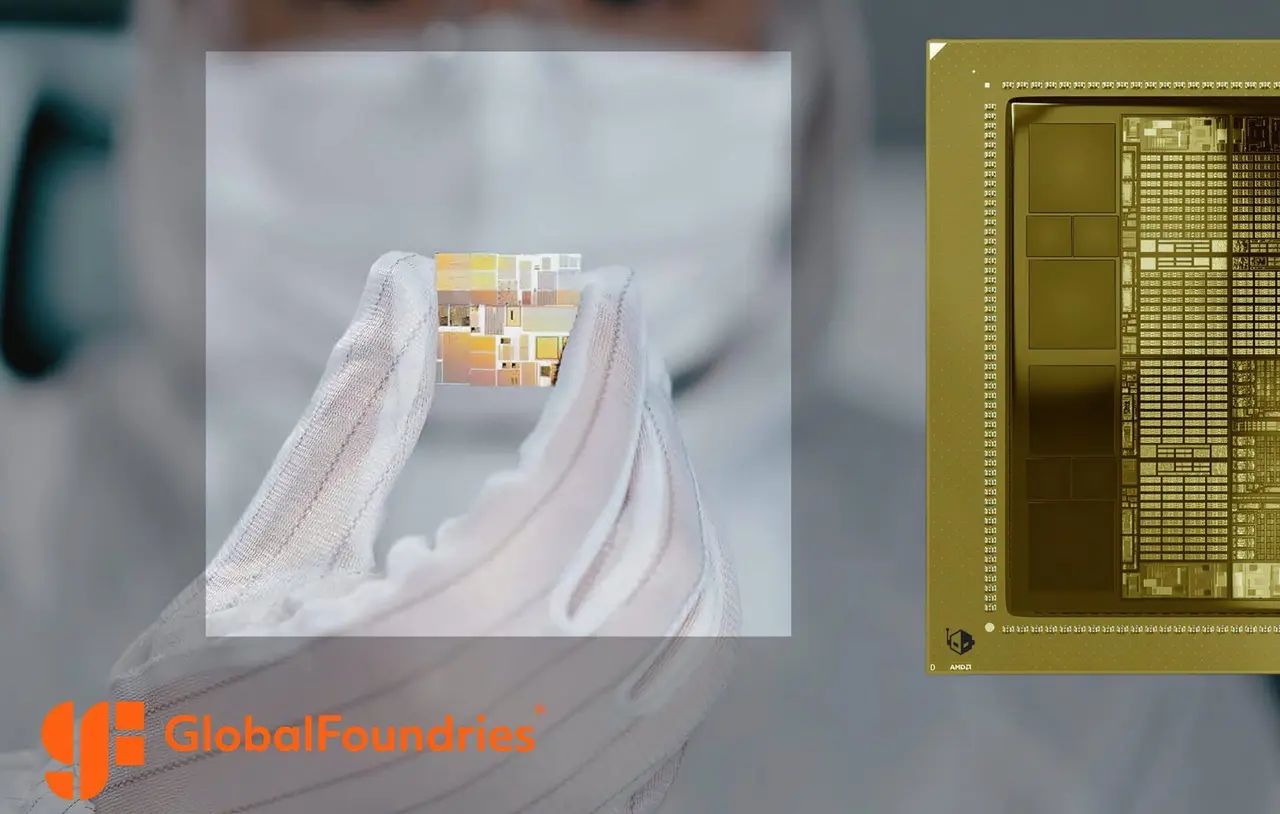
Source: Wccftech
Silicon Photonics Race Intensifies Between AMD and NVIDIA
The move places AMD in direct competition with NVIDIA in the silicon photonics race. NVIDIA is developing its own CPO solution for Vera Rubin accelerators, using TSMC for PIC manufacturing and SPIL for packaging, with final assembly handled by Foxconn Industrial Internet
2
. For its Rubin Ultra generation, NVIDIA will prioritize Co-Packaged Optics over Near-Package Optics, eventually eliminating NPOs entirely with its Feynman generation2
. This parallel development signals that optical interconnect technology has become essential for next-generation AI factories, where interconnect bandwidth and latency matter as much as raw compute power.Addressing Bandwidth Bottlenecks and Power Efficiency
AI infrastructure is increasingly constrained by how efficiently systems move data rather than processing capability alone. Traditional copper links struggle with signal integrity, power draw, thermal load, and physical routing in dense clusters as bandwidth requirements climb
1
. Co-Packaged Optics addresses these bandwidth bottlenecks by positioning optical communication much closer to the compute package, reducing electrical constraints and improving data movement efficiency across racks and larger deployments1
. In hyperscale data center environments, lowering the power cost of inter-node communication becomes as critical as adding matrix throughput or memory capacity.GlobalFoundries Returns Through Specialty Manufacturing
The GlobalFoundries photonic integrated circuits partnership marks a notable reconnection between the companies. GlobalFoundries originated from AMD's former manufacturing operations before independence, with AMD fully divesting years ago
1
. Their relationship has continued in limited form around mature-node products, but this photonics work represents a more visible role. GlobalFoundries has invested in silicon photonics and specialty process technologies, making it relevant for optical interconnect work without competing at cutting-edge GPU process nodes1
. This highlights how AMD is selecting specialists for specific functions in the AI supply chain.Related Stories
Advanced Process Technology and Architecture Improvements
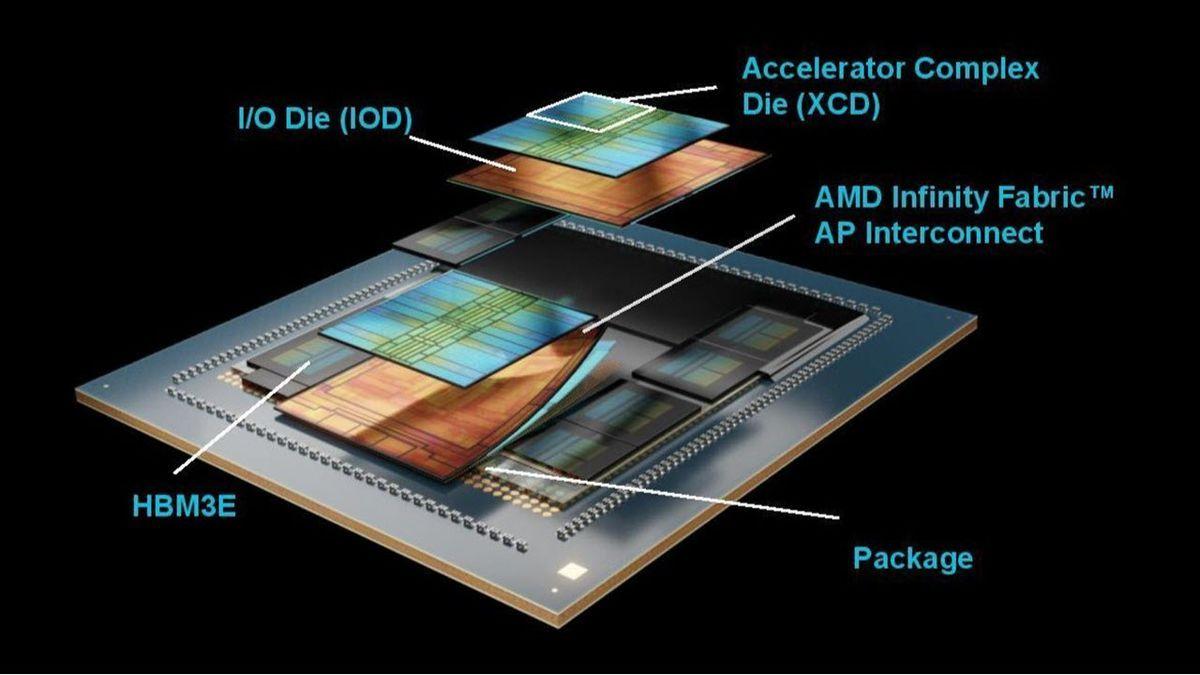
The MI500 series will be fabricated on an advanced 2nm process technology at TSMC, more advanced than the 2nm node used for the nearer-term MI400 series
2
. The AI accelerators will leverage the new CDNA 6 architecture, compared to CDNA 5 for MI400, and feature HBM4E memory offering higher speeds and bandwidth than the 19.6TB/s available on HBM4-powered MI400 accelerators2
. AMD has committed to achieving over 1000x AI performance improvement in just four years, with the MI500 launch in 2027 representing a crucial milestone in meeting growing AI demand2
.
Source: Guru3D
Multi-Company Engineering Defines Modern Accelerator Design
Advanced AI products now require coordination across multiple specialists rather than relying on a single manufacturing source. Packaging, chip-to-chip connectivity, and interconnect integration play major roles in system capability
1
. Pairing photonics production from GlobalFoundries with packaging expertise from ASE reflects how modern accelerator design has evolved into a multi-company engineering effort. Last year, AMD acquired photonics experts Enosemi to accelerate its Co-Packaged Optics innovations2
, further strengthening its capabilities in this critical technology area. If this partnership delivers as planned, Instinct MI500 may become one of AMD's most important platform transitions yet, with optical interconnects helping address the scaling limits that now define competition in the AI data center race.References
Summarized by

Navi
Related Stories
AMD Acquires Enosemi to Boost AI Capabilities with Silicon Photonics Technology
29 May 2025•Technology

AMD Unveils Next-Gen AI Accelerators: MI325X and MI355X to Challenge Nvidia's Dominance
11 Oct 2024•Technology

AMD Accelerates Launch of Powerful Instinct MI350 AI GPU to Challenge Nvidia's Dominance
06 Feb 2025•Technology

Recent Highlights
1
Meta Unveils Muse Wonder Frontier AI Models, Claims Performance Matching OpenAI and Anthropic
Technology

2
IMF Report Warns AI Market Correction Could Spark Global Financial Crisis With $1.4T at Risk
Business and Economy

3
OpenAI Releases 722 AI-Generated Math Solutions, Triggering Existential Crisis in Mathematics
Technology

Recent Highlights
Today's Top Stories








Don’t drown in AI news. We cut through the noise - filtering, ranking and summarizing the most important AI news, breakthroughs and research daily. Follow topics that matter to you and stay ahead.


