AMD Plans Massive AI Chip Supply Ramp in 2027 as Demand Outpaces Production Capacity


9 Sources
[1]
AMD plans to substantially increase supply in 2027, CEO says
TAIPEI, Oct 6 (Reuters) - AMD (AMD.O), opens new tab plans to substantially increase chip supply in 2027 as the US chipmaker races to meet booming demand from artificial intelligence, CEO Lisa Su said on Tuesday. AMD, Nvidia's (NVDA.O), opens new tab closest rival in AI graphics processors, has
[2]
AMD vows to massively increase AI chip supply in 2027 as demand surges
Serving tech enthusiasts for over 25 years. TechSpot means tech analysis and advice you can trust. In brief: AMD is preparing to ramp up chip production in 2027 in order to meet growing AI demand. The chipmaker increased its supply over the course of this year and plans to do the same next year,
[3]
AMD's chief says demand is outrunning supply, and that AI should police itself
Lisa Su told reporters in Taipei that AMD will substantially increase supply in 2027 and could use more, called the Trump administration's Super Intelligence Force an important step, and repeated a pledge to put more than $10B into Taiwan AMD's Lisa Su said chip demand is running ahead of supply
[4]
AMD CEO Lisa Su pledges tens of billions for AI chip supply
AMD managed to expand production over the course of 2026, Su said, yet customer demand continued to outrun what the company could deliver. The company plans to increase supply further in 2027. "We can definitely use more," she said. That pressure has led AMD to lengthen the forecasting timeframe
[5]
AMD CEO Lisa Su plans major AI chip supply ramp in 2027
"We've been able to increase our supply as we've gone through 2026, and we're going to substantially increase our supply in 2027, but we can definitely use more," Su told reporters in Taipei. Su, on her third trip to Taiwan this year, touched down Tuesday and told reporters she had held meetings
[6]

Global Market: AMD to increase AI chip supply substantially in 2027 to meet rising demand
AMD plans to substantially increase chip supplies in 2027 as demand for AI processors accelerates. CEO Lisa Su is working with key suppliers in Taiwan and South Korea to expand manufacturing and secure advanced wafer and memory capacity. Advanced Micro Devices plans to substantially increase chip
[7]

AMD's Monster 2026 Rally Gets Fresh Fuel From Lisa Su's 2027 AI Supply Push - Advanced Micro Devices (NAS
Advanced Micro Devices, Inc. (NASDAQ:AMD) is positioning for another leg of AI-driven growth as it expands chip supply, strengthens its server CPU business and competes more directly with NVIDIA Corp. (NASDAQ:NVDA) across data center workloads. AMD stock has surged more than 200% in 2026, pushing
[8]
AMD chip supply increase: AMD plans to substantially increase supply in 2027, CEO says
AMD, Nvidia's closest rival in AI graphics processors, has been rapidly expanding its AI chip business, with its market value recently topping $1 trillion amid an AI-driven rally. AMD plans to substantially increase chip supply in 2027 as the US chipmaker races to meet booming demand from
[9]

AMD plans to boost chip supply in 2027 to meet AI demand By Investing.com
Investing.com -- Advanced Micro Devices plans to increase chip supply in 2027 as the company works to meet growing demand from artificial intelligence applications, CEO Lisa Su said on Tuesday. Su told reporters in Taipei that AMD has increased its supply throughout 2026 and will substantially
Share
Copy Link
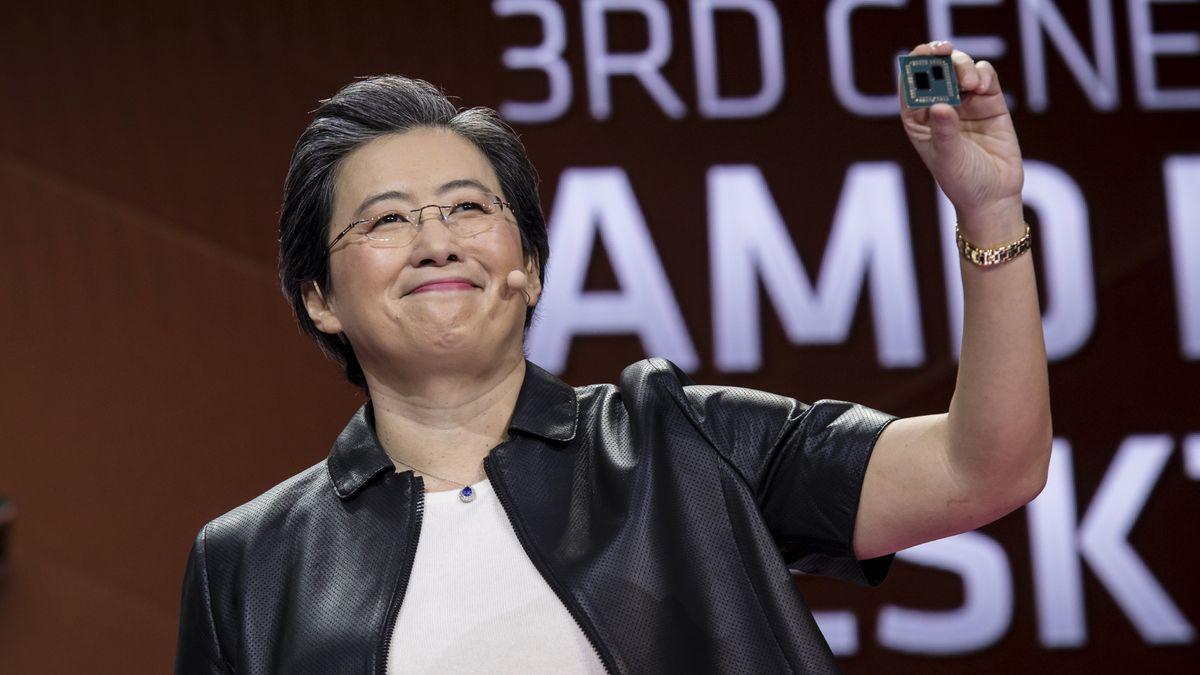
AMD CEO Lisa Su announced plans to substantially increase AI chip supply in 2027 during her Taiwan visit, meeting with TSMC and Foxconn to secure production capacity. The chipmaker is investing over $10 billion in Taiwan's supply chain as booming AI demand continues to outrun current manufacturing capabilities.

AMD Commits to Major Supply Chain Expansion
AMD CEO Lisa Su announced plans to substantially increase AI chip supply in 2027 as the chipmaker struggles to meet booming AI demand that continues to outpace production capabilities
1
. Speaking to reporters in Taipei on Tuesday, Su revealed that while AMD managed to expand production throughout 2026, customer demand is still outrunning what the company can deliver4
. The company, which recently surpassed $1 trillion in market value, is now planning three to five years ahead instead of the previous one-to-two-year forecasting window to give suppliers enough lead time to align their expansions1
.Strategic Meetings with Taiwan Supply Chain Partners
The primary purpose of Lisa Su's third Taiwan visit this year was to ensure AMD's supply chain could ramp up CPU and GPU production to meet growing AI demand
1
. Su held meetings with key partners including Acer, Asus, Foxconn, and Quanta, with a scheduled visit to TSMC in Hsinchu5
. The chipmaker has pledged more than $10 billion to Taiwan, covering packaging capacity through ASE and SPIL and supply for the Helios rack platform3
. Su emphasized that Taiwan remains critical to AMD and to the semiconductor supply chain as the company seeks additional advanced wafer capacity3
.Memory Supply Constraints Drive Strategic Planning
AMD is working closely with memory chipmakers to secure sufficient supplies for AI server applications and standard memory for PC and CPU products
1
. Su acknowledged that the broader memory market remains tight and said AMD is engaged with both suppliers and customers to map out high-bandwidth memory requirements4
. Following her Taiwan meetings, Su planned to visit South Korea to meet with memory giants Samsung and SK Hynix1
. The AI-driven supply chain pressures have forced AMD to extend its forecasting timeframe significantly to ensure partners can scale production for AI workloads.Related Stories


Market Performance Reflects AI Hardware Ecosystem Growth
AMD's stock surged 3.98% following the announcement, with shares trading at $656.84, representing a nearly 194% year-to-date increase
2
. The company, Nvidia's closest rival in AI graphics processors, has been rapidly expanding its AI chip business amid an AI-driven rally that pushed its market value past $1 trillion1
. AMD is also acquiring Fei-Fei Li's World Labs for $8.2 billion, a deal still awaiting regulatory clearance3
. When asked about TSMC's potential investment in Texas, Su indicated AMD would need additional advanced wafer capacity to meet strong demand over the next several years1
.AI Safety Through Industry Collaboration
Lisa Su called AI "incredibly good for the world" but urged companies to remain mindful of risks and work together on AI safety
1
. She emphasized that coordination among leading technology companies would be important as AI and superintelligence advance, describing the Trump administration's Super Intelligence Force as an important step forward3
. Su advocated for an ecosystem approach to self-regulation rather than naming specific regulators3
. This stance contrasts with Europe's regulatory approach, where the European Commission has been able to inspect models, restrict market access, and fine providers 3% of global turnover since August 2 under the EU AI Act3
. Spain's prime minister Pedro Sanchez has questioned whether self-regulation works, suggesting that industry safety warnings may partly aim to attract investors3
.References
Summarized by

Navi
Related Stories
Recent Highlights



Recent Highlights
Today's Top Stories



Don’t drown in AI news. We cut through the noise - filtering, ranking and summarizing the most important AI news, breakthroughs and research daily. Follow topics that matter to you and stay ahead.


