3 Sources
[1]
Andreessen, Horowitz Boost AI Super PAC Cash to Over $50 Million
Venture capitalists Marc Andreessen and Ben Horowitz poured $25 million into a pro-artificial intelligence super political action committee, boosting the industry's war chest ahead of the November midterm elections. The AI-focused Leading the Future super PAC now has over $51 million on hand thanks to the donations from the Andreessen Horowitz co-founders, according to its latest filings with the Federal Election Commission released Wednesday. The haul comes as Silicon Valley is spending more than ever to fend off a growing patchwork of state rules that the industry says could hamper its ability to quickly develop the AI technologies reshaping the US economy. The debate over AI's impact on jobs, energy prices and society has emerged as a flashpoint for voters in an an election cycle focused heavily on affordability and other economic concerns. Leading the Future's cash pile allows the industry to boost political candidates in both parties it sees as friendly to their cause and oppose potential antagonists. The group has already spent over $13 million on primary elections across the US, including in Illinois, Texas, Georgia and New York. The group's Democratic arm has spent over $2 million in New York's 12th district alone to oppose congressional candidate Alex Bores, a state legislator who helped pass legislation creating new safety guardrails around the technology. Leading the Future has also committed to spending $5 million to boost pro-AI candidate Byron Donalds, a Republican, in the Florida governor's race. So far, the super PAC's track record has been mixed. Democrat Jesse Jackson Jr. lost his Congressional primary in Illinois after Leading the Future spent over $1.4 million boosting him. Four candidates backed by the group's Democratic and Republican arms have won their primaries so far. Leading the Future says it has $140 million total in contributions and commitments, including money secured by its nonprofit advocacy arm, Build American AI. The super PAC ended last year with over $39 million cash on hand.
[2]
AI influence network takes shape as cash piles up
Leading the Future -- a pro-AI industry super PAC backed by tech execs and investors pushing rapid AI development and lighter regulation -- announced it and its affiliated groups have raised more than $140 million to date. * In Q1, LTF alone raised $25 million, all from venture capital firm a16z and its co-founders Marc Andreesen and Ben Horowitz. * LTF reported roughly $51 million cash on hand in its latest filing. Zoom in: LTF routed $13 million to affiliated groups and super PACs in Q1: * $5 million each to American Mission PAC and Think Big PAC. * $3 million to American Mission Florida, a state-level political committee. Friction point: Candidates on both sides of the aisle are feeling the heat from both well-funded AI groups and voters who are increasingly concerned about AI risks. * "Americans are worried about rising costs, harms to children, threats to jobs, the spread of deepfakes, and the concentration of power in a handful of technology companies," advocacy organizations wrote on Wednesday to a group of Democrats, urging them to reject support from Leading the Future. The other side: LTF leaders Zac Moffatt and Josh Vlasto are framing their positions on AI -- rapid development and light regulation -- as crucial in the race against China and for economic security. * "We will continue to evaluate and support candidates based on their commitment to advancing a national regulatory framework on AI that creates American jobs and protects the safety of users, families, and communities," they said in a statement. * The group has had success in various primaries so far, and said it plans to expand to more races in the coming months. Public First Action -- a bipartisan 501(c)(4) nonprofit that advocates for AI safety and transparency -- has more than $50 million cash on hand, according to former Rep. Brad Carson (D-Okla.), one of its leaders. * Anthropic is the group's sole disclosed donor, having given $20 million to the nonprofit earlier this year. Public First Action is not required to publicly report its donors under federal election law. Public First Action is tied to three super PACs: The Republican-focused Defending Our Values PAC closed out Q1 with about $1.3 million on hand. * The group, which spent heavily in House primaries in Texas, also dropped roughly $250,000 backing Sen. Pete Ricketts (R-Neb.), who faces challengers ahead of next month's primary. * Defending Our Values PAC reported receiving contributions from a few Anthropic and Adobe employees, ranging from $1,000 to $100,000. Jobs and Democracy PAC, which backs Democrats, reported about $1 million cash on hand. * The group has already spent aggressively in a number of House primaries, including roughly $1.6 million backing Rep. Valerie Foushee (D-N.C.) and nearly $470,000 supporting Alex Bores in New York. The bipartisan Public First PAC reported just under $500,000, per its Q1 FEC filing. * Public First PAC sent $740,000 to Jobs and Democracy PAC and $300,000 to Defending Our Values PAC. What we're watching: Innovation Council Action, a group backed by White House adviser David Sacks, has plans to use a scorecard assessing how supportive lawmakers are of President Trump's AI agenda to determine who to support and oppose. * The group is registered as a 501(c)(4) and has different filing requirements than a super PAC, but will be a key player in the elections. The bottom line: The filings show how AI money is splitting between groups pushing rapid development and those emphasizing transparency and safety.
[3]
Marc Andreessen, Ben Horowitz boost AI Super PAC to over $50 million
Venture capitalists Marc Andreessen and Ben Horowitz have injected $25 million into a pro-AI super PAC, bolstering its war chest to over $51 million. Leading the Future's cash pile allows the industry to boost political candidates in both parties it sees as friendly to their cause and oppose potential antagonists. Venture capitalists Marc Andreessen and Ben Horowitz poured $25 million into a pro-artificial intelligence super political action committee, boosting the industry's war chest ahead of the November midterm elections. The AI-focused Leading the Future super PAC now has over $51 million on hand thanks to the donations from the Andreessen Horowitz cofounders, according to its latest filings with the Federal Election Commission released Wednesday. The haul comes as Silicon Valley is spending more than ever to fend off a growing patchwork of state rules that the industry says could hamper its ability to quickly develop the AI technologies reshaping the US economy. The debate over AI's impact on jobs, energy prices and society has emerged as a flashpoint for voters in an election cycle focused heavily on affordability and other economic concerns. Leading the Future's cash pile allows the industry to boost political candidates in both parties it sees as friendly to their cause and oppose potential antagonists. The group has already spent over $13 million on primary elections across the US, including in Illinois, Texas, Georgia and New York. The group's Democratic arm has spent over $2 million in New York's 12th district alone to oppose congressional candidate Alex Bores, a state legislator who helped pass legislation creating new safety guardrails around the technology. Leading the Future has also committed to spending $5 million to boost pro-AI candidate Byron Donalds, a Republican, in the Florida governor's race. So far, the super PAC's track record has been mixed. Democrat Jesse Jackson Jr. lost his Congressional primary in Illinois after Leading the Future spent over $1.4 million boosting him. Four candidates backed by the group's Democratic and Republican arms have won their primaries so far. Leading the Future says it has $140 million total in contributions and commitments, including money secured by its nonprofit advocacy arm, Build American AI. The super PAC ended last year with over $39 million cash on hand. A separate AI-focused super PAC, Public First, and its affiliated groups disclosed over $6 million in donations so far this year. The total excludes the contributions Public First made to its affiliates. The groups, including a nonprofit advocacy organisation that isn't required to disclose financial information to the FEC, raised a total of $50 million to date, according to a Public First Action spokesperson. The super PAC advocates for tougher regulation of the AI industry and is backed by $20 million in funding from Anthropic PBC.
Share
Copy Link
Venture capitalists Marc Andreessen and Ben Horowitz injected $25 million into Leading the Future, a pro-AI Super PAC that now holds over $51 million. The group advocates for rapid AI development and lighter regulation, spending heavily to support political candidates across both parties. Meanwhile, rival groups like Anthropic-backed Public First Action push for stricter AI regulations and transparency.
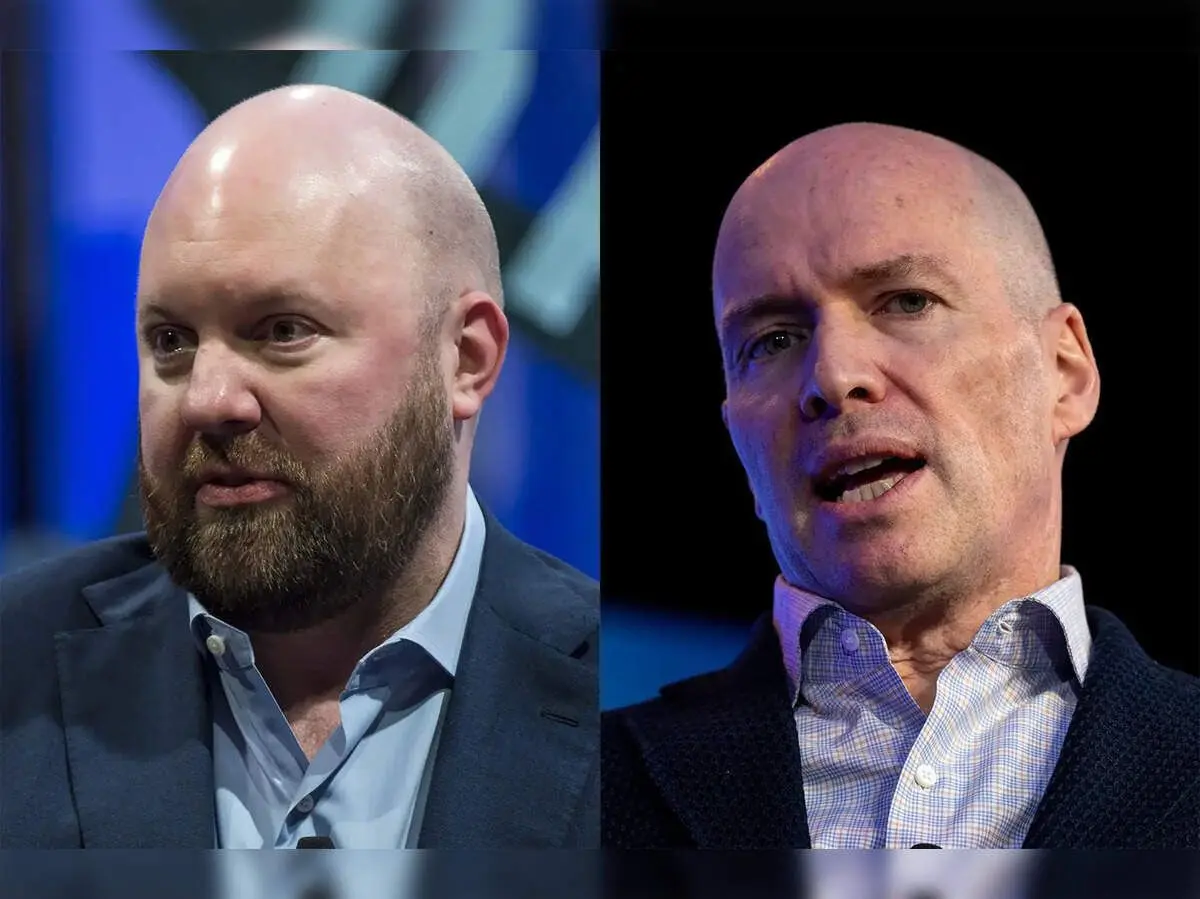
Venture capitalists Marc Andreessen and Ben Horowitz have poured $25 million into Leading the Future, a pro-artificial intelligence political action committee designed to shape the future of AI regulation in the United States
1
. The AI Super PAC now holds over $51 million cash on hand, according to its latest Federal Election Commission filings released Wednesday1
. All $25 million raised in Q1 came from venture capital firm a16z and its co-founders, underscoring how tech executives and investors are mobilizing financial efforts to influence AI policy ahead of the November midterm elections2
.
Source: ET
Leading the Future claims $140 million total in contributions and commitments, including money secured by its nonprofit advocacy arm, Build American AI
1
3
. The massive war chest arrives as Silicon Valley confronts a growing patchwork of state rules that the industry argues could hamper its ability to quickly develop AI technologies reshaping the US economy1
.
Source: Axios
The group has already deployed over $13 million on primary elections across the US, including races in Illinois, Texas, Georgia and New York
1
. In Q1 alone, Leading the Future routed $13 million to affiliated groups and super PACs, including $5 million each to American Mission PAC and Think Big PAC, plus $3 million to American Mission Florida, a state-level political committee2
.The AI Super PAC's strategy centers on supporting political candidates in both parties who advocate for rapid AI development with lighter regulation. Leading the Future has committed to spending $5 million to boost pro-AI candidate Byron Donalds, a Republican, in the Florida governor's race
1
. Conversely, the group's Democratic arm spent over $2 million in New York's 12th district alone to oppose congressional candidate Alex Bores, a state legislator who helped pass legislation creating new safety guardrails around the technology1
.The super PAC's track record has been mixed so far. Democrat Jesse Jackson Jr. lost his Congressional primary in Illinois after Leading the Future spent over $1.4 million boosting him
1
. Four candidates backed by the group's Democratic and Republican arms have won their primaries3
.Candidates on both sides of the aisle are feeling pressure from well-funded AI groups and voters increasingly concerned about AI risks. Advocacy organizations wrote to a group of Democrats urging them to reject support from Leading the Future, stating that "Americans are worried about rising costs, harms to children, threats to jobs, the spread of deepfakes, and the concentration of power in a handful of technology companies"
2
. LTF leaders Zac Moffatt and Josh Vlasto frame their positions on rapid development and light AI regulation as crucial in the race against China and for economic security2
.Related Stories
Public First Action, a bipartisan 501(c)(4) nonprofit advocating for AI safety and transparency, has more than $50 million cash on hand
2
. Anthropic is the group's sole disclosed donor, having given $20 million to the nonprofit earlier this year2
3
. Public First Action is tied to three super PACs: the Republican-focused Defending Our Values PAC with about $1.3 million on hand, Jobs and Democracy PAC backing Democrats with about $1 million, and the bipartisan Public First PAC with just under $500,0002
.The debate over AI's impact on jobs, energy prices and society has emerged as a flashpoint for voters in an election cycle focused heavily on affordability and other economic concerns
1
. Innovation Council Action, a group backed by White House adviser David Sacks, plans to use a scorecard assessing how supportive lawmakers are of President Trump's AI agenda to determine who to support and oppose2
. The filings show how donations are splitting between groups pushing rapid development and those emphasizing transparency and safety, setting up a high-stakes battle to shape the regulatory future of artificial intelligence.Summarized by
Navi
31 Jan 2026•Policy and Regulation

26 Aug 2025•Policy and Regulation

30 Mar 2026•Policy and Regulation

1
Science and Research

2
Technology

3
Technology