43 Sources
[1]
Anthropic co-founder confirms the company briefed the Trump administration on Mythos | TechCrunch
Jack Clark, one of Anthropic's co-founders who also serves as Head of Public Benefit for Anthropic PBC, confirmed that the AI company had briefed the Trump administration about its new Mythos model. The model, announced last week, is so dangerous that it's not being released to the public, largely due to its alleged powerful cybersecurity capabilities. In an interview at the Semafor World Economy summit this week, Clark explained why the company was still engaged with the U.S. government while simultaneously suing them. This March, Anthropic filed a lawsuit against Trump's Department of Defense (DOD) after the agency labeled the company a supply chain risk. Anthropic had clashed with the Pentagon over whether the military should have unrestricted access to Anthropic's AI systems for use cases that included mass surveillance of Americans and fully autonomous weapons. (OpenAI ended up winning the deal instead.) At the conference, Clark downplayed the administration's labeling of its business as supply chain risk, saying it was merely a "narrow contracting dispute" and that Anthropic didn't want it to get in the way of the fact that the company cares about national security. "Our position is the government has to know about this stuff, and we have to find new ways for the government to partner with a private sector that is making things that are truly revolutionizing the economy, but are going to have aspects to them which hit National Security, equities, and other ones," said Clark. "So absolutely, we talked to them about Mythos, and we'll talk to them about the next models as well." His confirmation comes after reports last week that Trump officials were encouraging banks to test Mythos, including JPMorgan Chase, Goldman Sachs, Citigroup, Bank of America, and Morgan Stanley. Clark also addressed other aspects of AI's impact on society during the interview, including things like unemployment and higher education. Previously, Anthropic CEO Dario Amodei has warned that AI's advances could bring unemployment to Depression-era-like numbers, but Clark slightly disagrees. He explained in the interview that Amodei believes that AI will get much more powerful than people expect very quickly, so he's using that as the basis of his estimations. Clark, who leads a team of economists at Anthropic, said that the company is so far only seeing "some potential weakness in early graduate employment" across select industries. He noted that Anthropic is ready in case there are major employment shifts, however. Pushed to say what majors college students today should be pursuing or avoiding, as a result of AI's impacts, Clark would only broadly suggest that the most important majors are those that "involve synthesis across a whole variety of subjects and analytical thinking about that." "That's because what AI allows us to do is it allows you to have access to sort of an arbitrary amount of subject matter experts in different domains," Clark said. "But the really important thing is knowing the right questions to ask and having intuitions about what would be interesting if you collided different insights from many different disciplines."
[2]
Anthropic's new cybersecurity model could get it back in the government's good graces
The Trump administration has spent nearly two months fighting with AI company Anthropic. It's dubbed the company a "RADICAL LEFT, WOKE COMPANY" full of "Leftwing nut jobs" and a menace to national security. But some of the ice may reportedly be melting between the two, thanks to Anthropic's buzzy new cybersecurity-focused model: Claude Mythos Preview. Anthropic's relationship with the Pentagon soured quickly in late February after the company refused to budge on two red lines: using its technology for domestic mass surveillance or lethal fully autonomous weapons with no human in the loop. Anthropic's tech has in the past been used heavily by the DoD and, it was the first company to have its models cleared to operate on classified military networks. The stalemate led to public insults on social media, Anthropic being categorized as a "supply chain risk," the company filing a lawsuit fighting that designation, and a temporary injunction halting its ban. Anthropic has recently attempted to get back in the US government's good graces, at least in some capacity, with Mythos Preview. And judging from reports that Anthropic CEO Dario Amodei attended a meeting at the White House on Friday, it may be working. (Anthropic did not provide a comment.) Mythos Preview was announced with major fanfare about its capabilities -- including the ability to find security issues in virtually every large web browser and operating system. Anthropic says the model is its most powerful yet, and it's currently only available for private access. It's being marketed as a way to flag high-stakes vulnerabilities in some of the most-used internet infrastructure we have, so that companies like Apple, Nvidia, and JPMorgan Chase -- which have already signed on to use it -- can plug them up before bad actors can exploit them. The release of Mythos Preview has already reportedly sparked emergency meetings between US bank leaders and Federal Reserve Chairman Jerome Powell. The Trump administration, too, seems to be taking notice. In a release about Mythos Preview, Anthropic wrote that it had already been in "ongoing discussions with US government officials about Claude Mythos Preview and its offensive and defensive cyber capabilities." Earlier this month, when The Verge asked for details, Dianne Penn, a head of product management at Anthropic, confirmed that the company had "briefed senior officials in the US government about Mythos and what it can do," and that the company is still "committed to working closely with all different levels of government." The company declined to specify who, exactly, had been briefed. Anthropic also reportedly recently hired Ballard Partners, a lobbying firm linked to Trump, which has inspired more reports that a deal between Anthropic and the White House may be in the works. On Friday, Axios reported that Amodei was scheduled for a meeting with White House chief of staff Susie Wiles later that day. Describing the reasons for the meeting, a source familiar with the negotiations said "it would be grossly irresponsible for the U.S. government to deprive itself of the technological leaps that the new model presents" and that "it would be a gift to China." The outlet also reported that "some parts of the U.S. intelligence community, plus the Cybersecurity and Infrastructure Security Agency (CISA, part of Homeland Security)" are testing Mythos Preview, and that other departments and agencies are interested. If Amodei did attend the meeting and it opens up conversations about further integrating Anthropic's Claude into government usage across agencies, it's possible that the DoD could shift its views on Claude accordingly as well. It would be an anticlimactic end to a bitter fight over national security -- but hardly the first time the administration has suddenly reversed course.
[3]
Anthropic's Amodei to Meet Wiles With US Seeking Mythos Access
Anthropic PBC Chief Executive Officer Dario Amodei is scheduled to meet on Friday with White House Chief of Staff Susie Wiles, according to people familiar with the matter, as the Trump administration seeks wider US government access to the company's powerful new Mythos artificial intelligence model. The discussions could set the stage for major federal agencies to eventually start using Mythos. Gregory Barbaccia, federal chief information officer of the White House Office of Management and Budget, said in an email Tuesday that OMB is setting up protections that could allow their agencies to begin using the closely guarded AI tool. Top administration officials have urged Wall Street leaders to use Mythos to identify cybersecurity weaknesses within their systems and fix them. Banks including JPMorgan Chase & Co., Goldman Sachs Group Inc. and Citigroup Inc. have been testing the technology internally to fund vulnerabilities. The people who described Amodei's plan to meet with Wiles spoke on condition of anonymity, owing to the sensitivity of the matter, and didn't specify what would be on the agenda. Spokespeople for Anthropic and the White House declined to comment directly on the meeting, reported earlier Friday by Axios. A White House official, who also spoke on condition of anonymity, declined to confirm the meeting but said that the administration is continuing to work with leading American AI labs to ensure that their models secure critical security gaps in software programs. The official added that any new technology would require a testing period to ensure its safety and reliability. Neither Anthropic nor the government has said what, if any, federal agencies have gotten early access to Mythos. The US Treasury has been seeking to gain access to the tool in order to begin hunting for vulnerabilities. The Trump administration's efforts to gain access to Mythos highlight the growing concerns surrounding the new model's knack for detecting digital vulnerabilities. Anthropic has only provided Mythos to a limited group of technology companies, financial firms and others, over fears that hackers could weaponize its capabilities to target critical infrastructure, including the banking system. Friday's discussions between Amodei and Wiles are taking place as senior US officials seek to get a handle on Mythos and the cybersecurity risks it could pose. Trump administration officials remain interested in Anthropic's AI tools despite a bitter public feud with the company over the safeguards it demanded on US military use of its technology. That dispute led the Pentagon to declare the firm and its products a threat to the supply chain, a designation that would bar it from defense work and that Anthropic is now suing to overturn. Last month, the company won a court order blocking a ban on government use of the technology, after Anthropic argued the move could cost it billions of dollars in lost revenue. Within Anthropic, company leaders became worried that the new Mythos model could be a national security risk after testers were able to use it to turn up the types of critical bugs that it would normally take the world's best hackers to uncover. Those concerns prompted the company's limited release of the model. Before its limited release of Mythos, Anthropic briefed senior officials across the US government on the model's full capabilities, including both its offensive and defensive cyber applications, according to a company official who spoke on condition that they not be identified discussing the talks with government. The talks included staff at the Cybersecurity and Infrastructure Security Agency and the Center for AI Standards and Innovation, among others, the company official said, and Anthropic has continued to work with government on security issues arising from the model. Signaling the seriousness of US government concerns, Treasury Secretary Scott Bessent and Federal Reserve Chair Jerome Powell convened Wall Street leaders for discussions in Washington on the day that Anthropic publicly disclosed Mythos' existence to urge financial institutions to use the model to find weaknesses in their own systems. At this week's spring meetings of the International Monetary Fund and the World Bank in Washington, global financiers expressed concern that Mythos or similar technologies could be used to breach traditional cyber defenses, leaving the financial system open to untold threats.
[4]
Anthropic CEO Dario Amodei arrives at White House for talks
WASHINGTON, April 17 (Reuters) - Anthropic CEO Dario Amodei arrived at the White House for talks on Friday amid the artificial intelligence startup's dispute with the Pentagon, according to a Reuters witness. Amodei's visit comes as U.S. President Donald Trump's administration acknowledges the advanced capabilities of Anthropic's new AI model, Mythos, for its sophisticated cybersecurity defense breaching abilities. Announced on April 7, Mythos is being deployed as part of Anthropic's "Project Glasswing," a controlled initiative under which select organizations are permitted to use the unreleased Claude Mythos Preview model for defensive cybersecurity purposes. A White House official said earlier on Friday that the Trump administration continues to engage across government and industry, including working with frontier AI labs to ensure their models help secure software vulnerabilities. Any new technology that could be used by the government would require a period of evaluation for security, the official added. Reporting by Jessica Koscielniak and Bo Erickson; Writing by Doina Chiacu; Editing by Caitlin Webber Our Standards: The Thomson Reuters Trust Principles., opens new tab
[5]
Anthropic in talks to give US government access to its Mythos model
Anthropic is in discussions with the US government about granting access to its new Mythos model to agencies including the Treasury despite federal lawsuits over whether the AI lab is a national security threat. US officials have been pushing the White House to test the new model, which Anthropic has said has a much greater ability to identify and exploit cyber security vulnerabilities. Several agencies have been in discussions with Anthropic about access since the release of Claude Mythos Preview, and the White House indicated in an email this week it was considering these requests, said people familiar with the matter. Anthropic released the new model to a small group of tech companies earlier this month, but delayed a public launch to prevent its cyber security capabilities being used by bad actors. The talks around access to Mythos come despite federal lawsuits over the administration's efforts to bar Anthropic from working for the federal government and brand it a supply-chain risk after its clash with the Pentagon over limits on the military's use of AI. The prospect of the White House allowing US agencies to use Mythos suggests the need to harness the most advanced AI systems may override the concerns raised by defence secretary Pete Hegseth about the lab. An administration official told the FT that the White House "continues to proactively engage across government and industry to protect the United States and Americans" and that "this includes working with frontier AI labs to ensure their models help secure critical software vulnerabilities". "Any new technology that would potentially be used or deployed by the federal government requires a technical period of evaluation for fidelity and security," they added. "The collective effort of all involved will ultimately benefit industry and our country as a whole." Treasury secretary Scott Bessent last week summoned the leaders of some of the largest US banks to discuss the cyber risks posed by the model. The government's push to assess such risks is being co-ordinated by Sean Cairncross at the White House's Office of the National Cyber Director. Several chief information officers across the US government have asked for access to Mythos, said a person familiar with the matter, but have yet to receive authorisation from the White House. Those requests came after President Donald Trump in February ordered all federal agencies to stop using Anthropic's products. "We don't need it, we don't want it, and will not do business with them again!" the president said at the time. Anthropic clashed with the White House after it tried to impose limits on the military's use of its technology. The start-up sued to challenge the administration's moves to cut it from government supply chains and label it a national security risk. It won a preliminary injunction from a California court last month which allowed it to continue working with the government. In a parallel case, a federal appeals court in Washington denied Anthropic's emergency request to pause its designation, but expedited further hearings on the matter. Asked at the Semafor World Economy forum on Wednesday whether agencies would eventually get access to Mythos, Cairncross said: "Sure . . . we're working closely with the large language model companies, we're working closely with the tech sector, working closely with industry to make sure that we do this in a responsible fashion." He emphasised the government was in "close collaboration" with industry and said advanced models have a "tremendous capacity on the defensive side to help fix vulnerabilities that were previously very hard to do". Anthropic has said it will hold off on a wider release of the model until it is reassured that it is safe and cannot be abused by bad actors. The company also has a finite amount of computing power and has suffered outages in recent weeks. Multiple people with knowledge of the matter suggested Anthropic was holding back from a wider release until it could reliably serve the model to customers.
[6]
White House chief of staff to meet with Anthropic CEO over its new AI technology
WASHINGTON (AP) -- White House chief of staff Susie Wiles plans to sound out Anthropic CEO Dario Amodei about the artificial intelligence company's new Mythos model, which has attracted attention from the federal government for how it could transform national security and the economy. A White House official, who requested anonymity to discuss the planned meeting Friday, said the administration is engaging with advanced AI labs about their models and the security of software. The official stressed that any new technology that might be used by the federal government would require a technical period for evaluation. The meeting comes after tensions have run hot between the Trump administration and the safety-conscious Anthropic, which has sought to put guardrails on the development of AI to minimize any potential risks and maximize its economic and national security benefits for the U.S. President Donald Trump tried to stop all federal agencies from using Anthropic's chatbot Claude over the company's contract dispute with the Pentagon, with Trump saying in a February social media post that the administration "will not do business with them again!" Defense Secretary Pete Hegseth also sought to declare Anthropic a supply chain risk, an unprecedented move against a U.S. company that Anthropic has challenged in two federal courts. The company said it wanted assurance the Pentagon would not use its technology in fully autonomous weapons and the surveillance of Americans. Hegseth said the company must allow for any uses the Pentagon deemed lawful. U.S. District Judge Rita Lin issued a ruling in March that blocked the enforcement of Trump's social media directive ordering all federal agencies to stop using Anthropic products. Anthropic declined to speak about the meeting in advance. The San Francisco-based Anthropic has said the new Mythos model it announced on April 7 is so "strikingly capable" that it is limiting its use to select customers because of its ability to surpass human cybersecurity experts in finding and exploiting computer vulnerabilities. And while some industry experts have questioned whether Anthropic's claims of too-powerful AI technology were a marketing ploy, even some of the company's sharpest critics have suggested that Mythos might represent a further advancement in AI. One influential Anthropic critic, David Sacks, who was the White House's AI and crypto czar, said people should "take this seriously." "Anytime Anthropic is scaring people, you have to ask, 'Is this a tactic? Is this part of their Chicken Little routine? Or is it real?'" Sacks said on the "All-In" podcast he co-hosts with other tech investors. "With cyber, I actually would give them credit in this case and say this is more on the real side." Sacks said, "It just makes sense that as the coding models become more and more capable, they are more capable at finding bugs. That means they're more capable at finding vulnerabilities. That means they're more capable at stringing together multiple vulnerabilities and creating an exploit." The model's potential benefits, as well as its risks, have also attracted attention outside the U.S. The United Kingdom's AI Security Institute said it evaluated the new model and found it a "step up" over previous models, which were already rapidly improving. "Mythos Preview can exploit systems with weak security posture, and it is likely that more models with these capabilities will be developed," the institute said in a report. Anthropic has also been in talks with the European Union about its AI models, including advanced models that haven't yet been released in Europe, European Commission spokesman Thomas Regnier said Friday. Axios first reported the scheduled meeting between Wiles and Amodei. When it announced Mythos, Anthropic said it was also forming an initiative called Project Glasswing, bringing together tech giants such as Amazon, Apple, Google and Microsoft, along with other companies like JPMorgan Chase, in hopes of securing the world's critical software from "severe" fallout that the new model could pose to public safety, national security and the economy. "We're releasing it to a subset of some of the world's most important companies and organizations so they can use this to find vulnerabilities," said the Anthropic co-founder and policy chief, Jack Clark, at this week's Semafor World Economy conference. Clark added that Mythos, while ahead of the curve, is not a "special model." "There will be other systems just like this in a few months from other companies, and in a year to a year-and-a-half later, there will be open-weight models from China that have these capabilities," he said. So the world is going to have to get ready for more powerful systems that are going to exist within it." ___ O'Brien reported from Providence, R.I. AP business reporter Kelvin Chan contributed to this report from London.
[7]
Anthropic's Dario Amodei to meet with White House about Mythos
Anthropic CEO and co-founder Dario Amodei speaks during the 56th annual World Economic Forum meeting in Davos, Switzerland, Jan. 20, 2026. Anthropic CEO Dario Amodei is meeting with Susie Wiles, the White House chief of staff, on Friday to discuss the company's powerful new Mythos model that was announced earlier this month, CNBC confirmed. The meeting comes less than two months after President Donald Trump blacklisted Anthropic and declared that his administration would "not do business with them again." The artificial intelligence company appears to be inching back into the White House's good graces. Mythos excels at identifying weaknesses and security flaws within software, according to Anthropic, and the company has said it is engaging in "ongoing discussions" with U.S. government officials about its capabilities. Anthropic is rolling the model out to a select group of companies as part of a new cybersecurity initiative, and does not have plans to release it publicly. Anthropic declined to comment. Axios was first to report the meeting.
[8]
White House and Anthropic Hold 'Productive' Meeting, Aiming for a Compromise
Julian E. Barnes and Tyler Pager reported from Washington and Sheera Frenkel reported from San Francisco. Anthropic's chief executive met with White House officials on Friday for discussions that both sides described as "productive," as the Trump administration works to forge a compromise that would bring the artificial intelligence company's technology back into the government, according to U.S. officials and others briefed on the matter. Dario Amodei, Anthropic's chief executive, met with the White House chief of staff, Susie Wiles, Treasury Secretary Scott Bessent and others at the White House, the people said. The meeting was "both productive and constructive," the White House said in a statement, with conversations about how to collaborate and address the challenges of A.I. while exploring "the balance between advancing innovation and ensuring safety." Anthropic said in a statement that the discussions touched on "key shared priorities" such as cybersecurity and A.I. safety. Anthropic had been effectively cut off from working with the federal government after battling with the Pentagon earlier this year. The two sides had disagreed in negotiations over a $200 million contract about the use of A.I. in warfare, with the Pentagon later designating Anthropic a "supply chain risk." Friday's meeting was a potential first step to a deal. If officials reach a compromise with the company, it would likely exclude the Pentagon, two officials said. Some White House officials have argued that a fight with Anthropic is counterproductive and denies the United States some of the most powerful tech tools, officials said. This follows Anthropic's unveiling on April 7 of a powerful new A.I. model, Mythos, which is capable of identifying security vulnerabilities in software. Officials believe it is critical to access the model -- which Anthropic has made available only on a limited basis -- to help protect government networks from cyberattacks. Some White House officials were also frustrated that other officials failed to find a way to de-escalate the contract fight with Anthropic, especially given the potential for Mythos to wreak havoc on computer systems, officials said. "We look forward to continuing this dialogue and will host similar discussions with other leading A.I. companies," the White House said in its statement. Anthropic added that the meeting reflected its "ongoing commitment to engaging with the U.S. government on the development of responsible A.I." and that it was "looking forward to continuing these discussions. The White House meeting was earlier reported by Axios. Neither the Pentagon nor Anthropic had shown much willingness to settle their dispute. During contract negotiations, Anthropic had sought assurances that its powerful A.I. models -- which until recently were the only ones allowed on classified computers at the Defense Department -- would not be used for commanding autonomous lethal weapons or surveilling Americans. In response, the Pentagon said no private contractor could tell it how to use the technology. The fight came to a head on March 5, when Secretary of Defense Pete Hegseth labeled Anthropic a supply chain risk. The designation was previously used only for foreign companies that the government believed posed a risk to national security. Anthropic later sued the U.S. government over the designation in courts in California and Washington, D.C. Since then, Anthropic has told government officials that it is willing to provide access to Mythos to help agencies use the tool to find and fix potential vulnerabilities in software and computer networks. At the Pentagon, engineers who work with Anthropic are petitioning the department to keep using the company's technology, according to two officials who have participated in meetings about A.I. technology this month. While the engineers were not averse to using new A.I. models from other companies, they did not want to be cut off from Anthropic's technology, which is used to analyze intelligence and handle sensitive data. The engineers also urged the Pentagon to update to the newest Anthropic models available, the two officials said. Because the models are held on systems housed within the Pentagon, Anthropic cannot update them unless given access by defense officials, they said. Senior Pentagon officials declined to talk about Anthropic, citing the ongoing lawsuits. The department is using an older version of Anthropic's Opus A.I. model than it would have had the dispute not occurred, current and former defense officials said. Other officials said they were pressing ahead with bringing models from OpenAI and Google to Pentagon computers, including a more advanced version of Google's Gemini that will be online for military use in the coming days. After Anthropic sued the U.S. government over the "supply chain risk" label, a judge in the U.S. District Court for the Northern District of California temporarily stopped the Pentagon from enforcing the designation in late March. In a separate ruling in the U.S. Court of Appeals for the District of Columbia Circuit on April 8, the judge denied Anthropic's request to stop the Pentagon from labeling the company a supply chain risk.
[9]
White House and Anthropic set aside court fight to meet amid fears over Mythos model
The White House has said it had a "productive and constructive" meeting with the head of artificial intelligence firm Anthropic, which is suing the US Department of Defense. The meeting comes a week after the firm released its Claude Mythos preview, an AI tool that the company claims can outperform humans at some hacking and cyber-security tasks. Anthropic CEO Dario Amodei spoke on Friday with Treasury Secretary Scott Bessent and White House Chief of Staff Susie Wiles, Axios reports. A representative of Anthropic did not comment on the meeting, which comes two months after the White House derided the firm as a "radical left, woke company". So far, only a few dozen companies have been given access to Mythos, which researchers have said is "strikingly capable at computer security tasks". The tool can find bugs lurking in decades-old code, according to Anthropic, and autonomously find ways to exploit them. Last week, Amodei said the company had "spoken to officials across the US government" and offered to work with them. Friday's meeting is a sign that Anthropic's technology may be too critical for even the US government to do without - despite the Trump administration's tough stance against the firm. "We discussed opportunities for collaboration, as well as shared approaches and protocols to address the challenges associated with scaling this technology," the White House said. The statement added that the meeting had "explored the balance between advancing innovation and ensuring safety". In March, Anthropic took legal action against the defence department and other federal agencies, after the firm was labelled a "supply chain risk." It was the first time a US company had been publicly given the label, which means a technology is not secure enough for government use. Anthropic has been used in high-level government and military work since 2024. It argued in court that the label was simple retaliation by Defence Secretary Pete Hegseth, because Amodei had refused to grant the Pentagon unfettered use of its AI tools over fears of Anthropic being used for mass domestic surveillance and fully autonomous weapons. While a federal court in California has largely agreed, a federal appeals court has denied the firm's request to temporarily block the supply chain risk designation. Nevertheless, Anthropic's tools are still in use at all of the government agencies that had been using them before the designation. Until Friday, the White House had said little positive about Anthropic. When Trump directed all government agencies to stop using Anthropic, he wrote on social media that the company was run by "left wing nut jobs", who were attempting to "strong arm" defence. "We don't need it, we don't want it, and will not do business with them again!" Trump wrote. As he arrived for an event in Phoenix, Arizona, on Friday, Trump was asked by reporters about the Anthropic CEO's visit to the White House. The president said he had "no idea" about the meeting.
[10]
White House Moves to Give US Agencies Anthropic Mythos Access
The US government is preparing to make a version of Anthropic PBC's powerful new artificial intelligence model available to major federal agencies amid concerns that the tool could sharply increase cybersecurity risk, according to a memo reviewed by Bloomberg News. Gregory Barbaccia, federal chief information officer of the White House Office of Management and Budget, told officials at Cabinet departments in an email Tuesday that OMB is setting up protections that would allow their agencies to begin using the closely guarded AI tool, Mythos. The email doesn't say definitively that the various agencies will get access to Mythos, nor does it provide a timeline for when it might come or how they might use it. It tells top technology and cybersecurity chiefs to expect more information "in the coming weeks." Anthropic has only provided Mythos to a limited group of technology companies, financial firms and others, urging them to use it to assess their cybersecurity risk. The firm limited the release of Mythos amid concerns that hackers could weaponize its capabilities to steal data or sabotage victim networks. Get the Tech Newsletter bundle. Get the Tech Newsletter bundle. Get the Tech Newsletter bundle. Bloomberg's subscriber-only tech newsletters, and full access to all the articles they feature. Bloomberg's subscriber-only tech newsletters, and full access to all the articles they feature. Bloomberg's subscriber-only tech newsletters, and full access to all the articles they feature. Plus Signed UpPlus Sign UpPlus Sign Up By continuing, I agree to the Privacy Policy and Terms of Service. Before its limited release of Mythos, Anthropic briefed senior officials across the US government on the model's full capabilities, including both its offensive and defensive cyber applications, according to a company official who spoke on condition that they not be identified discussing the talks with government. The talks included staff at the Cybersecurity and Infrastructure Security Agency and the Center for AI Standards and Innovation, among others, the company official said, and Anthropic has continued to work with government on security issues arising from the model. Barbaccia's message was sent as leaders from Washington to Wall Street are grappling with the possibility that the model could make it dramatically easier for hackers to find ways to break into sensitive computer systems in industry and government. "We're working closely with model providers, other industry partners, and the intelligence community to ensure the appropriate guardrails and safeguards are in place before potentially releasing a modified version of the model to agencies," Barbaccia wrote in the email, which had the subject, "Mythos Model Access." A White House official said in an email that the government continues to work and engage with AI companies to ensure their models help secure critical software vulnerabilities. They didn't answer specific questions on the matter. Anthropic declined to comment. Neither Anthropic nor the government said what, if any, federal agencies have gotten early access to Mythos. Barbaccia's email went to officials with the Department of Defense, Department of Treasury, Department of Commerce, Department of Homeland Security, Department of Justice and Department of State, among several other agencies. The Treasury Department has been seeking access to Mythos in order to uncover its own software flaws, Bloomberg has reported. Within Anthropic, company leaders became worried the model could be a national security risk after testers were able to use Mythos to turn up the types of critical bugs that it would normally take the world's best hackers to uncover. These concerns prompted the company's limited release of the model. It's similarly set off alarms in various parts of the US government. Among officials focused on national defense, the introduction of Mythos has created profound uncertainty about how to evaluate cybersecurity risk, a person familiar with the matter previously told Bloomberg. Equipping an individual hacker with the model, or similar AI tools, would likely be a transformation equivalent to turning a conventional soldier into a special forces operator, the person said. On the day, Anthropic publicly disclosed Mythos' existence, US Treasury Secretary Scott Bessent and Federal Reserve Chair Jerome Powell convened Wall Street leaders for a meeting in Washington to urge them to use the model to find weaknesses in their own systems.
[11]
Trump, When Asked About White House Meeting with Anthropic’s Dario Amodei: â€~Who?’
In Truth Social-ese, one might say Anthropic’s Claude Mythos Preview model is "the 'hottest' AI model out there"â€"with Trump's patented awkward scare quotes around "hottest." Anthropic has said Mythos is so advanced it “could reshape cybersecurity.†The UK is scrambling to respond to the apparent vulnerabilities it exposed. European cyber agencies have been thwarted in their attempts to get their hands on it and see what new weaknesses it can find. But in Anthropic’s home country, things are a little more complicated. According to Politico, Anthropic CEO Dario Amodei held a meeting at the White House with chief of staff Susie Wiles, National Cyber Director Sean Cairncross, and Treasury Secretary Scott Bessent on Friday. The White House said the following in its statement about the meeting, per Politico: “We discussed opportunities for collaboration, as well as shared approaches and protocols to address the challenges associated with scaling this technology. The conversation also explored the balance between advancing innovation and ensuring safety. We look forward to continuing this dialogue and will host similar discussions with other leading AI companies.†It almost sounds like the White House is considering having a business relationship with Anthropic. But when President Trump touched down at Phoenix Sky Harbor International Airport on Friday, well, see for yourself. (The relevant section starts at 4:19) Trump walked out to a runway press scrum and answered a handful of reporters’ questions, mostly about the Iran War. Before turning and walking away, one reporter (It’s not clear which), asked “Did Anthropic have a meeting at the White House, sir?†The president then gave one of his famous wing-flap shrugs and said “I have no idea.†To refresh your memory, the Trump Administration is still in the middle of a strange and unprecedented power struggle with Anthropicâ€"arguably the tech leader in artificial intelligence right now, even if it’s not as valuable a company as OpenAI. Back in February, the U.S. Department of Defense/War came into conflict with Anthropic over authorized uses of Anthropic’s models. A Pentagon official at one point claimed that Amodei "is a liar and has a God-complex.†Pete Hegseth, the Secretary of Defense/War, branded Anthropic with a “supply chain risk†designation that supposedly means companies that do business with the Pentagon cannot do business with Anthropicâ€"which could sabotage Anthropic’s entire business model, and has never been applied to an American company before. While litigation over the designation is pending, Anthropic briefly succeeded in getting the courts to suspend the designation, but earlier this month it was reimplemented for the time being. But our president loves winners, and if there’s such a thing as an AI power ranking, Amodei is on top of it right now thanks in no small part to Anthropic’s ability to convince everyone it has the world’s scariest technology chained up in its figurative garage. Trump’s pal Jensen Huang of Nvidia could arguably be gunning for silver at the moment, although a recent clip of himself insisting he’s not a loser didn’t actually help him not sound like a loser: And OpenAI’s Sam Altman is competing with rumors that he’s about to be fired. So Trump is in a tough position. His Administration’s official position is essentially that Anthropic must be shunned by almost all of U.S. industry, but his vaguely expressed beliefs about the future of U.S. industry appear to revolve around AI and other automation. Meanwhile, around the world seemingly everyone is wetting their pants about the unspeakable evil Anthropic is capable of unleashing, which must be a tempting prospect when you're someone who likes to brag about being able to cause an entire civilization to die. With all this happening, Trump is trying to wind down his war in Iranâ€"which even friendly publications say hasn’t gone wellâ€"and with that hanging over him, he’s also supposed to wind down hostilities with a bunch of dweebs in San Francisco? I can see why he might have “no idea†what to say.
[12]
Anthropic's Amodei heads to the White House as Washington fights over Mythos access
Summary: Anthropic CEO Dario Amodei is meeting White House Chief of Staff Susie Wiles on Friday to negotiate access to Mythos, a frontier AI model that can identify and exploit thousands of zero-day vulnerabilities across every major operating system and browser. The meeting follows Anthropic's blacklisting by the Pentagon after Amodei refused to remove safety restrictions, and comes as US Treasury, the intelligence community, CISA, and UK financial regulators all seek access to the model through Anthropic's controlled Project Glasswing programme. Anthropic CEO Dario Amodei is scheduled to meet White House Chief of Staff Susie Wiles on Friday in what represents the most significant step yet toward resolving the company's standoff with the Pentagon over its refusal to remove safety restrictions from its AI models. The meeting comes as multiple US government agencies, including the Treasury Department, the intelligence community, and the Cybersecurity and Infrastructure Security Agency, are seeking access to Anthropic's Mythos model, a frontier AI system whose cybersecurity capabilities have triggered emergency briefings from Washington to London to Ottawa. Mythos, announced on 7 April, is not a cybersecurity product. It is a general-purpose AI model that, during testing, turned out to be capable of identifying and exploiting thousands of previously unknown zero-day vulnerabilities across every major operating system and web browser. It found flaws that had survived decades of human security review and millions of automated tests. When directed to develop working exploits, it succeeded on the first attempt in more than 83% of cases. It is the first AI model to complete a 32-step corporate network attack simulation from start to finish. Anthropic chose not to release Mythos publicly. Instead, it created Project Glasswing, a controlled access programme that provides the model to roughly 40 vetted organisations, including Amazon Web Services, Apple, Google, Microsoft, Nvidia, Cisco, CrowdStrike, JPMorgan Chase, and Palo Alto Networks, to find and fix vulnerabilities in critical software before they can be exploited. The company has committed up to $100 million in Mythos usage credits and $4 million in donations to open-source security organisations. The White House meeting is the product of a dispute that has escalated since February. Defense Secretary Pete Hegseth demanded that Anthropic grant the Pentagon unfettered access to its models across all lawful purposes, including potential use in autonomous weapons systems and domestic surveillance. Amodei refused. Hegseth designated Anthropic a national security supply-chain risk, a label previously reserved for companies associated with foreign adversaries, effectively blacklisting it from government contracts. Anthropic sued the Trump administration in early March, filing two federal lawsuits alleging illegal retaliation. A federal judge initially blocked the blacklisting, but an appeals court reversed that decision on 8 April, leaving Anthropic excluded from Department of Defense contracts while litigation continues. The company can still work with other government agencies. The paradox is that the same government that blacklisted Anthropic now wants access to its most powerful model. The Treasury Department is seeking Mythos to hunt for vulnerabilities in its own systems. Parts of the intelligence community and CISA are already testing it. The White House Office of Management and Budget is setting up protections to allow federal agencies to use a controlled version. Axios reported that Anthropic has hired Trumpworld consultants to facilitate negotiations, and that Friday's meeting is designed to pave the way toward a deal. JPMorgan Chase CEO Jamie Dimon said publicly that Mythos "reveals a lot more vulnerabilities" for cyberattacks. The UK's AI Security Institute evaluated a preview version and found it "substantially more capable at cyber offence than any model previously assessed," noting that it is the first model capable of chaining multiple attack steps into complete intrusions end to end. The Council on Foreign Relations called it "an inflection point for AI and global security." The defensive case for Mythos is straightforward: if an AI model can find vulnerabilities that human security teams and automated testing have missed for decades, giving that model to the organisations responsible for defending critical infrastructure lets them fix the holes before adversaries discover them. The offensive risk is equally straightforward: the same capability in hostile hands would be catastrophic. Anthropic's decision to restrict access rather than release publicly is a direct application of the safety principles that put it in conflict with the Pentagon. The company's commercial trajectory gives it leverage in the negotiation. Anthropic's annualised revenue has reached $30 billion, it has attracted investor offers at an $800 billion valuation, and it is exploring an IPO. It does not need Pentagon contracts to survive. What it needs is a resolution that preserves its safety commitments while restoring its ability to work with the broader US government, a position that the Wiles meeting is designed to explore. Mythos has become a subject of concern well beyond Washington. The Bank of England's Governor Andrew Bailey named it explicitly as a cybersecurity risk in a speech at Columbia University on 15 April. The Bank's Cross Market Operational Resilience Group is convening an emergency briefing within the fortnight with the CEOs of the UK's eight largest banks, four financial infrastructure providers, two insurers, and representatives from the Treasury, the Financial Conduct Authority, and the National Cyber Security Centre. Anthropic is planning to provide Mythos access to select British banks within days as part of Project Glasswing's expansion, and is quadrupling its London office to 800 staff in King's Cross. The UK's AI Security Institute, which has an existing evaluation partnership with Anthropic, published its technical assessment on 17 April. Canadian Finance Minister François-Philippe Champagne described Mythos as an "unknown unknown" being discussed at IMF meetings. Global regulators are coordinating on how to assess and manage the cybersecurity implications. The geopolitical dimension is unavoidable. The US government's desire for Mythos access exists in tension with its punishment of the company that built it. Anthropic's willingness to provide the model to UK banks and regulators while locked in litigation with the Pentagon creates a situation in which America's closest ally may have access to a critical national security tool before its own government does. That dynamic gives the White House an incentive to resolve the dispute that transcends the original disagreement over safety guardrails. The outlines of a potential resolution are visible. Anthropic would restore its eligibility for government contracts and provide Mythos access for defensive cybersecurity purposes. The Pentagon would withdraw the supply-chain risk designation. Anthropic would maintain its restrictions on autonomous weapons and mass surveillance applications but potentially agree to a process for reviewing specific military use cases that do not cross those lines. Both sides have reasons to compromise: Anthropic because the blacklisting damages its enterprise credibility, and the administration because it needs the technology. Whether Amodei and Wiles reach that kind of arrangement on Friday or simply begin the process of getting there is less important than what the meeting represents. The company that built the most capable cybersecurity tool in existence did so as a byproduct of building a general-purpose AI model, then restricted its release on safety grounds, then was punished by the government for maintaining those same safety principles, and is now being courted by that government because the tool is too valuable to ignore. That sequence captures something essential about where AI governance stands in April 2026. The technology is advancing faster than the institutions responsible for managing it can adapt, and the companies that take safety seriously are simultaneously rewarded by the market and penalised by the state. Mythos is the sharpest example yet of a model whose capabilities are so consequential that restricting it and releasing it are both defensible positions, and the argument between them is playing out not in a research paper or a congressional hearing but in the West Wing.
[13]
White House to give US agencies Anthropic Mythos access, Bloomberg News reports
April 16 (Reuters) - The U.S. government is planning to make a version of Anthropic's frontier AI model Mythos available to major federal agencies amid concerns that the tool could sharply increase cybersecurity risk, Bloomberg News reported on Thursday. Announced on April 7, Mythos is being deployed as part of Anthropic's "Project Glasswing," a controlled initiative as part of which select organizations are permitted to use the unreleased Claude Mythos Preview model for defensive cybersecurity purposes. Mythos has found "thousands" of major vulnerabilities in operating systems, web browsers and other software. Its capabilities to code at a high level have given it a potentially unprecedented ability to identify cybersecurity vulnerabilities and devise ways to exploit them, experts said. Gregory Barbaccia, federal chief information officer at the White House Office of Management and Budget, told Cabinet department officials in an email on Tuesday that the OMB was setting up protections to allow their agencies to begin using Mythos, according to Bloomberg News. "We're working closely with model providers, other industry partners, and the intelligence community to ensure the appropriate guardrails and safeguards are in place before potentially releasing a modified version of the model to agencies," Barbaccia said in the email, which had "Mythos Model Access" as the subject, the report said. Barbaccia's email does not definitively say that various agencies would get Mythos access, nor does it provide a timeline for when it might come or how they might use it, Bloomberg said. The White House and Anthropic did not immediately respond to Reuters requests for comment. Anthropic was discussing Mythos with the Trump administration, co-founder Jack Clark said on Monday, even after the Pentagon cut off business with the U.S. AI lab following a contract dispute. Reporting by Juby Babu in Mexico City; Editing by Pooja Desai Our Standards: The Thomson Reuters Trust Principles., opens new tab
[14]
Anthropic CEO heads to White House amid hacking fears over new AI model
Anthropic has developed a powerful next-generation AI system known as Mythos. (Dado Ruvic/Reuters) Anthropic chief executive Dario Amodei is set to meet White House Chief of Staff Susie Wiles on Friday, according to a person briefed on the plan, as the federal government races to understand the national security implications of a powerful new artificial intelligence model the company says it has developed. The meeting reflects the strange embrace Anthropic and the Trump administration are locked in. The White House has sought to blacklist the company and prevent it from doing business with the government after a dispute over use of its AI model by the Pentagon spun out of control this year. At the same time, the government has been forced to engage with the company over the risks posed by its next-generation system, known as Mythos. Anthropic says the new model has powerful new abilities to find security weaknesses in computer code. That could help programmers fix long-dormant vulnerabilities -- but it could also supercharge hackers targeting American businesses and government agencies. The company has said it has briefed government cybersecurity agencies on the new model. Officials at the White House and the National Institute of Standards and Technology have been studying its implications, according to an internal email obtained by The Washington Post and a person briefed on the discussions. Officials are exploring the possibility of giving more agencies access to a version of the model, according to the email. There are some people who are especially concerned, including Wiles, Vice President JD Vance and Treasury Secretary Scott Bessent, said the person, who spoke on the condition of anonymity to characterize private conversations. "Rightly so." An Anthropic spokesman declined to comment on the planned meeting, which was first reported by Axios. The Trump administration has sought to speed the development of AI, trying to push aside regulations that could hold the industry back and position America to win what it sees as a race with China to dominate the technology. But the increasing power of the new generation of systems means officials are now having to confront some of the downsides that the technology could bring. President Donald Trump remained bullish about the prospects of the technology but was asked this week if some forms of AI should have a "kill switch." "There should be," Trump told Fox Business. A White House official said the administration is working with leading AI labs "to ensure their models help secure critical software vulnerabilities." Anthropic announced the new model last week and said it would not release it publicly. Instead, the company formed a coalition of major tech companies and other big businesses to size up the risks it poses and try to patch any holes. It called the effort Project Glasswing. The AI lab said Mythos had already unearthed thousands of vulnerabilities, affecting every major computer operating system and web browser. OpenAI, one of the other leading labs, is finalizing a potent next-generation system code-named Spud. "Given the rate of AI progress, it will not be long before such capabilities proliferate, potentially beyond actors who are committed to deploying them safely," Anthropic said in its announcement. "The fallout -- for economies, public safety, and national security -- could be severe." Federal agencies have been rushing to respond. In the days after the announcement, Bessent and Federal Reserve Chair Jerome H. Powell hosted the chief executives of major banks in Washington to urge them to take the risks seriously. Bessent said that he sees the power of the AI systems growing quickly and that some financial institutions are better at cybersecurity than others. "I feel confident that everyone is now on board, rowing in the same direction to build up resiliency," Bessent said in an interview with CNBC on Wednesday. Until this spring, Anthropic had had a close relationship with the federal government, having been the first of the major AI companies approved to work on the classified systems where agencies store their secrets. But as the Defense Department pushed for more control over how Anthropic's Claude model could be used -- seeking the freedom to use it for any lawful purpose -- Amodei pushed back, saying he would not agree to the tool being used to power fully autonomous weapons or carry out mass domestic surveillance. Amodei met personally with Defense Secretary Pete Hegseth to try to reach a deal, but the talks collapsed at the end of February. Trump blasted Anthropic's leaders as "Leftwing nut jobs." A court in San Francisco ruled that the blacklisting was probably illegal, but a separate panel of federal judges in Washington issued a preliminary ruling allowing it to remain in place. Claude is deeply enmeshed in the military's systems. The same night that the Trump administration said it would cut ties with Anthropic, its system was put to use to aid the bombing campaign in Iran. And in a sign that the company was trying to repair its relationship with the White House, disclosures filed this week showed that it had spent $130,000 in March to hire lobbyist Brian Ballard, who has close ties with the president's team.
[15]
White House Is Reportedly Ready to Drop Its Anthropic Beef and Embrace the Spooky New Model
The White House is planning to distribute a version of Anthropic's new model Mythos to major federal agencies, according to a reported memo sent by Gregory Barbaccia, the federal chief information officer of the White House Office of Management and Budget. Officials at the Departments of Defense, Treasury, Commerce, Homeland Security, Justice, and State were notified that the Office of Management and Budget was working on setting up protections in Mythos to allow agencies to use the model in the coming weeks, according to the memo reviewed by Bloomberg, though the plan is not set in stone. Late last month, an apparent leak claimed that Anthropic was working on a scary, powerful new AI model called Mythos. Shortly after, the company announced that the "leak" was true and that the model was so powerful that it posed a cybersecurity risk. Allegedly fearing that it could be abused by hackers, Anthropic said that it would not be unveiled immediately to the public. Instead, the company released Claude Opus 4.7 on Thursday, a model that it said was "not as advanced" as Mythos, especially in its cyber capabilities. While the public got Opus 4.7, a handful of companies like tech giants Nvidia, Microsoft, Google, and Apple, as well as financial behemoths like JPMorganChase, received limited access to a preview version of the model under an initiative that Anthropic is calling Project Glasswing. Since then, reports have come out detailing the shock and fear instilled in government and corporate officials who allegedly were allowed to view the model. The Bank of England is holding "urgent discussions" with cybersecurity officials after previewing the model, the Financial Times claimed. Most recently, The Information said that the crypto industry has been vying desperately to get its hands on Mythos to help counter the threat the model could pose to cryptography. According to the Bloomberg report from Thursday, Anthropic briefed senior officials across the U.S. government before the limited release to corporate partners and other governments. The briefings reportedly included ways that Mythos could be used for both offensive and defensive cyber applications. The Trump administration's eagerness to welcome Anthropic Mythos into the federal government is interesting, considering that the company's products were deemed a risk to national security and effectively banned from the federal government just a little over a month ago. The designation was historic, as it was only reserved for foreign companies up until that point, and it followed a disagreement between the Pentagon and Anthropic over in what capacity its models could be used in war, just hours before the United States began striking Iran. The Bloomberg report comes days after Politico reported that the Commerce Department's Center for AI Standards and Innovation began actively testing Mythos's abilities even before Anthropic's official acknowledgement that the model existed. The Politico report also claims that staff from at least two other large federal agencies had reached out to Anthropic to request access to Mythos, despite Trump's ban, and at least three congressional committees had held or requested briefings from the company within the past week.
[16]
Scoop: Bessent and Wiles met Anthropic's Amodei in sign of thaw
Why it matters: Anthropic is building tools that could have enormous implications for the federal government. But that same government is currently fighting Anthropic in court after the Pentagon declared it a "supply chain risk." The meeting points to a potential thaw. * "This is a big problem. Everyone's complaining. There's all this drama. So this got elevated to Susie to hear Dario out, determine what is bullshit and start to plot a way forward," a Trump adviser told Axios. * It was not immediately clear whether the meeting produced a breakthrough. The Anthropic side went in cautiously optimistic. * The White House said afterwards that the "introductory meeting" had been "productive and constructive," adding: "We discussed opportunities for collaboration, as well as shared approaches and protocols to address the challenges associated with scaling this technology. The conversation also explored the balance between advancing innovation and ensuring safety." Driving the news: Due to its frightening cyber capabilities, Anthropic only released its new Mythos Preview model to a select group of companies and organizations. * Treasury and other government agencies have expressed interest in joining that list. Two sources told Axios prior to the White House meeting that a deal along those lines could be struck soon. * One concern is that Mythos and other cutting edge AI tools could allow nefarious hackers to breach the U.S. financial system. Alternatively, companies and government agencies could utilize Mythos to harden their cyber defenses before bad actors get access. * Bessent joined the meeting because "he wants to make sure everyone is on the same page," a source familiar with his thinking said. "He understands this is a private company but there is a role for government to play here." Split screen: Anthropic is still fighting the "supply chain risk" designation, which the Pentagon applied after the company refused to make its software available to the military for "all lawful uses." * Amodei insisted on banning its use for mass surveillance or to develop autonomous weapons. During weeks of bitter and ultimately failed negotiations, some in the Pentagon grew to loathe Anthropic and Amodei. * President Trump declared at the time of the Pentagon designation that all government agencies must cease their use of Anthropic, but that pronouncement is on hold as the court battle continues. * The company still has plenty of detractors inside the administration. "They're using this Mythos cyber weapon to find friendly ears in the government," one U.S. official said. "They're succeeding." The bottom line: Another U.S. official said that "every agency except [The Department of] War wants to" use Anthropic.
[17]
Federal agencies skirt Trump's Anthropic ban to test its advanced AI model, Politico reports
April 14 (Reuters) - Federal agencies and government officials are quietly sidestepping U.S. President Donald Trump's ban on working with Anthropic, Politico reported on Tuesday. The Commerce Department's Center for AI Standards and Innovation is actively testing Anthropic's frontier AI model Mythos' hacking prowess, the report said. Reuters could not immediately confirm the report. Anthropic, the White House and the Commerce Department did not immediately respond to a request for comment. Staff on at least three congressional committees held or requested briefings from the company to learn about Mythos' cyber scanning capabilities over the past week, the report added. Anthropic's co-founder Jack Clark said at the Semafor World Economy event on Monday that the company is discussing Mythos with the Trump administration even after the Pentagon cut off business with the U.S. AI company following a contract dispute. The nature and details of Anthropic's talks with the U.S. government, including which agencies are involved, were not immediately clear. Mythos, announced on April 7, is Anthropic's "most capable yet for coding and agentic tasks," the company said in a blog post, referring to the model's ability to act autonomously. Reporting by Gnaneshwar Rajan in Bengaluru; Editing by Muralikumar Anantharaman and Raju Gopalakrishnan Our Standards: The Thomson Reuters Trust Principles., opens new tab
[18]
White House chief of staff to meet with Anthropic CEO about dangerous new Mythos model, official says | Fortune
A White House official, who requested anonymity to discuss the planned meeting Friday, said the administration is engaging with advanced AI labs about their models and the security of software. The official stressed that any new technology that might be used by the federal government would require a technical period for evaluation. The meeting comes after tensions have run hot between the Trump administration and the safety-conscious Anthropic, which has sought to put guardrails on the development of AI to minimize any potential risks and maximize its economic and national security benefits for the U.S. President Donald Trump tried to stop all federal agencies from using Anthropic's chatbot Claude over the company's contract dispute with the Pentagon, with Trump saying in a February social media post that the administration "will not do business with them again!" Defense Secretary Pete Hegseth also sought to declare Anthropic a supply chain risk, an unprecedented move against a U.S. company that Anthropic has challenged in two federal courts. The company said it wanted assurance the Pentagon would not use its technology in fully autonomous weapons and the surveillance of Americans. Hegseth said the company must allow for any uses the Pentagon deemed lawful. U.S. District Judge Rita Lin issued a ruling in March that blocked the enforcement of Trump's social media directive ordering all federal agencies to stop using Anthropic products. Anthropic declined to speak about the meeting in advance. The San Francisco-based Anthropic has said the new Mythos model it announced on April 7 is so "strikingly capable" that it is limiting its use to select customers because of its ability to surpass human cybersecurity experts in finding and exploiting computer vulnerabilities. And while some industry experts have questioned whether Anthropic's claims of too-powerful AI technology were a marketing ploy, even some of the company's sharpest critics have suggested that Mythos might represent a further advancement in AI. One influential Anthropic critic, David Sacks, who was the White House's AI and crypto czar, said people should "take this seriously." "Anytime Anthropic is scaring people, you have to ask, 'Is this a tactic? Is this part of their Chicken Little routine? Or is it real?'" Sacks said on the "All-In" podcast he co-hosts with other tech investors. "With cyber, I actually would give them credit in this case and say this is more on the real side." Sacks said, "It just makes sense that as the coding models become more and more capable, they are more capable at finding bugs. That means they're more capable at finding vulnerabilities. That means they're more capable at stringing together multiple vulnerabilities and creating an exploit." The model's potential benefits, as well as its risks, have also attracted attention outside the U.S. The United Kingdom's AI Security Institute said it evaluated the new model and found it a "step up" over previous models, which were already rapidly improving. "Mythos Preview can exploit systems with weak security posture, and it is likely that more models with these capabilities will be developed," the institute said in a report. Anthropic has also been in talks with the European Union about its AI models, including advanced models that haven't yet been released in Europe, European Commission spokesman Thomas Regnier said Friday. Axios first reported the scheduled meeting between Wiles and Amodei. When it announced Mythos, Anthropic said it was also forming an initiative called Project Glasswing, bringing together tech giants such as Amazon, Apple, Google and Microsoft, along with other companies like JPMorgan Chase, in hopes of securing the world's critical software from "severe" fallout that the new model could pose to public safety, national security and the economy. "We're releasing it to a subset of some of the world's most important companies and organizations so they can use this to find vulnerabilities," said the Anthropic co-founder and policy chief, Jack Clark, at this week's Semafor World Economy conference. Clark added that Mythos, while ahead of the curve, is not a "special model." "There will be other systems just like this in a few months from other companies, and in a year to a year-and-a-half later, there will be open-weight models from China that have these capabilities," he said. So the world is going to have to get ready for more powerful systems that are going to exist within it." ___ O'Brien reported from Providence, R.I. AP business reporter Kelvin Chan contributed to this report from London.
[19]
Anthropic CEO meets White House chief of staff over Pentagon feud
Anthropic CEO Dario Amodei is meeting with White House chief of staff in an effort to resolve the company's ongoing standoff with the Trump administration, according to Axios. The meeting comes months after the Pentagon designated Anthropic a supply-chain risk -- a label typically reserved for adversarial foreign companies -- after Anthropic refused to allow its AI models to be used for autonomous weapons or domestic surveillance. Anthropic called the designation "legally unsound" and sued. The legal fight has so far produced a split outcome. One court blocked the government from enforcing a ban on Anthropic's Claude AI, while a federal appeals court allowed the Pentagon's blacklisting to stand while litigation continues. Despite the dispute, Anthropic has reported significant growth. The company says its annualized revenue climbed from about $9 billion at the end of 2025 to more than $30 billion, and paid consumer subscriptions have more than doubled. The number of clients spending at least $1 million a year has crossed 1,000, according to Anthropic. The Pentagon standoff sharpened the contrast between Anthropic and OpenAI. When OpenAI announced a deal with the Defense Department, app analytics firm Sensor Tower found that ChatGPT uninstalls rose 295% day-over-day, while Claude downloads climbed 51% over the same weekend. Last week, Anthropic unveiled Project Glasswing, a cybersecurity initiative built around a new, unreleased model called Claude Mythos. Partners including AWS, Apple $AAPL, Microsoft $MSFT, Google $GOOGL, and Cisco $CSCO are testing the model, which Anthropic has described in internal materials as "by far the most powerful AI model we've ever developed." The company has committed $100 million to the initiative and said it has no plans to release Mythos to the public. Defense Secretary Pete Hegseth initiated the supply-chain risk designation, and Defense Under Secretary Emil Michael has continued to publicly criticize Amodei since the standoff began. The appeals court ruling means Anthropic remains locked out of Defense Department contracts while the litigation plays out, even as it continues working with other government agencies.
[20]
Scoop: Anthropic to have peace talks at White House
* "It would be grossly irresponsible for the U.S. government to deprive itself of the technological leaps that the new model presents," a source close to negotiations told us. "It would be a gift to China." Reminder: Anthropic is suing the Pentagon for blacklisting the company after Amodei refused to allow his AI to be used without restrictions. * Some parts of the U.S. intelligence community, plus the Cybersecurity and Infrastructure Security Agency (CISA, part of Homeland Security), are testing Mythos. Treasury and others want it. Behind the scenes: After Anthropic took the administration to court, negotiations with the Pentagon chilled. But Anthropic has hired key Trumpworld consultants -- so expect a deal. Friday's meeting is designed to pave the way. Flashback: This is the second time Amodei has held a high-stakes meeting with a top Trump official this year. * In late February, Defense Secretary Pete Hegseth gave Amodei until the end of the week to accept the Pentagon's terms, or else. Anthropic didn't. * Since then, the Pentagon and Anthropic have been locked in a legal and political feud. Some in the administration think the fight is growing counterproductive. 💡 If you're a CEO or on a CEO's team: Apply here for free admission to Jim's new Axios C-Suite weekly newsletter.
[21]
Anthropic talking to the Trump administration about its next AI model, co-founder says
WASHINGTON, April 13 (Reuters) - Anthropic is discussing its frontier AI model Mythos with the Trump administration, the firm's co-founder said on Monday, even after the Pentagon cut off business with the U.S. AI company following a contract dispute. A dispute between Anthropic and the Pentagon over guardrails for how the military could use its artificial intelligence tools led the agency to label Anthropic a supply-chain risk last month, barring its use by the Pentagon and its contractors. "We have a narrow contracting dispute, but I don't want that to get in the way of the fact that we care deeply about national security," Anthropic Co-founder Jack Clark said at the Semafor World Economy event in Washington. "Our position is the government has to know about this stuff ... So absolutely, we're talking to them about Mythos, and we'll talk to them about the next models as well." The nature and details of Anthropic's talks with the U.S. government, including which agencies are involved, were not immediately clear. Mythos, announced on April 7, is Anthropic's "most capable yet for coding and agentic tasks," the company said in a blog post, referring to the model's ability to act autonomously. Its capabilities to code at a high level have given it a potentially unprecedented ability to identify cybersecurity vulnerabilities and devise ways to exploit them, experts said. A Washington, D.C., federal appeals court last week declined to block the Pentagon's national security blacklisting of Anthropic for now, a win for the Trump administration that comes after another appeals court came to the opposite conclusion in a separate legal challenge by Anthropic. Reporting by Alexandra Alper Editing by Rod Nickel Our Standards: The Thomson Reuters Trust Principles., opens new tab
[22]
Trump officials negotiating access to Anthropic's Mythos despite blacklist
Why it matters: Anthropic is in a bitter feud with the Pentagon, but even U.S. officials who dislike the company concede that it's building tools that could aid U.S. national security -- or harm it, if they fall into the wrong hands. Driving the news: Anthropic is only rolling out Mythos to a select group of companies and organizations, rather than the general public, so they can assess its frightening cyber capabilities and harden their defenses. * Some government agencies want to join that club, and the White House and Anthropic are discussing the terms under which that might be possible. * In response to queries from agencies as to whether they are able to use Mythos, the Office of Management and Budget sent out an email, first reported by Bloomberg, saying they were looking into the matter. * Two sources told Axios there are ongoing discussions with Anthropic and agencies may get access to Mythos in the coming weeks. Friction point: That's despite the fact that Anthropic is in ongoing litigation with the Pentagon, which declared the company a "supply chain risk" and ordered companies that work with the military to remove its software from those workflows. * Anthropic is currently barred from Pentagon contracts but can do business with the rest of the government while the case continues. * "There's progress with the White House. There's not progress with [the Department of] War," a administration official said. * A second administration official said the government "has a responsibility to evaluate every model to see where the frontier of tech is," but accused Anthropic of using "fear tactics" by issuing warnings of how Mythos could supercharge hacking. * "They're using this Mythos cyber weapon to find friendly ears in the government," the official said. "They're succeeding." What they're saying: "All the intel agencies use Anthropic. Every agency except War wants to. That's because Anthropic doesn't want to kill people and War's position is 'don't tell us what the f*** to do.' But if you're the Department of Energy, you don't give a f*** about that. You're worried about the Chinese attacking the energy grid. So you want Anthropic," the first administration official said. * Anthropic's official position is that it will not allow its models to be used for mass surveillance or to develop fully autonomous weapons. * The Pentagon says that's unduly restrictive because those definitions are nebulous and it needs assurances it can use AI systems for "all lawful purposes." * Most of those concerns don't apply to non-military work. * Anthropic and the Pentagon both declined to comment. Zoom in: Civilian agencies like the Departments of Energy and Treasury are responsible for safeguarding critical sectors like the electric grid and financial system. * Accessing Mythos would help them determine where companies and local governments may be vulnerable to cyberattacks and how to help them prepare. Between the lines: Key officials in the Trump administration see Anthropic and its leaders as woke doomsters, and some relished slapping on the "supply chain risk" designation. * But some of those same officials, and many others, also see Anthropic's tools as best-in-class when it comes to AI for national security purposes. * One Defense official told Axios at the height of the Pentagon-Anthropic feud that the only reason the talks were ongoing is "these guys are that good."
[23]
White House says meeting with Anthropic 'productive and constructive'
Anthropic CEO Dario Amodei met with senior administration officials staff at the White House Friday, sparking new questions over the future of the artificial intelligence firm's relationship with the Trump administration amid its ongoing battle with the Pentagon. The White House said the "introductory meeting" with the company was "both productive and constructive." "We discussed opportunities for collaboration, as well as shared approaches and protocols to address the challenges associated with scaling this technology," the White House added in a statement shared with The Hill. "The conversation also explored the balance between advancing innovation and ensuring safety. We look forward to continuing this dialogue and will host similar discussions with other leading AI companies." A spokesperson for Anthropic confirmed the meeting, stating Amodei had a "productive discussion on how Anthropic and the U.S. government can work together on key shared priorities such as cybersecurity, America's lead in the AI race, and AI safety." The high-stakes meeting involved Amodei, White House Chief of Staff Susie Wiles and Treasury Secretary Scott Bessent, Axios first reported. The Hill reached out to the Treasury Department for comment. "The meeting reflected Anthropic's ongoing commitment to engaging with the U.S. government on the development of responsible AI," the Anthropic spokesperson said. "We are grateful for their time and are looking forward to continuing these discussions." It comes just over a week after Anthropic announced it would limit the release of its new Mythos model to a limited set of companies, banks and government entities given its cybersecurity capabilities. While the tool can help governments find cybersecurity vulnerabilities in infrastructure, web browsers or software, it also makes it much easier for hackers to exploit these security gaps. Upon learning about Mythos and its capabilities earlier this month, multiple Trump administration officials quickly engaged with Anthropic, despite its ongoing legal fight with the Pentagon. Bessent and Federal Reserve Chair Jerome Powell convened Wall Street executives last week to discuss the cybersecurity concerns, mulitple people familiar with the meeting told The Hill. CNBC later reported the Treasury secretary joined Vice President Vance on a call with a group of technology leaders, including Anthropic CEO Dario Amodei, xAI CEO and former Trump adviser Elon Musk, OpenAI CEO Sam Altman and others, to discuss the security of AI models. Friday's meeting could signal a new chapter for Anthropic's rocky relationship with the Trump administration. It comes nearly two months after negotiations between the Pentagon and Anthropic fell apart over safety guardrails, prompting the Pentagon to label the company as a supply chain risk. President Trump also directed federal civilian agencies to stop using Anthropic's models, prompting the company to sue the federal government. A preliminary injunction was granted by a California federal judge, putting a temporary pause on the government's directive not to use Anthropic's technology. Mythos has already found thousands of high-security vulnerabilities, some of which date back more than two decades, according to Anthropic. Multiple banks on Wall Street are already using the model to spot vulnerabilities, while technology firms like Google and Apple are testing it as part of Anthropic's new security initiative Project Glasswing. Anthropic is also in conversations with the Cybersecurity and Infrastructure Security Agency and the Center for AI Standards and Innovation about Mythos, a company official told The Hill earlier this week. Bloomberg reported this week that the White House is preparing to make a version of Anthropic's AI model available to major federal agencies.
[24]
Anthropic CEO Dario Amodei Arrives at White House for Talks
WASHINGTON, April 17 (Reuters) - Anthropic CEO Dario Amodei arrived at the White House for talks on Friday amid the artificial intelligence startup's dispute with the Pentagon, according to a Reuters witness. Amodei's visit comes as U.S. President Donald Trump's administration acknowledges the advanced capabilities of Anthropic's new AI model, Mythos, for its sophisticated cybersecurity defense breaching abilities. Announced on April 7, Mythos is being deployed as part of Anthropic's "Project Glasswing," a controlled initiative under which select organizations are permitted to use the unreleased Claude Mythos Preview model for defensive cybersecurity purposes. A White House official said earlier on Friday that the Trump administration continues to engage across government and industry, including working with frontier AI labs to ensure their models help secure software vulnerabilities. Any new technology that could be used by the government would require a period of evaluation for security, the official added. (Reporting by Jessica Koscielniak and Bo Erickson; Writing by Doina Chiacu; Editing by Caitlin Webber)
[25]
White House Chief Of Staff Meets With Anthropic CEO Over Its New AI Technology
WASHINGTON (AP) -- White House chief of staff Susie Wiles on Friday sounded out Anthropic CEO Dario Amodei about the artificial intelligence company's new Mythos model, which has attracted attention from the federal government for how it could transform national security and the economy. A White House official, who requested anonymity to discuss the meeting ahead of time, said the administration is engaging with advanced AI labs about their models and the security of software. The official stressed that any new technology that might be used by the federal government would require a technical period for evaluation. The White House said afterward that the meeting was productive and constructive, as opportunities for collaboration were discussed as well as the goal of balancing innovation and safety. Anthropic said in a statement that Amodei's meeting included senior administration officials and explored how the San Francisco-based company and the "U.S. government can work together on key shared priorities such as cybersecurity, America's lead in the AI race, and AI safety." The company said it was "looking forward to continuing these discussions." The meeting came after tensions had run hot between the Trump administration and the safety-conscious Anthropic, which has sought to put guardrails on the development of AI to minimize any potential risks and maximize its economic and national security benefits for the U.S. President Donald Trump tried to stop all federal agencies from using Anthropic's chatbot Claude over the company's contract dispute with the Pentagon, with Trump saying in a February social media post that the administration "will not do business with them again!" When Trump was asked Friday while in Arizona if Anthropic had a meeting at the White House, the president said he had "no idea." Defense Secretary Pete Hegseth also sought to declare Anthropic a supply chain risk, an unprecedented move against a U.S. company that Anthropic has challenged in two federal courts. The company said it wanted assurance the Pentagon would not use its technology in fully autonomous weapons and the surveillance of Americans. Hegseth said the company must allow for any uses the Pentagon deemed lawful. U.S. District Judge Rita Lin issued a ruling in March that blocked the enforcement of Trump's social media directive ordering all federal agencies to stop using Anthropic products. Anthropic has said the new Mythos model it announced on April 7 is so "strikingly capable" that it is limiting its use to select customers because of its ability to surpass human cybersecurity experts in finding and exploiting computer vulnerabilities. And while some industry experts have questioned whether Anthropic's claims of too-powerful AI technology were a marketing ploy, even some of the company's sharpest critics have suggested that Mythos might represent a further advancement in AI. One influential Anthropic critic, David Sacks, who was the White House's AI and crypto czar, said people should "take this seriously." "Anytime Anthropic is scaring people, you have to ask, 'Is this a tactic? Is this part of their Chicken Little routine? Or is it real?'" Sacks said on the "All-In" podcast he co-hosts with other tech investors. "With cyber, I actually would give them credit in this case and say this is more on the real side." Sacks said: "It just makes sense that as the coding models become more and more capable, they are more capable at finding bugs. That means they're more capable at finding vulnerabilities. That means they're more capable at stringing together multiple vulnerabilities and creating an exploit." The model's potential benefits, as well as its risks, have also attracted attention outside the U.S. The United Kingdom's AI Security Institute said it evaluated the new model and found it a "step up" over previous models, which were already rapidly improving. "Mythos Preview can exploit systems with weak security posture, and it is likely that more models with these capabilities will be developed," the institute said in a report. Anthropic has also been in talks with the European Union about its AI models, including advanced models that haven't yet been released in Europe, European Commission spokesman Thomas Regnier said Friday. Axios first reported the scheduled meeting between Wiles and Amodei. When it announced Mythos, Anthropic said it was also forming an initiative called Project Glasswing, bringing together tech giants such as Amazon, Apple, Google and Microsoft, along with other companies like JPMorgan Chase, in hopes of securing the world's critical software from "severe" fallout that the new model could pose to public safety, national security and the economy. "We're releasing it to a subset of some of the world's most important companies and organizations so they can use this to find vulnerabilities," said the Anthropic co-founder and policy chief, Jack Clark, at this week's Semafor World Economy conference. Clark added that Mythos, while ahead of the curve, is not a "special model." "There will be other systems just like this in a few months from other companies, and in a year to a year-and-a-half later, there will be open-weight models from China that have these capabilities," he said. So the world is going to have to get ready for more powerful systems that are going to exist within it." ___
[26]
White House and Anthropic CEO discuss working together amid rising fear about Mythos model - The Economic Times
The meeting between CEO Dario Amodei and White House staff, which took place amid growing fears the AI startup's latest model will supercharge cyberattacks, suggests the two sides might be on a path to rebuilding trust.The Trump administration and Anthropic's CEO on Friday discussed working together for the first time since a dispute earlier this year between the Pentagon and the AI firm over how that company's models should be used. The meeting between CEO Dario Amodei and White House staff, which took place amid growing fears the AI startup's latest model will supercharge cyberattacks, suggests the two sides might be on a path to rebuilding trust. The Trump administration, central bankers across the globe and industries are racing to get up to speed on Anthropic's new model Mythos and its ability to make complex cyberattacks both easier and quicker to execute. The banking industry, with its legacy technology systems, is particularly vulnerable. Government officials in at least three countries - the US, Canada and Britain - have met with top banking officials to discuss the threats posed by Mythos. Treasury Secretary Scott Bessent joined Chief of Staff Susie Wiles in the meeting with Amodei, Axios reported. "We discussed opportunities for collaboration, as well as shared approaches and protocols to address the challenges associated with scaling this technology," the White House said in a statement that described the meeting with Anthropic as "productive and constructive." The two sides also talked about balancing innovation and safety. "We look forward to continuing this dialogue and will host similar discussions with other leading AI companies," the White House statement said. Anthropic said the meeting was "productive" and discussed how the two "can work together on key shared priorities such as cybersecurity, America's lead in the AI race, and AI safety." Announced on April 7, Mythos is first being deployed to a select group of companies as part of Anthropic's "Project Glasswing," a controlled initiative under which the organizations are permitted to use the unreleased Claude Mythos Preview model to search for cybersecurity vulnerabilities. The model is the company's "most capable yet for coding and agentic tasks," the company said in a blog post, referring to the model's ability to act autonomously. But its capabilities to code at a high level have given it a potentially unprecedented ability to identify cybersecurity vulnerabilities and devise ways to exploit them, experts have said. That's a particular problem for banks and other financial institutions, which run technology stacks that integrate state-of-the-art tools with decades-old software, potentially opening a large number of vulnerabilities, according to TJ Marlin, the chief executive of enterprise AI security firm Guardrail Technologies. Dispute with Trump and Pentagon Long before the launch of Mythos, the US government and the Silicon Valley firm disagreed on how Anthropic's AI should be used. After months of contentious talks, the Pentagon slapped a formal supply-chain risk designation on Anthropic, sharply limiting use of its technology after the startup refused to remove guardrails against using its AI for autonomous weapons or domestic surveillance. When ordering federal agencies to stop using Anthropic's AI tools, US President Donald Trump blasted the company on Truth Social, saying "The Leftwing nut jobs at Anthropic have made a DISASTROUS MISTAKE trying to STRONG-ARM the Department of War". Anthropic sued to block the Pentagon from placing it on a national security blacklist in March. Asked in Phoenix by reporters about the Anthropic meeting on Friday, Trump said, "I have no idea."
[27]
White House Chief of Staff to Meet With Anthropic CEO Over Its New AI Technology
WASHINGTON (AP) -- White House chief of staff Susie Wiles plans to sound out Anthropic CEO Dario Amodei about the artificial intelligence company's new Mythos model, which has attracted attention from the federal government for how it could transform national security and the economy. A White House official, who requested anonymity to discuss the planned meeting Friday, said the administration is engaging with advanced AI labs about their models and the security of software. The official stressed that any new technology that might be used by the federal government would require a technical period for evaluation. The meeting comes after tensions have run hot between the Trump administration and the safety-conscious Anthropic, which has sought to put guardrails on the development of AI to minimize any potential risks and maximize its economic and national security benefits for the U.S. President Donald Trump tried to stop all federal agencies from using Anthropic's chatbot Claude over the company's contract dispute with the Pentagon, with Trump saying in a February social media post that the administration "will not do business with them again!" Defense Secretary Pete Hegseth also sought to declare Anthropic a supply chain risk, an unprecedented move against a U.S. company that Anthropic has challenged in two federal courts. The company said it wanted assurance the Pentagon would not use its technology in fully autonomous weapons and the surveillance of Americans. Hegseth said the company must allow for any uses the Pentagon deemed lawful. U.S. District Judge Rita Lin issued a ruling in March that blocked the enforcement of Trump's social media directive ordering all federal agencies to stop using Anthropic products. Anthropic declined to speak about the meeting in advance. The San Francisco-based Anthropic has said the new Mythos model it announced on April 7 is so "strikingly capable" that it is limiting its use to select customers because of its ability to surpass human cybersecurity experts in finding and exploiting computer vulnerabilities. And while some industry experts have questioned whether Anthropic's claims of too-powerful AI technology were a marketing ploy, even some of the company's sharpest critics have suggested that Mythos might represent a further advancement in AI. One influential Anthropic critic, David Sacks, who was the White House's AI and crypto czar, said people should "take this seriously." "Anytime Anthropic is scaring people, you have to ask, 'Is this a tactic? Is this part of their Chicken Little routine? Or is it real?'" Sacks said on the "All-In" podcast he co-hosts with other tech investors. "With cyber, I actually would give them credit in this case and say this is more on the real side." Sacks said, "It just makes sense that as the coding models become more and more capable, they are more capable at finding bugs. That means they're more capable at finding vulnerabilities. That means they're more capable at stringing together multiple vulnerabilities and creating an exploit." The model's potential benefits, as well as its risks, have also attracted attention outside the U.S. The United Kingdom's AI Security Institute said it evaluated the new model and found it a "step up" over previous models, which were already rapidly improving. "Mythos Preview can exploit systems with weak security posture, and it is likely that more models with these capabilities will be developed," the institute said in a report. Anthropic has also been in talks with the European Union about its AI models, including advanced models that haven't yet been released in Europe, European Commission spokesman Thomas Regnier said Friday. Axios first reported the scheduled meeting between Wiles and Amodei. When it announced Mythos, Anthropic said it was also forming an initiative called Project Glasswing, bringing together tech giants such as Amazon, Apple, Google and Microsoft, along with other companies like JPMorgan Chase, in hopes of securing the world's critical software from "severe" fallout that the new model could pose to public safety, national security and the economy. "We're releasing it to a subset of some of the world's most important companies and organizations so they can use this to find vulnerabilities," said the Anthropic co-founder and policy chief, Jack Clark, at this week's Semafor World Economy conference. Clark added that Mythos, while ahead of the curve, is not a "special model." "There will be other systems just like this in a few months from other companies, and in a year to a year-and-a-half later, there will be open-weight models from China that have these capabilities," he said. So the world is going to have to get ready for more powerful systems that are going to exist within it." ___ O'Brien reported from Providence, R.I. AP business reporter Kelvin Chan contributed to this report from London.
[28]
Cuts and political battles muddy Trump's Mythos response
Friction point: The U.S. government, which typically acts as a coordinator between major tech vendors and those utilities, is in a huge fight with Anthropic. * The government also spent the last year cutting resources at the Cybersecurity and Infrastructure Security Agency, the federal cybersecurity agency that would lead these efforts. The big picture: It's a matter of when, not if, malicious hackers will get their hands on some of the advanced hacking capabilities that models like Mythos Preview possess. * Water, energy, transportation and communications are some of the biggest targets for adversarial hackers, including cybercriminals and state-backed groups. Driving the news: The Trump administration has reportedly held calls with major tech and cybersecurity CEOs to discuss the advanced cyber capabilities of models like Mythos Preview. * National cyber director Sean Cairncross is leading the administration's efforts to respond to security threats posed by the latest AI models, per the Wall Street Journal. * Anthropic unveiled the new model last week, noting it had found serious security flaws in nearly every operating system during testing. * To keep the model out of the hands of malicious hackers, the company has decided to give access only to a hand-picked group of technology and cybersecurity companies. Anthropic also briefed government partners, including CISA and the National Institute of Standards and Technology, a company official said. Reality check: Touching the topic has become a hot potato for Trump officials given the ongoing, politically charged fight with Anthropic. * Several sources declined to weigh in due to the pending litigation over President Trump's decision to designate Anthropic a supply chain risk. The big picture: Typically, CISA would take a leading role in determining the ways a new AI model like Mythos could benefit critical infrastructure organizations' security defenses. Yes, but: The Trump administration has slashed the agency's funding, staffing and resources and has proposed more cuts next year. * The administration's nominee to run CISA has been in limbo in the Senate for more than a year. * CISA declined to comment on Mythos. The Office of the National Cyber Director did not respond to several requests for comment. What they're saying: "This is not just a technical opportunity but a strategic imperative," Jen Easterly, former CISA director, wrote in a post about Anthropic's Mythos Preview rollout. * "CISA, as both America's Cyber Defense Agency and the National Coordinator for critical infrastructure security and resilience, could play a critical coordinating role." The intrigue: Patching operational technology devices -- the technology that sits on a cargo ship or cell tower and helps it run -- isn't as easy as running a software update, Chris Grove, director of cybersecurity strategy at Nozomi Networks, told Axios. * "Security has generally been like a game of cat and mouse," Grove said. "Now, [AI] puts the cats and the mice on caffeine." Between the lines: Even as the White House convenes industry meetings, turning those conversations into actual policy will be a heavy lift that requires agencies like CISA and NIST, Jake Braun, former deputy cyber director at the White House, told Axios. * "Engagement for engagement's sake is usually a huge waste of time," Braun said. "Ideally they also have a back-end apparatus of people who are taking the do-outs from those meetings and synthesizing all of them into broader policy analysis and talking to operators to understand how these things would actually manifest in the real world." * Government agencies can help critical infrastructure organizations determine how exactly they should shore up their defenses, Ellen Boehm, senior vice president of strategy and AI innovation at Keyfactor, told Axios. Zoom in: The Operational Technology Cybersecurity Coalition, an industry group of cybersecurity companies, infrastructure operators and policymakers, is already working with member companies to develop AI guidelines and principles, executive director Tatyana Bolton told Axios. * "In the face of AI-driven threats, silos and human speed are luxuries we can no longer afford," Bolton said. "The federal government and the private sector have to move as one." * She added that the Office of the National Cyber Director should step in to help critical infrastructure organizations that don't have the resources to fend off the increasingly volatile threat landscape. What to watch: Critical infrastructure security firms don't appear to have a strong presence in Anthropic's limited rollout of Mythos Preview, but some are already clamoring to get access to the model. * The Treasury Department is also seeking access to Anthropic's model, according to Bloomberg.
[29]
Trump Appears Unaware Of Anthropic CEO Visit As White House Calls Meeting 'Constructive' Weeks After Blac
On Friday, the White House signaled a possible reset with Anthropic even as President Donald Trump appeared unaware of the CEO's high-level visit. White House-Anthropic Talks Signal Possible Thaw The White House described the meeting with Anthropic CEO Dario Amodei as "productive" and "constructive," CNBC reported. Amodei met senior officials, including Chief of Staff Susie Wiles and Treasury Secretary Scott Bessent, to discuss collaboration and guardrails around advanced AI systems. The administration said the talks focused on balancing innovation with "safety" and managing risks tied to scaling powerful models. Anthropic echoed the tone, calling the discussion "productive," in a statement to the publication. Trump's 'Who?' Remark Raises Questions Despite the high-level engagement, Trump appeared out of the loop. When asked about Amodei's visit on a runway in Arizona, he responded "Who?" and later added he had "no idea." The meeting marks a shift from the recent tensions, when the administration labeled Anthropic a national security risk and ordered agencies to stop using its technology. The company responded with lawsuits challenging the move, and those cases are ongoing. At the core of the dispute were disagreements with the Pentagon over how its AI could be used, particularly concerns about autonomous weapons and mass surveillance. Mythos AI At The Center Of Talks A key focus of the meeting was Anthropic's new AI model, Mythos, designed to detect software vulnerabilities and strengthen cybersecurity. The system is being rolled out selectively under a private initiative and is not publicly available. White House and Anthropic did not immediately respond to Benzinga's request for comments. Image via Shutterstock Market News and Data brought to you by Benzinga APIs To add Benzinga News as your preferred source on Google, click here.
[30]
Anthropic and Trump officials meet to discuss Mythos access
The White House said a meeting Friday with Anthropic CEO Dario Amodei was "productive and constructive" as U.S. President Donald Trump's administration seeks wider access to the company's powerful new Mythos artificial intelligence model. The White House said opportunities for collaboration and for addressing the challenges from artificial intelligence were discussed, and that it plans to continue that dialogue with Anthropic and other AI companies. "The meeting reflected Anthropic's ongoing commitment to engaging with the U.S. government on the development of responsible AI," according to a statement from the company, which said Amodei participated in the discussions.
[31]
White House Plans To Give Federal Agencies Access To Claude Mythos, The A.I. Model Making Everyone Nervous
April 16 (Reuters) - The U.S. government is planning to make a version of Anthropic's frontier AI model Mythos available to major federal agencies amid concerns that the tool could sharply increase cybersecurity risk, Bloomberg News reported on Thursday. Announced on April 7, Mythos is being deployed as part of Anthropic's "Project Glasswing," a controlled initiative as part of which select organizations are permitted to use the unreleased Claude Mythos Preview model for defensive cybersecurity purposes. Mythos has found "thousands" of major vulnerabilities in operating systems, web browsers and other software. Its capabilities to code at a high level have given it a potentially unprecedented ability to identify cybersecurity vulnerabilities and devise ways to exploit them, experts said. Gregory Barbaccia, federal chief information officer at the White House Office of Management and Budget, told Cabinet department officials in an email on Tuesday that the OMB was setting up protections to allow their agencies to begin using Mythos, according to Bloomberg News. "We're working closely with model providers, other industry partners, and the intelligence community to ensure the appropriate guardrails and safeguards are in place before potentially releasing a modified version of the model to agencies," Barbaccia said in the email, which had "Mythos Model Access" as the subject, the report said. Barbaccia's email does not definitively say that various agencies would get Mythos access, nor does it provide a timeline for when it might come or how they might use it, Bloomberg said. The White House and Anthropic did not immediately respond to Reuters requests for comment. Anthropic was discussing Mythos with the Trump administration, co-founder Jack Clark said on Monday, even after the Pentagon cut off business with the U.S. AI lab following a contract dispute.
[32]
White House to give US agencies Anthropic Mythos access: Report - The Economic Times
The US government is planning to make a version of Anthropic's frontier AI model Mythos available to major federal agencies amid concerns that the tool could sharply increase cybersecurity risk.The US government is planning to make a version of Anthropic's frontier AI model Mythos available to major federal agencies amid concerns that the tool could sharply increase cybersecurity risk, Bloomberg News reported on Thursday. Announced on April 7, Mythos is being deployed as part of Anthropic's "Project Glasswing," a controlled initiative as part of which select organizations are permitted to use the unreleased Claude Mythos Preview model for defensive cybersecurity purposes. Mythos has found "thousands" of major vulnerabilities in operating systems, web browsers and other software. Its capabilities to code at a high level have given it a potentially unprecedented ability to identify cybersecurity vulnerabilities and devise ways to exploit them, experts said. Gregory Barbaccia, federal chief information officer at the White House Office of Management and Budget, told Cabinet department officials in an email on Tuesday that the OMB was setting up protections to allow their agencies to begin using Mythos, according to Bloomberg News. "We're working closely with model providers, other industry partners, and the intelligence community to ensure the appropriate guardrails and safeguards are in place before potentially releasing a modified version of the model to agencies," Barbaccia said in the email, which had "Mythos Model Access" as the subject, the report said. Barbaccia's email does not definitively say that various agencies would get Mythos access, nor does it provide a timeline for when it might come or how they might use it, Bloomberg said. The White House and Anthropic did not immediately respond to Reuters requests for comment. Anthropic was discussing Mythos with the Trump administration, cofounder Jack Clark said on Monday, even after the Pentagon cut off business with the US AI lab following a contract dispute.
[33]
Anthropic and White House Aim to Make Peace in Friday Meeting | PYMNTS.com
By completing this form, you agree to receive marketing communications from PYMNTS and to the sharing of your information with our sponsor, if applicable, in accordance with our Privacy Policy and Terms and Conditions. Axios, which was first to report the news, said Friday that the meeting is meant to resolve the artificial intelligence (AI) company's dispute with the government at a time when the company's Mythos model is causing widespread concerns about cybersecurity. The Pentagon banned the use of Anthropic's products after a dispute over how those products can be used, and Anthropic is currently suing the Pentagon over that ban. However, Axios quoted a source close to the negotiations as saying that the government would be "grossly irresponsible" if it didn't access the capabilities of Anthropic's new model. The Wall Street Journal reported on the scheduled meeting Friday, saying that Amodei wants to ease tensions with the Trump administration and that Anthropic has been briefing government officials about Mythos and is in talks to give agencies early access to the model. The potential risks around Mythos led both sides to seek to make peace, according to the WSJ report. Amodei has already participated in meetings in which tech and financial executives discussed preparation for Mythos with Vice President JD Vance and Treasury Secretary Scott Bessent, per the report. CNBC also reported Friday that it confirmed the planned meeting between Amodei and Wiles, saying that the meeting will focus on Mythos and represents a thaw in the nearly two-month standoff between the government and Anthropic. Reuters reported Friday that a White House official said the administration works with government and industry, including AI companies, to ensure the security of software. It was reported Thursday (April 16) that Anthropic has also met with European Union officials to discuss concerns about Mythos and that more such meetings are planned. It was also reported Thursday that Anthropic is ready to begin offering Mythos to British banks. This move marks an expansion of the AI company's Project Glasswing, which offers select organizations early access to the AI model. Anthropic launched the program after learning of Mythos' ability to spot and possibly exploit weaknesses in cyber defenses.
[34]
Anthropic Talking to the Trump Administration About Its Next AI Model, Co-Founder Says
WASHINGTON, April 13 (Reuters) - Anthropic is discussing its frontier AI model Mythos with the Trump administration, the firm's co-founder said on Monday, even after the Pentagon cut off business with the U.S. AI company following a contract dispute. A dispute between Anthropic and the Pentagon over guardrails for how the military could use its artificial intelligence tools led the agency to label Anthropic a supply-chain risk last month, barring its use by the Pentagon and its contractors. "We have a narrow contracting dispute, but I don't want that to get in the way of the fact that we care deeply about national security," Anthropic Co-founder Jack Clark said at the Semafor World Economy event in Washington. "Our position is the government has to know about this stuff ... So absolutely, we're talking to them about Mythos, and we'll talk to them about the next models as well." The nature and details of Anthropic's talks with the U.S. government, including which agencies are involved, were not immediately clear. Mythos, announced on April 7, is Anthropic's "most capable yet for coding and agentic tasks https://www.reuters.com/legal/litigation/ai-boosted-hacks-with-anthropics-mythos-could-have-dire-consequences-banks-2026-04-13/," the company said in a blog post, referring to the model's ability to act autonomously. Its capabilities to code at a high level have given it a potentially unprecedented ability to identify cybersecurity vulnerabilities and devise ways to exploit them, experts said nL6N40W126. A Washington, D.C., federal appeals court last week declined to block https://www.reuters.com/world/us-court-declines-block-pentagons-anthropic-blacklisting-now-2026-04-08/ the Pentagon's national security blacklisting of Anthropic for now, a win for the Trump administration that comes after another appeals court came to the opposite conclusion in a separate legal challenge by Anthropic. (Reporting by Alexandra AlperEditing by Rod Nickel)
[35]
Anthropic CEO To Visit White House Over Pentagon Lawsuit
Anthropic CEO Dario Amodei plans to visit the White House on Friday to meet with President Donald Trump's top adviser in an effort to resolve the company's ongoing lawsuit with the Pentagon. Amodei is meeting with White House Chief of Staff Susie Wiles, Axios reported. The company filed a lawsuit in March, after the Pentagon formally notified the artificial intelligence company that its products pose a risk to the U.S. supply chain. Despite the lawsuit, the government is reportedly considering granting federal agencies access to Anthropic's advanced AI model "Mythos." In an email on Tuesday, Gregory Barbaccia, CIO at the White House Office of Management and Budget, said that the department is preparing safeguards to give agencies access to Mythos. This will reportedly be a modified version of the advanced AI model. The email did not specify a timeline for the rollout. Mythos was announced earlier this month. It is part of Anthropic's "Project Glasswing," which allows select organizations to access the unreleased Claude Mythos Preview model. "It would be grossly irresponsible for the U.S. government to deprive itself of the technological leaps that the new model presents. It would be a gift to China," a source close to negotiations told Axios. This is the second time that Amodei has met with White House officials. In February, the CEO held a meeting with Defense Secretary Pete Hegseth to discuss the government's use of Anthropic's AI model, CNBC reported. Photo: Shutterstock Market News and Data brought to you by Benzinga APIs To add Benzinga News as your preferred source on Google, click here.
[36]
Anthropic talking to the Trump administration about its next AI model, cofounder says
AI firm Anthropic is engaging with the Trump administration about its advanced AI model, Mythos. This comes even after the Pentagon halted business with Anthropic due to a contract dispute over AI tool usage. Anthropic emphasizes its commitment to national security. The company is sharing details about Mythos, an AI capable of autonomous actions and high-level coding. Anthropic is discussing its frontier AI model Mythos with the Trump administration, the firm's cofounder said on Monday, even after the Pentagon cut off business with the U.S. AI company following a contract dispute. A dispute between Anthropic and the Pentagon over guardrails for how the military could use its artificial intelligence tools led the agency to label Anthropic a supply-chain risk last month, barring its use by the Pentagon and its contractors. "We have a narrow contracting dispute, but I don't want that to get in the way of the fact that we care deeply about national security," Anthropic cofounder Jack Clark said at the Semafor World Economy event in Washington. "Our position is the government has to know about this stuff ... So absolutely, we're talking to them about Mythos, and we'll talk to them about the next models as well." The nature and details of Anthropic's talks with the U.S. government, including which agencies are involved, were not immediately clear. Mythos, announced on April 7, is Anthropic's "most capable yet for coding and agentic tasks," the company said in a blog post, referring to the model's ability to act autonomously. Its capabilities to code at a high level have given it a potentially unprecedented ability to identify cybersecurity vulnerabilities and devise ways to exploit them, experts said. A Washington, D.C., federal appeals court last week declined to block the Pentagon's national security blacklisting of Anthropic for now, a win for the Trump administration that comes after another appeals court came to the opposite conclusion in a separate legal challenge by Anthropic.
[37]
Trump Admin Is Embroiled In A Feud With Anthorpic, Now They Are Reportedly Considering Giving Federal Age
The Donald Trump administration is currently embroiled in a legal fight with Anthropic after labelling the AI company a "supply chain risk." Now the government is reportedly considering granting federal agencies access to Anthropic's advanced AI model "Mythos." Federal Access Under Consideration In an email on Tuesday, Gregory Barbaccia, CIO at the White House Office of Management and Budget, said that the department is preparing safeguards to give agencies access to Mythos, Reuters reported (via Bloomberg). This will reportedly be a modified version of the advanced AI model. The email did not specify a timeline for the rollout. Anthropic and the White House did not immediately respond to Benzinga's request for comments. Powerful Cybersecurity Capabilities Mythos was announced earlier this month. It is part of Anthropic's "Project Glasswing," which allows select organizations to access the unreleased Claude Mythos Preview model. Market News and Data brought to you by Benzinga APIs To add Benzinga News as your preferred source on Google, click here.
[38]
White House to Provide Anthropic Mythos Access to US Agencies Despite Pentagon Rift
An official said the White House was working with frontier AI labs to ensure their models help secure critical software against vulnerabilities, adding that any new technology requires a period of technical evaluation for fidelity and security. The US government is planning to make a version of Anthropic's frontier available to major federal agencies amid concerns that the tool could sharply increase cybersecurity risk, Bloomberg News reported on Thursday (April 17, 2026). Gregory Barbaccia, federal chief information officer at the White House Office of Management and Budget, told Cabinet department officials in an email on Tuesday that the OMB was setting up protections to allow their agencies to begin using Mythos, according to . Barbaccia's email does not definitively say that various agencies would get Mythos access, nor does it provide a timeline for when it might come or how they might use it, the Bloomberg report added. Its advanced coding ability allows it to detect and potentially exploit weaknesses, making it a powerful tool for cybersecurity testing. Departments such as energy and finance believe access could help strengthen defenses and prepare for cyber threats to critical infrastructure.
[39]
White House chief of staff to meet with Anthropic CEO over its new AI technology
WASHINGTON -- White House chief of staff Susie Wiles plans to sound out Anthropic CEO Dario Amodei about the artificial intelligence company's new Mythos model, which has attracted attention from the federal government for how it could transform national security and the economy. A White House official, who requested anonymity to discuss the planned meeting Friday, said the administration is engaging with advanced AI labs about their models and the security of software. The official stressed that any new technology that might be used by the federal government would require a technical period for evaluation. The meeting comes after tensions have run hot between the Trump administration and the safety-conscious Anthropic, which has sought to put guardrails on the development of AI to minimize any potential risks and maximize its economic and national security benefits for the U.S. President Donald Trump tried to stop all federal agencies from using Anthropic's chatbot Claude over the company's contract dispute with the Pentagon, with Trump saying in a February social media post that the administration "will not do business with them again!" U.S. Defense Secretary Pete Hegseth also sought to declare Anthropic a supply chain risk, an unprecedented move against a U.S. company that Anthropic has challenged in two federal courts. The company said it wanted assurance the Pentagon would not use its technology in fully autonomous weapons and the surveillance of Americans. Hegseth said the company must allow for any uses the Pentagon deemed lawful. U.S. District Judge Rita Lin issued a ruling in March that blocked the enforcement of Trump's social media directive ordering all federal agencies to stop using Anthropic products. Anthropic declined to speak about the meeting in advance. The San Francisco-based Anthropic has said the new Mythos model it announced on April 7 is so "strikingly capable" that it is limiting its use to select customers because of its ability to surpass human cybersecurity experts in finding and exploiting computer vulnerabilities. And while some industry experts have questioned whether Anthropic's claims of too-powerful AI technology were a marketing ploy, even some of the company's sharpest critics have suggested that Mythos might represent a further advancement in AI. One influential Anthropic critic, David Sacks, who was the White House's AI and crypto czar, said people should "take this seriously." "Anytime Anthropic is scaring people, you have to ask, 'Is this a tactic? Is this part of their Chicken Little routine? Or is it real?'" Sacks said on the "All-In" podcast he co-hosts with other tech investors. "With cyber, I actually would give them credit in this case and say this is more on the real side." Sacks said, "It just makes sense that as the coding models become more and more capable, they are more capable at finding bugs. That means they're more capable at finding vulnerabilities. That means they're more capable at stringing together multiple vulnerabilities and creating an exploit." The model's potential benefits, as well as its risks, have also attracted attention outside the U.S. The United Kingdom's AI Security Institute said it evaluated the new model and found it a "step up" over previous models, which were already rapidly improving. "Mythos Preview can exploit systems with weak security posture, and it is likely that more models with these capabilities will be developed," the institute said in a report. Anthropic has also been in talks with the European Union about its AI models, including advanced models that haven't yet been released in Europe, European Commission spokesman Thomas Regnier said Friday. Axios first reported the scheduled meeting between Wiles and Amodei. When it announced Mythos, Anthropic said it was also forming an initiative called Project Glasswing, bringing together tech giants such as Amazon, Apple, Google and Microsoft, along with other companies like JPMorgan Chase, in hopes of securing the world's critical software from "severe" fallout that the new model could pose to public safety, national security and the economy. "We're releasing it to a subset of some of the world's most important companies and organizations so they can use this to find vulnerabilities," said the Anthropic co-founder and policy chief, Jack Clark, at this week's Semafor World Economy conference. Clark added that Mythos, while ahead of the curve, is not a "special model." "There will be other systems just like this in a few months from other companies, and in a year to a year-and-a-half later, there will be open-weight models from China that have these capabilities," he said. So the world is going to have to get ready for more powerful systems that are going to exist within it."
[40]
Anthropic CEO Dario Amodei set to meet White House Chief of Staff Susie Wiles amid AI fight: reports
Anthropic CEO Dario Amodei was reportedly set to meet Friday with White House Chief of Staff Susie Wiles, in the wake of a bitter feud in which the Pentagon blacklisted the AI giant and the exec lashed out at the Trump administration. The West Wing meeting was expected as leaders in the US and beyond have been grappling with Anthropic's Mythos, a new artificial-intelligence model that the company itself says could create widespread online disruption due to its ability to breach cybersecurity defenses. "It would be grossly irresponsible for the US government to deprive itself of the technological leaps that the new model presents," a source close to the talks told Axios. "It would be a gift to China." The White House confab comes as Anthropic has been in discussions to provide government agencies with advance access to the system, according to the Wall Street Journal. The administration has convened meetings involving Vice President JD Vance, Treasury Secretary Scott Bessent and Defense Secretary Pete Hegseth, along with senior execs including Amodei, to coordinate preparations for Mythos. Instead of a public release, Anthropic has unveiled "Project Glasswing," a plan to share Mythos with a handpicked group of about 40 companies including Amazon, Apple, CrowdStrike, Google, JPMorgan Chase and Nvidia. They are receiving early access to the model so they can use it to find and fix security flaws. Anthropic and the White House have feuded for months over safety restrictions. After the company refused to remove safeguards blocking its AI models from being used to power autonomous weapons or mass surveillance of Americans, the Pentagon last month labeled the company a supply-chain risk -- barring it from working with the Department of War and prohibiting contractors from using Anthropic's AI models in their work with the Pentagon. The White House directed all federal agencies to drop Anthropic's tech, too. Meanwhile, Amodei lashed out at the president in a leaked internal email, accusing the Department of War of targeting Anthropic for not giving "dictator-style praise to Trump." The exec later apologized, as his company fought the blacklisting in court. Still, the feds have been prepping a version of Mythos for key agencies, according to Bloomberg. Recent days have seen staff from two large agencies contact Anthropic about integrating Mythos into their cyber-defense projects, Politico reported. Anthropic has been working with lobbyists with White House ties as it tries to ease the tensions, according to the Journal. Following the blacklisting, the company hired mega-lobbyist Brian Ballard, the publication reported. He raised over $50 million for Trump's 2024 presidential run. The company works with Carlos Trujillo, a veteran of the first Trump White House, too. The Pentagon reached agreements with Anthropic rivals OpenAI and xAI to use their models in classified settings. But security analysts say it could take months before those systems are integrated into operations at the level Anthropic's technology has achieved.
[41]
US agencies test Anthropic's advanced AI model despite Trump ban - Politico By Investing.com
Investing.com-- U.S. federal agencies are quietly testing advanced artificial intelligence tools from Anthropic despite a Trump administration ban, as officials weigh the technology's cybersecurity potential, Politico reported on Tuesday, citing people familiar with the matter. Staff from multiple agencies, including the Commerce Department's Center for AI Standards and Innovation, have been evaluating Anthropic's new "Claude Mythos" model, which has drawn attention for its ability to detect critical software vulnerabilities that can elude human experts, the report said. Get real-time updates on market-moving news with InvestingPro The outreach comes even after U.S. President Donald Trump directed agencies earlier this year to halt use of Anthropic's technology, following disputes over the firm's stance on military and surveillance applications. According to Politico, officials view the model's capabilities as potentially vital for strengthening cyber defenses, prompting quiet efforts to assess and deploy it despite formal restrictions. Lawmakers and congressional staff have also sought briefings on the system, reflecting growing concern that adversaries could develop similar tools, the report stated. The White House said it continues engaging with AI firms to address security risks, while balancing national security considerations.
[42]
Will Trump Greenlight Anthropic's Mythos After The Pentagon Fight? - Amazon.com (NASDAQ:AMZN)
Anthropic co-founder Jack Clark said the firm is discussing its next frontier model with the Trump administration despite a Pentagon contract dispute that led the agency to label the company as a supply chain risk. "AI models have reached a level of coding capability where they can surpass all but the most skilled humans at finding and exploiting software vulnerabilities," Anthropic noted. Mythos Preview is an AI model that exposes software vulnerabilities, helping companies protect themselves from threats. The development handed the Trump administration a key interim victory in a closely watched legal fight over artificial intelligence and military use. The ruling allows the designation to remain in effect while litigation continues, though it does not resolve the case on its merits. "We have a narrow contracting dispute, but I don't want that to get in the way of the fact that we care deeply about national security," Clark said at the Semafor World Economy event in Washington on Monday. "Our position is the government has to know about this stuff, and we have to find new ways for the government to partner with a private sector that is making things that are truly revolutionizing the economy, but are going to have aspects to them which hit national security, equities, and other ones. So absolutely, we're talking to them about Mythos, and we'll talk to them about the next models as well," he continued. Specific details regarding the discussions with the U.S. government -- including which agencies are involved -- have not been disclosed, according to Reuters. Photo: Shutterstock Market News and Data brought to you by Benzinga APIs To add Benzinga News as your preferred source on Google, click here.
[43]
Anthropic CEO to meet White House chief of staff, Axios reports
STORY: Anthropic CEO Dario Amodei is due to meet White House chief of staff Susie Wiles on Friday (April 17). That's according to a report by Axios. It's a sign of a breakthrough in the startup's recent fallout with the Pentagon over AI use on the battlefield. Anthropic sued in a federal court after it was formally labeled a national security supply-chain risk by Defense Secretary Pete Hegseth. The report said Friday's potential meeting comes with authorities focused on Anthropic's new AI model, Mythos. It said the Trump administration has acknowledged the advanced abilities of the model. Especially for its sophisticated cybersecurity defense breaching abilities. The White House and Anthropic didn't immediately respond to requests for comment. Reuters could not independently verify the report. The New York Times' DealBook newsletter has also reported further government focus on Mythos. It said the Treasury and the State Departments have asked Anthropic for briefings on the model. Representatives for the Treasury and the State Departments couldn't immediately be reached for comment. Mythos was announced earlier this month and being deployed as part of Anthropic's "Project Glasswing" The controlled initiative allows select organizations to use the unreleased Claude Mythos Preview model for defensive cybersecurity purposes.
Share
Copy Link
Anthropic is in talks with the Trump administration to provide government access to its powerful Mythos AI model, despite ongoing lawsuits over whether the company poses a national security threat. CEO Dario Amodei met with White House officials as federal agencies push to test the model's advanced cybersecurity capabilities, which can identify critical software vulnerabilities.
Anthropic is negotiating with the Trump administration to grant government access to its powerful new Mythos AI model, even as the company remains locked in a legal dispute with the Pentagon over national security concerns
1
3
. CEO Dario Amodei arrived at the White House on Friday for discussions with Chief of Staff Susie Wiles, according to Reuters witnesses, marking a potential thaw in relations between the AI company and federal officials4
.
Source: New York Post
Jack Clark, Anthropic's co-founder and Head of Public Benefit, confirmed that the company had briefed senior officials in the US government about Claude Mythos Preview and its offensive and defensive cyber capabilities
1
. The briefings included staff at the Cybersecurity and Infrastructure Security Agency and the Center for AI Standards and Innovation, among others3
.The Mythos AI model has sparked intense interest across government agencies due to its ability to identify cybersecurity vulnerabilities in major web browsers, operating systems, and critical infrastructure
2
. Anthropic announced the model on April 7 as part of Project Glasswing, a controlled initiative providing select organizations with defensive cybersecurity access4
.
Source: Analytics Insight
Gregory Barbaccia, federal chief information officer at the White House Office of Management and Budget, indicated in an email that OMB is establishing protections to allow agencies to begin using the closely guarded AI tool
3
. Several chief information officers across the US government have requested access to Mythos but have yet to receive White House authorization5
.Treasury Secretary Scott Bessent and Federal Reserve Chairman Jerome Powell convened emergency meetings with Wall Street leaders, urging financial institutions including JPMorgan Chase, Goldman Sachs, and Citigroup to use the model to find weaknesses in their systems before bad actors could exploit them
3
.The discussions around government access occur against the backdrop of a bitter Pentagon dispute that began in late February when Anthropic refused to budge on two red lines: using its technology for domestic mass surveillance or lethal fully autonomous weapons with no human in the loop
2
. The Department of Defense subsequently labeled Anthropic a supply chain risk, prompting the company to file a lawsuit in March challenging the designation1
.
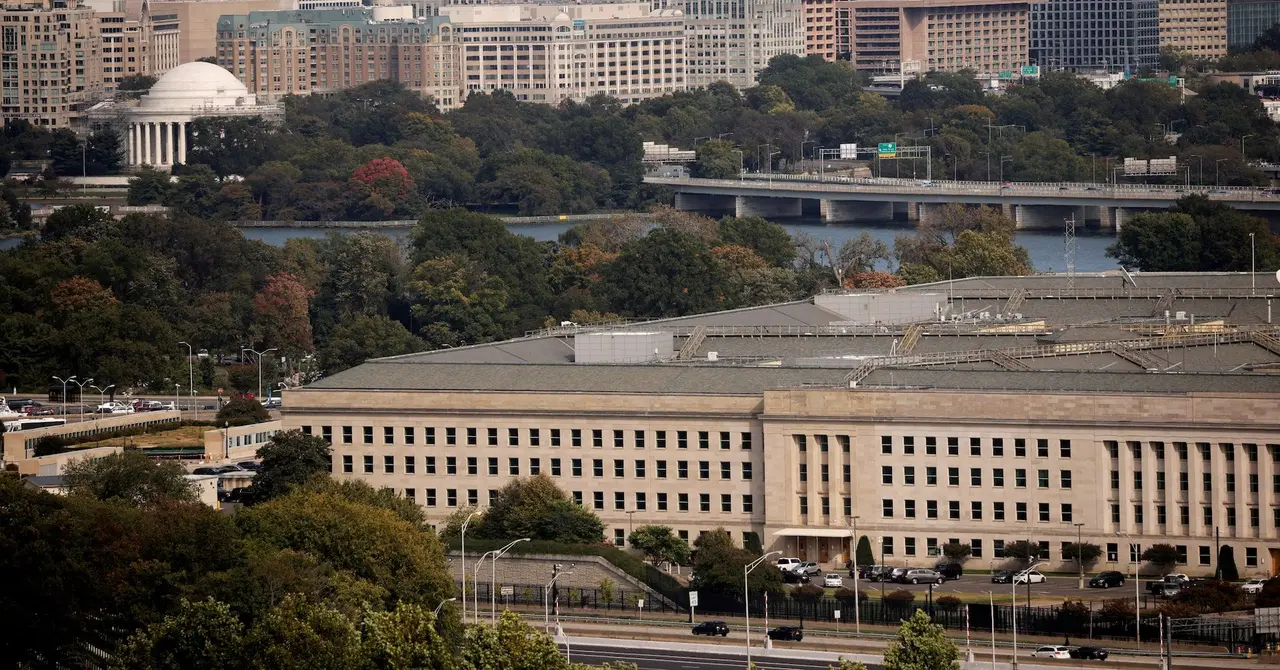
Source: Reuters
President Donald Trump ordered all federal agencies in February to stop using Anthropic's products, declaring "We don't need it, we don't want it, and will not do business with them again!"
5
. Despite this, Anthropic won a preliminary injunction from a California court last month allowing it to continue working with the government5
.Clark downplayed the supply chain risk designation at the Semafor World Economy summit, characterizing it as merely a "narrow contracting dispute" that shouldn't interfere with the company's commitment to national security
1
. "Our position is the government has to know about this stuff, and we have to find new ways for the government to partner with a private sector that is making things that are truly revolutionizing the economy," Clark stated1
.Related Stories
The potential rapprochement suggests that the need to harness advanced AI systems for cybersecurity may override earlier concerns raised by Defense Secretary Pete Hegseth about the lab
5
. A source familiar with the negotiations told Axios that "it would be grossly irresponsible for the U.S. government to deprive itself of the technological leaps that the new model presents" and that doing so "would be a gift to China"2
.Anthropic has reportedly hired Ballard Partners, a lobbying firm linked to Trump, which has fueled speculation that a deal between the company and the White House may be in the works
2
. A White House official stated that the administration "continues to proactively engage across government and industry" and is "working with frontier AI labs to ensure their models help secure critical software vulnerabilities"5
.Any new technology that could be used by the government would require a security evaluation period to ensure its safety and reliability
3
. Within Anthropic, company leaders became worried that the new model could pose a national security risk after testers used it to uncover critical bugs that would normally take the world's best hackers to find, prompting the limited release strategy3
. At the IMF and World Bank spring meetings, global financiers expressed concern that Mythos or similar technologies could breach traditional cyber defenses, leaving the financial system vulnerable to unprecedented threats3
.Summarized by
Navi
[1]
21 Apr 2026•Policy and Regulation

30 Apr 2026•Policy and Regulation

19 Apr 2026•Policy and Regulation

1
Health

2
Technology

3
Technology