Anthropic launches Claude Design, an AI design tool for prototypes and slides


24 Sources
[1]
Anthropic launches Claude Design, a new product for creating quick visuals | TechCrunch
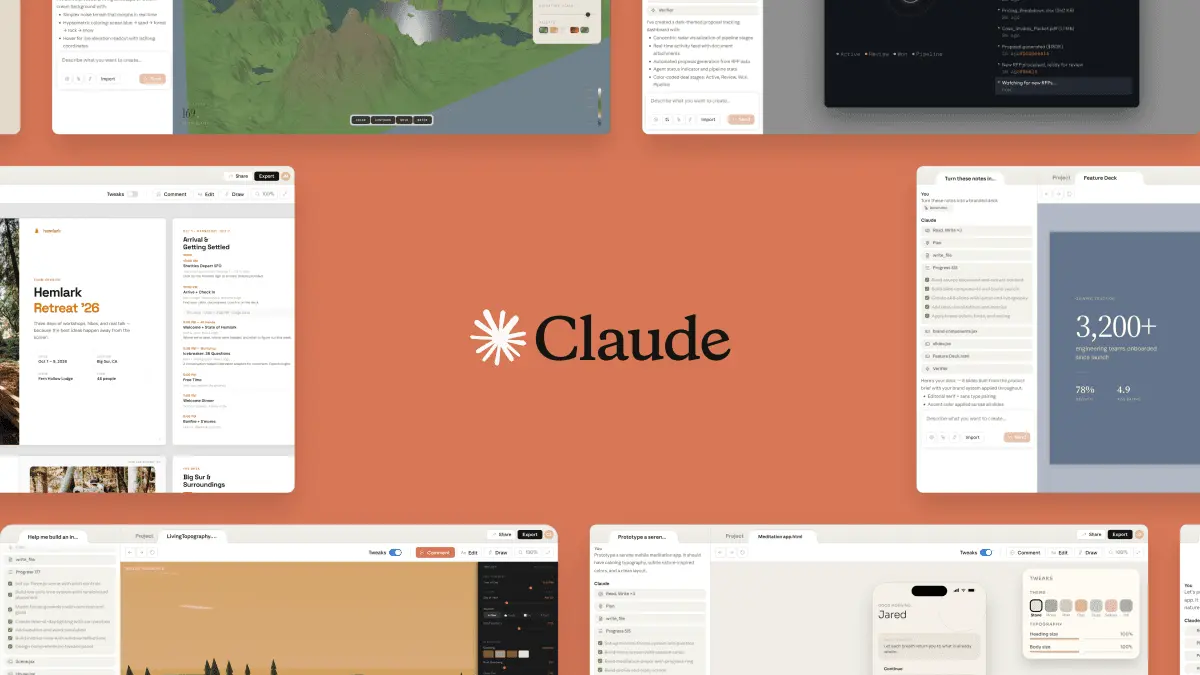
Anthropic announced on Friday that it's launching Claude Design, a new experimental product that lets users create visuals like prototypes, slides, one-pagers, and more using Claude. The company says Claude Design is intended to help people like founders and product managers without a design
[2]
Anthropic Introduces First Design Tool to Claude
Anthropic is getting into the design business. The AI company on Friday introduced Claude Design, its first proprietary AI design tool. Claude Design is not explicitly an AI image generator, like Google's Nano Banana or Midjourney. Instead, you can use Claude Design to create slide decks, social
[3]
Anthropic's Claude Rolls Out New Tool for Designers
Fiddling around with Canva, Photoshop, or the technical intricacies of graphic design isn't your strong suit? AI firm Anthropic has a new tool, running on its latest model Claude Opus 4, it says can help those without a design background bring their ideas to life, and help time-strapped designers
[4]
Anthropic debuts Claude Design, because who needs designers?
The bar for creating visual assets has been lowered to the ability to converse with a model Anthropic is known for its industry-leading Claude Code that writes programs, but why stop there? The company, on Friday, introduced a research preview service called Claude Design that creates visual
[5]

Anthropic now has a design assistant too
In hindsight, I suppose it was only a matter of time after Anthropic made Claude capable of generating charts and diagrams that the company would then begin offering a more robust image editor. Now, a little more than a month after that release, Anthropic has announced Claude Design, a new research
[6]

Canva and Anthropic launch Claude Design for AI-powered visual creation
In short: Canva and Anthropic have launched Claude Design, a new Anthropic Labs product powered by Claude Opus 4.7 that uses Canva's Design Engine to generate fully editable, on-brand visuals from text descriptions. The announcement coincides with Canva AI 2.0, which the company calls its biggest
[7]

Claude can now bring your design dreams to life
You might not need to do the heavy lifting the next time you have design work on hand. Anthropic has unveiled Claude Design, a "research preview" that uses the Opus AI model (4.7) to craft designs -- potentially complete ones, depending on what you need. Claude Design can use a text prompt to
[8]

I tried Claude Design for half an hour. I'm already locked out for a week
Despite its capabilities, Claude Design consumes tokens so rapidly that it can exhaust a Claude Pro user's weekly allowance within 30 minutes of use. Anthropic has been churning out new AI products at an astonishing rate, and its latest-Claude Design-is perhaps its most impressive. It's shaping up
[9]

Anthropic Debuts Claude Design for Creating Prototypes, Pitch Decks, and Mockups
Anthropic today launched Claude Design, a new AI product for creating designs, prototypes, slides, and more. Claude Design uses Opus 4.7, a new AI model that was introduced earlier this week. Claude Design is able to mock up an initial design after being provided with a prompt, and from there,
[10]

Anthropic launches Claude design to simplify visual creation with AI
Anthropic has introduced a new AI-powered design tool called Claude Design, aimed at helping users create visual content such as prototypes, presentations, and marketing assets through simple conversational inputs. The product, developed under Anthropic Labs, is currently available in research
[11]

Anthropic launches Claude Design to speed up graphic design projects - SiliconANGLE
Anthropic launches Claude Design to speed up graphic design projects The latest addition to Anthropic PBC's product portfolio is Claude Design, a tool that enables users to generate visual assets with prompts. The company launched the offering into public preview today. It's available to Claude
[12]

Anthropic launches a design tool to take on all the other design tools
The company is billing the tool as a way for non-designers to mock up visuals, and a way for designers to quickly test out a range of initial prototypes. It's powered by Claude's most recent new model, Opus 4.7, which is trained to handle difficult coding prompts and complex, long-running tasks.
[13]

Anthropic launches Claude Design, and it's trying to work with Canva, not compete with it
Graphic designers and casual users are still figuring out Canva's new AI 2.0, which can generate full designs from simple text prompts, and Anthropic is already showing off its own take. The company announced on Friday that it's launching Claude Design, a new experimental product that allows
[14]

Anthropic Takes Aim at Figma and Adobe With New Claude Design Platform
Titled Claude Design, the new model is designed to make polished visual work for experienced designers and newbies alike. The platform gives users room to produce visuals they want, refining the work through conversation and comments. Claude Design is hoping to simplify the stress of editing.
[15]

Claude can now design your slide decks -- and a whole lot more
When not writing, Dave enjoys spending time with his family, running, playing the guitar, camping, and serving in his community. His favorite place is the Blue Ridge Mountains, and one day he hopes to retire there (hopefully his fear of heights will have retired by then, too!). Summary Claude
[16]

No design skills? Claude design plus Canva could change that as Anthropic partnership expands AI visual creation
Claude Design and Canva are changing how people create visuals using AI. These tools help users make designs quickly without much skill. People can turn ideas into real content and edit them easily. While it helps beginners a lot, designers may see changes in their work. The focus is on faster
[17]
Anthropic's New AI Tool Will Let Anyone Create Pro-Grade Designs Just by Having a Conversation
According to a blog item published this morning, Anthropic says that Claude Design will help professional designers explore a greater number of visual ideas in a shorter amount of time, and give "founders, product managers and marketers with an idea but not a design background" the ability to
[18]

What You Need to Know About Claude Design's New 'Flow Editing' Feature
Claude Design, developed by Anthropic, is a platform that connects design and implementation in a practical way. Matt Maher highlights its ability to generate cohesive design systems, such as buttons, fonts and color palettes, directly from uploaded files or repositories. This feature helps
[19]
Why Anthropic's New Claude Design is Already Disrupting the UI/UX Industry
Anthropic's "Claude Design" offers a structured approach to creating visual assets by integrating AI-driven features with collaborative workflows. Built on the Claude Opus 47 model, it supports tasks like wireframing, prototyping and animation while maintaining alignment with brand guidelines.
[20]

Anthropic Launches Claude Design for Creating Quick Visuals
Could this be the Figma-killer that the company has been working on while partnering with the design software provider to cross-sell each other amongst enterprise users Anthropic has released Claude Design as an experimental product for users seeking to create visuals such as slides, one-pagers,
[21]
Why Anthropic's New Claude Design is Catching the Attention of Figma Users
Anthropic's latest offering, Claude Design, introduces a fresh approach to creative workflows by combining AI-driven functionality with a conversational interface. Powered by the Opus 4.7 model, this platform is currently in research preview and aims to simplify tasks like prototyping, slide
[22]

Anthropic Launches Claude Design io to Simplify Visual Creation With AI
The update builds on Claude's writing and coding abilities and adds the capability to turn ideas into clear visual formats. It reflects a wider move by AI companies to go beyond text and handle everyday tasks. Claude Design works through . A user can ask for a pitch deck, a landing page, or a
[23]
How Anthropic's New Claude Design Tool is Changing the Prototyping Game
Claude Design, developed by Anthropic Labs, offers a conversational AI platform for creative workflows. Built on the Claude Opus 4.7 engine, it enables users to generate prototypes, wireframes and mockups by describing their ideas in natural language. Eliot Prince highlights features such as
[24]

Anthropic releases Claude Design to help create visuals: Here is how it works
The designs you create using Claude Design can be exported to Canva. Anthropic has introduced Claude Design, a new AI tool aimed at helping people create visual content more easily. This product is designed for both professionals and beginners who want to turn ideas into polished designs without
Share
Copy Link
Anthropic introduced Claude Design on Friday, a new experimental AI design tool that enables users to create visual prototypes, presentation decks, and wireframes through simple text prompts. Powered by Claude Opus 4.7, the tool targets founders and product managers without design backgrounds, positioning itself as a complement to existing platforms like Canva rather than a replacement.
Anthropic Unveils Claude Design for Quick Visual Creation
Anthropic announced on Friday the launch of Claude Design, a new experimental AI design tool that allows users to generate visuals including prototypes, slides, one-pagers, and pitch decks using conversational prompts
1
. The company positions the tool as a solution for people like founders and product managers who lack a design background but need to share their ideas visually1
.
Source: TechCrunch
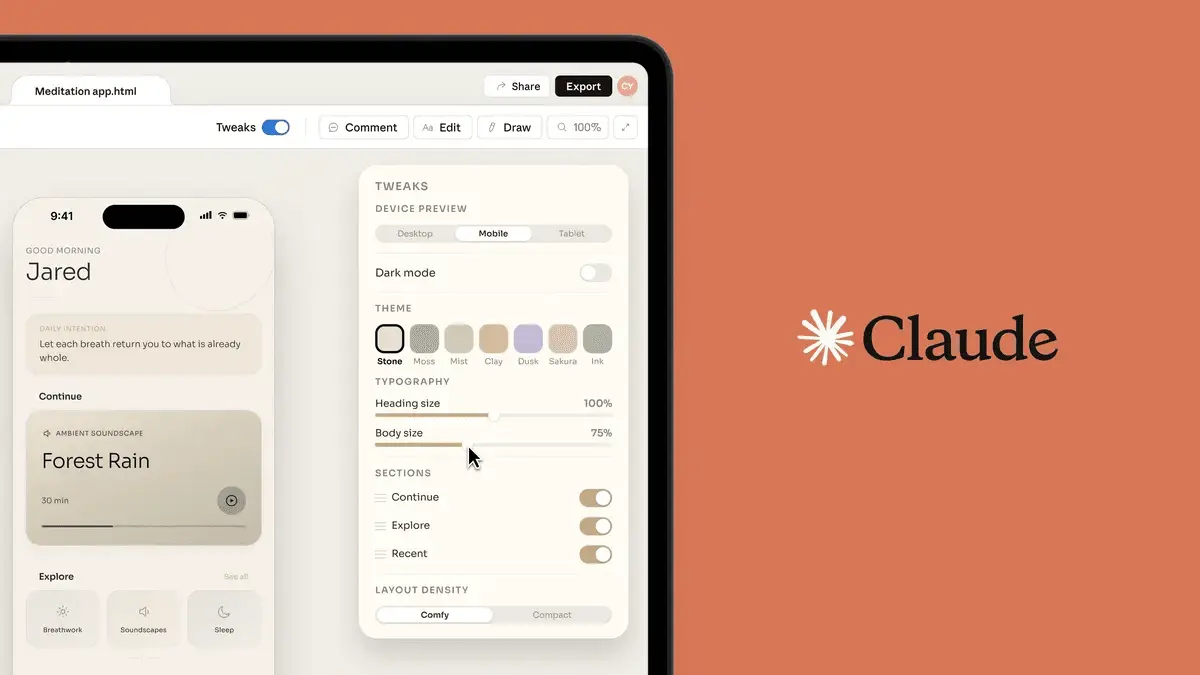
With Claude Design, users describe what they want, and the AI-powered design tool creates an initial version that can be refined through direct edits, inline comments, or conversational requests
1
. For instance, a user could request Claude to "prototype a serene mobile meditation app" with specific typography and color requirements, then tweak elements or add features like a dark mode toggle1
.
Source: TweakTown
How the AI Design Assistant Works
Claude Design is not explicitly an AI image generator like Google's Nano Banana or Midjourney
2
. Instead, users can generate designs using text prompts, upload images and documents in formats such as DOCX, PPTX, and XLSX, or point Claude at their codebase to create visual prototypes3
. The tool also includes a web capture feature that allows users to grab elements directly from their website, ensuring prototypes align with the actual product3
.
Source: SiliconANGLE
Users can fine-tune their creations by commenting inline on specific elements or using custom sliders generated by Claude to adjust spacing, color, and layout in real time
3
5
. Once finalized, designs can be shared as internal URLs, saved in folders, or exported to Canva, PDF, PPTX, or standalone HTML files3
.Custom Design Systems for Enterprise AI Solutions
A standout feature of Claude Design is its ability to apply custom design systems to every project, ensuring consistency with a company's overall visual style . Anthropic says the tool achieves this by reading a company's codebase and design files, allowing teams to refine these components and maintain multiple design systems
1
. This onboarding process enables Claude to build an internal visual language, automatically using your organization's colors, typography, and styling conventions in subsequent projects5
.Powered by Claude Opus 4.7 with Enhanced Visual Intelligence
The new product is powered by Claude Opus 4.7, Anthropic's latest and more costly model released on Thursday . Anthropic describes Opus 4.7 as its most capable vision model to date, featuring better visual intelligence to understand images
2
. Claude Design is available in research preview for Claude Pro, Max, Team, and Enterprise subscribers1
2
.Usage of Claude Design is metered and tracked separately from other Claude services, with its own weekly limits that sit alongside existing chat or Claude Code limits . Enterprise subscribers receive a one-time credit covering approximately 20 typical prompts, which expires on July 17 .
Positioning Against Canva, Figma, and Adobe
While Claude Design may initially appear to compete with Canva, which recently expanded its own AI capabilities, Anthropic told TechCrunch the tool is intended to complement rather than replace existing design platforms
1
. The company emphasizes its product is built for people who aren't starting from a design tool and need to get from an idea to something visual quickly1
. Once teams create presentation decks or visual prototypes and slides, they can export them to Canva where they become fully editable and collaborative1
.The announcement also represents a challenge to other AI design services like Lovable, and market reaction was immediate—Figma's stock fell about 7 percent following the announcement . Adobe recently announced it is bringing its creative AI agent to Claude, which is complementary but separate from Claude Design
2
.Related Stories

Impact on the Design Industry and Workforce
The launch raises questions about the future of design work as generative AI tools become more sophisticated. Roughly 86% of global designers now say they are incorporating generative AI in their work, according to research by Figma
3
. However, the impact may vary across different segments of the design industry.Molly McCoy, a graphic designer with 25 years of experience based in the San Francisco Bay Area, told The Register she expects tools like Claude Design will have an impact on the corporate design world where there's "a lot of rigidity to the degree of creativity that you can use" . She noted that AI-driven design has a high degree of influence on social media where graphics are more disposable and "don't have to be of any degree of quality" . McCoy emphasized that running a design business is about relationships, saying "I guess AI can be your therapist for you, but it's not gonna be able to take the things that you tell it" and translate them with the same human understanding .
Anthropic's Enterprise Push Amid Funding Speculation
The launch highlights Anthropic's ongoing push into the enterprise and prosumer categories as competition intensifies around AI workplace tools
1
. In January, Anthropic rolled out Claude Cowork, an agentic assistant built for complex tasks, and later brought agentic plug-ins to Cowork designed to automate specialized tasks within various departments1
.The announcement comes days after Bloomberg reported that VCs have been offering Anthropic a preemptive funding round that would value it at $800 billion or more, which would almost match or even surpass rival OpenAI
1
. However, according to the report, Anthropic isn't interested in the latest offers1
. Anthropic has promised to make it easier to build integrations with Claude Design in the near future, allowing users to connect it with more tools their teams use5
.References
Summarized by

Navi
[1]
[3]
[4]
[5]
Related Stories
Anthropic updates Claude Design with brand guidelines compliance and seamless code integration
17 Jun 2026•Technology
Anthropic's Claude AI Expands Integration Capabilities for Education and Design
10 Jul 2025•Technology

Anthropic's Claude Code: Revolutionizing AI-Powered Software Development
06 Jun 2025•Technology

Recent Highlights



Recent Highlights
Today's Top Stories






Don’t drown in AI news. We cut through the noise - filtering, ranking and summarizing the most important AI news, breakthroughs and research daily. Follow topics that matter to you and stay ahead.


