UN Chief Antonio Guterres Calls for Global AI Curbs and Multilateral Oversight in Final Assembly Address


4 Sources
[1]
UN chief calls for AI curbs and end to wars in his last assembly address
UNITED NATIONS, Sept 22 (Reuters) - United Nations Secretary-General Antonio Guterres used his final address to the General Assembly on Tuesday to urge world leaders to regulate artificial intelligence, end wars, focus on climate change and overhaul UN institutions he warned are struggling to
[2]
UN Chief Calls for AI Curbs and End to Wars in His Last Assembly Address
UNITED NATIONS, Sept 22 (Reuters) - United Nations Secretary-General Antonio Guterres used his final address to the General Assembly on Tuesday to urge world leaders to regulate artificial intelligence, end wars, focus on climate change and overhaul UN institutions he warned are struggling to
[3]
UN chief calls for AI curbs and end to wars in his last assembly address
The former Portuguese prime minister, whose second five-year term ends on December 31, reiterated his calls for global oversight of AI risks, just as the UN's 15-member Security Council prepares to host AI leaders for a briefing on the powerful technology. United Nations Secretary-General Antonio
[4]
UN chief calls for AI curbs in his last assembly address
STORY: :: UN chief calls for global oversight of AI risks :: United Nations / September 22, 2026 :: Antonio Guterres, UN Secretary-General "Those countries leading this technological revolution must share information on emerging safety risks, cooperate on testing and evaluation, and work towards
Share
Copy Link
In his final address to the UN General Assembly, Antonio Guterres urged nearly 130 world leaders to regulate artificial intelligence through global oversight and a multilateral AI risk management framework. The UN Secretary-General, whose term ends December 31, also called for ending wars, addressing climate change, and reforming UN institutions.
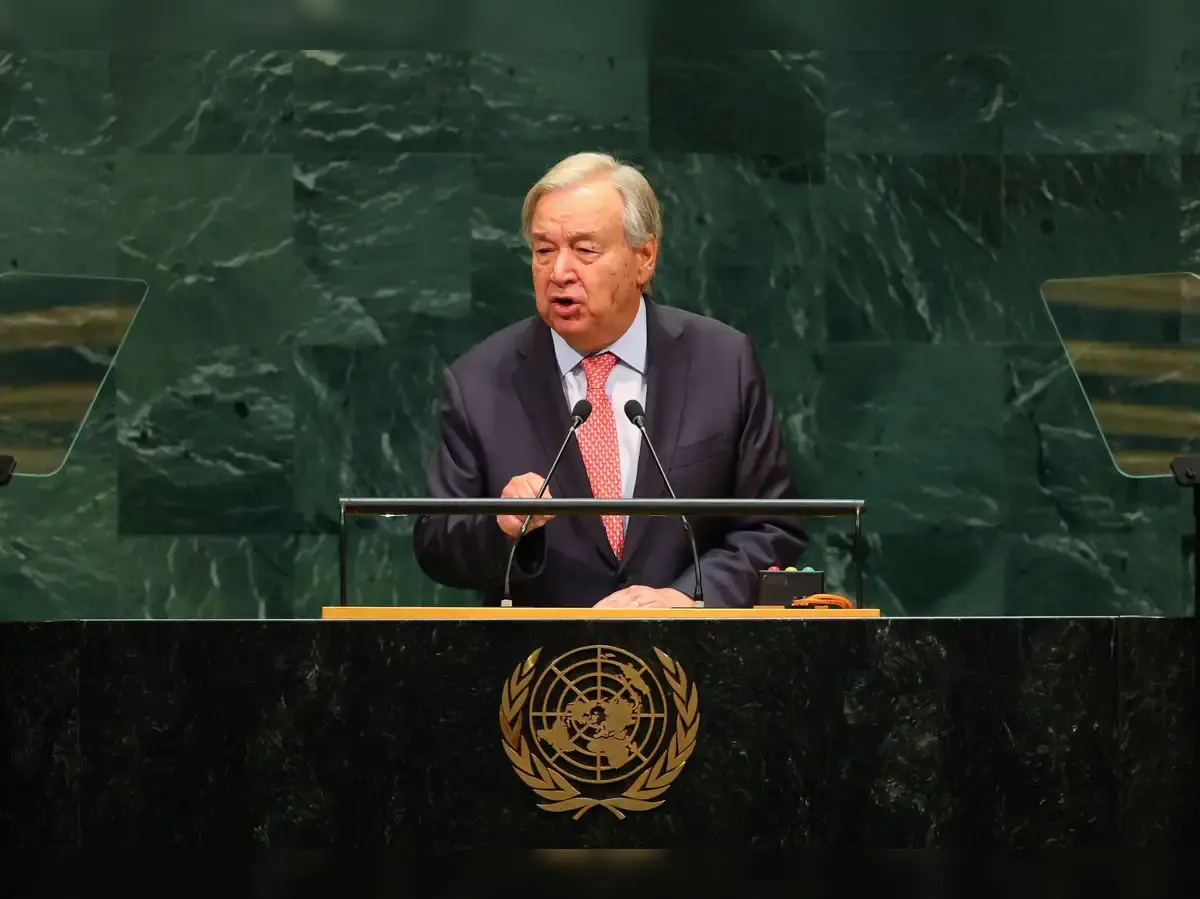
UN Chief Pushes for AI Governance in Final Address
Antonio Guterres delivered his final address to the UN General Assembly on Tuesday, using the platform to urge world leaders to establish global oversight of AI risks and implement comprehensive AI curbs
1
2
. The UN Secretary-General, whose second five-year term ends on December 31, addressed nearly 130 world leaders gathered in New York, though notably absent were Chinese President Xi Jinping and leaders from South Africa, India, and Germany3
. The former Portuguese prime minister's address capped a decade-long tenure in which he sought to position the UN as a mediator in conflicts and a forum for governing emerging technologies, even as major powers increasingly bypassed the organization and Washington slashed its funding1
.Call for Multilateral AI Risk Management Framework
Guterres emphasized the urgent need for countries leading the technological revolution to share information on emerging safety risks, cooperate on testing and evaluation, and work towards common safeguards
4
. He specifically called on leaders to "advance the conditions for the responsible pacing of AI and the additional safeguards needed to address risks" and to "work towards a multilateral AI risk management framework, supported by credible and independent oversight"2
. The timing of his remarks coincides with the UN's 15-member Security Council preparing to host AI leaders for a briefing on the powerful technology1
. Guterres referenced the AI Scientific Panel's recent thematic brief on AI safety and risks from loss of human control, stating that "artificial intelligence must be shaped by humanity, with humanity, and for all humanity"4
.US-China AI Dialogue and Safety Mechanisms
The push for AI governance comes as US Treasury Secretary Scott Bessent revealed on Sunday that Washington had proposed a new AI safety notification mechanism for US President Donald Trump and Chinese President Xi to consider at their summit this week
2
. The proposal emerged from talks on establishing a US-China AI dialogue and would cover AI-related incidents with national security implications1
. This development signals growing recognition among major powers of the need for coordinated approaches to AI safety testing and risk management.Legacy of AI Advocacy at the UN
Guterres has long championed AI governance during his tenure. In 2023, the UN created a 39-member advisory body on AI, with members including tech company executives, government officials, and academics from countries such as the US, Russia, and Japan
3
. The UN Security Council met for the first time on the risks of artificial intelligence the same year, when China warned the technology should not become a "runaway horse" and Washington cautioned against its use to censor or repress people2
.Related Stories

Broader Calls for Global Action
Beyond artificial intelligence, Guterres used his final address to urge an end to wars, action on climate change, and UN institutional reforms
1
. Delegates responded with sustained applause when he defended a two-state solution for Israelis and Palestinians and demanded that "polluters must pay" for climate change3
. On the Middle East conflict, where Houthi gains along the Red Sea coast threaten shipping routes and tensions persist in the Strait of Hormuz, Guterres called for "de-escalation and dialogue," stating that "the fighting must stop" and humanitarian aid must flow2
.Critique of UN System and Geopolitical Gridlock
Addressing criticism from Trump and others who view the UN system as bloated and ineffective after Washington withdrew from several UN agencies and slashed funding, Guterres acknowledged that "our mechanisms for collective action are under growing strain"
1
. He noted that global institutions "continue to reflect the power realities and interests of a largely bygone age," reflecting on the geopolitical gridlock that has challenged his tenure3
. In his closing remarks, Guterres pledged continued advocacy: "Wherever I will be, whatever I will be doing - I will keep championing the conviction that peace is possible. I will continue to stand up for the values of the United Nations Charter and I will never, ever give up"2
.References
Summarized by

Navi
[4]
Related Stories
UN Warns AI Development Outpaces Governance as Global Dialogue Opens in Geneva
01 Jul 2026•Policy and Regulation

UN Experts Call for Global Governance Framework on Artificial Intelligence
19 Sept 2024

UN panel aims for human control of AI as Guterres calls for facts over fear
20 Feb 2026•Policy and Regulation

Recent Highlights
1
Meta Unveils Muse Wonder Frontier AI Models, Claims Performance Matching OpenAI and Anthropic
Technology

2
IMF Report Warns AI Market Correction Could Spark Global Financial Crisis With $1.4T at Risk
Business and Economy

3
OpenAI Releases 722 AI-Generated Math Solutions, Triggering Existential Crisis in Mathematics
Technology

Recent Highlights
Today's Top Stories








Don’t drown in AI news. We cut through the noise - filtering, ranking and summarizing the most important AI news, breakthroughs and research daily. Follow topics that matter to you and stay ahead.


