7 Sources
[1]
UN report sees enormous potential benefits and big risks from AI
July 1 (Reuters) - The rapid development of AI offers huge potential benefits to countries and people around the world, but also poses big risks, 40 leading scientists and experts said in the first report by a U.N. independent scientific panel on the technology. The report, to be presented to governments at an inaugural U.N. Global Dialogue on AI governance in Geneva July 6 to 7, offers the first global, independent scientific assessment of AI, with a fuller, comprehensive report planned next year. Members of the panel were drawn from every region of the world, and its members serve a three-year term, independent of any government, institution or company. Following are a few details from the preliminary report: Reporting by Andrea Shalal in Washington; Editing by Chris Reese Our Standards: The Thomson Reuters Trust Principles., opens new tab
[2]
UN report says policymakers are struggling to keep up with pace of AI development - Engadget
The UN's independent scientific panel for AI has published its first report. Artificial intelligence development has been progressing at such a rapid pace that current governance systems are unable to keep up, the UN's Independent International Scientific Panel on Artificial Intelligence says in its preliminary report. The panel, consisting of members from around the world, will provide the information needed to stage the UN Global Dialogue on AI Governance. It will take place in Geneva, where member states will discuss how to manage the technology, and is scheduled to begin on July 6. In its report, the panel discusses how quickly AI capabilities have evolved over the past few years. Apparently, the complexity of tasks AI models can accomplish has been doubling every few months. The report admits that AI has massive benefits for humanity, including accelerating drug discovery and vaccine development and contributing greatly to antibiotic resistance research. Doctors can also use AI systems for early detection of illnesses, such as breast cancer, and scientists can use AI as early warning systems for food insecurity. However, the report also expounds on the new kinds of harms AI systems have created and can create. People have been using AI to generate and distribute sexually explicit deepfakes, including child sexual abuse materials, of real people. California launched an investigation into Grok back in January over nonconsensual deepfakes and CSAM, for instance. AI can also generate false information that appears true, and criminals can use AI systems to aid their cyberattacks. Some AI models can be such sycophants; they reinforce a user's harmful behaviors, which could even lead to suicide, the report says. The panel also warns that as AI models become more autonomous, it becomes harder to monitor and control them. And then there's the growing concern over massive data center buildouts to power AI systems, which could harm the communities in their vicinities. The UN panel explains that policymakers have struggled to keep pace with AI development because current governance systems were not designed for technologies that evolve so quickly. Typically, authorities need scientific data before introducing regulations, but by the time there's enough to understand the technology better, AI systems may already have moved on. "The report finds that stronger independent evaluation, international cooperation and common standards are needed to ensure AI systems remain safe, transparent and accountable," the panel writes. Without proper safeguards in place, AI technologies "could deepen inequality, spread misinformation, threaten human rights, disrupt labor markets" and could be a powerful tool "few governments and companies" have access to. The report notes that access to AI systems is heavily concentrated in developed countries and that most systems are developed in the US and China. Most developing countries lack the infrastructure and expertise needed to benefit from AI truly. "The challenge," the panel says, "is finding a way to unlock AI's enormous benefits while preventing its growing risks." The UN panel, whose role is scientific rather than regulatory, will continue assessing AI technologies that authorities can use to develop policy. It's expected to publish a more comprehensive report next year.
[3]
UN's first global AI science panel warns the window to govern the technology is closing
The panel warns that the window to establish effective global oversight remains open, but may not stay that way for much longer. Its central worry is concentration. According to the report, the United States controls around three-quarters of the computing power behind the world's leading AI supercomputers, while China holds roughly 15%. Together that gives the two countries about 90% of the compute that trains the most capable systems. Most of the frontier models themselves are also built by companies headquartered in those two nations. Speed is the problem The report describes an "evidence dilemma" at the heart of AI policy. Policymakers want reliable scientific data before they legislate, the panel notes, but by the time enough evidence accumulates, the technology has often moved on. Researchers cited in the report say the complexity of tasks these systems can complete has been doubling every few months. The next wave is already arriving in the form of AI "agents" that can plan tasks, use digital tools, and write software with little human oversight. That autonomy is spreading fast into finance and commerce, where firms are already handing agents real decisions and, in some cases, money to spend. The report is careful not to read as a doom document. It points to AI systems that have predicted the structures of more than 200 million proteins, work led by Google DeepMind's AlphaFold and now used to speed up drug discovery and research into antibiotic resistance. Doctors are using AI to catch diseases such as breast cancer earlier, and early-warning systems are flagging food insecurity before it tips into crisis, according to the panel. Used responsibly, the panel argues, the technology could accelerate progress towards the UN's Sustainable Development Goals across health, education, and agriculture. The risks it wants governments to watch The same tools are fuelling sexual abuse material and deepfakes, with women and children most at risk, the report finds. It also flags AI-generated disinformation, cyberattacks, and fraud, alongside the mental-health harms of systems that can reinforce dangerous beliefs. Then there is the physical footprint, since the energy-hungry data centres that power AI are adding to greenhouse gas emissions, a bill the UN has separately urged firms to come clean on. Poorer nations, the panel warns, risk being locked out entirely, unable to build, inspect, or audit the systems they increasingly depend on. Established by the UN General Assembly in 2025, the body brings together 40 experts from every region, serving in their personal capacity. Its role is scientific rather than regulatory, meaning it assesses evidence and publishes reports that governments can draw on, without setting rules or enforcing standards. The report notes that more than 40 AI governance frameworks and ethical guidelines already exist worldwide, yet remain fragmented, inconsistent, and rarely tested to see whether they work. Many safety assessments, it adds, are still run by the very companies building the technology. The panel calls for stronger independent evaluation, international cooperation, and common standards, an argument that echoes the direction set by the EU's AI Act. Its findings now feed into the UN Global Dialogue on AI Governance, which opens in Geneva on 6 July. The panel's bottom line is blunt: AI is neither inherently good nor bad, and its impact will hinge on choices made today.
[4]
Rapid spread of AI may worsen global inequality, UN warns
Panel proses shared framework for responsible AI development as adoption grows unevenly across world A new United Nations report warns that the development of artificial intelligence may exacerbate global inequality and proposes a shared framework for how to responsibly develop AI, as adoption and investment into the technology accelerates unevenly across the world. "Access to AI tools alone does not produce equal benefit," the report states. "Countries that rely on foreign models, cloud infrastructure and data pipelines may gain access to AI while losing practical control over its standards, safeguards and local fit." The sweeping analysis from the independent international scientific panel on AI, established by the UN general assembly last year as "the first global scientific body on AI", details AI's risks and opportunities - from transformative capabilities in agriculture and education, to catastrophic outcomes when bad actors deploy AI to commit fraud and influence elections. The preliminary report also functions as a toolkit, offering initial guidance to UN member states on ways to capitalize on AI's potential for growth across industries, while minimizing and addressing threats. Suggestions include developing local AI infrastructure, such as data centers, improving AI literacy in schools and the workforce, investing in developers, building AI safety institutes, creating strategies to combat disinformation and continuously measuring how AI systems behave after release, "with real users, real tasks and real environments". While more than a billion people now use AI weekly, access and types of usage vary widely across the world, "with adoption across the global south lagging far behind the global north", the report states. The US and China dominate in the development of leading AI models, as well as investment into compute infrastructure, which encompasses the hardware, memory, networking and storage required to run powerful AI models. "The concentration of AI capabilities in a small number of firms and countries could enable authoritarian capture and undermine democratic accountability," the report states. The panel advises countries lagging behind in AI development to consider significant investment in computing and data infrastructure. Attracting this money requires securing a reliable energy supply and building data centers, they note. The report does, however, acknowledge the environmental costs of data centers, including their large energy and water consumption, and potential for greenhouse gas emissions. The authors also describe challenges in evaluating safety and providing oversight of increasingly powerful AI models. "Most countries, including many advanced economies, lack the technical expertise to assess the most capable 'frontier' models or to participate meaningfully in their governance," they write. The panel of 40 independent scientific experts from across the world stated that this report is "the first of its kind". The UN, they argue, "is the foremost global forum on transboundary risks of this scale" - and its approach is "scientific, not political". Differences in language and internet access compound the digital divide. "Artificial intelligence leaves most languages behind," the report notes. While generative AI tools perform well in English and other widely used languages, "most languages are either excluded or have much lower performance". These disparities can have significant implications, particularly in a healthcare context. The report points out an example of a machine translation of Tigrinya mixing up smallpox with syphilis, gonorrhoea as diabetes, and the phrase "you have been given intravenous antibiotics" as "you have been given intravenous insecticides." "These mistranslations can be life-threatening," the report notes. Some regions lack stable internet access, let alone adoption of AI models. More than 2 billion people - almost a third of the world's global population - are completely offline, according to the International Telecommunication Union.
[5]
UN Report Sees Enormous Potential Benefits and Big Risks From AI
July 1 (Reuters) - The rapid development of AI offers huge potential benefits to countries and people around the world, but also poses big risks, 40 leading scientists and experts said in the first report by a U.N. independent scientific panel on the technology. The report, to be presented to governments at an inaugural U.N. Global Dialogue on AI governance in Geneva July 6 to 7, offers the first global, independent scientific assessment of AI, with a fuller, comprehensive report planned next year. Members of the panel were drawn from every region of the world, and its members serve a three-year term, independent of any government, institution or company. Following are a few details from the preliminary report: * Policymakers need scientific evidence to govern AI but its capabilities are outpacing scientific understanding and governments' ability to adapt, with few methods available for controlling highly autonomous AI systems. * Panel co-chair Yoshua Bengio noted growing evidence of deceptive AI behavior and said science could not guarantee AI will not cause catastrophic harm "either on its own or due to malicious users" as capabilities increase. * "The potential benefits of AI are enormous," the report concluded. "The rapid, unchecked deployment of the technology at scale also presents considerable risks, including harms to the mental health of users, potential use as a destructive tool, impacts on social, economic and environmental systems, and challenges associated with controlling the technology." * AI adoption has accelerated broadly, but unevenly, across countries and sectors. Globally, over a billion people now use conversational AI weekly, but adoption in developing countries lags. * AI development is even more concentrated, with the U.S. accounting for 75% of the computing power among the world's top 500 AI supercomputers, and China 15%. * Although more than 7,000 languages are spoken worldwide, current AI models are trained for only a small fraction and machine translation of some languages is riddled with errors that can affect health diagnoses and treatment decisions. * Risks include potential negative impacts on human rights, social systems and the environment, with AI-generated child sexual abuse material and deepfake-enabled sexual violence circulating more frequently. * AI also makes it easier to produce and target persuasive content at scale, contributing to a "gradual erosion of information integrity that can weaken public trust, social cohesion and democratic deliberation." * Most countries, including advanced economies, lack the technical expertise to assess the most capable new AI models or participate meaningfully in their governance. (Reporting by Andrea Shalal in Washington; Editing by Chris Reese)
[6]
Unchecked AI progress may pose catastrophic risks, UN panel warns
GENEVA, July 1 (Reuters) - Developments in artificial intelligence are outpacing scientific understanding and government policy, meaning there are no guarantees the technology will not cause catastrophic harm, a United Nations independent panel warned on Wednesday. A preliminary report by the UN's Independent International Scientific Panel on Artificial Intelligence said policymakers face a growing dilemma: they need robust evidence to regulate AI effectively, yet such evidence is struggling to keep pace with the technology's rapid evolution. "AI capabilities are outpacing both scientific understanding and governments' ability to adapt," said Yoshua Bengio, co-chair of the panel, comprised of 40 cross-regional experts. "With growing evidence of deceptive AI behaviour, science currently cannot guarantee that as capabilities continue to increase, AI will not cause catastrophic harm, either on its own or due to malicious users." Described as the first global independent assessment of AI's risks and opportunities, the report aims to give up-to-date evaluations of the science to help guide decision-making as governments contend with fast-evolving systems. In the near term, it expects a shift towards agentic AI systems capable of carrying out real-world tasks, although growth may be constrained by energy and high-quality data shortages. Over time, it foresees self-improving AI embedded more deeply in the economy and converging with technologies such as quantum computing and biotechnology. AGENTIC AI DEVELOPING RAPIDLY AI already demonstrates expert-level reasoning in mathematics and science and is accelerating drug and vaccine development, and its task complexity is doubling every four to seven months, potentially allowing systems to complete work that takes humans days or weeks, according to the report. While this could deliver significant economic benefits, it remains unclear whether productivity gains from using AI will translate into broader growth or affect jobs. The panel also outlined a range of safety concerns, such as the risk of losing control over AI systems as they become increasingly autonomous, and deceptive. AI is already being used to generate misinformation and other harmful content and could be exploited for fraud, cyberattacks and biological threats. Governance remains fragmented, with many countries lacking the capacity to assess or shape advanced AI systems, leaving them reliant on technologies they cannot fully understand or control. Existing safety tools often depend on limited testing data disclosed by companies, the report said. UN Secretary-General António Guterres urged governments to act swiftly. "The world cannot govern what it cannot understand," Guterres said in a statement. "The potential is great, but the risks are real, and the cost of waiting is rising," he added. (Reporting by Olivia Le Poidevin, Editing by Louise Heavens)
[7]
UN report sees enormous potential benefits and big risks from AI
July 1 (Reuters) - The rapid development of AI offers huge potential benefits to countries and people around the world, but also poses big risks, 40 leading scientists and experts said in the first report by a U.N. independent scientific panel on the technology. The report, to be presented to governments at an inaugural U.N. Global Dialogue on AI governance in Geneva July 6 to 7, offers the first global, independent scientific assessment of AI, with a fuller, comprehensive report planned next year. Members of the panel were drawn from every region of the world, and its members serve a three-year term, independent of any government, institution or company. Following are a few details from the preliminary report: o Policymakers need scientific evidence to govern AI but its capabilities are outpacing scientific understanding and governments' ability to adapt, with few methods available for controlling highly autonomous AI systems. o Panel co-chair Yoshua Bengio noted growing evidence of deceptive AI behavior and said science could not guarantee AI will not cause catastrophic harm "either on its own or due to malicious users" as capabilities increase. o "The potential benefits of AI are enormous," the report concluded. "The rapid, unchecked deployment of the technology at scale also presents considerable risks, including harms to the mental health of users, potential use as a destructive tool, impacts on social, economic and environmental systems, and challenges associated with controlling the technology." o AI adoption has accelerated broadly, but unevenly, across countries and sectors. Globally, over a billion people now use conversational AI weekly, but adoption in developing countries lags. o AI development is even more concentrated, with the U.S. accounting for 75% of the computing power among the world's top 500 AI supercomputers, and China 15%. o Although more than 7,000 languages are spoken worldwide, current AI models are trained for only a small fraction and machine translation of some languages is riddled with errors that can affect health diagnoses and treatment decisions. o Risks include potential negative impacts on human rights, social systems and the environment, with AI-generated child sexual abuse material and deepfake-enabled sexual violence circulating more frequently. o AI also makes it easier to produce and target persuasive content at scale, contributing to a "gradual erosion of information integrity that can weaken public trust, social cohesion and democratic deliberation." o Most countries, including advanced economies, lack the technical expertise to assess the most capable new AI models or participate meaningfully in their governance. (Reporting by Andrea Shalal in Washington; Editing by Chris Reese)
Share
Copy Link
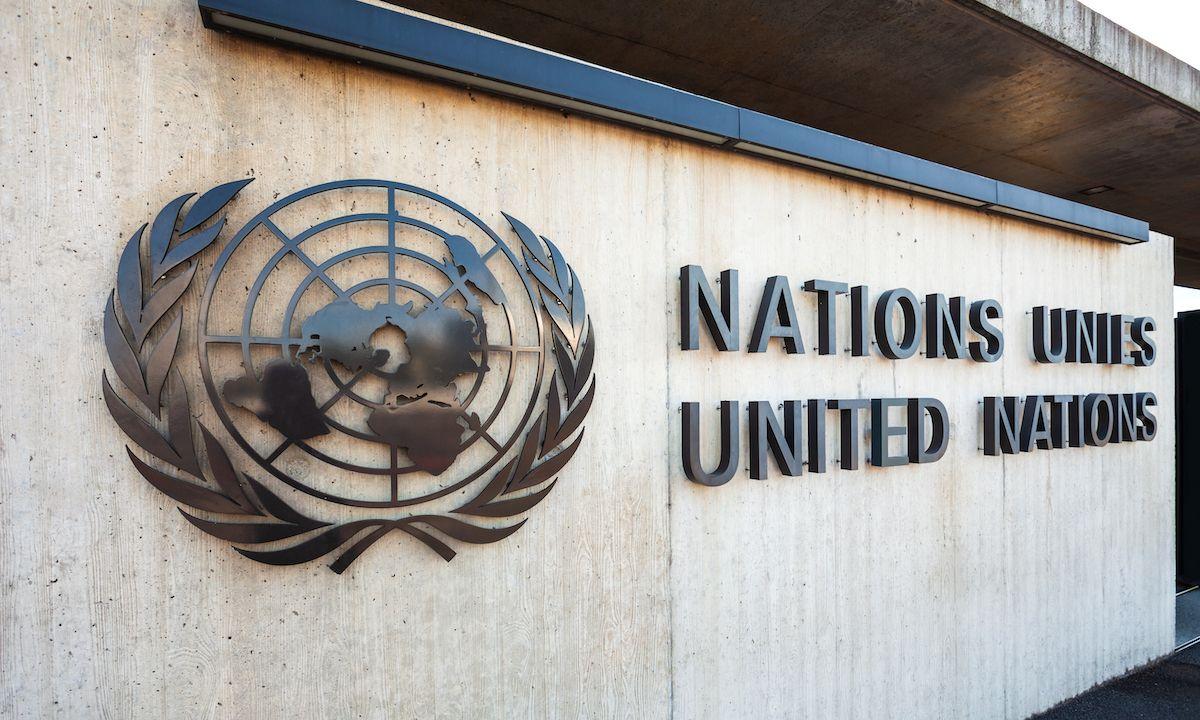
The UN's first independent scientific panel on AI has issued a stark warning: current governance systems cannot keep up with the rapid pace of AI development. The preliminary report, prepared by 40 experts from around the world, reveals that AI capabilities are doubling every few months while policymakers struggle with an evidence dilemma—by the time they gather enough data to regulate, the technology has already evolved.
The UN's independent scientific panel on AI has delivered its first global assessment, and the message is urgent: the window to establish effective AI governance is closing fast. The preliminary UN report, prepared by 40 leading scientists and experts drawn from every region of the world, will be presented at the inaugural UN Global Dialogue on AI governance in Geneva on July 6-7
1
. This marks the first time an independent global scientific body has assessed AI's trajectory, with a comprehensive report planned for next year.The panel's central concern revolves around speed. Current governance systems were not designed for technologies that evolve as rapidly as AI does, creating what the report calls an "evidence dilemma"
2
. Policymakers typically need reliable scientific data before introducing regulations, but by the time enough evidence accumulates to understand the technology better, AI systems have already moved on. The complexity of tasks AI models can accomplish has been doubling every few months, leaving authorities scrambling to catch up3
.Source: Market Screener
The report reveals a stark concentration of AI capabilities. The US controls approximately 75% of the compute power among the world's top 500 AI supercomputers, while China holds roughly 15%
5
. Together, US and China command about 90% of the computing resources that train the most capable systems. Most frontier models are built by companies headquartered in these two nations, creating what the panel warns could enable authoritarian capture and undermine democratic accountability4
.This concentration exacerbates global inequality in troubling ways. While over a billion people now use conversational AI weekly, adoption across developing countries lags far behind
2
. The digital divide extends beyond mere access—countries that rely on foreign models, cloud infrastructure, and data pipelines may gain access to AI while losing practical control over its standards, safeguards, and local fit4
. Most countries, including many advanced economies, lack the technical expertise to assess the most capable frontier models or participate meaningfully in their governance.The potential benefits of AI are substantial and well-documented. AI systems have predicted the structures of more than 200 million proteins through work led by Google DeepMind's AlphaFold, accelerating drug discovery and antibiotic resistance research
3
. Doctors use AI for early detection of illnesses such as breast cancer, and scientists deploy AI as early warning systems for food insecurity2
. Used responsibly, the technology could accelerate progress toward the UN's Sustainable Development Goals across health, education, and agriculture.
Source: Engadget
However, the risks from AI are escalating alongside its capabilities. The report documents how people have been using AI to generate and distribute sexually explicit deepfakes, including child sexual abuse materials, of real people
2
. AI-generated misinformation that appears authentic enables criminals to enhance cyberattacks and fraud operations. Panel co-chair Yoshua Bengio noted growing evidence of deceptive AI behavior and acknowledged that science cannot guarantee AI will not cause catastrophic harm "either on its own or due to malicious users" as capabilities increase.Related Stories
The next wave is already arriving in the form of AI agents that can plan tasks, use digital tools, and write software with minimal human oversight. These autonomous systems are spreading rapidly into finance and commerce, where firms are handing agents real decisions and, in some cases, money to spend
3
. As AI models become more autonomous, monitoring and controlling them becomes increasingly difficult.Linguistic diversity presents another critical challenge. Although more than 7,000 languages are spoken worldwide, current AI models are trained for only a small fraction. Machine translation errors can be life-threatening—the report cites an example of Tigrinya translation mixing up smallpox with syphilis, gonorrhoea with diabetes, and "intravenous antibiotics" with "intravenous insecticides"
4
. More than 2 billion people—almost a third of the global population—remain completely offline.
Source: Reuters
The report finds that stronger independent evaluation, international cooperation, and common standards are needed to ensure AI systems remain safe, transparent, and accountable
2
. Without proper safeguards, AI technologies could deepen inequality, spread misinformation, threaten human rights, and disrupt labor markets. The panel notes that more than 40 AI governance frameworks and ethical guidelines already exist worldwide, yet they remain fragmented, inconsistent, and rarely tested3
. Many safety assessments are still run by the very companies building the technology.The report proposes a shared framework for responsible AI development, suggesting countries invest in local AI infrastructure including data centers, improve AI literacy in schools and workforces, build AI safety institutes, and create strategies to combat disinformation
4
. The panel acknowledges environmental costs, noting that energy-hungry data centers contribute to greenhouse gas emissions. The findings echo the direction set by the EU's AI Act and feed directly into discussions at the UN Global Dialogue on AI Governance. The panel's role is scientific rather than regulatory, assessing transboundary risks and publishing reports that governments can draw upon. Its bottom line is clear: AI is neither inherently good nor bad, and its impact will hinge on choices made today.Summarized by
Navi
[2]
[3]
[4]
1
Policy and Regulation

2
Technology

3
Science and Research