APEC Finance Ministers Chart New Path for Cooperation in AI-Driven Global Economy


3 Sources
[1]
Korea charts new path for APEC cooperation amid AI-driven shifts in global economy - The Korea Times
Finance minister says Incheon gatherings' outcomes significant ahead of next week's Economic Leaders' Meeting Korea played a leading role in proposing a new path for cooperation within the Asia-Pacific Economic Cooperation (APEC) during this year's APEC Finance Ministers' Meeting, in response to
[2]
Korea's finance chief calls for AI-driven prosperity across APEC - The Korea Times
Korean Finance Minister Koo Yun-cheol on Wednesday outlined his vision to promote prosperity across Asia-Pacific Economic Cooperation (APEC) member economies through innovation centered on artificial intelligence (AI). Koo made the remarks during a joint session on the second day of the APEC
[3]
APEC Finance Ministers Confront Fiscal Pressures And Digital Shifts In Incheon
Incheon, Republic of Korea, 21 October 2025 Issued by the APEC Finance Ministers' Meeting APEC finance ministers are gathered in Incheon, Republic of Korea, to shape coordinated responses to fiscal challenges and digital transformation, focusing on the global economic outlook, sustainable public
Share
Copy Link
APEC finance ministers gather in Incheon, South Korea, to address fiscal challenges and digital transformation. The meetings focus on AI-driven innovation and sustainable growth, setting the stage for the upcoming APEC Economic Leaders' Meeting.
APEC Finance Ministers' Meeting in Incheon
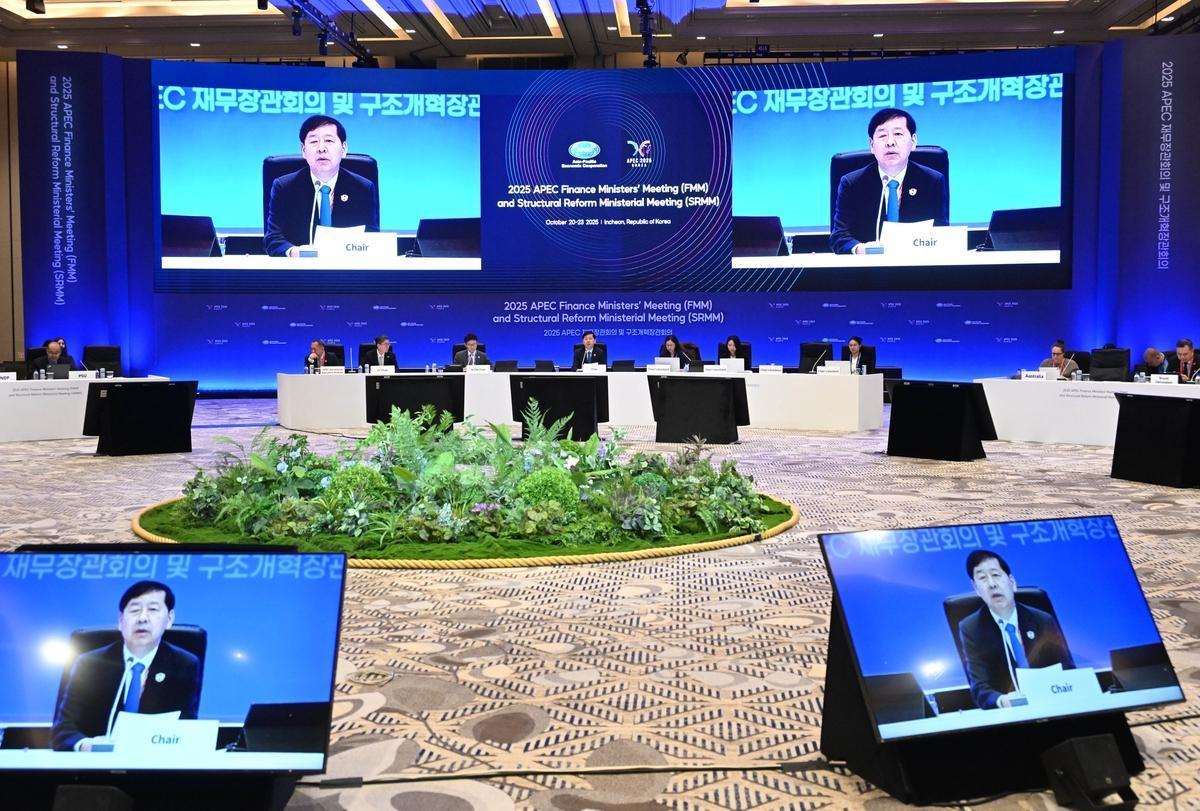
The Asia-Pacific Economic Cooperation (APEC) Finance Ministers' Meeting, held in Incheon, South Korea, from October 21-23, 2025, has set a new course for regional cooperation in response to the rapidly changing global economic landscape driven by artificial intelligence (AI)
1
. The gathering, which brought together finance ministers from 21 APEC member economies, focused on addressing fiscal challenges and digital transformation in the face of AI-driven shifts3
.
Source: Korea Times
The Incheon Plan: A New Roadmap for APEC
A significant outcome of the meeting was the unanimous adoption of the Incheon Plan, a five-year roadmap guiding shared financial policies among APEC members
1
. The plan focuses on four key pillars: innovation, finance, fiscal policy, and access and opportunity across the region. As the host country, Korea played a pivotal role in broadening the scope of APEC's financial discussions by introducing AI-related themes for the first time within the APEC finance track1
.AI-Driven Prosperity and Digital Transformation
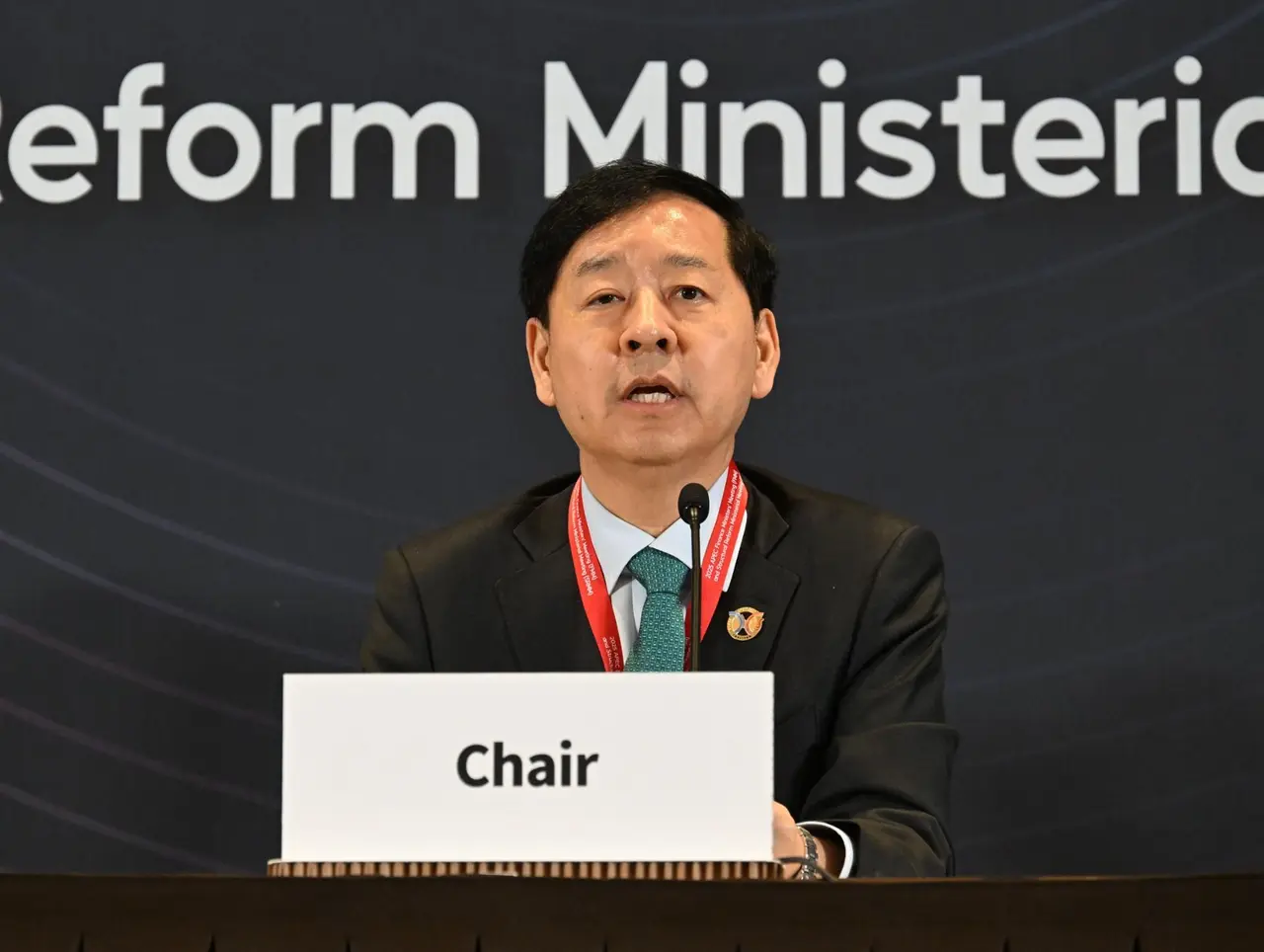
Korean Finance Minister Koo Yun-cheol emphasized the potential of AI to drive prosperity across APEC economies
2
. He highlighted Korea's comprehensive AI transformation plan across private and public sectors, citing a domestic study that projected AI adoption could increase Korea's productivity by 1.1 to 3.2 percent and its GDP by 4.2 to 12.6 percent2
.Addressing Fiscal Challenges and Sustainable Growth
The meeting also focused on confronting fiscal pressures and ensuring sustainable public finances in the face of demographic changes and long-term sustainability challenges
3
. Ministers discussed the need for fiscal authorities to respond to structural societal changes, including aging populations and climate change, while also channeling resources into critical areas such as AI transformation3
.Related Stories
Joint Session on Innovation and Digitalization
A unique aspect of this year's meeting was the joint session between finance ministers and their counterparts from the Structural Reform Ministerial Meeting
1
. This session explored how APEC economies can harness digital technologies to boost productivity, strengthen regulatory coherence, and ensure that the benefits of digital transformation are broadly shared3
.
Source: Korea Times
Looking Ahead: APEC Economic Leaders' Meeting
The outcomes of the Finance Ministers' Meeting and the Structural Reform Ministers' Meeting are expected to set the stage for the upcoming APEC Economic Leaders' Meeting, scheduled for October 31 to November 1, 2025, in Gyeongju, South Korea
2
. These gatherings have established a solid foundation for advancing structural reform policies and financial cooperation across the region, with a strong focus on AI-driven innovation and sustainable growth1
.References
Summarized by

Navi
[1]
Related Stories
South Korea Announces Massive AI Investment Push with $7 Billion Budget Increase
04 Nov 2025•Policy and Regulation

South Korea Prioritizes AI Investment to Boost Economic Growth Amid Challenges
22 Aug 2025•Technology

South Korea raises 2026 GDP forecast to 3% as AI chip boom fuels semiconductor-led recovery
14 Jul 2026•Business and Economy
Recent Highlights



Recent Highlights
Today's Top Stories






Don’t drown in AI news. We cut through the noise - filtering, ranking and summarizing the most important AI news, breakthroughs and research daily. Follow topics that matter to you and stay ahead.


