4 Sources
[1]
South Korea forecasts 2026 economic growth at 5-year high on AI chip boom
SEOUL, July 14 (Reuters) - South Korea pledged on Tuesday to swiftly advance artificial intelligence investments to bolster economic performance, as it raised its 2026 growth forecast to a five-year high of 3.0% on the back of a global semiconductor boom. In semi-annual economic policy plans released earlier, the finance ministry projected this year's economic growth at 3.0%, the strongest since 2021 and up from the previous forecast of 2.0% as well as last year's 1.1% pace. The ministry said it would push policies aimed at three key goals, including lifting the economy's potential growth rate to 3% from an estimated level below 2%. As part of that effort, the government will fast-track three "mega projects" unveiled last month covering semiconductor, AI data centre and physical AI investments, the ministry said. Earlier this week, the government said it would increase 2027 budget spending by at least 10% to more than 800 trillion won ($532.73 billion), prioritising the mega projects and drawing support from stronger tax revenues from the semiconductor sector. "While robust economic indicators, such as exports, driven by a semiconductor boom are clearly opportunity factors, there remain tasks that our economy needs to overcome at the same time," Vice Finance Minister Lee Hyoung-il said. Asia's fourth-largest economy delivered its strongest growth in nearly six years last quarter, driven by booming chip exports amid global surge in AI investment. The ministry also set targets of making South Korea one of the world's four largest exporters and raising gross national income per capita to $50,000, from an expected $40,000 this year. The country currently ranks among the world's top five exporters. It pledged measures to counter persistently high inflation, a weak currency and elevated bond yields linked to the Middle East conflict, including fuel price caps, extended foreign-exchange regulatory easing and low-cost policy loans in the second half of the year. Inflation was forecast at 2.6% for 2026, up from the previous 2.1% seen in January, amid high oil prices. That would be faster than the 2.1% pace in 2025 and the quickest since 2023. For 2027, the ministry forecast economic growth at 2.2% and inflation at 2.2%. ($1 = 1,501.7000 won) Reporting by Jihoon Lee Editing by Shri Navaratnam Our Standards: The Thomson Reuters Trust Principles., opens new tab
[2]
Global Market: South Korea targets AI-led growth, raises 2026 GDP forecast to five-year high; chip stocks in focus
South Korea has raised its 2026 GDP growth forecast to 3%, the fastest pace in five years, backed by an AI and semiconductor-led investment push. The government's plans to boost chip manufacturing, AI infrastructure and exports are expected to support technology stocks despite inflation and bond yield concerns. South Korea on Tuesday unveiled an ambitious economic strategy centred on artificial intelligence and semiconductor investments, while raising its 2026 economic growth forecast to 3.0%, the fastest pace in five years, as the country rides a global semiconductor boom, Reuters reported. In its semi-annual economic policy plans, the finance ministry projected the economy to expand 3.0% this year, sharply higher than its previous estimate of 2.0% and an improvement from last year's 1.1% growth. The revised forecast marks the strongest annual expansion since 2021, according to Reuters. US MarketsPowered By As on 14 Jul 2026, 01:30 AM IST S&P 500 Top Gainers FactSet Research Systems263.11(6.47%) Gartner141.31(6.06%) Valero Energy295.79(5.38%) Intuit289.76(5.38%) Gainers" S&P 500 Top Losers AppLovin442.85(-12.65%) Coterra Energy32.56(-8.62%) Oracle131.54(-6.47%) Intel103.12(-6.12%) Losers" The ministry said its policy agenda would focus on three key priorities, including lifting South Korea's potential growth rate to 3% from an estimated level below 2%. To achieve this, the government will accelerate three major investment projects announced last month, covering semiconductor manufacturing, AI data centres and physical AI technologies, Reuters reported. The latest policy push follows the government's announcement earlier this week that it plans to increase its 2027 budget by at least 10% to more than 800 trillion won ($532.73 billion). The additional spending will prioritise mega projects and be supported by stronger tax revenues from the semiconductor industry, according to Reuters. Vice Finance Minister Lee Hyoung-il said robust exports driven by the semiconductor boom have created significant opportunities for the economy, but policymakers still need to address several structural challenges, the news agency added. Asia's fourth-largest economy recorded its strongest quarterly growth in nearly six years in the latest quarter, driven by surging chip exports amid rising global investments in artificial intelligence, Reuters said. The government also outlined longer-term ambitions of making South Korea one of the world's four largest exporters and raising gross national income per capita to $50,000 from an expected $40,000 this year. South Korea is currently among the world's top five exporting nations, according to Reuters. Alongside its growth strategy, the ministry pledged measures to tackle elevated inflation, a weak currency and higher bond yields linked to tensions in the Middle East. Planned steps include fuel price caps, extending foreign-exchange regulatory easing and providing low-cost policy loans during the second half of the year, Reuters reported. The ministry raised its 2026 inflation forecast to 2.6% from 2.1% projected in January, citing higher oil prices. The revised estimate compares with inflation of 2.1% in 2025 and would represent the highest annual inflation rate since 2023. Looking ahead, the finance ministry expects economic growth to moderate to 2.2% in 2027, with inflation also easing to 2.2%, according to Reuters. Impact on stocks The government's aggressive push to expand AI and semiconductor investments is expected to support sentiment towards South Korean technology and chipmakers, which have already benefited from the global AI-driven demand cycle. Increased public spending on semiconductor infrastructure, AI data centres and related technologies could strengthen earnings visibility for companies across the semiconductor supply chain. The upgraded growth outlook is also likely to bolster broader investor confidence in South Korean equities, particularly export-oriented sectors such as technology, electronics and industrials. However, the higher inflation forecast and concerns over elevated bond yields may temper gains in interest rate-sensitive sectors, while companies with high energy costs could remain exposed if oil prices stay elevated. (Disclaimer: Recommendations, suggestions, views and opinions given by the experts are their own. These do not represent the views of The Economic Times)
[3]
Korea eyes 3% growth in 2026 riding on AI chip boom - The Korea Times
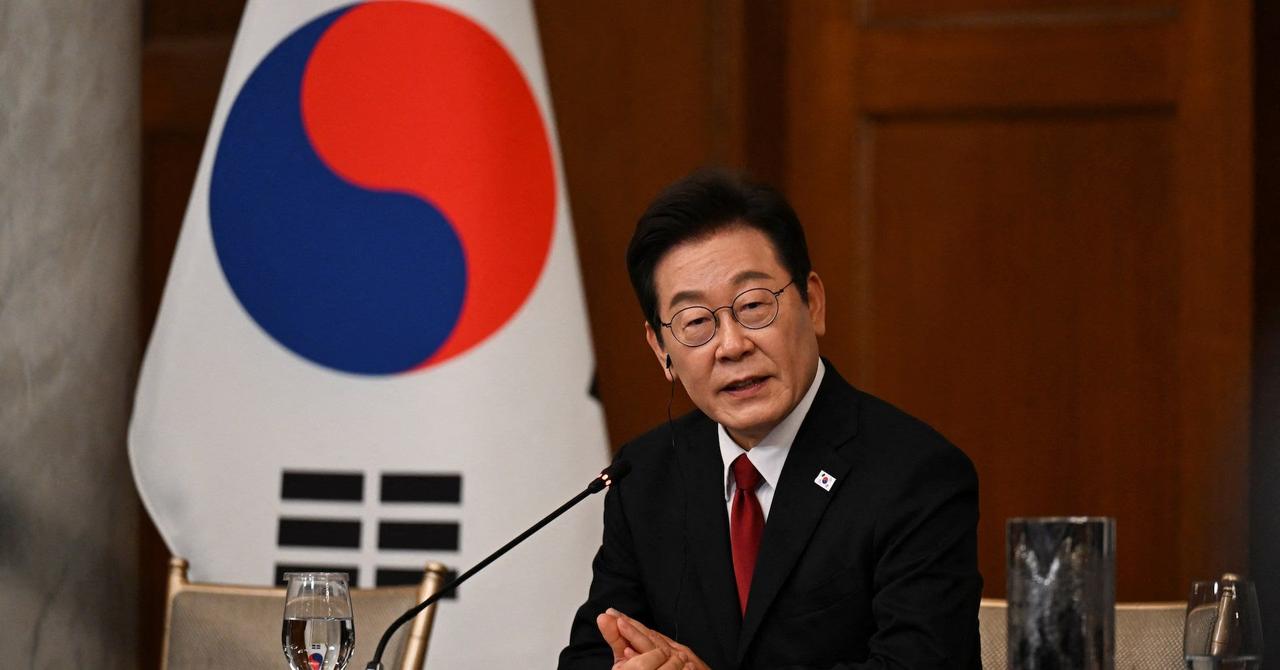
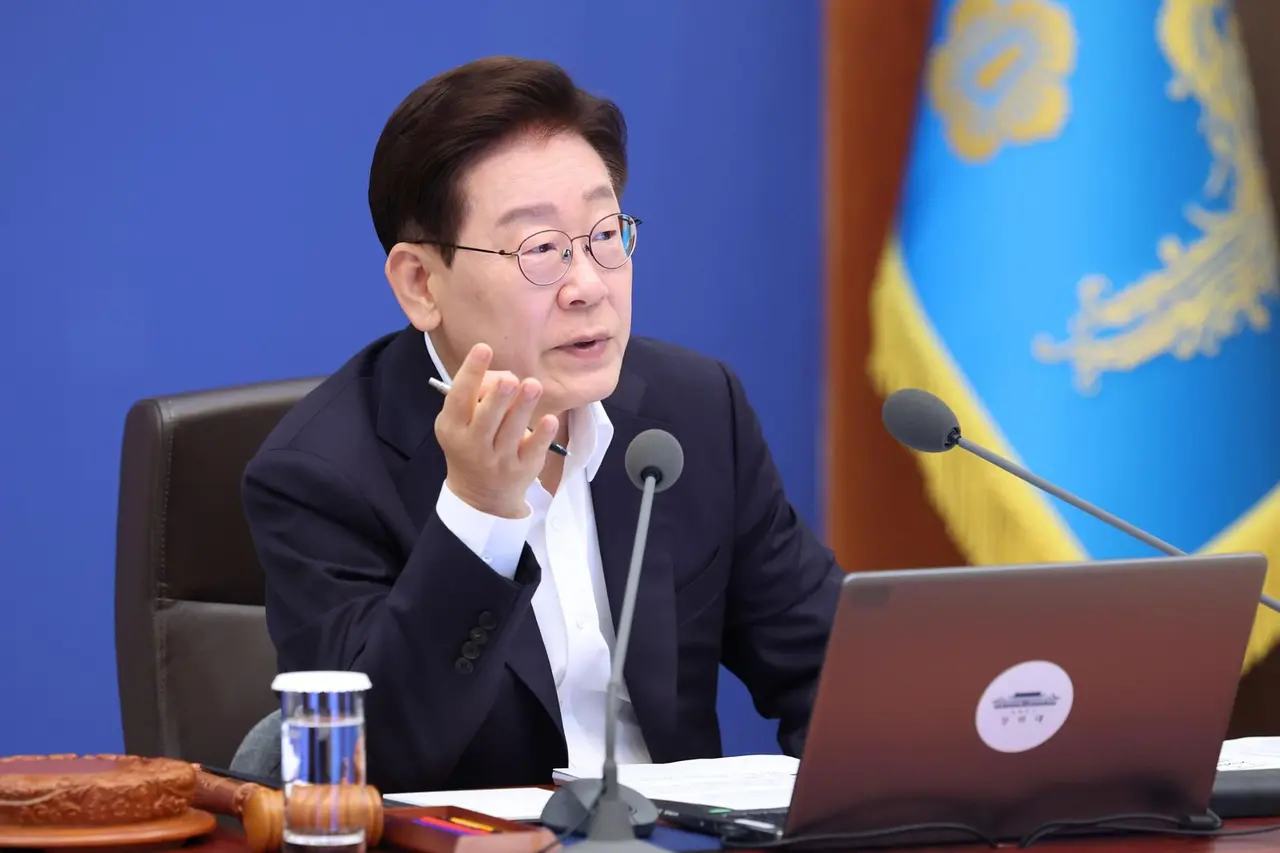
President Lee Jae Myung speaks during a Cabinet meeting at Cheong Wa Dae in Seoul, Tuesday. Joint Press Corps The government on Tuesday raised Korea's real gross domestic product (GDP) growth forecast for 2026 to 3 percent, up from the January projection of 2 percent, citing robust semiconductor exports driven by strong global demand for artificial intelligence (AI) chips. To keep the growth momentum going, it plans to focus on developing semiconductor-centered industries and creating relevant jobs for young people. The revised forecast was unveiled as the government announced its economic strategy for the second half of the year. "The economy is expected to grow 3 percent this year as strong AI-driven demand for semiconductors continues to support exports, while downside risks stemming from the Middle East conflict will be cushioned by the supplementary budget and other policy measures," the Ministry of Finance and Economy said. The government's projection is more optimistic than those of major international organizations. Earlier this month, both the OECD and the International Monetary Fund released their forecasts that Korea's economy would expand by 2.6 percent this year. The ministry also projected nominal GDP growth at 12.3 percent, the fastest pace since 1996, driven by improved trade conditions from the chip export boom. Consumer inflation is forecast to average 2.6 percent this year amid continued volatility in global oil prices linked to the Middle East conflict. Speaking at a Cabinet meeting, President Lee Jae Myung called on ministries to seize the opportunities created by the AI-driven transformation of the global economy. "The achievements we make in the second half of this year will determine the direction of Korea's next 30 years," Lee said. The president set out goals of raising Korea's potential growth rate to 3 percent, becoming the world's fourth-largest trading nation and increasing per capita income to $50,000. According to the OECD, Korea's potential growth rate fell to 1.85 percent in 2025 from 2.45 percent a year earlier and is projected to decline further to 1.66 percent this year. "We need to accelerate the economic drive in the latter half of this year," Lee said. Later in the day, Finance Minister Koo Yun-cheol outlined the government's economic strategy for the remainder of the year, aimed at sustaining the semiconductor-led recovery while strengthening Korea's long-term growth potential. "Whether the current semiconductor boom ends as a temporary success or becomes a lasting turning point for the Korean economy depends on the choices we make today," Koo said during a briefing. "We must reverse the decline in Korea's potential growth rate and address widening structural imbalances between exports and domestic demand, the IT and non-IT sectors, and the capital region and other parts of the country," he added. To support those goals, the government plans to establish a new fund to channel windfall corporate tax revenue generated by the semiconductor boom into long-term investment in youth development, regional growth and future industries. The strategy also includes three flagship projects aimed at developing advanced industries centered on semiconductors, physical AI and AI data centers across the country's southwestern and central regions in the Jeolla and Chungcheong provinces, with major investments planned by Samsung Electronics and SK hynix. In addition, the government aims to create more than 200,000 jobs for young people by 2030, including 100,000 private-sector positions in emerging industries such as science and technology, as well as 100,000 public-sector jobs linked to strategic industries. The government also said it would foster new growth engines, including blockchain and other emerging industries, while pursuing regulatory reforms to support sustainable long-term growth.
[4]
South Korea forecasts 2026 economic growth at 5-year high on AI chip boom
SEOUL, July 14 (Reuters) - South Korea pledged on Tuesday to swiftly advance artificial intelligence investments to bolster economic performance, as it raised its 2026 growth forecast to a five-year high of 3.0% on the back of a global semiconductor boom. In semi-annual economic policy plans released earlier, the finance ministry projected this year's economic growth at 3.0%, the strongest since 2021 and up from the previous forecast of 2.0% as well as last year's 1.1% pace. The ministry said it would push policies aimed at three key goals, including lifting the economy's potential growth rate to 3% from an estimated level below 2%. As part of that effort, the government will fast-track three "mega projects" unveiled last month covering semiconductor, AI data centre and physical AI investments, the ministry said. Earlier this week, the government said it would increase 2027 budget spending by at least 10% to more than 800 trillion won ($532.73 billion), prioritising the mega projects and drawing support from stronger tax revenues from the semiconductor sector. "While robust economic indicators, such as exports, driven by a semiconductor boom are clearly opportunity factors, there remain tasks that our economy needs to overcome at the same time," Vice Finance Minister Lee Hyoung-il said. Asia's fourth-largest economy delivered its strongest growth in nearly six years last quarter, driven by booming chip exports amid global surge in AI investment. The ministry also set targets of making South Korea one of the world's four largest exporters and raising gross national income per capita to $50,000, from an expected $40,000 this year. The country currently ranks among the world's top five exporters. It pledged measures to counter persistently high inflation, a weak currency and elevated bond yields linked to the Middle East conflict, including fuel price caps, extended foreign-exchange regulatory easing and low-cost policy loans in the second half of the year. Inflation was forecast at 2.6% for 2026, up from the previous 2.1% seen in January, amid high oil prices. That would be faster than the 2.1% pace in 2025 and the quickest since 2023. For 2027, the ministry forecast economic growth at 2.2% and inflation at 2.2%. ($1 = 1,501.7000 won) (Reporting by Jihoon LeeEditing by Shri Navaratnam)
Share
Copy Link
South Korea has raised its 2026 economic growth forecast to 3%, the strongest pace in five years, riding a global surge in AI chip demand. The government plans to fast-track mega projects covering semiconductor manufacturing, AI data centres and physical AI investments, backed by a 2027 budget exceeding 800 trillion won. The upgrade marks a sharp revision from the previous 2.0% forecast.
South Korea has raised its 2026 GDP forecast to 3.0%, marking the strongest South Korea economic growth projection in five years as the nation capitalizes on a global boom in semiconductor and AI chip demand
1
. The finance ministry's semi-annual economic policy plans represent a significant upward revision from the previous forecast of 2.0% and a substantial improvement from last year's 1.1% growth rate1
. This AI chip boom has positioned Asia's fourth-largest economy to deliver its strongest quarterly performance in nearly six years, driven by surging chip exports amid rising global investments in artificial intelligence2
.The Ministry of Finance has outlined three key policy priorities, with the primary goal of lifting the country's potential growth rate to 3% from an estimated level below 2%
1
. According to the OECD, South Korea's potential growth rate fell to 1.85% in 2025 from 2.45% a year earlier and is projected to decline further to 1.66% this year, making the government's ambitions particularly urgent3
.

Source: ET
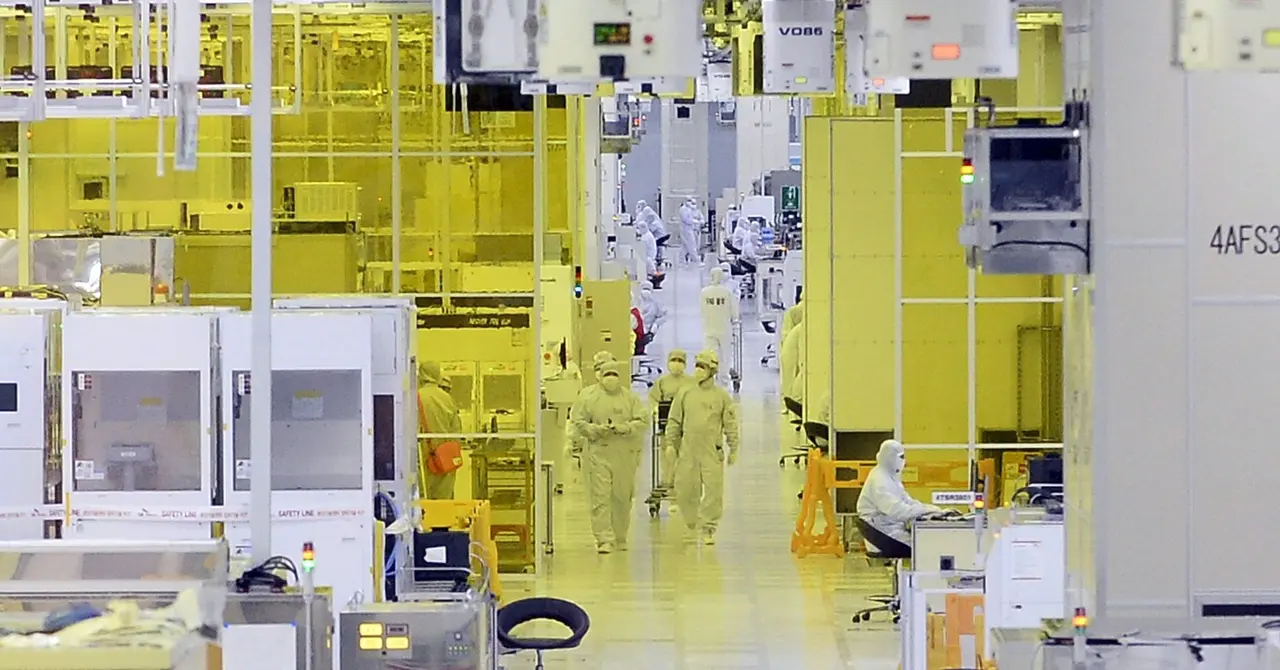
The government plans to fast-track three mega projects unveiled last month, covering semiconductor manufacturing, AI data centre development and physical AI investments
1
. These flagship initiatives will focus on developing advanced industries centered on AI-driven semiconductors across the country's southwestern and central regions in the Jeolla and Chungcheong provinces, with major investments planned by Samsung Electronics and SK hynix3
.To support this AI-led growth agenda, the government announced earlier this week that it would increase 2027 budget spending by at least 10% to more than 800 trillion won ($532.73 billion)
1
. The additional spending will prioritize these mega projects and be supported by stronger tax revenues from the semiconductor sector2
. Finance Minister Koo Yun-cheol emphasized the stakes: "Whether the current semiconductor boom ends as a temporary success or becomes a lasting turning point for the Korean economy depends on the choices we make today"3
.
Source: Reuters
The ministry has set ambitious targets of making South Korea one of the world's four largest exporters and raising gross national income per capita to $50,000, from an expected $40,000 this year
1
. The country currently ranks among the world's top five exporters4
. President Lee Jae Myung told Cabinet members that "the achievements we make in the second half of this year will determine the direction of Korea's next 30 years"3
.
Source: Korea Times
The government's projection of 3% growth is more optimistic than forecasts from major international organizations. Earlier this month, both the OECD and the International Monetary Fund projected Korea's economy would expand by 2.6% this year
3
. The ministry also projected nominal GDP growth at 12.3%, the fastest pace since 1996, driven by improved trade conditions from the chip export boom3
.Related Stories
Vice Finance Minister Lee Hyoung-il acknowledged that "while robust economic indicators, such as exports, driven by a semiconductor boom are clearly opportunity factors, there remain tasks that our economy needs to overcome at the same time"
1
. The ministry pledged measures to counter persistently high inflation, a weak currency and elevated bond yield pressures linked to geopolitical risks from the Middle East conflict1
.Planned steps include fuel price caps, extended foreign-exchange regulatory easing and low-cost policy loans in the second half of the year
4
. Inflation was forecast at 2.6% for 2026, up from the previous 2.1% seen in January, amid high oil prices1
. This would be faster than the 2.1% pace in 2025 and the quickest since 20234
. For 2027, the ministry forecast economic growth at 2.2% and inflation at 2.2%1
.The government also plans to establish a new fund to channel windfall corporate tax revenues generated by the semiconductor boom into long-term investment in youth development, regional growth and future industries
3
. The strategy includes creating more than 200,000 jobs for young people by 2030, including 100,000 private-sector positions in emerging industries such as science and technology, as well as 100,000 public-sector jobs linked to strategic industries3
.Summarized by
Navi
[4]
22 Aug 2025•Technology

24 Jun 2026•Technology

30 Aug 2025•Business and Economy

1
Technology

2
Business and Economy

3
Technology