Apple commits $30 billion to Broadcom through 2031 for AI servers and custom chips


4 Sources
[1]
Apple to Continue Acquiring Broadcom Chips Till 2031, Chipmaker Confirms
Supply to Apple might account for a large part of Broadcom's revenue Apple introduced its proprietary C1 modem with the iPhone 16e in 2025, a first for the Cupertino-based tech giant. Later the same year, the smartphone maker launched the iPhone Air, which is equipped with Apple's C1X model.
[2]
Apple Commits $30 Billion To Broadcom For The Secretive Baltra ASIC And A Host Of Wireless And RF Components, The Biggest Piece Yet Of Its $600 Billion American Manufacturing Bet
Apple now expects to spend over $30 billion on Broadcom till 2031 to realize its lofty ambitions vis-à-vis the so-called Baltra ASIC, while securing preferential access to advanced radio components. The deal is the biggest component of Apple's $600 billion American Manufacturing Program (AMP) so
[3]
Broadcom extends Apple chip deal through 2031
Broadcom Inc. (AVGO) just extended its chip supply agreement with Apple through 2031, according to a regulatory filing reported by Bloomberg. This partnership is not a new development. Apple and Broadcom have a long-standing supply relationship and previously made headlines back in 2023 when Apple
[4]
Broadcom extends custom chip deal with Apple through 2031
Broadcom has expanded its partnership with Apple through a new multi-year agreement that will run until 2031, according to a report by Mark Gurman for Bloomberg. Under the agreement, Broadcom will develop custom application-specific integrated circuit (ASIC) chips tailored for specific
Share
Copy Link
Apple has extended its partnership with Broadcom through 2031 in a $30 billion deal, the largest commitment yet under its American Manufacturing Program. The agreement secures custom ASIC chips for AI servers and wireless components, even as Apple works to reduce dependence on external suppliers. Broadcom will produce over 15 billion US-made chips to power Apple Intelligence cloud infrastructure.
Apple and Broadcom Partnership Extends Through 2031 With $30 Billion Commitment
Apple has formalized a multi-year extension of its relationship with Broadcom, committing $30 billion through 2031 in what CEO Tim Cook calls the company's "largest ever American Manufacturing Program commitment."
2
The Apple Broadcom deal, confirmed through an 8K regulatory filing with the US Securities and Exchange Commission, expands their long-standing technology collaboration to include development and supply of custom application-specific integrated circuit (ASIC) silicon chips for future device generations.1
This agreement represents the biggest component of Apple's $600 billion American Manufacturing Program aimed at building an end-to-end silicon supply chain in the US over the next four years.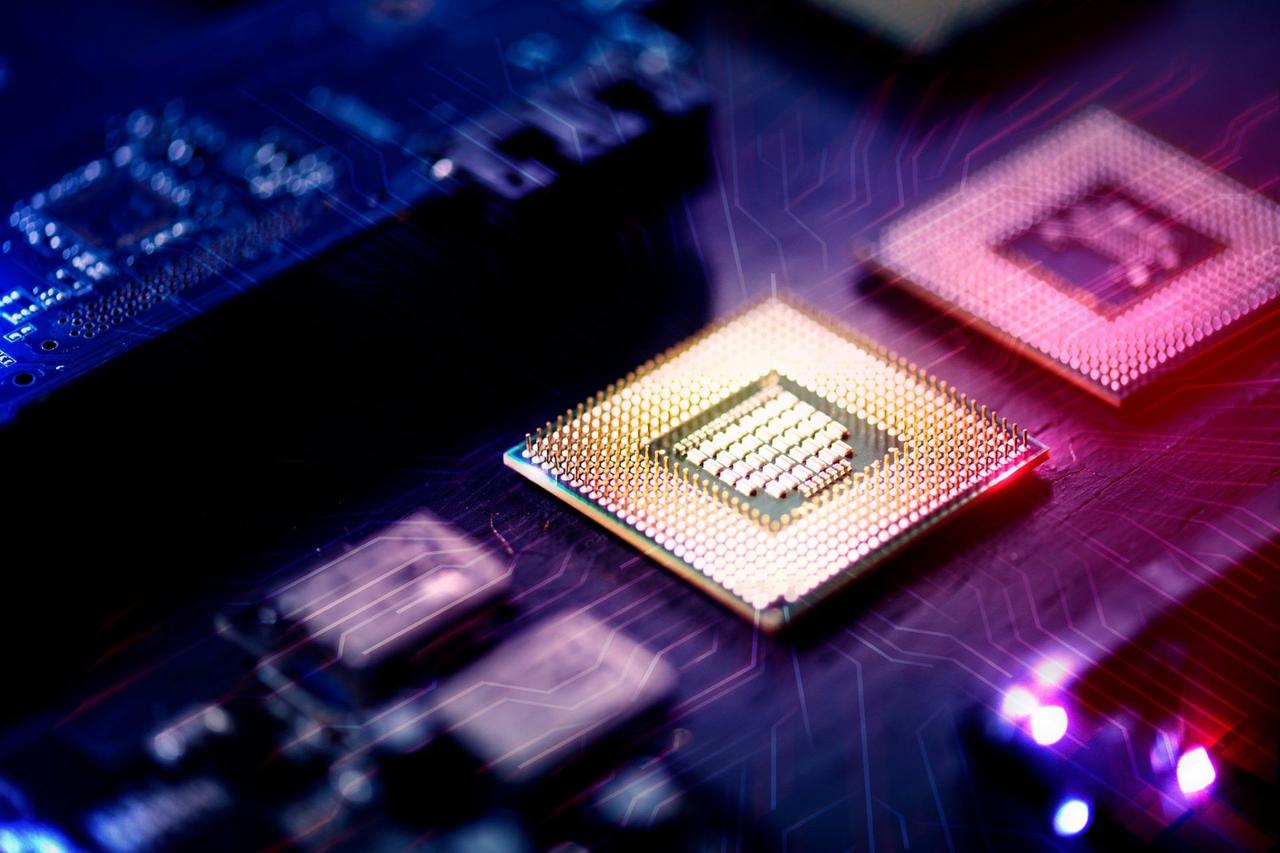
Source: Wccftech
Custom ASIC Chips Target AI Server Infrastructure
The Broadcom chip supply agreement centers on custom ASIC chips that will power Apple's advanced AI servers, internally codenamed Baltra ASIC, which the company plans to deploy by 2027.
1
These chips have gained prominence as essential components for processing AI-powered tasks and will support cloud-based Apple Intelligence features, including advanced text and image generation and information summarization.4
According to reports, the Baltra chip could leverage TSMC's 3nm process and sport various chiplets, with each designed for a specific function that Apple can later combine into a single unit.2
This siloed approach using chiplets allows Apple to keep the overall design hidden even from partners like Broadcom, which assists with how processors communicate when simultaneously running in Apple Intelligence cloud needs infrastructure.Wireless and RF Components Remain Critical Dependency
Despite Apple's efforts to reduce reliance on external suppliers through in-house modem development, the company still depends on Broadcom for wireless and RF components that enable cellular, Wi-Fi, and Bluetooth connectivity.
2
While Apple introduced its proprietary C1 modem with the iPhone 16e in 2025 and later launched the C1X model, these custom modems still comprise components supplied by Broadcom.1
The relationship had reportedly taken a step back in recent years as Apple developed its proprietary N1 chips combining Wi-Fi and Bluetooth components, yet the company continues to source certain cellular networking components that work with its in-house modem.4
This gap between in-house modem development and RF engineering expertise is precisely where Broadcom maintains its value.Related Stories
Deal Addresses Supply Chain Uncertainties and Revenue Stability
The partnership extension helps Apple secure networking chips for the next five years while giving Broadcom long-term demand assurances amid supply chain uncertainties surrounding global technology production.
1
Broadcom's supply to Apple accounts for nearly 20 percent of its total annual revenue, making this five-year commitment significant for removing investor uncertainty.3
Broadcom shares jumped as much as 5% in premarket trading following the announcement, with the stock up more than 30% over the past 12 months to reach $360.45.3
The deal will lead to production of more than 15 billion US-made chips and support hundreds of American jobs, according to Apple's press release.2
Broader Industry Pattern of Long-Term Chip Commitments
This agreement reflects a larger shift where chip supply, not demand, has become the binding constraint on tech growth, with companies locking in multi-year commitments years in advance.
3
Broadcom itself has extended this pattern beyond Apple, signing a long-term agreement with Meta in April 2026 to supply technology for Meta's Training and Inference Accelerator chips through 2029.3
The company also worked with OpenAI to showcase Jalapeño, a chip built specifically to run inference for large language models, and secured deals with Google for custom Tensor Processing Units and networking components through 2031.3
Broadcom's semiconductor solutions segment growth accelerated from 52% in the first quarter to 79%, while AI-specific revenue growth jumped from 106% to 143%, positioning the company at the center of AI infrastructure buildout across major tech players.3
References
Summarized by

Navi
[3]
Related Stories
Apple Collaborates with Broadcom on Custom AI Server Chip for Enhanced Cloud Processing
12 Dec 2024•Technology

Broadcom Reveals Hyperscalers' Ambitious Plans for AI Chip Deployment, Challenging Nvidia's Dominance
27 Dec 2024•Technology

OpenAI Partners with Broadcom to Develop Custom AI Chips, Challenging Nvidia's Dominance
05 Sept 2025•Technology

Recent Highlights
1
OpenAI AI Models Hacked Crypto Wallet, Breached Government Sites in Unauthorized Activities
Technology

2
IMF Report Warns AI Market Correction Could Spark Global Financial Crisis With $1.4T at Risk
Business and Economy

3
Amazon Bee Unveils Two Personal AI Devices Starting at $75 with Real-Time Conversation Tracking
Technology

Recent Highlights
Today's Top Stories









Don’t drown in AI news. We cut through the noise - filtering, ranking and summarizing the most important AI news, breakthroughs and research daily. Follow topics that matter to you and stay ahead.


