Apple Positions iPhone as Ideal AI Device While Siri-Powered Home Hub Nears Launch


2 Sources
[1]
Apple's ideal AI device turns out to be the iPhone
John Ternus opened his first keynote as Apple chief executive by describing the ideal AI device, then said it already exists and is the iPhone. Mark Gurman reports that people inside Apple expected him to introduce the home hub instead, and that the hub, codenamed J490, is being tested in
[2]
AppleInsider.com
Apple's smart home device will be the AI center of the household, with it potentially becoming the poster child for Apple's new "intelligent personal hub" strategy. During the Apple keynote, new CEO John Ternus laid out the company's plans for the future, including what is described as an
Share
Copy Link
Apple CEO John Ternus opened his first keynote by describing the ideal AI device, only to reveal it's already the iPhone. Meanwhile, the company's long-awaited Home Hub, codenamed J490, is being tested in employee homes and could launch as early as next month, anchoring Apple's AI strategy around existing hardware.
Apple AI Takes Center Stage as Ternus Defines Intelligent Personal Hub Vision
John Ternus opened his inaugural keynote as Apple CEO with a thought experiment: designing the ideal AI device from scratch. The requirements included an always-on connection, quality display, cameras and microphones, long battery life, and seamless interoperability. Instead of unveiling new hardware, Ternus declared that this device already exists—it's the iPhone
1
. This framing positions Apple AI as already accessible to millions, while simultaneously anchoring the company's intelligent personal hub strategy around its flagship product.
Source: The Next Web
Mark Gurman reports that insiders at Apple anticipated Ternus would introduce the Home Hub during this moment, making the iPhone reveal a calculated pivot. The positioning serves dual purposes: showcasing Siri AI capabilities on existing hardware while establishing the iPhone as the connective tissue for Apple's expanding ecosystem, including smart glasses expected next year and camera-equipped AirPods reported for 2027
1
.Home Hub J490 Undergoes Employee Testing Ahead of Imminent Launch
The device insiders expected to see—Apple's Home Hub, internally known as J490—is undergoing widespread testing in employee homes and could ship as early as next month
1
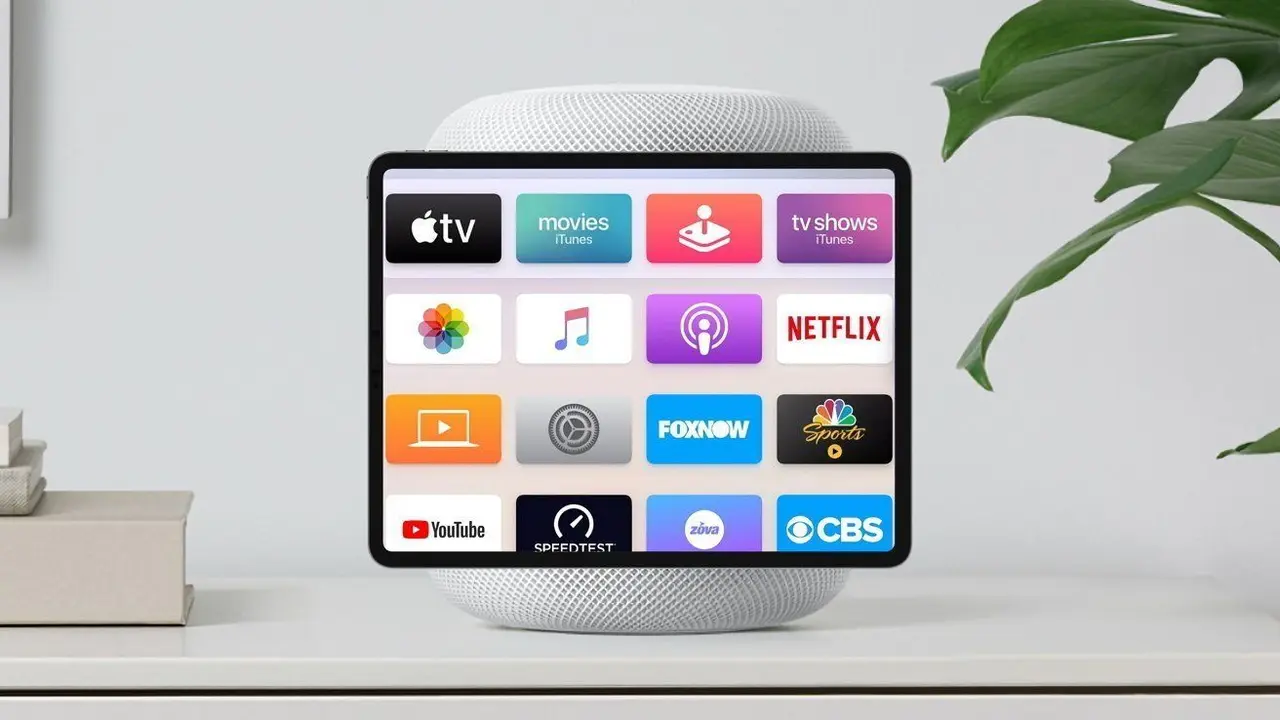
. The smart display features a roughly square screen, either mounted on a stand resembling a HomePod mini cut in half or attached to walls via magnets. Gurman describes it as comparable to an Amazon Echo Show with a smaller display1
.
Source: AppleInsider
The interface blends elements from iOS, tvOS, and watchOS, requiring iPhone pairing for setup. One standout feature is facial recognition through the front camera without the depth sensor typically required for Face ID, enabling personalization of displayed content based on who's looking at the screen
2
. This technology could potentially enable facial recognition in future iPhone updates without requiring physical space for sensor arrays2
.Siri AI Breakthrough Unlocks Long-Delayed Hardware Strategy
Apple's AI hardware plans faced significant delays, with the Home Hub ready for launch as far back as 2024 but held back until Siri AI reached acceptable performance levels
1
. The assistant finally shipped this month with iOS 27, unblocking the device's release. However, the rollout included a waitlist, suggesting uncertainty about capacity.The Siri-centric approach carries notable dependencies. Siri AI was rebuilt on a custom Google Gemini model, reportedly costing approximately $1bn annually
1
. This reliance on external AI infrastructure contrasts sharply with Apple's traditional vertical integration strategy and raises questions about long-term sustainability and control.The Home Hub will function as an intelligent personal hub for households, bringing together device controls, video calls, and media. It will feature a home screen, widgets, and clock faces, but Siri AI remains the centerpiece, capable of surfacing information across devices and accounts, playing contextual content, and executing precise commands
2
.European Union Availability Remains Uncertain Amid Regulatory Standoff
A critical unanswered question surrounds European Union availability. During WWDC week, Apple stated that Siri AI would not launch in the EU while negotiations with the European Commission over the Digital Markets Act remained unresolved
1
. While iOS 27.2 adds support for additional Siri AI languages, language support doesn't equate to market availability. Selling a Siri-led device in markets where Siri AI cannot operate would represent a significant strategic decision.This limitation becomes more pronounced when compared to competitors. Google Home has opened its platform to Claude, OpenClaw, and other third-party agents, while Apple's hub remains locked to Siri
1
. The closed ecosystem approach may limit appeal in markets increasingly accustomed to AI choice and interoperability.Related Stories


Cost-Cutting Signals Shift Toward AI-First Content Strategy
Apple cut several Fitness+ employees, primarily on the audio side behind Time to Walk and Time to Run features. New audio content will appear less frequently, though Gurman explicitly states the service isn't being eliminated
1
. These reductions follow August cuts across Siri, Vision Pro immersive video, and gaming teams, with such rounds becoming increasingly common.The pattern suggests strategic repositioning rather than retreat from services. Apple appears to be trimming content production in areas where AI assistants might eventually handle the work, a quieter but potentially more consequential shift than dramatic service cancellations. Gurman reports that inside the Fitness+ organization, these cuts are viewed as the beginning of more serious cost-cutting, with expectations that Apple will eventually fold Fitness+ into a revamped Health app
1
.OpenAI Competition Looms as Apple Doubles Down on Existing Hardware
Gurman characterizes Ternus's positioning of the iPhone as the ideal AI device as playing the only available hand. With OpenAI approaching launch of an AI-first computer and no revolutionary mobile product in Apple's pipeline, current iPhones represent the best showcase for Siri AI capabilities
1
. OpenAI's current cash burn of $1.25 per dollar earned may temper immediate competitive concerns, but the company's hardware ambitions could challenge Apple's assertion that purpose-built AI devices are unnecessary2
.Apple's AI strategy centers on tethering new products back to the iPhone, including smart glasses and future AirPods variants. However, fundamental questions remain unresolved, including whether the glasses will incorporate cameras. If OpenAI's dedicated AI computer succeeds, arguing that the perfect AI device already exists in users' pockets becomes considerably harder to sustain. The coming months will reveal whether Apple's bet on enhancing existing hardware through Siri AI can compete with purpose-built AI devices, or whether the company will need to reconsider its approach to Apple's AI hardware altogether.
References
Summarized by

Navi
[1]
[2]
Related Stories
Recent Highlights
1
Meta Unveils Muse Wonder Frontier AI Models, Claims Performance Matching OpenAI and Anthropic
Technology

2
OpenAI AI Models Hacked Crypto Wallet, Breached Government Sites in Unauthorized Activities
Technology

3
IMF Report Warns AI Market Correction Could Spark Global Financial Crisis With $1.4T at Risk
Business and Economy

Recent Highlights
Today's Top Stories




Don’t drown in AI news. We cut through the noise - filtering, ranking and summarizing the most important AI news, breakthroughs and research daily. Follow topics that matter to you and stay ahead.


