AWS CEO Matt Garman says AI should not replace junior devs, warns of threats to talent pipelines


2 Sources
[1]
AWS CEO Matt Garman Doesn't Think AI Should Replace Junior Devs
Amid the breathless coverage and relentless AI hype of recent years, one of the world's biggest tech companies -- Amazon -- has been notably absent. Matt Garman, the CEO of Amazon Web Services, is looking to change that. At the recent AWS re:Invent conference, Garman announced a bunch of frontier
[2]
AWS CEO says replacing young employees with AI is 'one of the dumbest ideas' -- and bad for business: 'At some point the whole thing explodes on itself' | Fortune
Anthropic CEO Dario Amodei has warned of AI displacing entry-level workers, and Ford CEO Jim Farley said the tech will wipe out half of white-collar jobs, but Amazon Web Services (AWS) CEO Matt Garman has a wildly different take on young workers' fate in the age of AI. Earlier this year, Garman
Share
Copy Link
Amazon Web Services CEO Matt Garman pushes back against AI replacing entry-level workers, calling it short-sighted and bad for business. Despite warnings from other tech leaders about AI displacing junior employees, Garman argues that eliminating young workers threatens talent pipelines and long-term company health, even as Amazon pursues aggressive automation goals.
AWS CEO Challenges Industry Narrative on AI Displacing Entry-Level Workers
Matt Garman, the CEO of Amazon Web Services, has taken a contrarian stance in the heated debate over AI transforming job roles across the tech industry. While leaders like Anthropic CEO Dario Amodei warn of AI displacing entry-level workers and Ford CEO Jim Farley predicts the technology will eliminate half of white-collar jobs, Garman maintains that replacing young employees with AI represents "one of the dumbest ideas" he's encountered
2
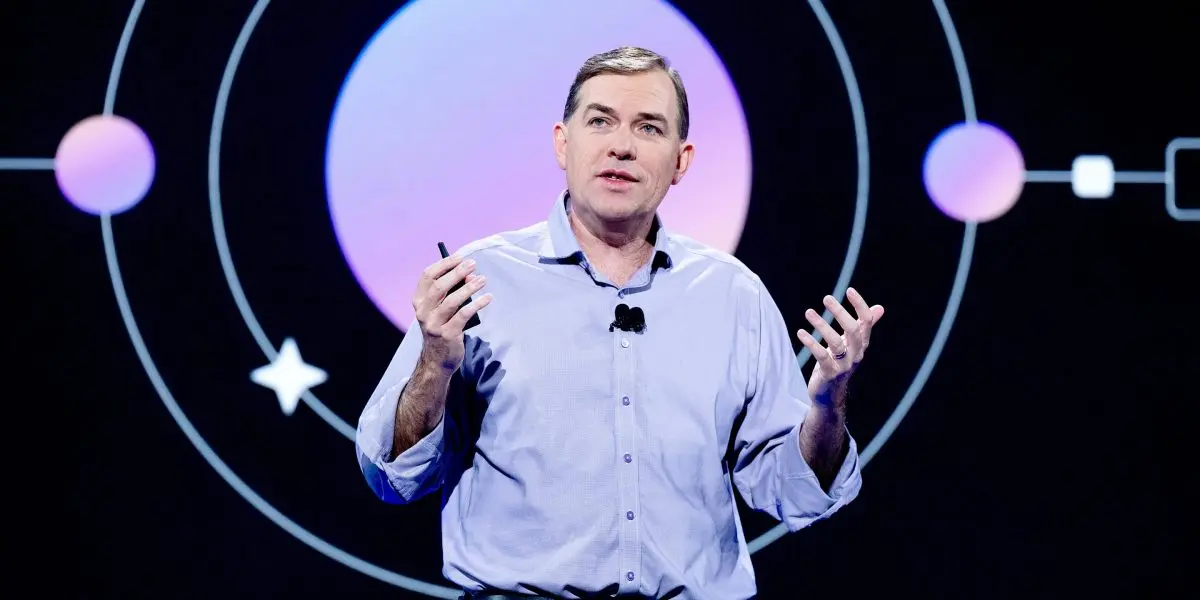
. Speaking at the recent re:Invent conference and in a subsequent interview with WIRED, the 49-year-old executive outlined why he believes junior developers and entry-level employees remain critical to building sustainable organizations1
.
Source: Fortune
Garman's argument centers on both economic logic and organizational health. Entry-level workers typically earn the lowest salaries, making their elimination in favor of retaining higher-paid senior talent a counterintuitive cost-cutting strategy. More importantly, these fresh-faced young workers often arrive as recent college graduates bringing energy, excitement, and native familiarity with AI tools that older employees may lack. "At some point that whole thing explodes on itself," Garman told WIRED. "If you have no talent pipeline that you're building and no junior people that you're mentoring and bringing up through the company, we often find that that's where we get some of the best ideas"
2
.The Contradiction Between Vision and Reality at Amazon
Garman's defense of junior employees arrives amid a complex reality at the tech giant. Amazon announced in October it would slash 14,000 jobs, primarily targeting middle management positions. Earlier in the year, additional layoffs hit divisions including Amazon Web Services, the Wondery podcast division, and consumer devices units
2
. While Amazon CEO Andy Jassy attributed these workforce reductions to cultural mismatches rather than automation, internal memos tell a different story. A June memo acknowledged that AI efficiency gains would "reduce our total corporate workforce," and a New York Times investigation revealed Amazon's ambitious goal to automate 75% of its work, potentially eliminating the need to hire for approximately 600,000 positions2
.This tension between Garman's public statements and Amazon's automation trajectory reflects broader uncertainty in the labor market. A Stanford University study published in August found that "the AI revolution" is already having a "significant and disproportionate impact on entry-level workers in the U.S. labor market," particularly affecting 22- to 25-year-old software engineers and customer service agents
2
.AWS Focuses on Enterprise Solutions While Acknowledging Workforce Transformation
At the re:Invent conference, Garman announced frontier AI models and Nova Forge, a tool enabling AWS customers to engage in custom pretraining by adding their own data during base model development. This enterprise solutions approach reflects Garman's belief that AI's real value lies not in consumer applications but in integration across AWS offerings with material impact on corporate bottom lines
1
. Rather than compete with flashy consumer AI announcements, Garman aims to embed AI throughout Amazon Web Services' infrastructure.Yet Garman doesn't deny that AI will fundamentally alter how people work. "One of the things that I tell our own employees is 'Your job is going to change.' There's no two ways about it," he acknowledged. He predicts AI will initially create a burst of new positions while reducing others, but employees must learn new skills and organizations must restructure teams. Those who adapt will gain expanded impact and responsibilities, while those who resist change risk being left behind by faster-moving competitors. "There is going to be some disruption in there for sure. Like there is no question in my mind," Garman stated
2
.Related Stories

Long-Term Company Health Depends on Talent Pipelines
Garman's core message emphasizes that long-term company health requires sustained investment in developing future leaders. "You've gotta think longer term about the health of a company," he explained. "And just saying 'OK great, we're never going to hire junior people anymore,' that's just a nonstarter for anyone who's trying to build a long-term company"
2
. This perspective positions talent pipelines as strategic assets rather than expendable costs, even as automation pressures mount across industries. Whether Amazon and other tech companies will follow this philosophy as AI capabilities accelerate remains an open question that will shape the workforce for years to come.References
Summarized by

Navi
Related Stories
AWS CEO Matt Garman Criticizes Replacing Junior Staff with AI, Emphasizes Long-Term Talent Development
20 Aug 2025•Technology

AWS CEO says AI isn't replacing workers as Amazon plans to hire 11,000 software developers
30 Apr 2026•Business and Economy
AWS CEO Matt Garman declares AI agents bigger than internet as Amazon stakes claim in AI race
02 Dec 2025•Technology

Recent Highlights
1
Microsoft and Nvidia Launch Surface Laptop Ultra: A $2,599 AI-Ready PC With RTX Spark Chip
Technology

2
Google Unveils Gemini 4 Argon AI Model, Restricts Access to Trusted Cyber Defenders
Technology

3
OpenAI Releases 722 AI-Generated Math Papers on GitHub, Igniting Fury Among Mathematicians
Science and Research

Recent Highlights
Today's Top Stories






Don’t drown in AI news. We cut through the noise - filtering, ranking and summarizing the most important AI news, breakthroughs and research daily. Follow topics that matter to you and stay ahead.


