AWS CEO says AI isn't replacing workers as Amazon plans to hire 11,000 software developers


4 Sources
[1]
Wanna Work for Amazon? AWS CEO Promises He's Still Hiring Devs
Amazon has been laying off staff en masse this year, axing over 16,000 employees in 2026 so far. Meanwhile, fears about AI taking white-collar jobs are everywhere, with programming one of the many fields that experts are saying are primed for disruption. However, the CEO of cloud computing giant
[2]
Massive layoffs, shocking pivot: Amazon cuts 30,000 jobs, yet AWS CEO insists AI isn't replacing workers -- so what's the real story?
Despite recent tens of thousands of job cuts, Amazon is actively hiring, with plans to bring in 11,000 software developers and interns in 2026. AWS CEO Matt Garman stated that AI is reshaping jobs by automating repetitive tasks, allowing developers to focus on more complex responsibilities and
[3]
AWS CEO Says AI Not 'Taking Away Jobs' As Company Plans 11,000 Software Hires
'We're still hiring software development experts too. AI isn't killing those jobs necessarily. It's letting them do more customer-facing or business-facing tasks versus writing code for hours and hours or working on in-house technical things that AI can do in seconds if we set it up right for
[4]
AWS CEO Defends AI Layoffs, Announces Massive Developer Hiring Plan
"I can tell you we are hiring just as many software developers as we ever had inside of Amazon," Garman said. "And in fact, I see the demand for that really accelerating." He added that Amazon planned to hire around 11,000 software development engineer (SDE) interns and full-time employees this
Share
Copy Link
AWS CEO Matt Garman pushes back against fears that AI is eliminating developer jobs, announcing Amazon will hire 11,000 software engineers in 2026. Despite cutting 30,000 positions recently, Garman insists AI acts as an accelerator for teams rather than a replacement, enabling developers to focus on higher-value tasks like system design and problem-solving while automation handles repetitive work.
AWS CEO Defends Developer Jobs Amid AI Transformation
Amazon Web Services CEO Matt Garman is pushing back hard against the narrative that AI is eliminating software developer positions. Speaking at Amazon's What's Next with AWS event this week, Garman declared that the company is hiring just as many software developers as ever, with plans to bring in 11,000 software engineering interns and early-career employees in 2026
1
3
. "I can tell you we are hiring just as many software developers as we ever had inside of Amazon," Garman stated. "And in fact, I see the demand for that really accelerating"2
. The AWS chief emphasized that hiring software developers remains a priority despite widespread concerns about AI displacing jobs across the tech industry.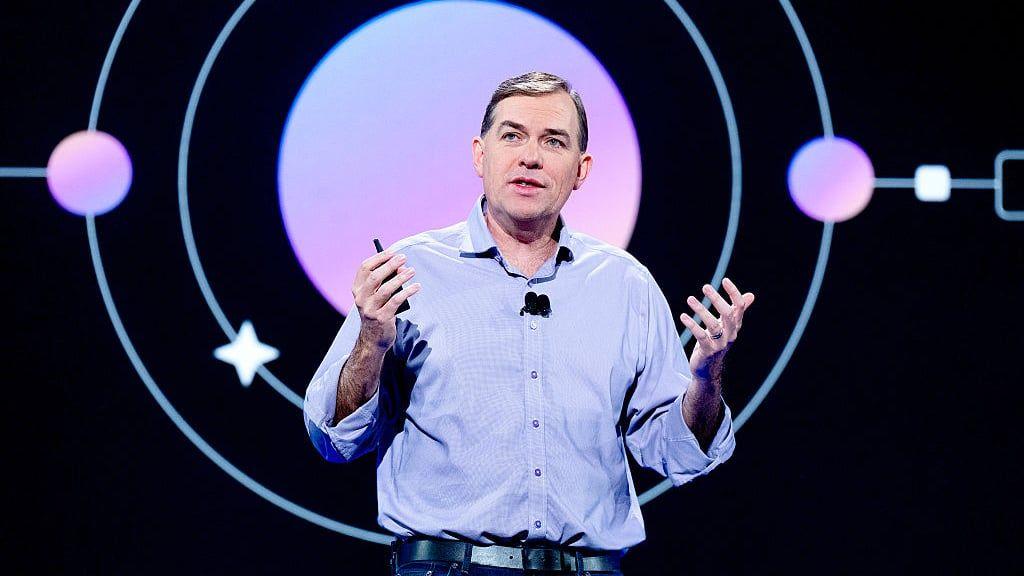
Source: PC Magazine
Massive Layoffs Create Confusing Picture
The hiring announcement comes against a backdrop of significant job cuts at Amazon. The company has laid off approximately 30,000 employees in recent months, including around 16,000 roles in January 2026 and another 14,000 toward the end of 2025
2
. Amazon has axed over 16,000 employees in 2026 so far, contributing to broader concerns about AI-related layoffs sweeping through the technology sector1
. These job cuts have affected multiple areas, including managerial roles within AWS itself. The apparent contradiction between mass layoffs and aggressive hiring has left many questioning what's truly happening behind the scenes at one of the world's largest tech companies.
Source: ET
AI Acts as an Accelerator, Not a Replacement
Garman's core argument centers on how AI is fundamentally changing the nature of work rather than eliminating it. He explained that AI agents are increasingly taking over repetitive tasks such as debugging, writing routine code, and managing operational workflows
2
4
. Rather than reducing the need for engineers, these tools enable developers to focus on higher-value tasks like system design, architecture, and solving complex customer problems. "The jobs will be a little bit different," Garman acknowledged, noting that expertise in writing small code snippets may become less valuable while broader technical skills around problem-solving and application development grow in importance1
4
. The transformation in job roles means developers need to think differently about their value proposition in an AI-augmented workplace.Dramatic Acceleration in Project Timelines
The impact of AI on productivity is already visible within Amazon's own teams. Garman shared that tasks which once took weeks can now be completed in minutes, and large-scale systems are being rebuilt far more quickly with AI-assisted tools
2
. He cited a specific example from his own office where a project initially expected to take two years was completed in just two quarters4
. Teams are now fixing bugs in minutes rather than weeks, demonstrating how automation enables faster development cycles. When developers interview for positions at Amazon, they specifically ask about access to the latest development tools like Kiro and Claude Code, signaling strong demand for AI-enhanced work environments3
.Related Stories

Workforce Transformation Extends Beyond Engineering
The shift toward AI-assisted work isn't limited to software developers. Garman explained that sales professionals are thinking about leveraging AI to automate mundane tasks like loading opportunities into Salesforce, freeing up time to spend with customers and focus on delivering value
3
. One CEO at a solution provider partnering with AWS told CRN that his company isn't firing people because of AI but rather giving them AI tools to avoid low-level work. "AI isn't killing those jobs necessarily. It's letting them do more customer-facing or business-facing tasks versus writing code for hours and hours," the executive explained3
. This pattern of workforce transformation suggests that AI isn't replacing workers but reshaping what they do daily.Industry Predictions Clash With Amazon's Reality
Garman's optimistic outlook contrasts sharply with predictions from prominent AI figures. Anthropic CEO Dario Amodei recently claimed "we might be 6-12 months away from models doing all of what software engineers do end-to-end"
1
. This isn't the first time Garman has challenged pessimistic forecasts about AI job takeovers. Back in August 2025, the cloud boss called replacing junior employees with AI "one of the dumbest things" he'd ever heard1
. Meanwhile, other tech companies have attributed recent layoffs at least partially to AI-driven changes. HP's CEO said the company will cut 4,000 to 6,000 jobs by 2028 as it pivots toward AI adoption, while Snapchat maker Snap laid off 16% of its staff in April, highlighting how AI can reduce repetitive task workloads1
. A 2025 World Economic Forum report projected that software and application developers would be among the fastest-growing roles in percentage terms in coming years, offering some support for Garman's position1
.References
Summarized by

Navi
[4]
Related Stories
AWS CEO Matt Garman Criticizes Replacing Junior Staff with AI, Emphasizes Long-Term Talent Development
20 Aug 2025•Technology

Amazon CEO Andy Jassy Predicts AI Will Reshape Workforce, Reducing Some Jobs While Creating New Opportunities
26 Jun 2025•Business and Economy
AWS CEO Matt Garman says AI should not replace junior devs, warns of threats to talent pipelines
16 Dec 2025•Business and Economy

Recent Highlights
1
Microsoft and Nvidia Launch Surface Laptop Ultra: A $2,599 AI-Ready PC With RTX Spark Chip
Technology

2
Google Unveils Gemini 4 Argon AI Model, Restricts Access to Trusted Cyber Defenders
Technology

3
Trump Consulted Grok AI Before Ordering Venezuela Invasion and Capture of Nicolás Maduro
Policy and Regulation

Recent Highlights
Today's Top Stories






Don’t drown in AI news. We cut through the noise - filtering, ranking and summarizing the most important AI news, breakthroughs and research daily. Follow topics that matter to you and stay ahead.


