9 Sources
[1]
Baidu's AI cloud is booming & it still cannot stop the revenue drop
Baidu revenue fell 4% to RMB31.3bn ($4.62bn) in the second quarter, a fifth straight quarterly drop, as advertising kept shrinking faster than its AI business grew. Net income fell 68%. Its AI cloud grew 50%, but the shares still slid. Robin Li vowed to bring Ernie back to the AI frontier. Baidu revenue fell for a fifth straight quarter. The advertising business kept shrinking faster than the AI business could grow. The Chinese search company reported its results on Tuesday, with second-quarter revenue of RMB31.3bn ($4.62bn). That is down 4 percent on a year earlier and 2 percent on the previous quarter. Net income attributable to Baidu was RMB2.3bn ($342mn). That is down from RMB7.3bn a year earlier, a fall Bloomberg put at 68 percent. The company's US-listed shares fell after the numbers. They dropped as much as 10 percent to $93.70, according to Bloomberg. Reuters reported a 7 percent slide in early trading. The revenue figure missed analyst forecasts. The South China Morning Post put the consensus at RMB31.6bn from a Bloomberg poll. Reuters cited an LSEG average of RMB31.96bn. Either way, Baidu came in short. The two halves of Baidu are pulling apart The problem is the old business. Online marketing revenue, Baidu's traditional mainstay, fell 19 percent year on year to RMB13.1bn. Reuters attributed the drop to a weak Chinese property sector and cautious consumer spending. Both have pushed companies to cut marketing budgets. The AI side is growing fast off a smaller base. Baidu's Core AI-powered Business brought in RMB12.5bn, up 25 percent. It now accounts for half of the company's general business revenue. Inside that, AI Cloud Infra rose 50 percent to RMB7.3bn. The sharpest number is GPU Cloud, the business of renting out AI accelerators. Its revenue rose 283 percent year on year, accelerating from 184 percent growth the quarter before. Clients are rushing to rent computing power. Baidu renamed the line this quarter. It previously called it subscription revenue from AI accelerator infrastructure. The company said the growth reflects mounting demand for public cloud AI computing. Baidu restructured its reporting late last year to break the AI businesses out on their own, spanning cloud, applications and marketing. That segment passed half of Baidu's core sales for the first time in the March quarter, Bloomberg noted. It held roughly there this time. Ernie has fallen behind, and the CEO knows it Baidu's Ernie model has gone months without a major upgrade, Reuters reported, while rivals ship newer ones. Bloomberg wrote that Ernie now trails open-weight models such as Moonshot AI's. Those rivals perform on par with OpenAI and Anthropic on key benchmarks, Bloomberg said. Chief executive Robin Li made regaining that ground the centre of his message. He told analysts that Baidu would return Ernie to the frontier of AI, Reuters reported. "In a market like this, we believe long-term competitiveness ultimately comes down to sustained technology investment, application-driven approach, and patience," he said. Those rivals are the ones the desk has tracked closing the gap. Alibaba's Qwen model has been closing on Moonshot in size. Moonshot in turn trained its Kimi K3 model on 20,000 Nvidia chips rented through Alibaba's cloud. The AI bet is expensive Winning the AI business costs money up front. Excluding its streaming unit iQIYI, Baidu's capital expenditure tripled in the quarter, Bloomberg reported. It reached RMB11.4bn, up from RMB3.78bn a year earlier. That spending on chips and data centres is what analysts expect to keep pressuring margins even as AI revenue climbs. Baidu is not alone in that squeeze. Its rival Tencent this month reported that its AI compute bill outgrew its cash flow, the same pattern of heavy upfront spending on models that have yet to pay their way. Baidu's own cash position is still large. It reported RMB283.1bn ($41.72bn) in total cash and investments, and operating cash flow of RMB3.4bn, positive for a fourth straight quarter. It has returned $259mn to shareholders through buybacks since the start of this year, under a programme it set alongside its first dividend in February. Robotaxis and a Hong Kong listing Beyond software, Baidu is leaning on autonomous driving. Its Apollo Go robotaxi service has reached 28 cities and logged more than 350mn autonomous kilometres, over 240mn of them fully driverless. It began open-road testing in London with Uber and Lyft, launched driverless commercial rides in Dubai, and won Hong Kong's first fully driverless testing permits. That expansion follows a setback at home. A fleet outage in Wuhan in April triggered an industry-wide safety review and a three-month freeze on new robotaxi permits, Bloomberg reported. China has since resumed issuing them. The Apollo Go push abroad builds on approvals such as its Level 4 clearance in Switzerland in June. On the corporate side, Baidu said its dual-primary listing in Hong Kong should take effect this year, giving mainland investors direct access to its shares. It is also spinning off its chip unit Kunlunxin, which is targeting a Hong Kong listing to tap demand for local alternatives to Nvidia. Baidu is casting the whole shift as a change of identity. Chief financial officer Haijian He said operating cash flow stayed positive for a fourth consecutive quarter, and that the company remains committed to investing in AI as its core growth driver. The company's flagship Baidu App still reached 644mn monthly active users in June, the release said, giving it a large base to sell AI features into. Whether the pivot pays is unproven Not every analyst is convinced the AI push can carry Baidu. Bloomberg Intelligence's Robert Lea wrote that the company's prospects rest on turning money-losing AI businesses profitable, and that he doubts it can, because it lacks the scale to compete with China's largest platforms. Three numbers would settle the question over the coming quarters. Whether AI Cloud growth keeps outrunning the advertising decline in absolute terms, not just in percentages. Whether the tripled capital spending starts converting into profit rather than eroding it. And whether an upgraded Ernie can actually close the gap on Moonshot and Alibaba that opened this year. None is answered yet.
[2]
China's Baidu, betting on AI, posts fifth straight quarterly revenue drop
Beijing (AFP) - Baidu posted a fifth straight drop in quarterly revenue on Tuesday as the Chinese tech giant expressed confidence in its transition to artificial intelligence services to drive long-term growth. The Beijing-based search engine provider, sometimes called China's Google, has for years heralded the potential of AI in the country. Baidu pushed aggressively into AI by recruiting prominent researchers and with the release of its "Ernie" tool -- one of China's first AI chatbots. Revenue during the second quarter of the year came to 31.3 billion yuan ($4.6 billion), an unaudited financial report showed, a four-percent year-on-year drop. The figure represented the fifth straight quarter with declining revenue. Operating income was 3 billion yuan during the three-month period ending June 30, the report showed, down from 3.3 billion yuan a year earlier. With cash flows still largely generated by marketing on its search platform, Baidu has suffered in recent years from a pronounced slump in Chinese consumer spending. "While our online marketing business remains under pressure, the growing momentum in our core AI-powered Business reaffirms Baidu's transition from an internet-centric company to an AI-first company," the firm's chief executive Robin Li said in a statement. That AI momentum "strengthens our confidence in our long-term growth potential", Li said. Revenue from Baidu's AI business, including applications and supporting infrastructure, was 12.5 billion yuan in the second quarter, up 25 percent year-on-year. Meanwhile revenue from online marketing services was 13.1 billion yuan, down 19 percent compared with the same period a year earlier. Highlighting a nagging consumption slump, China's retail sales grew at a slower pace in July, official data showed on Monday. Data released by the National Bureau of Statistics showed retail sales grew 0.6 percent in July, well below the 1.5-percent forecast in a Bloomberg survey and down from the one-percent increase seen in June.
[3]
Baidu: Baidu CEO vows to return Ernie to AI frontier as revenue miss sinks shares
Its Ernie large language model has gone months without a major upgrade, while competitors such as Alibaba and Moonshot have continued to roll out newer versions of their models. Baidu CEO Robin Li vowed on Tuesday to bring the company's Ernie large language model back to the frontier of AI, after the Chinese tech company posted quarterly revenue that missed Wall Street estimates. "In a market like this, we believe long-term competitiveness ultimately comes down to sustained technology investment, application-driven approach, and patience," Li told analysts, adding that Baidu would keep investing in top talent and technology to regain its edge. His remarks come as Baidu faces mounting questions over its position in China's AI race. Its Ernie large language model has gone months without a major upgrade, while competitors such as Alibaba and Moonshot have continued to roll out newer versions of their models. The competitive pressure compounds challenges in Baidu's core business. COMPANIES CUT MARKETING SPEND The company reported a 4% decline in revenue to 31.33 billion yuan ($4.7 billion) in the second quarter, short of analysts' average estimate of 31.96 billion yuan, according to data compiled by LSEG. Its U.S.-listed shares are down 7% in early trading. A prolonged downturn in China's property sector and weak consumer spending have led businesses to cut marketing budgets, weighing on advertising demand and pressuring Baidu's online marketing business. Baidu's online marketing services segment reported total revenue of 13.1 billion yuan in the quarter ended June, down 19% from a year ago. The bright spot remained its AI-linked businesses, as corporate adoption of AI drove demand for Baidu's cloud infrastructure. Revenue from its Core AI-powered business, which includes cloud computing and AI applications, rose 25% year-on-year to 12.5 billion yuan. Still, Baidu has been increasing its spending on AI infrastructure and personnel, which analysts say could continue to pressure margins even as AI-related revenue grows. Net income for the quarter was 2.3 billion yuan, down from 7.3 billion a year earlier. ($1 = 6.7423 Chinese yuan renminbi) (Reporting by Harshita Mary Varghese in Bengaluru and Liam Mo in Beijing; Editing by Kate Mayberry and David Holmes)
[4]
Why Is Baidu Stock Falling Tuesday? - Baidu (NASDAQ:BIDU)
Baidu's AI Pivot Hits the Gas, but Its Advertising Cash Cow Is Losing Steam Baidu Inc. (NASDAQ:BIDU) stock fell Tuesday after the company reported second-quarter 2026 revenue and adjusted earnings that missed analyst estimates. Baidu Earnings, Revenue Miss As Advertising Slumps Baidu reported revenue of 31.3 billion yuan ($4.62 billion), down 4% year over year and missing the $4.65 billion analyst estimate. GAAP diluted earnings were 5.74 yuan (85 cents) per American depositary share. Adjusted earnings of 7.22 yuan ($1.06) per ADS missed the $1.35 analyst estimate. Operating income was 3 billion yuan, representing a 10% margin. Adjusted operating income was 3.8 billion yuan, with a 12% margin. Latest Private Market Opportunities Join 400,000+ Investors The results came under pressure from Baidu's online advertising business. Online Marketing Services revenue fell 19% year over year to 13.1 billion yuan. AI Growth Offsets Advertising Weakness Adjusted EBITDA was 6.2 billion yuan, representing a 20% margin. General Business revenue fell 4% to 25.2 billion yuan. Its operating margin was 12%, while its adjusted operating margin was 15%. Meanwhile, iQIYI revenue declined 5% to 6.3 billion yuan. The business posted a negative 2% operating margin and a roughly flat adjusted operating margin. Baidu's AI businesses continued to expand. AI Cloud Infrastructure revenue jumped 50% to 7.3 billion yuan, while GPU Cloud revenue surged 283%. AI Applications revenue rose 3% to 2.5 billion yuan. AI-native Marketing Services revenue was roughly flat at 2.6 billion yuan. Baidu Core AI-powered Business revenue climbed 25% to 12.5 billion yuan, accounting for 50% of General Business revenue. AI Adoption, Apollo Go Expand AI daily active user penetration across Baidu Wenku and Baidu Drive increased 27.4% year over year in June. Baidu App monthly active users reached 644 million. Apollo Go expanded to 28 cities and surpassed 350 million cumulative autonomous kilometers, including more than 240 million fully driverless kilometers. The robotaxi service launched fully driverless commercial operations in Dubai and began open-road testing in London and Switzerland. Baidu also signed a memorandum of understanding with Kazakhstan's Turlov Private Holding Ltd. to explore autonomous ride-hailing services. Cash Flow, Capital Spending Operating cash flow rose to 3.4 billion yuan from 2.67 billion yuan in the previous quarter. That compared with an outflow of 877 million yuan a year earlier. However, free cash flow fell to negative 7.95 billion yuan from negative 3.25 billion yuan sequentially and negative 4.68 billion yuan a year earlier. The decline came as capital expenditures jumped to 11.39 billion yuan from 5.92 billion yuan in the first quarter. Baidu ended the quarter with 24.5 billion yuan in cash and cash equivalents. Total cash and investments stood at 283.1 billion yuan. Hong Kong Listing, AI Investment Other income, net, fell to 184 million yuan. Baidu attributed the decline mainly to lower fair-value gains on long-term investments and higher net foreign-exchange losses. Baidu expects the conversion of its Hong Kong listing to a dual-primary listing to take effect in 2026, subject to shareholder and exchange approvals. Management said the company remains committed to investing in AI as a core driver of long-term growth. Baidu Price Action BIDU Price Action: Baidu shares were trading 7.05% lower at $96.78 in Tuesday's premarket session, according to Benzinga Pro data. Image via Shutterstock Markets Trump-Backed World Liberty Partners With Platform Offering Chinese AI Models Flagged by US: Report Trump-backed World Liberty Financial reportedly partners with Hong Kong venture raising concerns over Chinese AI models and profits. 2 min read Read this article Market News and Data brought to you by Benzinga APIs To add Benzinga News as your preferred source on Google, click here.
[5]
Baidu earnings analysis: questions answered and next catalysts By Investing.com
Investing.com -- Baidu's Q2 2026 earnings delivered a painful double miss -- EPS of CNY 7.22 versus the CNY 9.84 consensus (a 26.6% shortfall) and revenue of CNY 31.3B below the CNY 31.95B estimate. Shares fell 9.25% to $94.49 as the structural advertising decline continues to outpace the AI growth story. The Good News: AI Hits 50% The headline buried inside the miss is notable: Baidu Inc (BIDU)'s AI-powered business hit CNY 12.5 billion in Q2, representing exactly 50% of general business revenue -- up from 43% just one quarter earlier. The growth engine is GPU cloud infrastructure, which rose 283% year-over-year, accelerating from 184% in Q1. AI Cloud Infra overall rose 50% YoY to CNY 7.3B. The Qianfan MaaS platform saw external token usage grow ninefold year-over-year. The Bad News: Advertising in Freefall Core advertising revenue fell 19% year-over-year to CNY 13.1B -- the fourth consecutive quarter of 15-21% declines. This isn't cyclical weakness; it's structural. Users are migrating from traditional search to AI chatbots, and e-commerce platforms are redirecting budgets toward user subsidies rather than traffic acquisition during China's 618 shopping festival. Management explicitly warned that online marketing will remain under pressure through H2 2026. Margins Under the Microscope Operating margin compressed to 10% GAAP (12% non-GAAP), while net margin fell to 7%. The culprit: other income fell to just CNY 184 million from CNY 4.9 billion a year earlier, driven by smaller fair-value gains and higher FX losses. Meanwhile, management flagged that higher AI investment in H2 2026 will pressure operating expenses further. The P/E ratio sits at a distorted 566x trailing earnings -- a reflection of how much the legacy business decline has compressed the bottom line. What Was Answered Next Catalysts to Watch August 26, 2026 -- Shareholder vote on Hong Kong dual primary listing conversion. Approval would broaden the investor base and enhance liquidity -- a potential sentiment catalyst. H2 2026 AI Investment Wave -- Management committed to maintaining CNY 100B+ cumulative AI investment. The market will watch whether GPU cloud's 283% growth rate sustains or plateaus as the base effect kicks in. Apollo Go International Expansion -- Operations now live in Dubai, Abu Dhabi, London, Seoul, and Hong Kong. International ride volume data will be critical for proving the robotaxi model scales beyond China. Kunlun Chip IPO -- The planned spin-off and separate listing of Baidu's AI chip subsidiary could unlock significant hidden value. Timing and valuation details remain the key unknowns. Q3 2026 Earnings (November) -- With Barclays forecasting full-year 2026 adjusted EPS to decline 21% and BofA cutting targets from $180 to $165, the next report must show advertising stabilization or the re-rating thesis breaks down. The Bull-Bear Tension The fair value upside of 39.8% and analyst target upside of 64.5% suggest the market is pricing in significant pessimism. The bull case hinges on AI revenue overtaking advertising entirely within 12-18 months. The bear case: advertising is declining faster than AI can replace it, and the CNY 283B cash pile may not compensate for a structurally shrinking core business. At $94.49, Baidu trades near the lower end of its 52-week range ($84.82-$165.30), making this a classic "show me" stock -- the AI numbers are real, but the advertising bleeding must stop. This article was generated with the support of AI and reviewed by an editor. For more information see our T&C.
[6]
Baidu slumps as Q2 results miss estimates despite growth in AI cloud business By Investing.com
Investing.com -- Baidu shares tumbled more than 7% in early U.S. trading Tuesday after the Chinese search and AI giant reported second-quarter earnings and revenue that missed analyst expectations. The company reported second-quarter earnings per share of RMB7.22, missing the analyst estimate of RMB9.84. Revenue came in at RMB31.33 billion, down 4% year-over-year, and also below the RMB31.95 billion consensus estimate. Shares in the Chinese internet giant fell about 3% in the U.S. pre-open trade by 05:08 ET. AI Cloud Infrastructure revenue rose 50% year-over-year to RMB7.3 billion, with GPU Cloud revenue within that segment surging 283% year-over-year, accelerating from 184% growth in the prior quarter. AI Applications revenue rose 3% to RMB2.5 billion, while revenue from AI-native marketing services was roughly flat year-over-year at RMB2.6 billion. "With AI-powered Business now firmly established as the core of Baidu, we are strengthening the foundations for our next phase of AI-driven growth. AI Cloud Infra sustained strong momentum this quarter, with GPU Cloud growth accelerating further off an already high base," said Robin Li, co-founder and CEO of Baidu. "While our online marketing business remains under pressure, the growing momentum in our core AI-powered Business reaffirms Baidu's transition from an internet-centric company to an AI-first company, and strengthens our confidence in our long-term growth potential," he added. Baidu's adjusted operating income came in at RMB3.8 billion, with an adjusted operating margin of 12%. Adjusted EBITDA was RMB6.2 billion, with an adjusted EBITDA margin of 20%.
[7]
Baidu's Profit, Revenue Continue to Fall as It Pivots to AI -- Update
Baidu's financial performance continued to deteriorate in the second quarter as the Chinese internet titan works to remake itself into an artificial-intelligence company. The Beijing-based company, once considered China's answer to Google, has been pouring money into AI, autonomous driving and chip design even as its bread-and-butter advertising business has continued to shrink. These investments have been slow to show results: Its net profit more than halved for the third consecutive quarter, while revenue has declined for more than a year. On Tuesday, Baidu reported a 68% drop in second-quarter net profit to 2.32 billion yuan, equivalent to $344.2 million. Revenue came to 31.325 billion yuan, down 4.2% from a year earlier. Analysts had expected net profit of 2.82 billion yuan on revenue of 31.34 billion yuan, according to a FactSet consensus estimate. The soft showing comes as Baidu's Hong Kong-listed shares have shed more than a fifth of their value this year, underperforming the broader market as the company's legacy business continued to drag its outlook. Investors, meanwhile, are keeping a close eye on the listing progress of its chip unit, Kunlunxin, expected in Hong Kong within this year. Baidu is pinning its hopes on its core AI-powered business, which the company said continued to account for half of general business revenue. Fitch Ratings last week downgraded its long-term issuer default rating on Baidu to A-minus from A, citing the structural decline in the company's search ad business. It said it also expects emerging AI search and competing chatbots to weigh on Baidu's search business monetization. The company's lower profitability also reflects a weakening legacy business and relatively lower margins for its nonmarketing business, Fitch wrote in a note. Baidu is facing stiff competition in China from tech titans such as Alibaba and ByteDance, as well as startups like DeepSeek and Moonshot AI in AI sector. For the three months ended June, Baidu's core AI-related business generated 25% revenue growth year over year, though the figure declined 8% from the prior quarter. Demand for compute power remained strong in the second quarter, Citi analysts said before the results. Our AI-powered business is now "firmly established as the core of Baidu," said Robin Li, the company's co-founder and chief executive. "We are strengthening the foundations for our next phase of AI-driven growth." The company's American depositary receipts fell 5% in premarket trading.
[8]
Baidu revenue misses as advertising slide outweighs AI cloud gains
Aug 18 (Reuters) - China's Baidu missed Wall Street estimates for second-quarter revenue on Tuesday as declines in its core advertising business offset growth in AI-linked cloud services, sending its U.S.-listed shares down 3.5% in premarket trading. A prolonged downturn in China's property sector and weak consumer spending have led businesses to cut marketing budgets, weighing on advertising demand and pressuring Baidu's online marketing business. The company reported a 4% decline in revenue to 31.33 billion yuan ($4.65 billion) in the second quarter, compared with analysts' average estimate of 31.96 billion yuan, according to data compiled by LSEG. The online marketing services segment reported total revenue of 13.1 billion yuan in the quarter ended June, down 19% from a year ago. However, the company's AI-related businesses stood out, as businesses' adoption of AI drove demand for Baidu's cloud infrastructure. Revenue from its Core AI-powered Business, which includes cloud computing and AI applications, rose 25% year-on-year to 12.5 billion yuan. Baidu has been increasing spending on AI infrastructure and talent, which analysts say could continue to pressure margins even as AI-related revenue grows. Even so, Baidu has fallen behind Chinese rivals such as ByteDance and Alibaba in the race to develop AI technologies and products. Its Ernie large language model has gone months without a major upgrade, while competitors have continued to roll out newer versions of their models. ($1 = 6.7423 Chinese yuan renminbi) (Reporting by Harshita Mary Varghese in Bengaluru and Liam Mo in Beijing; Editing by Pooja Desai and Kate Mayberry)
[9]
Baidu's Profit, Revenue Continue to Fall as It Pivots to AI
Baidu's financial performance continued to deteriorate in the second quarter as the Chinese internet titan works to remake itself into an artificial-intelligence company. The Beijing-based company, once considered China's answer to Google, has been pouring money into AI, autonomous driving and chip design even as its bread-and-butter advertising business has continued to shrink. These investments have been slow to show results: Its net profit has more than halved for the third consecutive quarter, while revenue has declined for more than a year. On Tuesday, Baidu reported a 68% drop in second-quarter net profit to 2.32 billion yuan, equivalent to $344.2 million. Revenue came in at 31.325 billion yuan, down 4.2% from a year earlier. Analysts had expected net profit of 2.82 billion yuan on revenue of 31.34 billion yuan, according to a FactSet consensus estimate. The mixed results come as Baidu's Hong Kong-listed shares have shed more than a fifth of their value so far this year, underperforming the broader market as the company's legacy business continues to drag its outlook. Investors, meanwhile, are keeping a close eye on the listing progress of its chip unit, Kunlunxin, expected in Hong Kong within this year. Baidu is pinning its hopes on its core AI-powered business, which the company said continued to account for half of general business revenue. "Going forward, we remain firmly committed to investing in AI as the core driver of Baidu's long-term growth," Chief Financial Officer Haijian He said.
Share
Copy Link
Baidu reported a 4% quarterly revenue drop to $4.62 billion, missing analyst estimates as its advertising business declined 19% year-over-year. Despite AI cloud infrastructure surging 50% and GPU Cloud revenue jumping 283%, the company's shares fell up to 10% as CEO Robin Li pledged to bring the Ernie large language model back to AI's frontier.
Baidu revenue fell 4% to RMB31.3 billion ($4.62 billion) in the second quarter of 2026, marking the company's fifth straight quarterly revenue drop
1
2
. The figure fell short of analyst forecasts, with consensus estimates ranging from RMB31.6 billion to RMB31.96 billion1
3
. Net income attributable to Baidu plummeted 68% to RMB2.3 billion ($342 million) from RMB7.3 billion a year earlier1
. The company's US-listed shares dropped as much as 10% to $93.70 following the earnings announcement1
3
.
Source: Benzinga
The primary driver behind Baidu's financial performance struggles is the accelerating decline in its traditional business. Online marketing revenue, the company's historical mainstay, fell 19% year-over-year to RMB13.1 billion
1
4
. This marks the fourth consecutive quarter of 15-21% declines in advertising revenue5
. The weakness stems from China's prolonged property sector downturn and cautious consumer spending, which have pushed businesses to slash marketing budgets1
3
. Additionally, users are migrating from traditional search to AI chatbots, while e-commerce platforms redirect budgets toward user subsidies rather than traffic acquisition5
.Despite advertising headwinds, Baidu's AI-powered business delivered significant growth. Baidu Core AI-powered Business generated RMB12.5 billion, up 25% year-over-year, now accounting for exactly 50% of the company's general business revenue
1
4
5
. Within this segment, AI Cloud Infrastructure revenue surged 50% to RMB7.3 billion1
. The most striking figure came from GPU Cloud revenue, which skyrocketed 283% year-over-year, accelerating from 184% growth in the previous quarter1
4
. This explosive growth reflects mounting demand for public cloud AI computing as clients rush to rent computing power1
. The Qianfan MaaS platform saw external token usage grow ninefold year-over-year5
.
Source: France 24
Baidu CEO Robin Li acknowledged mounting competitive pressure in China's AI race, vowing to bring the company's Ernie large language model back to the frontier of AI technology
1
3
. "In a market like this, we believe long-term competitiveness ultimately comes down to sustained technology investment, application-driven approach, and patience," Li told analysts1
3
. The Ernie large language model has gone months without a major upgrade while competitors including Alibaba Qwen and Moonshot AI have continued rolling out newer versions1
3
. Ernie now trails open-weight models such as Moonshot AI's, which perform on par with OpenAI and Anthropic on key benchmarks1
. Moonshot trained its Kimi K3 model on 20,000 Nvidia chips rented through Alibaba's cloud1
.Baidu's transition to an AI-first company requires substantial upfront capital. Excluding streaming unit iQIYI, Baidu Core's capital expenditure tripled to RMB11.4 billion from RMB3.78 billion a year earlier
1
. This spending on AI infrastructure and data centers continues to pressure margins even as AI-related revenue climbs1
3
. Operating margin compressed to 10% GAAP and 12% non-GAAP, while net margin fell to 7%5
. Management flagged that higher AI investment in H2 2026 will further pressure operating expenses5
. Despite margin pressure, Baidu maintains a strong cash position with RMB283.1 billion ($41.72 billion) in total cash and investments, and operating cash flow of RMB3.4 billion, positive for a fourth straight quarter1
.Related Stories
Beyond AI cloud infrastructure, Baidu is advancing its autonomous vehicle service. The Apollo Go robotaxi service has reached 28 cities and logged more than 350 million autonomous kilometers, including over 240 million fully driverless kilometers
1
4
. Apollo Go launched fully driverless commercial operations in Dubai and began open-road testing in London with Uber and Lyft, while winning Hong Kong's first fully driverless testing permits1
4
. The company also signed a memorandum of understanding with Kazakhstan's Turlov Private Holding Ltd. to explore autonomous ride-hailing services4
. This international expansion follows a domestic setback when a fleet outage in Wuhan triggered an industry-wide safety review and a three-month freeze on new robotaxi permits, though China has since resumed issuing them1
.
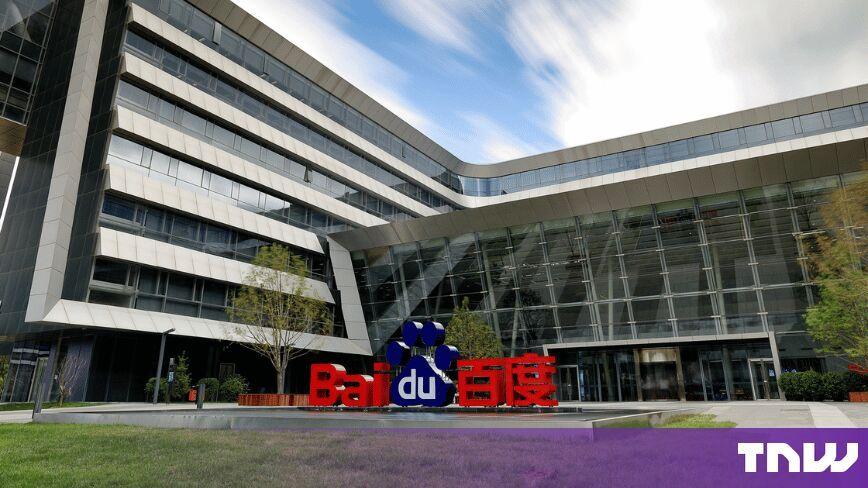
Source: The Next Web
Baidu expects its Hong Kong dual primary listing conversion to take effect in 2026, subject to shareholder and exchange approvals, which could broaden the investor base and enhance liquidity
4
5
. The planned spin-off and separate listing of the Kunlun AI chip subsidiary could unlock significant hidden value5
. AI daily active user penetration across Baidu Wenku and Baidu Drive increased 27.4% year-over-year in June, while Baidu App monthly active users reached 644 million4
. The company has returned $259 million to shareholders through buybacks since the start of 2026 under a program set alongside its first dividend in February1
. Market watchers will monitor whether GPU Cloud's 283% growth rate sustains as the base effect kicks in, whether advertising stabilizes in upcoming quarters, and how international Apollo Go expansion performs.Summarized by
Navi
23 Aug 2024

18 May 2026•Business and Economy

26 Feb 2026•Business and Economy

1
Technology

2
Technology

3
Technology