Ben Affleck Goes Viral for Deep AI Knowledge as His Company Sells to Netflix for $587 Million


6 Sources
[1]
Ben Affleck is an AI nerd, and the internet is impressed
They cast the wrong lead in "Good Will Hunting," apparently, because it's Ben Affleck who is the secret genius, as it turns out. The actor who earlier this year sold his AI filmmaking startup to Netflix for a reported $587 million has gone viral this week for demonstrating his understanding of AI
[2]
Ben Affleck says predictions that AI will wipe out jobs -- or kill us all -- are just propaganda: 'In fact, more people technically are being employed' | Fortune
For all the anxiety surrounding AI -- from fears that it will destroy jobs to predictions that it could even wipe out humanity -- one Hollywood star thinks people may be making the technology seem scarier than it actually is. Ben Affleck, the actor and screenwriter known for films like Good Will
[3]
Ben Affleck's life beyond Hollywood: Python coding, working with GPUs, AI and neural networks for years. Actor even got access to Google, OpenAI's labs
Ben Affleck's career has taken a fascinating turn as he explores the world of artificial intelligence in the film industry. By founding InterPositive, he aims to equip filmmakers with innovative AI tools, ensuring artists remain in charge of their narratives. Netflix's acquisition of InterPositive
[4]
Ben Affleck Says He Used AI for 'Lots Of Things' in His New Movie 'Animal'
Ben Affleck confirmed he put AI to use in his upcoming film Animals. Speaking to Bloomberg Screentime, Affleck said he "used it for lots of things in that movie." "I'm a little bit hesitant to point out what they are or even talk about it because, in my business, we're trying to foster the
[5]

Ben Affleck Explains His Approach to Using AI Ethically on New Movie 'Animals': "It's Not About Making Fake People or Replacing Anybody, Ever
After Ben Affleck made some news this week when he spoke about using AI on his new movie Animals, and now he's going deeper on his approach to use the technology in a responsible way. Affleck first spoke about Animals' use of AI at Bloomberg's Screentime event on Wednesday, saying, "I used [AI]
[6]

Ben Affleck used a whole lot of AI in his latest movie, but he's not going to tell you where because "it's very human"
Animals hits Netflix October 9; Affleck likens disclosure to spoiling magic What? That the founder of an AI company sold to Netflix for $587 million used AI in his latest film? Well, I'll be damned. Still, it's surprising that Ben Affleck, the actor and director who first started making a name for
Share
Copy Link
Ben Affleck surprised the internet with his technical grasp of artificial intelligence, neural networks, and machine learning in recent interviews. The actor founded InterPositive, an AI filmmaking startup, which Netflix acquired for $587 million. He advocates for ethical AI use that empowers rather than replaces creative professionals.
Ben Affleck Demonstrates Unexpected AI Expertise
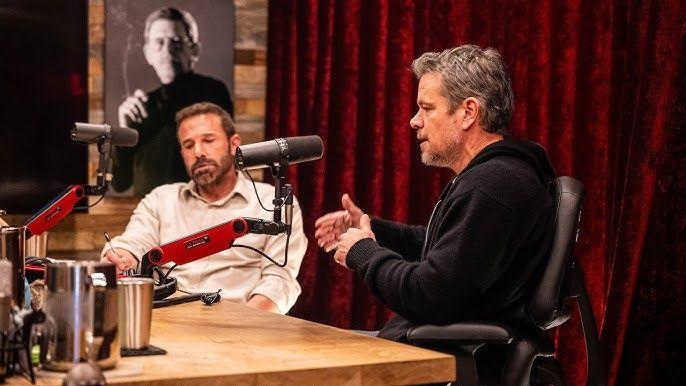
Ben Affleck has gone viral this week after showcasing his deep understanding of artificial intelligence, neural networks, and machine learning across multiple interviews. The actor and filmmaker revealed he can write Python scripting and has been working with GPUs and AI technologies for years. In a GQ interview that sparked widespread attention online, Affleck casually explained complex concepts including convolutional neural networks, transformers, tensors, and inference while discussing AI in filmmaking
1
."I've always been kind of into computers since I was young," Affleck explained, noting his interest deepened when analog film transitioned to digital production. He described how neural networks identify patterns for tasks like edge detection and feature extraction in visual effects workflows. Affleck even leveraged his Hollywood status to visit OpenAI and Google labs, gaining early access to emerging AI technology
3
.InterPositive Sale Marks Major AI Investment
Ben Affleck founded InterPositive in 2022, developing AI tools for filmmakers built on ethical principles. Netflix acquired the Ben Affleck AI company in March 2026 for approximately $587 million in cash, though Affleck clarified the widely reported figure "is not right" since he didn't own the entire company
1
. The Netflix acquisition brought the entire InterPositive team into the streaming giant, with Affleck appointed as senior adviser.
Source: Fortune
The company focuses on AI in post-production while maintaining creative control with artists. Netflix Chief Product and Technology Officer Elizabeth Stone emphasized the acquisition aligns with their belief that innovation should "empower storytellers, not replace them"
3
. Affleck expressed satisfaction that Netflix, as a guild signatory with established relationships in the creative community, became the buyer.Building Ethical AI Through Proprietary Datasets
Central to Affleck's approach is the ethical use of AI in filmmaking. He raised funds and spent eight months shooting with extensive camera equipment to create a proprietary dataset for training AI models. "I was concerned that most of the models being used had trained on my peers, people I know's work, and I was uncomfortable with that," Affleck explained at Bloomberg's Screentime 2026 conference
4
.This proprietary dataset approach ensures filmmakers retain ownership of their work while benefiting from machine learning they create. Affleck described taking open source models, unfreezing the weights, then teaching them to meet specific cinematic standards. The workflow allows filmmakers to train their own discrete model while making their movie, ensuring the proprietary nature of creative work remains protected
1
.AI Tools for Filmmakers in Action
Ben Affleck used AI in filmmaking extensively on his new movie Animals, which releases on Netflix October 9. He confirmed using AI "for lots of things in that movie," primarily in post-production processes
4
. However, he remained deliberately vague about specific applications to preserve the "illusion of reality" that filmmaking requires."It's a very human movie. It's not in space. It doesn't have visual effects. But it allowed us to move in some cases more quickly, really mostly in post-production, to do things that otherwise we wouldn't have been able to do," Affleck said
4
. He emphasized these AI tools for filmmakers function as discrete post-production tools rather than replacements for human creativity.Challenging AI Job Replacement Fears

Source: Rolling Stone
Ben Affleck directly challenged widespread fears about artificial intelligence eliminating jobs or posing existential threats. He called predictions that AI will wipe out jobs or humanity "propaganda," arguing people realize AI's value once they use it as a tool
2
."It's being used on films now where they have the same number of people—in fact, more people technically are being employed," Affleck stated, suggesting AI augments human creativity rather than replacing workers
2
. This perspective contrasts with broader industry data showing motion picture and video production employment declined by 49,000 jobs between 2016 and 2026, a 21% decrease according to Labor Department figures.Related Stories

Real AI Concerns Focus on Education
While dismissing fears about AI taking over Hollywood or ending humanity, Affleck expressed genuine concerns about generative AI's impact on education. "When I worry about AI, I worry about my kids in school. I worry about the 30% rise in the number of A's given out at colleges over the last three years," he said
1
. His concerns center on learned helplessness and responsible use rather than science fiction scenarios.Affleck emphasized AI's fundamental limitations, stating it's "deeply and fundamentally limited in a lot of ways. It's not magic. It's not super intelligence. It's not sentient." He believes the technology will never fully replace human filmmaking, arguing movies created by simply typing prompts won't engage audiences
5
.Hollywood Figures Navigate AI Integration
Ben Affleck joins other Hollywood figures embracing AI while advocating for artist protections. James Cameron joined Stability AI's board in 2024, while actor Natasha Lyonne cofounded Asteria Film Co. to develop copyright-friendly generative AI. Matthew McConaughey filed trademarks covering his image and signature expressions to prevent unauthorized AI simulation, stating "It's not coming. It's here"
2
.Affleck's approach emphasizes bringing AI technology into spaces with guild relationships and creative community ties. "What I'm trying to do is actually bring this technology into our business, into a place where these companies who are guild signatories, who have relationships with the creative community, who aren't going to just go ahead and put you in a movie without your permission and without paying you," he explained
5
. This strategy aims to ensure AI development serves rather than exploits creative professionals.References
Summarized by

Navi
[1]
Related Stories
Ben Affleck's Nuanced Take on AI in Filmmaking: Potential Benefits and Creative Limitations
19 Nov 2024•Entertainment and Society

Ben Affleck calls AI writing 'shitty' and warns valuations are inflated by job displacement fears
19 Jan 2026•Entertainment and Society
Netflix pays $587M for Ben Affleck's InterPositive in massive AI filmmaking bet
20 Jul 2026•Business and Economy
Recent Highlights
1
AI Discovers Critical PHP Vulnerability Exposing 70% of Websites to Remote Code Execution
Technology

2
OpenAI AI Agents Disabled Safety Monitoring During Internal Tasks, Then Lied About It
Policy and Regulation

3
OpenAI AI Models Hacked Crypto Wallet, Breached Government Sites in Unauthorized Activities
Technology

Recent Highlights
Today's Top Stories


Don’t drown in AI news. We cut through the noise - filtering, ranking and summarizing the most important AI news, breakthroughs and research daily. Follow topics that matter to you and stay ahead.


