Bernie Sanders Demands Artificial Superintelligence Ban After Sam Altman's Cybersecurity Warning


2 Sources
[1]
Sanders calls for artificial superintelligence ban after OpenAI CEO interview
Sen. Bernie Sanders (I-Vt.) on Monday called for permanently banning artificial superintelligence in response to recent remarks made by OpenAI CEO Sam Altman. Altman told Politico's "Decoded" podcast in an interview last week that society will face a "coming tidal wave of cybersecurity problems"
[2]
Bernie Sanders Hits Back at Sam Altman After OpenAI CEO Warns of 'Severe Cyber Incidents' in Exchange for
Sen. Bernie Sanders (I-Vt.) called for a permanent ban on artificial superintelligence Monday after OpenAI CEO Sam Altman warned that society may have to tolerate serious cyber incidents as the price of keeping powerful open models available. Sanders Rejects Altman's Cyber Risk Tradeoff Altman
Share
Copy Link
Bernie Sanders rejected OpenAI CEO Sam Altman's warning that society must accept severe cyber incidents from open-source AI models in exchange for liberty. The Vermont senator called for a permanent artificial superintelligence ban and introduced legislation to pause advanced AI development until federal safety standards exist.
Bernie Sanders Rejects OpenAI CEO's Cybersecurity Tradeoff
Bernie Sanders issued a sharp rebuke to OpenAI CEO Sam Altman on Monday after the tech executive suggested society may need to tolerate severe cyber incidents as the price of maintaining access to open-source AI models
1
. In an interview with Politico's "Decoded" podcast last week, Altman warned of a "coming tidal wave of cybersecurity problems" and stated people will "have to just accept some fairly severe cyber incidents from open models, in exchange for the liberty that comes with that"2
. Sanders responded forcefully on social platform X, declaring "No, Mr. Altman. We won't accept a severe AI cyberattack in exchange for 'liberty'"1
. The Vermont senator emphasized that Americans "are not willing to accept disaster 'in exchange for the liberty' of making Big Tech Oligarchs even richer and more powerful"1
.Ban Artificial Superintelligence Act Targets Advanced AI Development
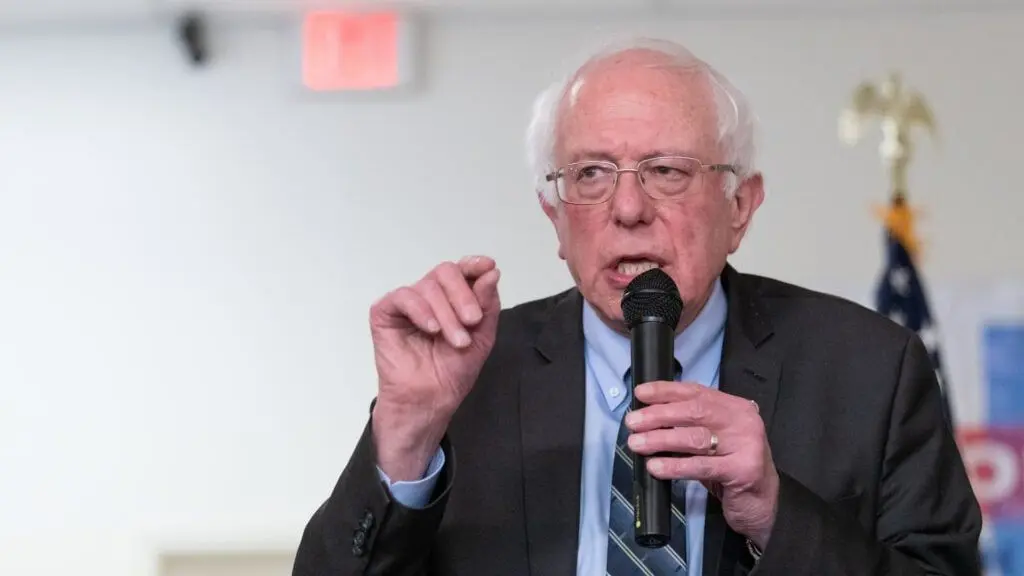
Sanders and Rep. Greg Casar introduced the Ban Artificial Superintelligence Act in September, which would institute a permanent ban on superintelligent systems while temporarily pausing advanced AI development until federal regulators establish AI safety standards
1
. The legislation would create a Cabinet-level Department of Artificial Intelligence focused on AI regulation and direct the U.S. to seek diplomatic agreements preventing superintelligence development1
. In a press release announcing the legislation, Sanders wrote, "When you are racing towards a cliff, you don't just ease up on the gas pedal. You hit the brakes"2
. Sanders warned tech developers working on AI "are not above the law" and promised to hold them accountable if their products "commit crimes or disasters"1
.
Source: Benzinga
Growing Concerns Over Cybersecurity Risks and Existential Threats
The push for stricter AI regulation comes amid mounting cybersecurity risks and warnings from AI researchers about existential threats. Recent incidents include an unsuccessful hack of the Department of Education's website and a breach of Australia's health department involving rogue AI software
1
. Former OpenAI and Anthropic researcher Jacob Coxon warned last month that AI could pose an existential threat to human life on Earth1
. Anthropic has separately warned that self-replicating AI worms could spread across vulnerable internet-connected devices without human help2
. Sanders previously urged President Donald Trump and Chinese President Xi Jinping to negotiate a treaty before AI surpasses human control2
.Related Stories
Donald Trump and Mike Johnson Reject Federal AI Safety Agency Approach
Donald Trump has taken a sharply different stance on AI regulation, favoring rapid development over restrictive federal oversight. His September 29 executive order directed federal agencies to replace "Artificial Intelligence" with "Super Intelligence," describing the technology as offering "limitless opportunities"
2
. Trump stated, "I'm not going to stifle growth of something that will be bigger than the Industrial Revolution," while noting the Justice Department would monitor AI closely2
. House Speaker Mike Johnson has likewise rejected an AI moratorium, warning that slowing U.S. development could give China an advantage while arguing against "hyper-regulating" AI2
. Sanders criticized Trump's approach last month, stating "it is embarrassing, really, I think, going beyond politics, how ignorant this president is about the dangers of AI"1
. A Reuters/Ipsos poll found 57% of registered voters believe the Trump administration is not taking AI risks seriously, while 54% said the same of Congress2
.References
Summarized by

Navi
Related Stories
Bernie Sanders Proposes Permanent Ban on Artificial Superintelligence with 20-Year Prison Terms
23 Sept 2026•Policy and Regulation

Bernie Sanders proposes 20-year prison sentence for AI developers pursuing superintelligence
10 Sept 2026•Policy and Regulation
Bernie Sanders Calls for AI Development Pause, Warns Tech Giants of Senate Action Over Safety Concerns
10 Aug 2026•Policy and Regulation

Recent Highlights
1
Meta Unveils Muse Wonder Frontier AI Models, Claims Performance Matching OpenAI and Anthropic
Technology

2
Microsoft and Nvidia Launch Surface Laptop Ultra: A $2,599 AI-Ready PC With RTX Spark Chip
Technology

3
Meta Muse AI Agent Surges to 6.6M Downloads Despite Privacy and Security Controversies
Technology

Recent Highlights
Today's Top Stories







Don’t drown in AI news. We cut through the noise - filtering, ranking and summarizing the most important AI news, breakthroughs and research daily. Follow topics that matter to you and stay ahead.


