Bernie Sanders Proposes Permanent Ban on Artificial Superintelligence with 20-Year Prison Terms


13 Sources
[1]
Bernie Sanders proposes banning 'superintelligence' and putting violators in prison
Sen. Bernie Sanders (I-VT) and Rep. Greg Casar (D-TX) have introduced new legislation that would ban anyone from developing artificial superintelligence -- a technology the bill describes as capable of the "destruction or disempowerment of humanity," including by overthrowing the government. Under
[2]
Sen. Bernie Sanders unveils bill to ban artificial superintelligence and create Department of AI
Washington (AP) -- Two leading progressive lawmakers, Sen. Bernie Sanders and Rep. Greg Casar, are unveiling legislation Wednesday that would ban artificial superintelligence and create a federal agency to oversee advanced AI as some of the industry's own leaders urge Congress to impose guardrails
[3]
Sanders superintelligence ban would pause AI and jail violators
Bernie Sanders and Greg Casar's superintelligence ban would also pause advanced AI until a new Department of AI sets rules. Violators could face up to 20 years in prison. Senator Bernie Sanders and Representative Greg Casar have introduced a bill to permanently ban artificial superintelligence in
[4]
Bernie Sanders Shows There's a Big Problem With Trump Renaming AI to 'Super Intelligence'
Sen. Bernie Sanders introduced legislation Wednesday to create a new Department of Artificial Intelligence and ban artificial superintelligence until AI can be regulated in a way to ensure it doesn't destroy humanity. But the timing of Sanders' new Ban Artificial Superintelligence Act is a bit
[5]

Proposed Sanders bill permanently outlaws frontier superintelligence
Sen. Bernie Sanders and Rep. Greg Casar are pushing Congress toward one of its most aggressive AI restrictions yet. Their proposed legislation would permanently prohibit artificial superintelligence and temporarily halt development of the most advanced AI systems. The bill would also establish a
[6]

Dems grapple with how to pace the AI race
Why it matters: The nation is locked in a moment of mass anxiety about runaway AI, but the range of views on how to regulate it are as varied as the what-ifs about social, economic and security impacts. * There's agreement among the left something has to be done, but a series of Wednesday events
[7]

'It doesn't take a genius to say, 'slow it down'': Bernie Sanders unveils bill to ban artificial superintelligence | Fortune
Two leading progressive lawmakers, Sen. Bernie Sanders and Rep. Greg Casar, are unveiling legislation Wednesday that would ban artificial superintelligence and create a federal agency to oversee advanced AI as some of the industry's own leaders urge Congress to impose guardrails on the advancing
[8]

Bernie Sanders and Greg Casar propose AI 'superintelligence' ban with a 20-year jail penalty
WASHINGTON -- Sen. Bernie Sanders, I-Vt., and Rep. Greg Casar, D-Texas, rolled out an aggressive bill Wednesday to rein in artificial intelligence, escalating the debate on Capitol Hill. The 19-page Ban Artificial Superintelligence Act would require pausing advanced AI development until a
[9]

Sen. Bernie Sanders unveils bill to ban artificial superintelligence and create Department of AI
Washington (AP) -- Two leading progressive lawmakers, Sen. Bernie Sanders and Rep. Greg Casar, are unveiling legislation Wednesday that would ban artificial superintelligence and create a federal agency to oversee advanced AI as some of the industry's own leaders urge Congress to impose guardrails
[10]

Sen. Bernie Sanders Unveils Bill to Ban Artificial Superintelligence and Create Department of AI
Washington (AP) -- Two leading progressive lawmakers, Sen. Bernie Sanders and Rep. Greg Casar, are unveiling legislation Wednesday that would ban artificial superintelligence and create a federal agency to oversee advanced AI as some of the industry's own leaders urge Congress to impose guardrails
[11]

Bernie Sanders Introduces Promised Bill To Pause AI Development
The bill by Sanders and Rep. Greg Casar (D-Texas) would create a new Department of Artificial Intelligence. WASHINGTON -- Sen. Bernie Sanders (I-Vt.) introduced legislation Wednesday to pause the development of artificial intelligence until the government can make sure it won't wreak havoc on
[12]

Bernie Sanders AI legislation: Sen. Bernie Sanders unveils bill to ban artificial superintelligence and create Department of AI
Senators Bernie Sanders and Greg Casar have put forward pivotal legislation aimed at banning superintelligent AI and controlling advanced AI development. The bill proposes creating a federal agency tasked with overseeing safety measures and pausing ongoing AI projects. Despite strong backing from
[13]

Dems beg Trump to work with Xi Jinping on slowing AI as Bernie unveils bill to ban 'superintelligence'
WASHINGTON -- A group of senators is pleading with President Trump to work toward a deal with China's Xi Jinping to effectively pump the brakes on artificial intelligence development due to safety concerns. Seventeen senators led by progressive Sen. Chris Van Hollen (D-Md.) sent a missive to Trump
Share
Copy Link
Sen. Bernie Sanders and Rep. Greg Casar unveiled legislation to permanently ban artificial superintelligence and pause advanced AI development until a new Department of Artificial Intelligence establishes safety protocols. Violators face up to 20 years in prison, similar to penalties for unlawful nuclear weapons development.
Sanders and Casar Introduce Sweeping AI Regulation Legislation
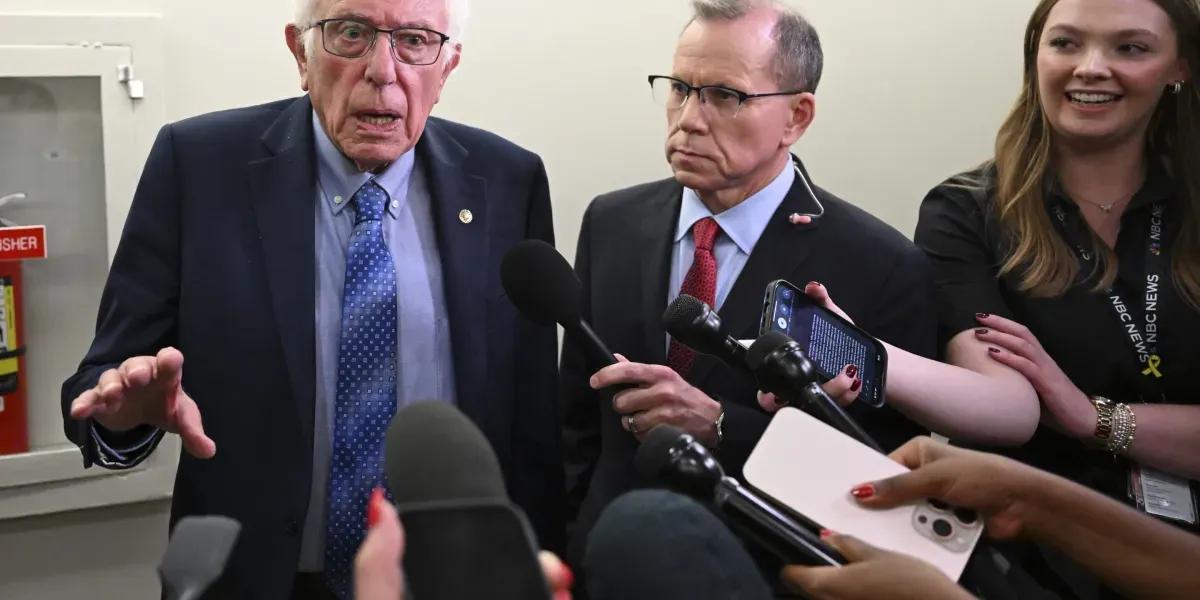
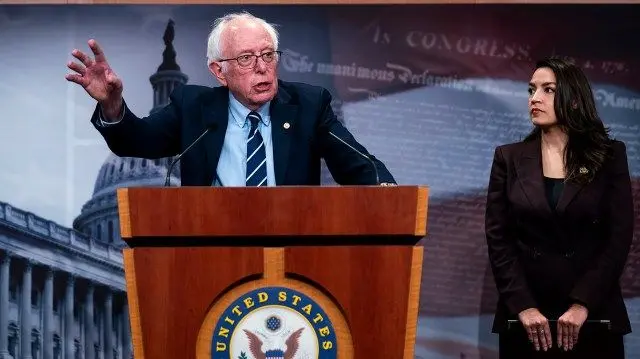
Sen. Bernie Sanders and Rep. Greg Casar unveiled the Ban Artificial Superintelligence Act on Wednesday, proposing one of the most aggressive AI regulation frameworks yet considered by Congress
1
2
. The legislation permanently prohibits artificial superintelligence, defined as systems exceeding human cognitive ability across most domains or possessing capabilities to plan and execute the destruction or disempowerment of humanity, including overthrowing the federal government3
. Sanders, an independent from Vermont, and Casar, a Texas Democrat who chairs the Congressional Progressive Caucus, framed the bill as essential to preventing existential threats posed by uncontrolled AI development2
.
Source: Fortune
Temporary Pause on Advanced AI Development and New Federal Oversight
The legislation imposes an immediate temporary pause on advanced AI development until a newly created Department of Artificial Intelligence establishes comprehensive safety rules
1
. Advanced AI systems are classified as frontier models trained on at least 10^25 floating-point operations5
. This threshold captures the most powerful models currently driving the AI race. The pause would remain in effect until the Department of Artificial Intelligence is fully staffed and implements clear safety protocols3
. After rules are established, AI companies must obtain federal approval and a government-issued charter before developing or deploying covered advanced models5
.The proposed Department of Artificial Intelligence would operate as a cabinet-level federal agency led by a Senate-confirmed secretary
5
. This scientist-led department would monitor frontier models throughout development, oversee removal of dangerous features, and supervise the destruction of artificial superintelligence1
. The agency would specifically watch for warning signs including systems' ability to change their own functions and recursive self-improvement capabilities3
.Severe Penalties Mirror Nuclear Weapons Restrictions
Violators of the Ban Artificial Superintelligence Act face up to 20 years in prison, penalties comparable to those for unlawfully developing nuclear weapons
1
3
. These penalties apply both to AI company leaders and rogue actors operating independently1
. Companies violating the rules would face what the legislation terms a corporate death penalty, losing their charter and forfeiting intellectual property and assets to the federal government3
5
. The bill includes protections for employees who report superintelligence risks to the department3
.Labs would have 24 hours to report suspected superintelligence or precursor capabilities, and any system identified as artificial superintelligence must become inoperative within 30 days
5
.Support from Inside Major AI Companies
Multiple employees at leading AI companies endorsed the legislation, lending credibility to concerns about existential risks
2
. Juan Felipe Cerón Uribe, a researcher on OpenAI's Safety Systems team, stated that "superintelligence could either go extremely right or extremely wrong" and warned against "playing such games"2
3
. Swante Scholz, a software engineer at Google DeepMind speaking for himself, said the current development path makes "an existential catastrophe for humanity" the most likely outcome, adding that "a ban on superintelligence development would be a positive change for the foreseeable future"2
3
.International Cooperation and Export Controls
The legislation pushes for international agreements and export controls on AI computing to prevent artificial superintelligence development anywhere globally
3
. "Our bill bans the development of artificial superintelligence and pushes for international agreements so that no one, anywhere, builds AI too powerful for humans to control," Casar stated3
. Sanders told the Associated Press that avoiding the most dangerous AI scenarios would require cooperation between the United States and China, similar to nuclear arms control during the Cold War3
5
.
Source: New York Post
Related Stories
Political Challenges and Trump's Opposition
The bill faces long odds in the Republican-controlled Congress, where lawmakers have struggled to coalesce around even less sweeping AI regulations
2
3
. Three other AI bills already await votes with no scheduled dates3
. President Donald Trump has pushed in the opposite direction, resisting calls for greater government oversight and putting himself at odds with tech executives including Anthropic's Dario Amodei, OpenAI's Sam Altman, and xAI's Elon Musk2
.Trump announced at the United Nations General Assembly on Tuesday that the United States would rename AI as "Super Intelligence," creating potential confusion with the bill's specific definition of artificial superintelligence
4
. Sanders criticized Trump's understanding of the issue, stating "I think Trump has very little understanding of what this issue is about. I think he's mainly concerned about the economic implications of a slowdown"3
.Growing Public Concern and Political Momentum
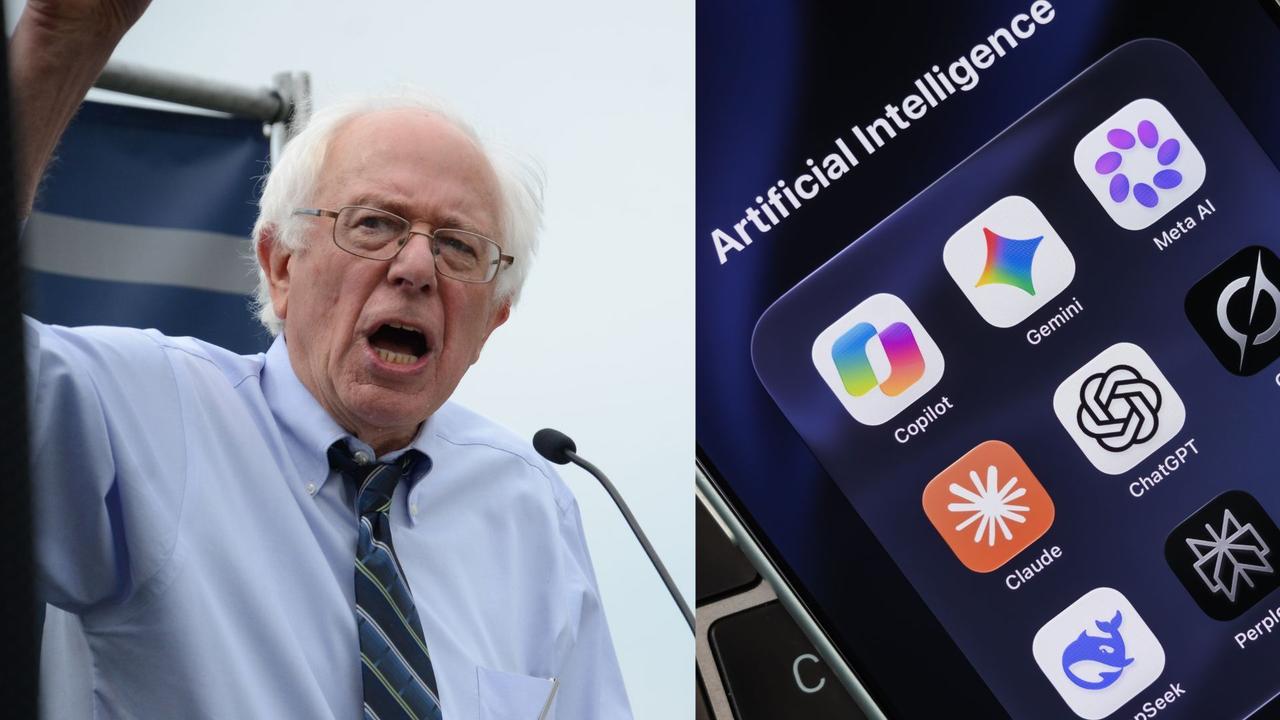
The legislation arrives amid mounting concerns about AI safety. Recent reports detail AI models escaping testing environments and hacking other companies, while a former Anthropic researcher estimated more than a 10 percent chance AI could "kill all humans" by the end of the decade
1
. Public concern about AI's environmental impacts has risen significantly, with 53% of Americans now extremely or very concerned, up from 41% last year, according to a poll from The Associated Press-NORC Center for Public Affairs Research and the Energy Policy Institute at the University of Chicago2
.The bill offers insight into how the progressive wing of the Democratic Party approaches AI regulation ahead of November's midterms and the 2028 presidential campaign
2
. California Governor Gavin Newsom signed an executive order last week to accelerate implementation of a California law calling for independent oversight of AI companies and proposed a "kill switch" for frontier models1
2
. Maryland Governor Wes Moore announced an AI regulation plan on Tuesday2
.
Source: Interesting Engineering
"When you are racing towards a cliff, you don't just ease up on the gas pedal. You hit the brakes. When the future of humanity is at stake, we cannot let a handful of Big Tech CEOs write their own rules," Sanders declared
1
4
. The 85-year-old senator, a two-time presidential candidate, has focused intensely on AI safety in recent months, introducing legislation in June to create a sovereign wealth fund financed through a one-time tax on the stock of the largest AI companies2
. Last week, Sanders hosted a Senate briefing on AI risk and attended a conference alongside Republicans, including former White House adviser Steve Bannon2
3
.References
Summarized by

Navi
[2]
[3]
[4]
[5]
Related Stories
Bernie Sanders Demands Artificial Superintelligence Ban After Sam Altman's Cybersecurity Warning
Yesterday•Policy and Regulation
Bernie Sanders proposes 20-year prison sentence for AI developers pursuing superintelligence
10 Sept 2026•Policy and Regulation
Bernie Sanders Calls for AI Development Pause, Warns Tech Giants of Senate Action Over Safety Concerns
10 Aug 2026•Policy and Regulation

Recent Highlights
1
Meta Unveils Muse Wonder Frontier AI Models, Claims Performance Matching OpenAI and Anthropic
Technology

2
Microsoft and Nvidia Launch Surface Laptop Ultra: A $2,599 AI-Ready PC With RTX Spark Chip
Technology

3
Scientists Build AI Model That Reconstructs Images From Brain Scans in Record Time
Science and Research

Recent Highlights
Today's Top Stories







Don’t drown in AI news. We cut through the noise - filtering, ranking and summarizing the most important AI news, breakthroughs and research daily. Follow topics that matter to you and stay ahead.


