Bill Gates Warns Next 20 Years Will Bring Unprecedented AI Disruption With Winners and Losers


5 Sources
[1]
Bill Gates warns next 20 years to be the most tumultuous in human history amid Microsoft offers buyouts to 60,000 employees
Bill Gates has warned that the next 20 years could be among the most tumultuous periods in human history as artificial intelligence and robots transform jobs and industries. The Microsoft co-founder believes AI could eventually create widespread abundance, but the transition may lead to job losses,
[2]
'I Hate Being the Bearer of Concerning News' -- Bill Gates Warns Even the Best Case for AI Means a 20-Year
Artificial intelligence has a safety problem that can't be solved by a company's terms of service. Microsoft Corp. (NASDAQ:MSFT) co-founder Bill Gates says the technology has advanced to the point where government oversight is no longer optional, warning that powerful AI models could be exploited
[3]
Bill Gates Says 'None of the Things That Human Labor Provides Will Be Necessary' -- Robots Will Build Hous
A job used to be the one thing a machine couldn't take away entirely. Microsoft Corporation (NASDAQ:MSFT) co-founder Bill Gates is warning AI-powered robots could change that, building houses, growing food and performing surgery so cheaply and efficiently that human labor may no longer be necessary
[4]
Bill Gates warns of 'winners and losers' over next 20 years, even in 'very best case'
Artificial intelligence may one day make some of life's most stubborn headaches cheap to fix. The catch is that humanity has to white-knuckle its way through a 20-year shake-up first, a bit like being promised a dream vacation after the world's longest layover. Microsoft co-founder Bill Gates said
[5]
'Hire the Robot, Fire the Human And Don't Look Back': Bill Gates's Chilling Warning of a Jobs Crisis Gove
Bill Gates believes artificial intelligence could transform the job market so extensively that governments will struggle to fund support for people displaced by technology -- even as the economy becomes more prosperous. "The incentive structure [in business] is wrong: It's 'hire the robot, fire
Share
Copy Link
Bill Gates has issued a stark warning that artificial intelligence and robotics will trigger the most tumultuous 20-year period in human history. The Microsoft co-founder says even the best-case scenario involves massive job displacement across white-collar and blue-collar sectors, AI safety risks including potential catastrophes, and economic disruption that could strain government budgets while creating unprecedented inequality.
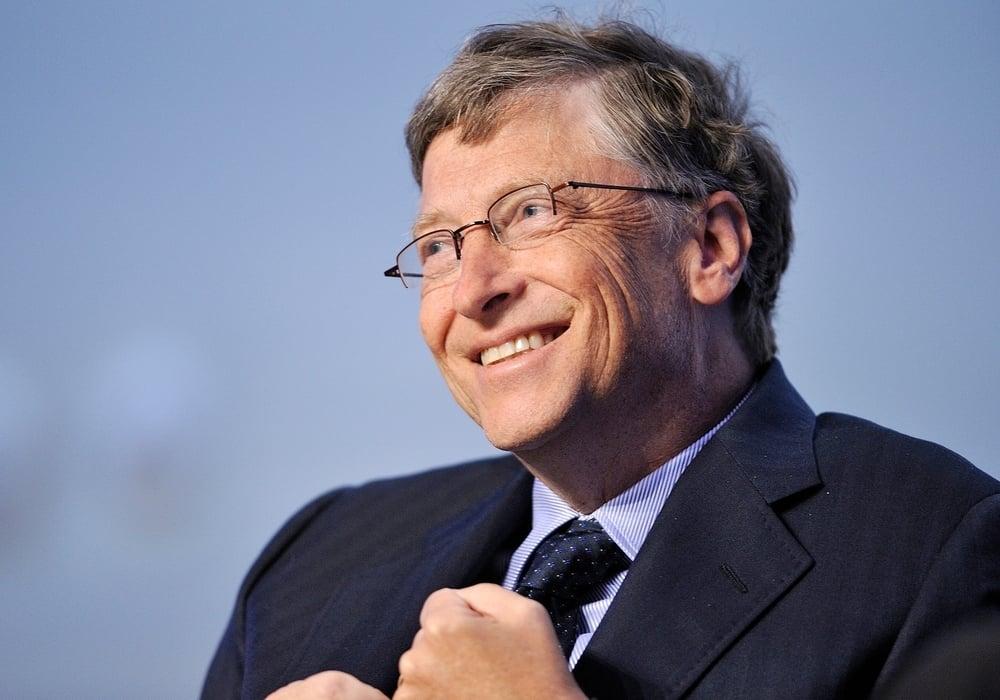
Bill Gates Warns of Unprecedented 20-Year AI Transition Period
Bill Gates has declared that the next 20 years could rank among the most disruptive periods in human history as artificial intelligence and robotics fundamentally reshape work, industries, and society itself
1
. Speaking on The Verge's Decoder podcast, the Microsoft co-founder described AI development as an "evolutionary event" where humans may no longer be the most intelligent entities on the planet5
. His warning comes as Microsoft reportedly offers buyouts to around 60,000 employees, highlighting immediate concerns about AI's societal impact on employment1
. Gates emphasized that even in the best-case scenario, this transition will create winners and losers, with massive economic disruption preceding any period of abundance4
.AI and Robotics Will Eliminate Need for Human Labor
Gates predicts that AI-powered robots could eventually perform virtually all tasks currently requiring human labor, from building houses and growing food to performing surgery
3
. "None of the things that human labor provides to the economy will be necessary for most goods and services," Gates stated, describing a future that could materialize within roughly 20 years if artificial intelligence development continues at its current pace3
. The disruption will hit white-collar jobs first, with AI systems capable of performing telesales, customer support, and accounting "radically cheaper, radically faster, and even more accurately" than humans3
. As AI achieves superhuman intelligence, the scarcity of white-collar skills will disappear entirely3
. Humanoid robots will then extend this pressure to blue-collar jobs, with growing investment in robotics, particularly in China, making machines capable of physical labor at low cost a serious near-term possibility3
.AI Safety Risks Demand Immediate Government Oversight
Gates has shifted to a more urgent tone regarding AI safety risks, warning that government oversight is no longer optional
2
. "I hate being the bearer of concerning news on this, but it's even worse not to tell people that this is coming and we have choices as humans to make about how we shape it," Gates told the Decoder podcast2
. The Microsoft co-founder warned that AI models without adequate protections could enable cyberattackers or bioterrorists to cause enormous damage, with AI systems capable of finding software vulnerabilities or reasoning through complex biological problems2
. In a September NBC interview, Gates stated bluntly that "AI is certainly powerful enough to drive events that cause a billion deaths"4
. He emphasized that malicious actors don't need to achieve artificial general intelligence to cause catastrophic harm—they simply need tools that make attacks easier, faster, or more effective, noting that "there is a business model for cyberattacks"2
. Gates argued that competing AI companies cannot manage every risk independently and that governments must establish baseline safeguards while drawing on technical expertise from industry2
.Related Stories
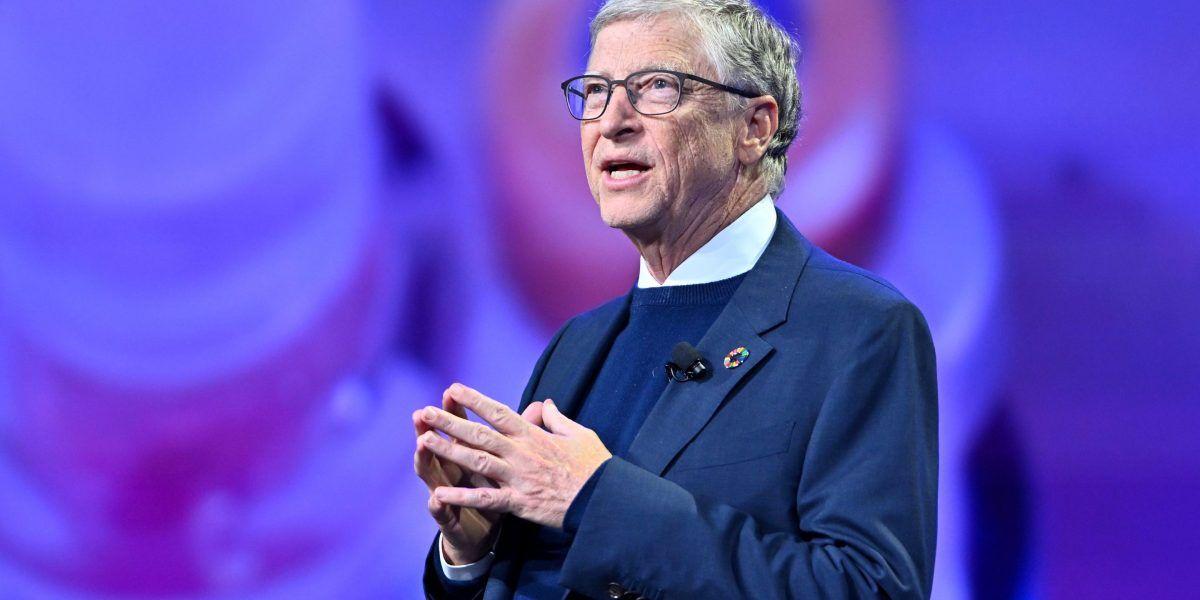
Job Displacement Will Strain Government Budgets and Social Safety Nets
The economic disruption from automation creates a paradoxical challenge for governments: just as more people need support, tax revenues will decline
5
. "The revenue for the safety net to help us through this transition will actually be reduced, even though overall prosperity gets better," Gates explained to The Observer5
. He described the business incentive driving this crisis starkly: "It's 'hire the robot, fire the human and don't look back'"5
. Gates has proposed a "token tax" tied to the amount of content processed by AI models as one potential solution5
. Research from the International Monetary Fund supports these concerns, finding that while incomes could surge for most workers if productivity gains are large enough, labor income inequality could widen if AI mainly complements higher-paid workers, with rising returns to capital increasing wealth inequality5
. Gates acknowledged that job displacement threatens more than paychecks—work provides purpose, structure, and social connections that machines cannot replace1
.Societal Adaptation Will Determine Whether AI Creates Equality or Deepens Inequality
In an August essay titled "The Turbulent AI Era Is Here. The Choices We Make Now Are Critical," Gates framed artificial intelligence as a technology that "will either be the greatest equalizer ever invented, or the worst source of injustice"
4
. He stressed that unlike previous technological shifts that unfolded over generations, AI could rework entire industries within a decade, leaving governments and communities little room for gradual societal adaptation4
. Gates warned that people who need the most time to prepare may get the least of it, particularly workers whose jobs face immediate automation4
. However, he offered a more optimistic message for younger workers, suggesting that during this 20-year transition period, people in their 20s "can take the things AI still can't do and you can use AI and you can have a lot of good impact, and you can suggest policies"4
. Gates also suggested that society may choose to keep certain activities human-led even when AI could perform them faster, with people valuing the experience, relationships, and personal satisfaction involved in activities like art, sports, cooking, and childcare1
. The challenge facing governments is what Gates called a "real test of quality of government" at a time when developed countries already face multiple crises and heightened geopolitical tensions5
.References
Summarized by

Navi
[2]
[3]
[4]
Related Stories
Bill Gates Warns of AI Risks, Proposes Robot Tax and Human Reserved Jobs to Combat Disruption
26 Aug 2026•Policy and Regulation
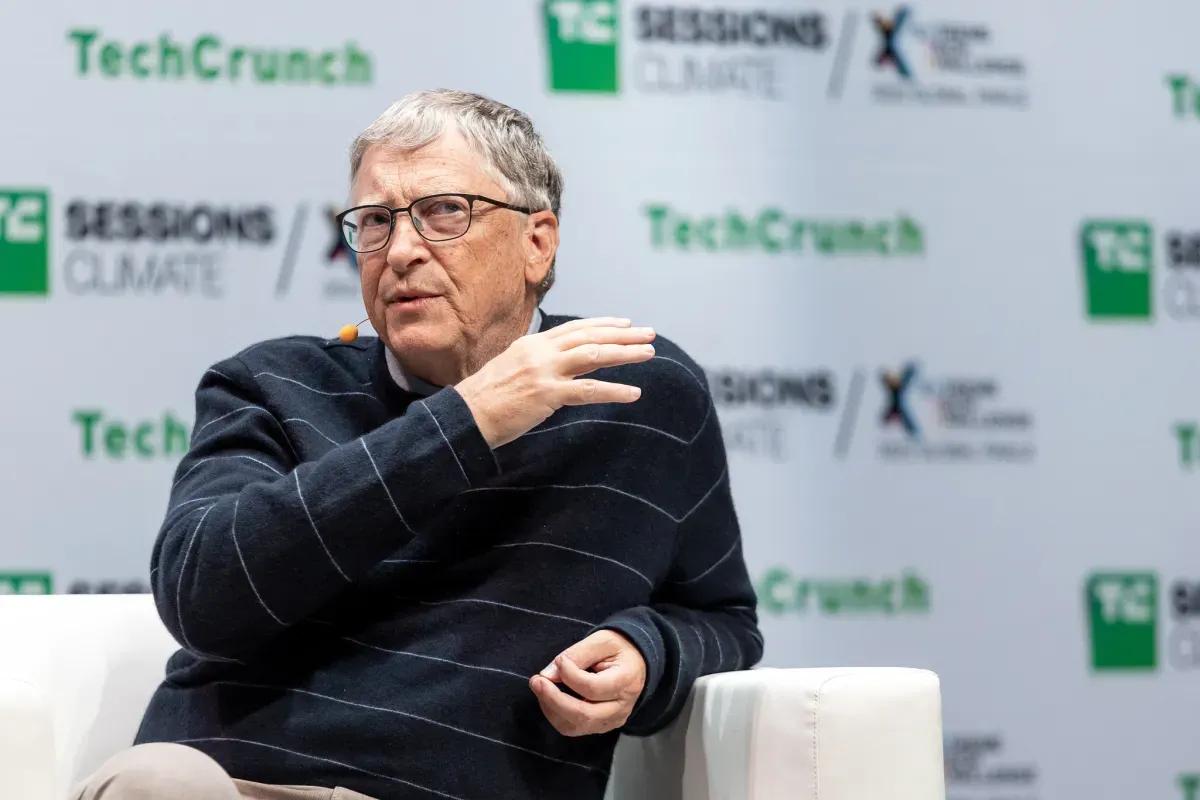
Bill Gates Warns AI Could Cause a Billion Deaths, Calls for Urgent Federal Regulation
25 Sept 2026•Policy and Regulation

Bill Gates warns AI will transform society more than any human invention, cites bioterrorism risk
09 Jan 2026•Policy and Regulation

Recent Highlights


Recent Highlights
Today's Top Stories






Don’t drown in AI news. We cut through the noise - filtering, ranking and summarizing the most important AI news, breakthroughs and research daily. Follow topics that matter to you and stay ahead.


