Bill Gates warns AI will transform society more than any human invention, cites bioterrorism risk


4 Sources
[1]
Bill Gates says there's 'no upper limit' on AI, citing opportunity and risk
Bill Gates had a front-row seat for the rise of AI, from his longtime work at Microsoft to early demonstrations of key breakthroughs from OpenAI that illustrated the technology's potential. Now he's urging the rest of us to get ready. Likening the situation to his pre-COVID warnings about pandemic
[2]
Bill Gates says AI could be used as a bioterrorism weapon akin to the COVID pandemic if it falls into the wrong hands | Fortune
The wheel, the internet, the car, and electricity. All of these human creations pale in comparison to artificial intelligence, Microsoft co-founder Bill Gates believes. In his annual letter released today, the Microsoft co-founder wrote that, "Of all the things humans have ever created, AI will
[3]
Microsoft's Bill Gates' big prediction and 'bioterrorism weapon' warning : This one human invention will change society more than anything
Microsoft co-founder Bill Gates in his annual letter warned that Artificial Intelligence (AI) is that one human invention that will change the society more than anything. Though the tech billionaire acknowledged AI's potential in healthcare and education, he warned of significant threats, including
[4]
Bill Gates Says 'AI Will Change Society the Most' -- Job Disruption Has Already Begun, 'Less Labor' Will Be Needed, And 5-Day Work Week May Disappear
Enter your email to get Benzinga's ultimate morning update: The PreMarket Activity Newsletter Bill Gates says he's still optimistic about the future -- but this time, he brought disclaimers. In his latest annual The Year Ahead letter, published on GatesNotes last week, the Microsoft co-founder
Share
Copy Link
In his annual Year Ahead letter, Bill Gates declares artificial intelligence will change society more than any human creation, warning there's no upper limit on AI capabilities. While highlighting AI's potential in healthcare and education, the Microsoft co-founder urges global preparedness for significant risks including bioterrorism weapons and job market disruption.
Bill Gates Says There's No Upper Limit on AI Capabilities
Bill Gates has issued his most emphatic statement yet about artificial intelligence, declaring in his annual Year Ahead letter that "of all the things humans have ever created, AI will change society the most." The Microsoft co-founder, who witnessed early breakthroughs from OpenAI firsthand, writes that "there is no upper limit on how intelligent AIs will get or on how good robots will get," predicting advances will eventually exceed human levels
1
. While acknowledging missed deadlines for artificial general intelligence can create skepticism, Gates warns against dismissing bigger breakthroughs that remain on the horizon, even if timing stays uncertain.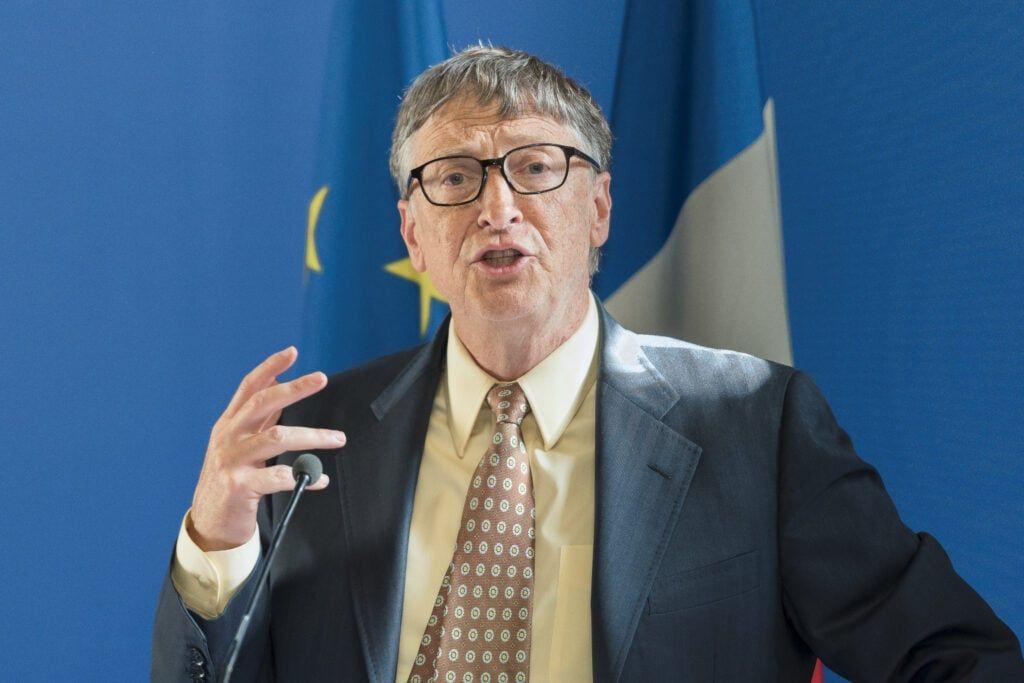
Source: Benzinga
Bioterrorism Weapon Threat Tops Gates' AI Concerns
Drawing parallels to his pre-COVID pandemic warnings, Gates identifies a chilling new danger: "An even greater risk than a naturally caused pandemic is that a non-government group will use open source AI tools to design a bioterrorism weapon"
2
. This represents his top concern about AI's potential misuse by bad actors. The philanthropist emphasizes that society hasn't adequately prepared for an AI era, stressing the need for deliberate governance around how this transformative human creation is developed and deployed. Gates argues that governments, not just markets, must lead AI implementation to manage these significant risks of artificial intelligence1
.Job Market Disruption Already Underway Across Sectors
The impact on employment represents another critical challenge. Gates reports that AI makes software developers "at least twice as efficient," with productivity gains already doubling output while slashing code production costs
1
. Job market disruption is spreading beyond tech, with warehouse work and phone support next in line. "AI capabilities will allow us to make far more goods and services with less labor," Gates writes, predicting this impact will grow substantially over the next five years4
. He suggests society should use 2026 to prepare for these changes, including policies for wealth distribution and potentially reducing the work week rather than accepting mass job loss.Related Stories

AI in Healthcare and Education Shows Potential for Breakthroughs
Despite the risks, Gates maintains optimism about AI's capacity to address global challenges. He reveals he personally uses AI "to better understand my own health" and envisions always-available, high-quality medical advice reaching every patient and provider worldwide
1
. Personalized learning powered by AI has become "the biggest focus of the Gates Foundation's spending on education," with Gates observing successful implementations in New Jersey1
. The Gates Foundation has committed $1.4 billion to help farmers facing extreme weather, with predictions that AI will soon provide poor farmers better advice about weather, prices, crop diseases, and soil than even the wealthiest farmers currently receive.
Source: GeekWire
Global Preparedness Requires Deliberate Action on Governance
Gates frames the challenge as managing AI's trajectory rather than halting progress. "We'll need to be deliberate about how this technology is developed, governed, and deployed," he writes, acknowledging that different political parties will propose varying approaches to spreading wealth and addressing jobs' societal role
2
. The Microsoft co-founder doesn't endorse universal basic income or specific redistribution mechanisms, leaving the path forward open-ended. He believes that within the next decade, humanity will "not only get the world back on track but enter a new era of unprecedented progress" — if society acts deliberately on global preparedness1
. Gates credits two factors for his continued optimism despite growing uncertainty: humanity's ability to anticipate problems through foresight, and our fundamental capacity for compassion toward one another.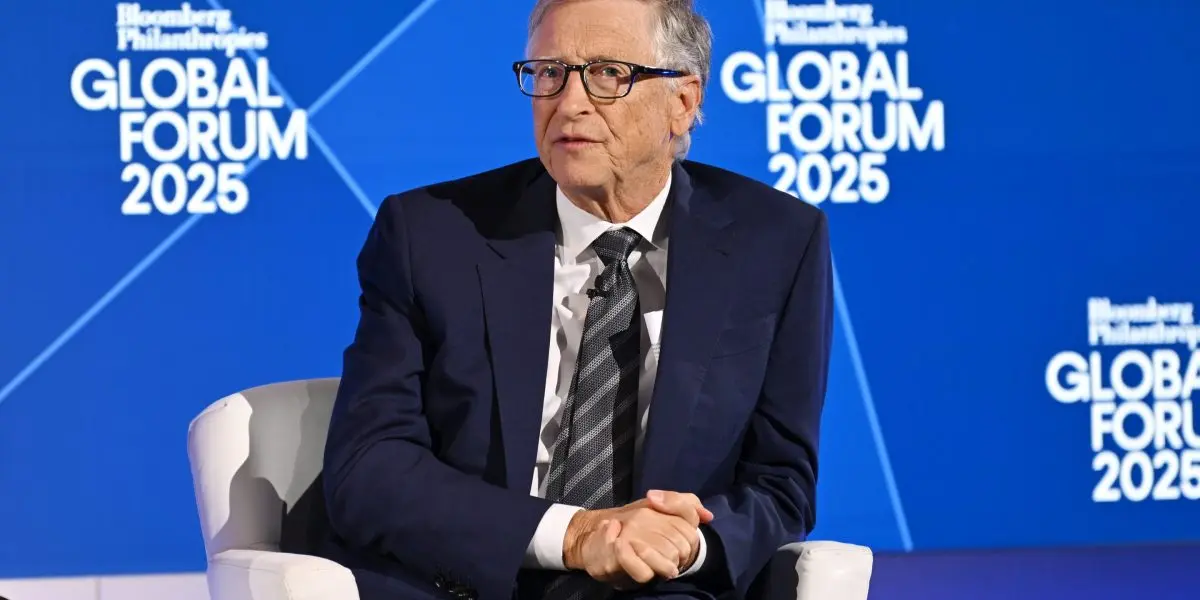
Source: Fortune
References
Summarized by

Navi
Related Stories
Bill Gates' AI Predictions: From Skeptic to Advocate, Foreseeing a Transformative Decade Ahead
07 Nov 2024•Technology

Bill Gates Warns of AI's Rapid Progress and Its Impact on the Future of Work
02 Aug 2025•Technology
Bill Gates Warns of AI Risks, Proposes Robot Tax and Human Reserved Jobs to Combat Disruption
26 Aug 2026•Policy and Regulation
Recent Highlights



Recent Highlights
Today's Top Stories





Don’t drown in AI news. We cut through the noise - filtering, ranking and summarizing the most important AI news, breakthroughs and research daily. Follow topics that matter to you and stay ahead.


