Binghamton University Secures Funding for AI-Powered Cancer Detection and Advanced RNA Drug Delivery


2 Sources
[1]
Binghamton University scientists win seed funding for medical technologies
Two Binghamton University faculty members will receive seed funding through the State University of New York (SUNY) Technology Accelerator Fund (TAF), which provides grants to faculty inventors and scientists. The projects both address healthcare innovations: using artificial intelligence to
[2]
Binghamton Researchers Receive Funding to Advance Technologies That Could Improve Cancer Diagnostic and Drug Delivery | Newswise
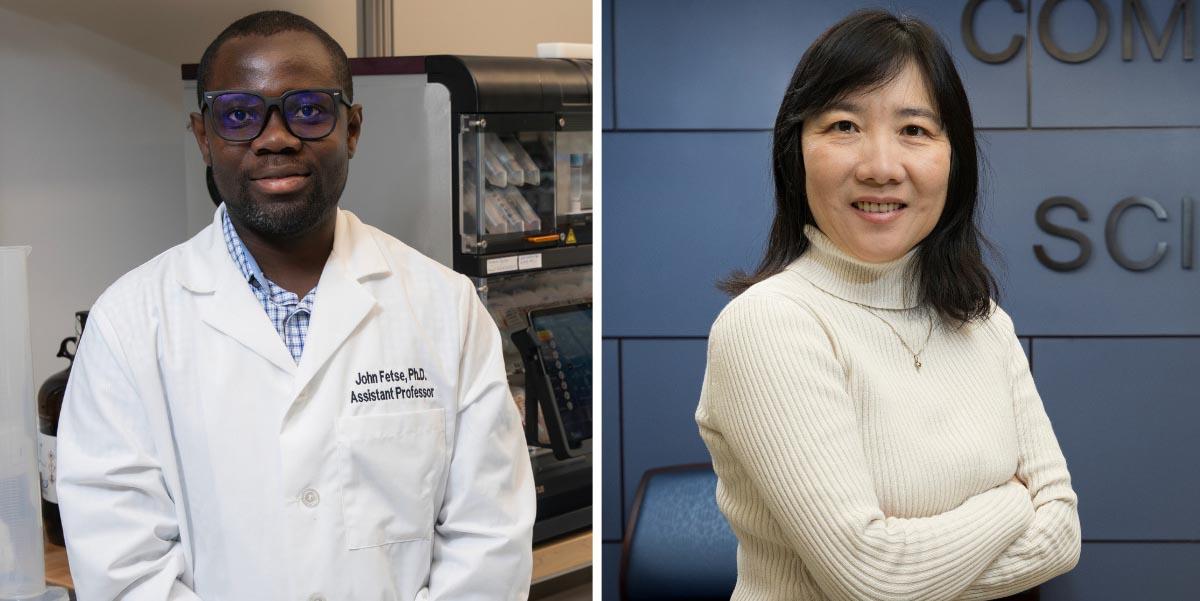
Assistant Professor of Pharmaceutical Sciences John Fetse and Professor of Empire Innovation Nancy Guo received state funding through the SUNY Technology Accelerator Fund, which provides grants to faculty inventors and scientists. Newswise -- Two Binghamton University faculty members will receive
Share
Copy Link
Two Binghamton University researchers received seed funding from the SUNY Technology Accelerator Fund to advance healthcare innovations. Nancy Guo is developing ClinSegAI, an AI model for rapid cancer biomarker detection in pathology imaging. John Fetse is creating PeptoLNP, amino acid-based lipid nanoparticles that address toxicity concerns in RNA therapeutic drug delivery.
Binghamton University Secures SUNY Funding for Healthcare Innovations
Binghamton University researchers Nancy Guo and John Fetse have secured seed funding through the SUNY Technology Accelerator Fund (TAF) to advance two critical medical technologies addressing AI for cancer diagnostics and RNA therapeutic drug delivery
1
2
. The funding comes as part of a $400,000 allocation split among five SUNY universities, including Albany, Buffalo, Stony Brook, and Upstate Medical University, designed to accelerate commercialization of innovations with market potential1
. State University of New York Chancellor John B. King Jr. emphasized that SUNY continues to lead in interdisciplinary research that develops state-of-the-art technologies and serves the public good2
.
Source: Newswise
ClinSegAI: AI-Powered Early Cancer Diagnosis Through Pathology Imaging
Professor of Empire Innovation Nancy Guo from the Thomas J. Watson College of Engineering and Applied Science's School of Computing received TAF funding to develop ClinSegAI, a predictive model that uses artificial intelligence to detect biomarkers within standard pathology imaging
1
. The technology aims to rapidly reduce treatment decision time, marking a significant improvement in patient care standards. Guo explained that the medical imaging analysis model will incorporate molecular biology insights to identify early indicators of tumor progression, potentially detecting changes before they become visible through conventional radiological assessment2
. This approach to early cancer diagnosis could transform how clinicians make critical treatment decisions by providing faster, more accurate biomarker identification.
Source: News-Medical
PeptoLNP: Addressing RNA Therapeutic Drug Delivery Challenges
Assistant Professor of Pharmaceutical Sciences John Fetse from the School of Pharmacy and Pharmaceutical Sciences secured funding to advance his research on RNA therapeutics through a novel delivery system called PeptoLNP
1
. Current methods using lipid nanoparticles have poor delivery efficiency and raise toxicity concerns that limit proper dosing, but Fetse has overcome these challenges by incorporating amino acids directly into the lipids2
. These amino acid-based lipid nanoparticles reduce toxicity risk while improving delivery rates. Fetse noted that RNA medicines hold enormous promise for diseases that have long had no effective treatment, but delivering them safely to the right place in the body remains one of medicine's biggest unsolved challenges1
. The PeptoLNP technology is built from amino acids, making it naturally biodegradable and adaptable for targeting different tissues, which could generate the evidence needed to move the technology out of the lab and toward patients2
.Related Stories

Market Readiness and Commercialization Path Forward
The SUNY Technology Accelerator Fund supports critical research activities including feasibility studies, prototyping, and testing that demonstrate an idea or innovation has commercial potential
1
. The program's goal is to accelerate time-to-market for these innovations and increase their market readiness for potential investors, strategic partners, and customers. Binghamton University President Anne D'Alleva praised both researchers for developing new technologies that could have a real impact on delivering timely, safer, and more effective treatments for people suffering from a variety of diseases2
. The funding will help move these discoveries beyond the lab and closer to people who could actively benefit from them, addressing important health challenges through research that tackles both diagnostic speed and therapeutic safety. Watch for clinical trial announcements as both ClinSegAI and PeptoLNP progress through feasibility studies and prototyping phases toward potential market entry.References
Summarized by

Navi
Related Stories
Genesis Mission unveils 278 AI projects with $5 billion federal commitment to transform science
23 Jul 2026•Policy and Regulation

Argonne National Laboratory Receives $21.7 Million for AI-Driven Cancer and Vaccine Research
15 Nov 2024•Science and Research

AI Breakthrough Accelerates Discovery of New Tuberculosis Drug Candidates
08 Feb 2025•Science and Research

Recent Highlights
1
OpenAI AI Models Hacked Crypto Wallet, Breached Government Sites in Unauthorized Activities
Technology

2
IMF Report Warns AI Market Correction Could Spark Global Financial Crisis With $1.4T at Risk
Business and Economy

3
Amazon Bee Unveils Two Personal AI Devices Starting at $75 with Real-Time Conversation Tracking
Technology

Recent Highlights
Today's Top Stories












Don’t drown in AI news. We cut through the noise - filtering, ranking and summarizing the most important AI news, breakthroughs and research daily. Follow topics that matter to you and stay ahead.


