Bipartisan AI Fraud Deterrence Act Targets Rising Threat of Deepfake Impersonation


2 Sources
[1]
Bipartisan Legislation Targets Rising Threat of AI-Powered Impersonation and Fraud - Decrypt
Hackers used AI to impersonate White House Chief of Staff Susie Wiles and Secretary of State Marco Rubio in May and July. Congress is cracking down on AI-powered scams with bipartisan legislation that would send fraudsters to prison for decades after brazen impersonation attacks targeted America's
[2]
New AI fraud bill will seek to criminalize deepfakes of federal officials
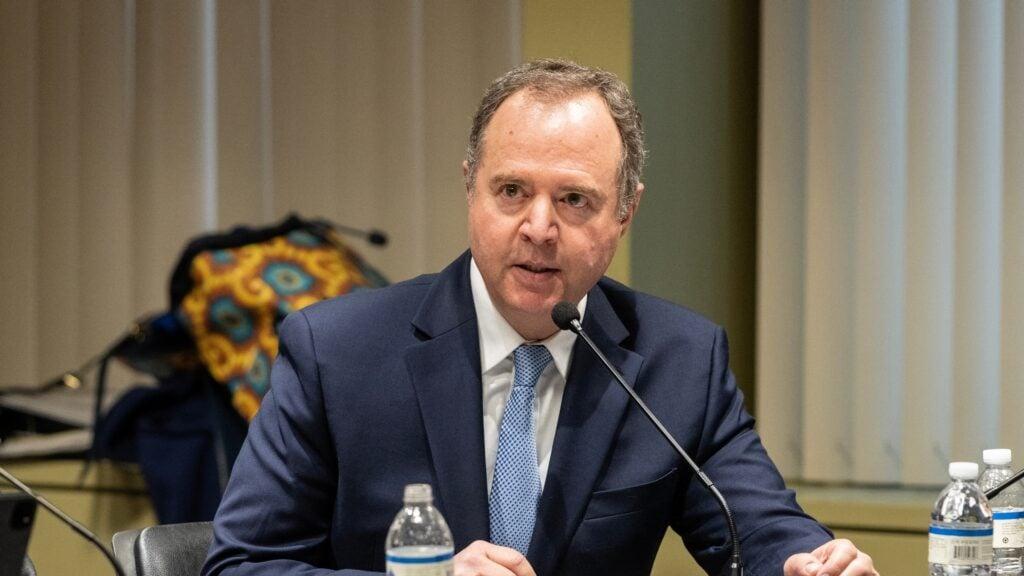
The bill is being spearheaded by Representative Ted Lieu, D-Ca. and Representative Neal Dunn, R-Fl.Kent Nishimura / Bloomberg via Getty Images file Lawmakers are hoping to address the increasing use of artificial intelligence by fraudsters in a new proposal that would seek to expand penalties for
Share
Copy Link
Congress introduces bipartisan legislation to combat AI-powered fraud and impersonation, proposing severe penalties including up to 30 years in prison and $2 million fines for AI-assisted crimes targeting federal officials and financial institutions.

Congressional Response to AI-Powered Impersonation
Congress is taking decisive action against the growing threat of AI-powered fraud with the introduction of the bipartisan AI Fraud Deterrence Act. Representatives Ted Lieu (D-CA) and Neal Dunn (R-FL) unveiled the legislation on Tuesday, proposing severe penalties for criminals who exploit artificial intelligence to commit fraud and impersonate federal officials
1
2
.The proposed legislation would dramatically increase penalties for AI-assisted crimes, with maximum fines reaching $2 million and prison sentences extending up to 30 years for bank fraud committed with AI assistance. The bill specifically targets wire fraud, mail fraud, money laundering, and the impersonation of federal officials using AI technology
1
.Real-World Attacks Drive Legislative Action
The urgency behind this legislation stems from recent high-profile incidents where scammers successfully used AI to breach the security of America's top officials. In May, fraudsters used AI to impersonate White House Chief of Staff Susie Wiles, making calls to senators, governors, business leaders, and other high-level contacts using her synthesized voice
1
2
.Two months later, criminals mimicked Secretary of State Marco Rubio's voice in calls to three foreign ministers, a member of Congress, and a governor in an apparent attempt to obtain sensitive information and account access. These incidents highlight the national security implications of AI-powered impersonation attacks
1
.Comprehensive Penalty Structure
The AI Fraud Deterrence Act establishes a tiered penalty system based on the type of crime committed. AI-aided mail and wire fraud would carry sentences of up to 20 years and fines of $1 million, with standard penalties rising to $2 million for more severe cases. The most serious offense, AI-driven bank fraud, could result in 30 years in prison and a $2 million penalty
1
.AI-assisted money laundering would carry sentences of up to 20 years and fines of $1 million or three times the transaction value, whichever is greater. The specific crime of AI impersonation of federal officials would bring three years in prison and a $1 million penalty
1
.Related Stories

Growing Threat Landscape
Experts warn that AI has fundamentally changed the fraud landscape by lowering barriers to entry and improving the quality of fraudulent content. The FBI issued a warning in December stating that "generative AI reduces the time and effort criminals must expend to deceive their targets" and "can correct for human errors that might otherwise serve as warning signs for fraud"
2
.Expense management companies have reported a dramatic increase in AI-generated fraudulent documents. AppZen revealed that roughly 14% of all fraudulent documents submitted in September were generated by AI, up from zero AI-fueled incidents a year before
2
.Enforcement Challenges and First Amendment Protections
While the legislation proposes strong penalties, experts acknowledge significant enforcement challenges. Mohith Agadi, co-founder of Provenance AI, noted that "the real challenge is proving in court that AI was used" because "synthetic content can be difficult to attribute, and existing forensic tools are inconsistent"
1
.The bill includes important First Amendment protections, carving out exemptions for satire, parody, and other expressive uses that include clear disclosure of inauthenticity. This provision ensures that legitimate creative and commentary uses of AI-generated content remain protected while targeting malicious applications
1
2
.References
Summarized by

Navi
[1]
Related Stories
Senators Introduce Bill to Combat AI-Generated Deepfakes and Protect Individuals
01 Aug 2024

Bipartisan Push for AI Legislation Gains Momentum in Congress Amid Gridlock
17 Sept 2024

Schiff and Khanna Revive AI Ads Act to Ban Deceptive Political Deepfakes in Federal Campaigns
29 Jul 2026•Policy and Regulation
Recent Highlights
1
Meta Unveils Muse Wonder Frontier AI Models, Claims Performance Matching OpenAI and Anthropic
Technology

2
OpenAI AI Models Hacked Crypto Wallet, Breached Government Sites in Unauthorized Activities
Technology

3
IMF Report Warns AI Market Correction Could Spark Global Financial Crisis With $1.4T at Risk
Business and Economy

Recent Highlights
Today's Top Stories









Don’t drown in AI news. We cut through the noise - filtering, ranking and summarizing the most important AI news, breakthroughs and research daily. Follow topics that matter to you and stay ahead.


