2 Sources
[1]
Brands using AI-generated influencers to promote products on social media
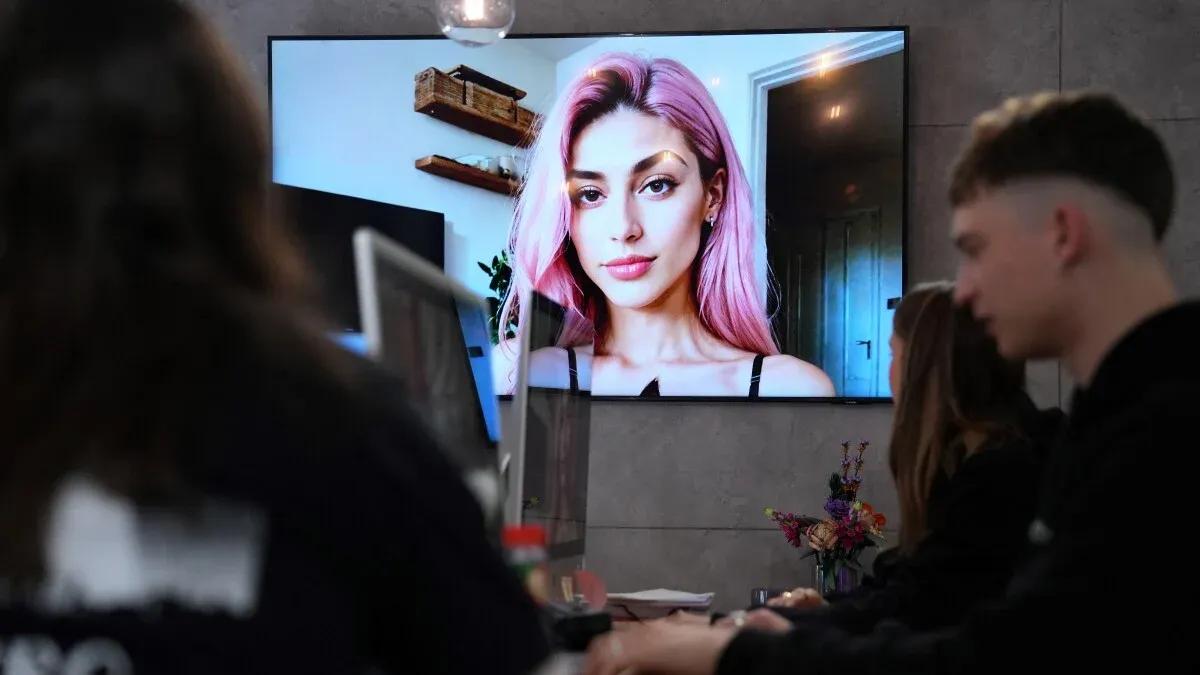
Investigation finds AI content that purports to show genuine customers, prompting calls for greater transparency Brands promoting their products online are quietly deploying AI-generated influencers on social media, an investigation has found, prompting calls for greater transparency. The findings suggest companies are increasingly turning to AI-generated content that purports to show genuine customer experiences while giving no obvious indication that the people featured are not real. The Guardian has also found that some content creators making AI influencer content are being asked to sign non-disclosure agreements so they cannot talk about their work. There are no specific rules requiring brands to tell consumers when advertising content has been created using AI. In the EU, new rules under the Artificial Intelligence Act will begin applying in August, requiring AI-generated or manipulated content such as deepfake images, audio and video to be clearly labelled. The legislation will not apply in the UK. The consumer group Which? said that customers should be clearly informed when promotional content features AI-generated influencers rather than real people. One example of a business appearing to use this content on Instagram includes a photo app called Once, which allows people's phones to create disposable camera-style photographs for events. According to analysis by Reality Defenders, a cybersecurity company specialising in deepfake detection, the brand has likely used AI-generated influencers in its promotion. Several videos on Instagram show a bride crying and saying she was pleased to have used the Once app at her wedding. In one she says: "Everyone expected a no-phone wedding, so I gave them cameras instead." The post was captioned, "The app I used is called @oncefilmapp." When asked about this, Once did not respond to a request for a comment. In another video a woman who appears to be AI generated says in a caption on the screen: "I could kiss the interior designer who showed me this." She then goes on to show herself using the Maket app, which uses AI to design and plan housing projects. Maket said: "AI-generated influencers have been one of several ways for us to test creative concepts and marketing hooks at a small scale before investing in broader campaigns. This is not a core part of our marketing strategy, but rather an experiment to better understand what resonates with audiences across channels, including influencer, social media and email campaigns." A fashion brand called Ashle, a Dubai-based business, posted a photograph appearing to show a woman wearing its clothes at a restaurant. The woman appears to have an extra finger. After being approached by the Guardian to ask about the use of AI influencers, the brand deleted photographs from its social media page. A spokesperson for Ashle said: "To clarify, all Ashle pieces are real garments that are handmade to order. We are not selling AI-generated products. Some early marketing imagery utilised AI during our initial launch phase to showcase designs. "The images that have been removed were taken down because those particular designs are no longer part of the collection, not because they were AI-generated." Lisa Barber, editor of Which? Tech, said: "Our recent investigation into deepfakes on social media found that a worrying 70% of people are unable to correctly identify all the real and fake videos we showed them, meaning consumers could be frequently being misled by AI-generated content and becoming targets for scammers. "It is concerning that consumers are not able to trust the content they are seeing online. Companies must be transparent when content has been created using AI, particularly if AI-generated influencers are appearing in the content." The Advertising Standards Authority (ASA) said there was nothing in its rules that explicitly prohibits brands from posting AI-generated promotional content without disclosing it. "There's nothing in our rules that prohibits this and there are no disclosure rules for AI content labelling," an ASA spokesperson said. "The content would, of course, still need to stick to the advertising rules. For example, it mustn't be misleading and it must be socially responsible." The regulator said the use of AI itself is not the issue it would assess when considering complaints. "That would depend on whether the use of AI results in the consumer being given a misleading impression of the product being advertised," the spokesperson said. "Ultimately, the issue we would look at is whether the ad itself is misleading, rather than the use of AI being inherently problematic." Clarissa Mansbridge, a former celebrity manager who has previously worked with Katie Price, creates images of AI influencers for brands as part of her Mia Metaverse portfolio. She says brands approach her because she has the technical ability to create hyperrealistic, aspirational digital humans. Brands can hire Mansbridge to create entirely new AI avatars that are used for user-generated content (UGC) - a form of content paid for by brands where humans review their products. For example, a beauty company may commission a realistic-looking video of an anonymous 20-year-old applying sunscreen beside a pool in Bali. The brand can then post the content directly on its own social channels, making it appear as though it was submitted by a real influencer. "I'm going to say about 40% to 60% of the content out there from some of the big brands is actually being made through AI, but a lot of the creators are under NDA," Mansbridge said. "If you sign with a brand, they'll make you sign an NDA saying you can't talk about the fact they're using [AI], because consumer trust is still being built. I call it plausible deniability." Mansbridge said brands are increasingly attracted by the lower costs associated with AI-generated content. "Brands want high-end photography, but they don't want to pay $20,000 to $70,000 for a traditional photoshoot," she said. "Unfortunately, human influencers killed the market for themselves. Brands are moving to AI to cut out issues like bad press, personal opinions, hourly rates and photographers." Mansbridge said the paid "UGC boom" started around three years ago, "when influencers were incredibly smart about it. They noticed brands were desperate for content that looked like real, everyday people using their products, so they started pitching paid content framed in that style. Brands loved it and paid for it." She added: "The authenticity of UGC was always about resonance, not [about] who made it. If the content reflects a real consumer truth about the product, it connects. AI just gives brands a smarter, more scalable way to get there." The use of AI-generated content that mimics authentic customer experiences is also being actively marketed to businesses. Leeds-based artist Zac Rossiter said he was recently approached by a marketing agency promising to help boost sales. In an email seen by the Guardian, the agency wrote: "Pick one of your products. I'm thinking your artwork prints, but it's up to you. We will use our AI studio to generate you a complimentary piece of ad creative for it, yours to keep." The agency said it wanted to create an AI-generated unboxing video featuring one of Rossiter's products. Unboxing videos, in which customers open and react to products on camera, have become a popular form of user-generated content because they are often viewed by consumers as authentic recommendations. Rossiter declined the offer. "I would never work with an agency that used fake AI unboxing videos over actual, real people," he said.
[2]
Brands Employing AI-Created Influencers on Social Media | PYMNTS.com
That's according to the results of an investigation by The Guardian published Sunday (June 21). The U.K. newspaper says these findings indicate that companies are using AI to generate content that purports to be an actual customer experience without letting people know the customers are AI inventions. The report noted that there are no regulations in the U.K. that mandate companies inform consumers that ads feature AI-generated content. New European Union rules set to go into effect in August will require AI-generated or manipulated content like deepfake images, audio and video to be labelled as such, but that rule won't apply in Great Britain. The report also includes comments from the U.K. consumer group Which? arguing that consumers should be clearly informed when ads feature AI-generated influencers. "Our recent investigation into deepfakes on social media found that a worrying 70% of people are unable to correctly identify all the real and fake videos we showed them, meaning consumers could be frequently being misled by AI-generated content and becoming targets for scammers," said Lisa Barber, editor of Which? Tech. "It is concerning that consumers are not able to trust the content they are seeing online. Companies must be transparent when content has been created using AI, particularly if AI-generated influencers are appearing in the content." The news comes days after the Senate Judiciary Committee voted to advance legislation designed to curb the spread of unauthorized AI-generated replicas of individuals. The Nurture Originals, Foster Art, and Keep Entertainment Safe (NO FAKES) Act, would create a federal intellectual property right covering a person's voice and visual likeness. "This bill is about protecting what's most personal to us, what makes us us: our voice and our likeness," said Sen. Chris Coons, D-Del., one of the bill's sponsors. He argued that advances in AI have made it possible to develop convincing digital replicas that depict people saying or doing things they never said or did. This technology can also be used to carry out financial fraud, as PYMNTS wrote earlier this month. While synthetic identity fraud is not new, AI has brought it to a new level. "A synthetic borrower in 2026 may arrive with a convincing driver's license generated by image models, employment verification supported by AI-written HR correspondence, and a live onboarding video featuring a deepfake face synchronized with cloned speech patterns," that report said. "Some fraud operations are reportedly generating entire digital footprints." For all PYMNTS AI coverage, subscribe to the daily AI Newsletter.
Share
Copy Link
An investigation by The Guardian reveals brands are quietly using AI-generated influencers to promote products on social media, with content appearing to show genuine customers who aren't real. Consumer group Which? found 70% of people can't identify deepfakes, raising concerns about transparency and consumer trust as regulatory loopholes persist in the UK.
Brands are increasingly deploying AI-generated influencers on social media to promote products, according to an investigation by The Guardian
1
. The findings reveal companies are using AI-created influencers to generate content that purports to show genuine customer experiences, without providing clear indication that the people featured are not real2
. This AI-driven marketing practice raises significant questions about consumer trust and transparency in digital advertising.
Source: PYMNTS
The investigation uncovered several examples of businesses appearing to use AI-generated promotional content on Instagram. A photo app called Once featured videos showing what appeared to be a bride crying with joy about using the app at her wedding, with one saying "Everyone expected a no-phone wedding, so I gave them cameras instead"
1
. According to analysis by Reality Defenders, a cybersecurity company specializing in deepfake detection, the brand has likely used AI-generated influencers in its promotion. Another example involved the Maket app, which uses AI to design housing projects, featuring a woman who appears to be AI-generated stating "I could kiss the interior designer who showed me this"1
.There are currently no specific rules requiring brands to tell consumers when advertising content has been created using AI in the UK. The Advertising Standards Authority (ASA) confirmed there is nothing in its rules that explicitly prohibits brands from posting AI-generated promotional content without disclosing it
1
. An ASA spokesperson stated: "There's nothing in our rules that prohibits this and there are no disclosure rules for AI content labelling"1
.In the EU, new rules under the Artificial Intelligence Act will begin applying in August, requiring AI-generated or manipulated content such as deepfakes images, audio and video to be clearly labelled. However, this legislation will not apply in the UK
1
. The regulatory gap has prompted calls for greater transparency from consumer advocacy groups.Lisa Barber, editor of Which? Tech, highlighted alarming findings from their recent investigation into deepfakes on social media. "A worrying 70% of people are unable to correctly identify all the real and fake videos we showed them, meaning consumers could be frequently being misled by AI-generated content and becoming targets for scammers"
1
. The consumer group Which? said that customers should be clearly informed when promotional content features AI-generated influencers rather than real people.Barber added: "It is concerning that consumers are not able to trust the content they are seeing online. Companies must be transparent when content has been created using AI, particularly if AI-generated influencers are appearing in the content"
1
. This erosion of consumer trust represents a significant challenge for the digital advertising ecosystem.Related Stories
Some companies have acknowledged using AI-generated influencers as part of their marketing experiments. Maket stated: "AI-generated influencers have been one of several ways for us to test creative concepts and marketing hooks at a small scale before investing in broader campaigns. This is not a core part of our marketing strategy, but rather an experiment to better understand what resonates with audiences across channels, including influencer, social media and email campaigns" .
The Guardian also found that some content creators making AI influencer content are being asked to sign non-disclosure agreements so they cannot talk about their work
1
. This practice further obscures the use of AI-created influencers from public view and prevents transparency about how brands promote products on social media.The issue extends beyond marketing into broader concerns about AI-generated content. Days before The Guardian's investigation, the Senate Judiciary Committee voted to advance the NO FAKES Act, legislation designed to curb the spread of unauthorized AI-generated replicas of individuals
2
. Sen. Chris Coons argued that advances in AI have made it possible to develop convincing digital replicas that depict people saying or doing things they never said or did.The technology can also be used to carry out financial fraud. As synthetic identity fraud reaches new levels with AI, some fraud operations are reportedly generating entire digital footprints, including convincing driver's licenses, employment verification, and live onboarding videos featuring deepfake faces
2
. As brands continue to experiment with AI-generated influencers, the need for ethical safeguards and clear regulatory frameworks becomes increasingly urgent to protect consumer trust and prevent misuse of this technology.Summarized by
Navi
09 Apr 2026•Business and Economy

21 Nov 2024•Technology

09 Sept 2025•Technology

1
Startups

2
Policy and Regulation

3
Policy and Regulation