Bristol Myers Squibb deploys Nvidia's most powerful AI system to accelerate drug discovery


7 Sources
[1]
Bristol Myers buys Nvidia's latest AI computing system for drug research
NEW YORK, July 20 (Reuters) - Bristol Myers Squibb (BMY.N), opens new tab said on Monday it is buying the latest-generation computing system from chip company Nvidia (NVDA.O), opens new tab to support its use of artificial intelligence across its drug discovery and development operations. The
[2]
Bristol Myers Squibb Building Life Science Industry's Most Advanced AI Factory on NVIDIA Vera Rubin
The pharmaceutical company has demonstrated how AI can transform drug discovery and is now scaling AI across R&D to accelerate the discovery of next-generation medicines. Erin Davis calls it the "SuperDuperPOD." That's two things in one name: pharmaceutical giant Bristol Myers Squibb (BMS) already
[3]
US pharma firm ropes in Nvidia to build sector's largest supercomputer
US pharmaceutical giant Bristol Myers Squibb (BMS) has teamed up with chip maker NVIDIA to build the sector's largest AI supercomputer. The computing cluster is expected to be online by January 2027 and will be hosted by data center company Equinix under a co-location agreement. The wave of
[4]
Bristol Myers buys Nvidia's latest AI computing system for drug research
Bristol Myers Squibb is buying Nvidia's latest AI computing system. This new system will support artificial intelligence in drug discovery and development. The company expects to cycle through many more potential drug candidates faster. AI tools are already cutting drug testing times by twenty to
[5]

Bristol Myers Squibb Supercharges Drug Discovery With NVIDIA AI - Bristol-Myers Squibb (NYSE:BMY)
The strategic deployment establishes the most robust and energy-efficient single-owned artificial intelligence infrastructure currently operating within the life sciences sector. The move builds on the company's broader AI strategy. In May, Bristol Myers signed a strategic agreement with Anthropic
[6]

Bristol Myers buys Nvidia's latest AI computing system for drug research
NEW YORK, July 20 - Bristol Myers Squibb said on Monday it is buying the latest-generation computing system from chip company Nvidia to support its use of artificial intelligence across its drug discovery and development operations. The drugmaker said it will be the first life sciences company to
[7]

Bristol Myers Squibb to Advance AI Infrastructure in Collaboration with Nvidia
Bristol Myers Squibb said it will expand its partnership with Nvidia, advancing its artificial-intelligence infrastructure to increase both computational power and efficiency. The biopharmaceutical company on Monday said it will deploy Nvidia DGX Vera Rubin NVL72 systems across its stack. The new
Share
Copy Link
Bristol Myers Squibb is building the life sciences industry's most advanced AI infrastructure with Nvidia's DGX SuperPOD based on Vera Rubin architecture. The system delivers 10x more performance per megawatt and already cuts drug testing times by 20-30%, with potential to reach 50% in coming years. The deployment marks a strategic bet on owned compute over rented capacity.
Bristol Myers Squibb Builds Life Sciences' Largest AI Infrastructure
Bristol Myers Squibb announced it is deploying a DGX SuperPOD built on eight DGX Vera Rubin NVL72 systems from Nvidia AI, establishing the most powerful single-owned AI computing system in the life sciences industry
1
2
. The pharmaceutical giant becomes the first company in its sector to adopt the Vera Rubin architecture, which Nvidia unveiled earlier this year as the successor to its current generation of AI systems . Financial terms were not disclosed, but the investment builds on a smaller SuperPOD system the drugmaker purchased approximately three years ago, which is now two or three generations behind Vera Rubin1
.
Source: ET
Strategic Shift: Owning Compute Over Renting
The decision to purchase rather than rent AI infrastructure reflects a calculated approach by Bristol Myers Squibb and other pharmaceutical companies including Eli Lilly and Roche, which made similar investments in October 2025 and March 2026 respectively
3
. When the BMS team analyzed the economics, they found that even when reserving rented capacity, they would access chips three to four generations old at significantly higher costs than purchasing outright3
. The ownership model also ensures that proprietary data and intellectual property remain on compute infrastructure the company controls3
. Greg Meyers, chief digital and technology officer at Bristol Myers Squibb, emphasized that the new system delivers 10 times more compute capacity per watt spent, addressing rising electricity costs1
. The supercomputer is expected to be online by January 2027 and will be hosted by data center company Equinix under a co-location agreement3
.Accelerating Drug Discovery With Measurable Impact
Bristol Myers Squibb is already demonstrating concrete results from AI-driven drug research. The company currently uses AI tools to cut the time to make medicines for clinical trials by 20% to 30%, with potential to reach 50% in coming years, according to Robert Plenge, chief research officer
1
4
. Plenge noted that the new capabilities would allow the company to cycle through many more potential drug candidates early in development: "Maybe before we could do 10 and now we can do dozens"1
. One experimental sickle cell disease treatment currently in early clinical development would likely not have been discovered without AI-enabled research1
. The company has used AI to expand its library of CELMoD compounds—molecules engineered to selectively degrade cancer-causing proteins with applications in blood cancer treatment and beyond2
.
Source: Reuters
Related Stories

Unified Platform Powers Research Across Therapeutic Areas
The expanded AI infrastructure will support research across oncology, cardiovascular disease, immunology, hematology, and neuroscience
5
. Researchers will gain access to NVIDIA BioNeMo Agent Toolkit for biological AI, enabling them to run predictions, train foundation models, and power agentic workflows across the full drug discovery pipeline2
5
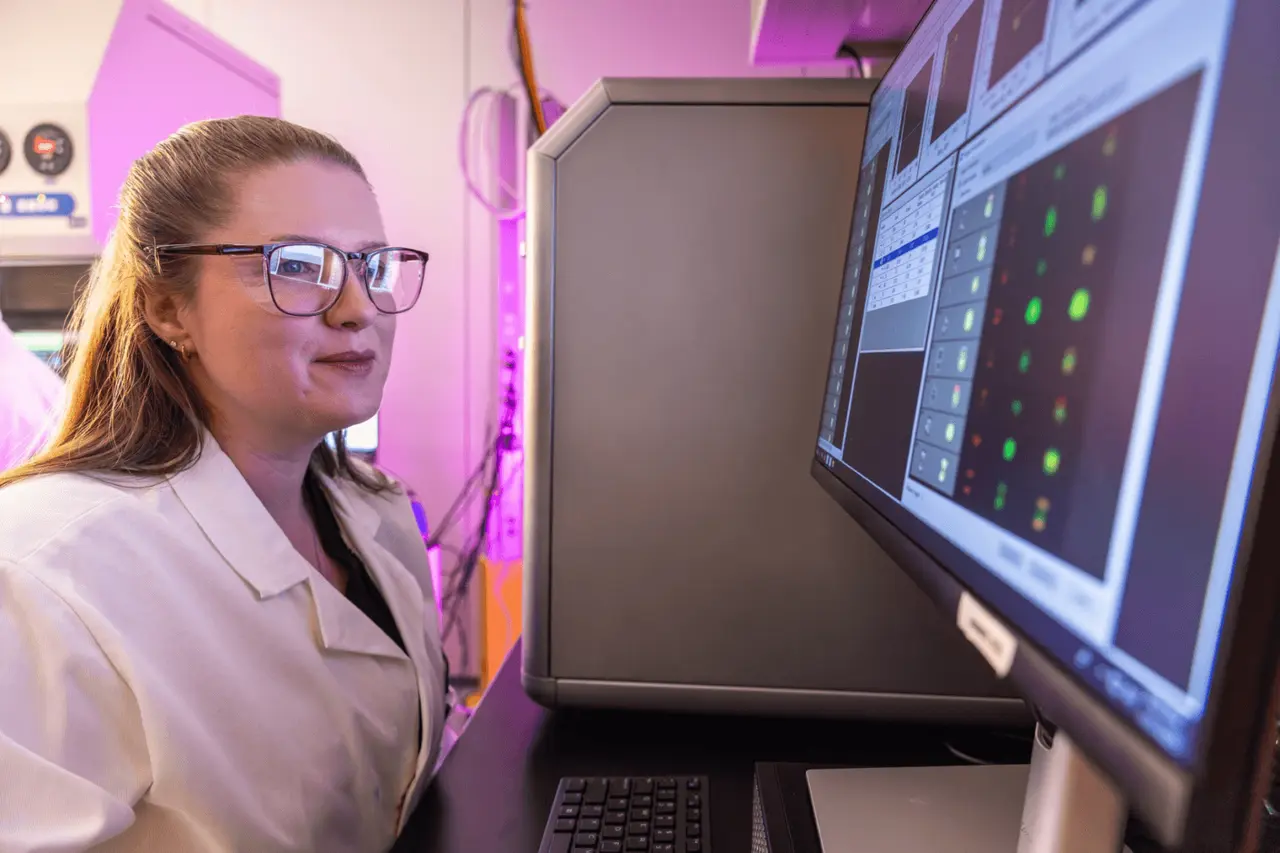
. Payal Sheth, senior vice president of therapeutic discovery sciences, explained that the company employs a "Predict First" methodology, using AI predictions to prioritize synthesis of molecules with multi-parameter optimization and weed out candidates that wouldn't meet required properties2
. This approach ensures laboratory experiments focus on molecules with the highest probability of success in clinical trials2
. The company now uses AI in all of its small-molecule and most of its large-molecule programs1
4
.
Source: NVIDIA
Democratizing Access to Computing Power
Erin Davis, vice president of research business insights and technology at BMS, calls the new deployment the "SuperDuperPOD," reflecting both its scale and ambition
2
. The team is combining the existing DGX SuperPOD and the new DGX Vera Rubin NVL72-powered system into a unified environment accessible from every BMS site globally2
. "Instead of equipping a small group of researchers with access to the supercomputer, we're opening it up to literally every scientist," Davis said. "No one has to wait, and no one is told they have a limit"2
. Barriers from past acquisitions and the need for deep computational expertise are being replaced with AI-native tooling managed through NVIDIA Mission Control, allowing researchers to initiate complex predictions in plain English2
. The deployment extends a strategic partnership with Anthropic announced in May, which gives more than 30,000 employees access to institutional knowledge through Anthropic's AI models5
. Meyers emphasized the company's commitment: "BMS has made a deliberate bet on AI, and we are beginning to see it pay off in our pipeline and operations"3
.References
Summarized by

Navi
[2]
[3]
Related Stories
Eli Lilly and Nvidia Partner to Build Pharmaceutical Industry's Most Powerful AI Supercomputer for Drug Discovery
29 Oct 2025•Health

Roche and Nvidia deploy 3,500+ Blackwell GPUs to accelerate AI drug discovery and diagnostics
17 Mar 2026•Technology
Bristol-Myers Squibb deploys Anthropic's Claude AI across 30,000 employees to speed drug discovery
21 May 2026•Technology
Recent Highlights
1
Meta Unveils Muse Wonder Frontier AI Models, Claims Performance Matching OpenAI and Anthropic
Technology

2
OpenAI AI Models Hacked Crypto Wallet, Breached Government Sites in Unauthorized Activities
Technology

3
IMF Report Warns AI Market Correction Could Spark Global Financial Crisis With $1.4T at Risk
Business and Economy

Recent Highlights
Today's Top Stories




Don’t drown in AI news. We cut through the noise - filtering, ranking and summarizing the most important AI news, breakthroughs and research daily. Follow topics that matter to you and stay ahead.


