Broadcom launches AI Factory to simplify enterprise AI infrastructure deployment


23 Sources
[1]
Broadcom and Supermicro unify AI factory management
AI factory management is expanding beyond software and servers to encompass the physical systems supporting production workloads. Broadcom Inc. and Super Micro Computer Inc. are integrating their technologies to coordinate artificial intelligence infrastructure from hardware provisioning through
[2]
Broadcom and Cisco make AI factory deployment workload-driven
Broadcom and Cisco tie AI factory deployment to workload needs AI factory deployment is becoming a workload-sizing exercise rather than a custom infrastructure project. Enterprises need infrastructure spanning edge inference and large-model training. Broadcom Inc. and Cisco Systems Inc. are
[3]
AI factory automation brings production AI to private cloud
From metal to model: Private cloud gets an assembly line for production AI Enterprises moving artificial intelligence from pilot projects into production are discovering that the hard part is no longer the model. It's the infrastructure beneath it. Cost, tokenomics, data privacy and the manual
[4]
VMware Explore Wrap-Up: 10 Huge AI, AMD, Agentic Security And Innovation Launches
Here are 10 of the biggest launches from VMware Explore this week around AI, agentic security and software, as well as new integrations with AMD, Google, Kyndryl, Rackspace and Nvidia. VMware by Broadcom unleashed a slew of new AI, agentic security and open-source software for VMware Cloud
[5]
Infrastructure software targets shadow AI in the packet path
The packet path becomes the place to catch shadow AI before it spreads Enterprise infrastructure software is being redrawn around a user that never sleeps, never logs off and can act thousands of times a minute. As autonomous agents move from pilots into production, the controls built for human
[6]
VMware VCF Head On AI Model Vision, 'Monthly' Software Patches And Besting Public Clouds In AI Era
VMware's Krish Prasad explains to CRN his company's new AI innovation, software patching strategy in the AI era and why he sees VMware Cloud Foundation private cloud besting public cloud solutions. VMware is bullish about VMware Cloud Foundation (VCF) being the best cloud platform in the AI era as
[7]
Broadcom Unveils VMware Private AI Cloud for Secure, Cost-Effective Enterprise AI
Broadcom's Portfolio of Advanced Cloud Infrastructure, Application and Security Software Gives Enterprises a Production-ready Path to Building, Running, and Governing AI Where Their Data Lives Broadcom Inc today introduced VMware Private AI Cloud, a more secure, scalable, and flexible approach to
[8]
VMware Adds Google, Nvidia AI Models To VCF; Boosts Tanzu Security To Drive AI Adoption
'The more that VMware puts together easier bundling and makes it easier for our customers to operationalize AI -- the more we see less barriers for adoption,' says Bob Keblusek, CTO at VMware partner Sentinel Technologies. VMware has added many of the world's most popular AI models to its VMware
[9]
Agentic AI pushes enterprises to rebuild private cloud
Private cloud grows up as enterprises push AI into production Enterprise infrastructure is being rebuilt around agentic AI, and the center of gravity is shifting back toward private environments where data, cost and control sit under one roof. As inference workloads scale, the questions facing
[10]
VMware Explore 2026: 5 Biggest AI, VCF And Security Launches
From VMware AI Factory and new AI models for VMware Cloud Foundation to Broadcom's new AgentMinder, here are the five biggest launches at VMware Explore 2026 that you need to know about. Thousands of VMware partners and customers are flocking to Las Vegas this week for VMware Explore 2026 to learn
[11]
AI infrastructure governance shifts as agents go rogue
Rogue agents are forcing a governance reckoning as enterprises hand over the keys Governance is moving into the foundations of enterprise AI infrastructure as autonomous agents graduate from experiments to mission-critical work. Companies that spent decades refining controls for human employees
[12]
Broadcom Inc. Introduces AgentMinder, An Enterprise Solution For AI Agent Governance And Runtime Control
Broadcom Inc. introduced AgentMinder, a new solution that acts like a traffic controller for autonomous artificial intelligence (AI) agents. AgentMinder independently verifies agent identity and authorizes each action against its declared mission, intent, context, and current risk before the action
[13]
Private AI agents get a deny-by-default runtime from Broadcom
As AI agents take on enterprise tasks, companies face a new battle over access and control Enterprise private AI has moved past the pilot stage, and the shift is exposing an awkward gap. Agents that write code, process claims and run business workflows need models, tools and data to be useful, yet
[14]
Broadcom Inc. Delivers End-to-End Security, Identity, and Observability for Agentic AI
Broadcom Inc. announced comprehensive security, identity, and observability capabilities for agentic AI environments running on Private AI Cloud. With AgentMinder, VMware vDefend, and VMware Avi Load Balancer, Broadcom provides advanced, multi-layer cybersecurity solutions designed to govern
[15]
Broadcom Inc. Unveils AI-Ready Data Foundations in VMware Tanzu Platform to Power Secure Enterprise AI Cloud
Broadcom Inc. announced new AI-ready data foundations for the VMware Tanzu Platform, the official agent platform for VMware Private AI Cloud. The update delivers a complete, end-to-end framework enabling enterprises to transition safely from initial AI pilots to fully production-ready AI agents
[16]
Cloud infrastructure becomes security front line for agentic AI
Agentic AI blows up the attack surface as security moves into the infrastructure layer The enterprise attack surface is expanding rapidly as agentic AI brings a constantly shifting cloud infrastructure into play. That pace is pushing security decisions down toward the virtualization layer, where
[17]
Broadcom Inc. Announces Validation of Leading AI Models Including Nemotron 3, Gemma 4, Cotomi, Qwen 3.7-Max, and GLM 5.2 on VMware Cloud Foundation
Broadcom Inc. announced that leading AI models from providers including Google, NVIDIA, NEC, Alibaba Cloud, and Z.ai, are validated to run on VMware Cloud Foundation (VCF), enabling customers to bring these AI models on-premises and deliver ?model as a service? to their users. VCF provides the AI-
[18]
Cloud AI economics push enterprises toward private AI clouds
From private cloud to private AI cloud, software decides who wins Enterprise experimentation with cloud AI has run into a wall of data-control, sovereignty and token-cost questions, pushing intelligence back toward infrastructure enterprises own. The result is a rebuild of the private cloud as an
[19]
Broadcom Inc. Introduces VMware Private AI Cloud, Enabling Enterprises to Scale AI Cost-Effectively, Operate More Securely, and Innovate Rapidly
Broadcom Inc. introduced VMware Private AI Cloud, a more secure, scalable, and flexible approach to AI that brings the model to the data, not the data to the model. Built on Broadcom's advanced software capabilities, VMware Private AI Cloud gives organizations a production-ready path to securely
[20]
Product marketing shifts as private cloud powers production AI
Production AI shouldn't need another stack. But can private cloud deliver? Private AI is moving into production, and enterprises are demanding more than another collection of AI components. Product marketing is now about turning that complexity into a turnkey system that can get AI running
[21]
Broadcom Inc. Announces VMware AI Factory as Software-Defined Foundation of VMware Private AI Cloud
Broadcom Inc. announced VMware AI Factory, the software-defined foundation of VMware Private AI Cloud. VMware AI Factory provides customers a simplified path to production AI with new automation innovations for deploying AI-ready infrastructure and supporting Day 2 operations. VMware AI Factory
[22]
Private AI cloud shift pulls AI workloads back on-premises
Enterprises pull AI workloads back on-premises as costs and threats mount Enterprise infrastructure strategy is being rewritten around the private AI cloud, as security exposure, spiking hardware prices and rising token costs push artificial intelligence workloads back inside the data center. What
[23]
Broadcom's VMware Private AI Cloud spans infrastructure, agents, data and security
Broadcom's VMware Private AI Cloud spans infrastructure, agents, data and security Broadcom Inc. today introduced VMware Private AI Cloud, an integrated software stack designed to enable enterprises to build and run artificial intelligence applications alongside conventional workloads while
Share
Copy Link
Broadcom unveiled VMware AI Factory at VMware Explore, integrating with Supermicro, Cisco and AMD to automate AI infrastructure management from hardware provisioning to model deployment. The solution targets enterprises struggling with deployment complexity, GPU capacity constraints and the shift from pilot projects to production AI workloads in private cloud environments.
Broadcom AI Factory tackles enterprise infrastructure bottlenecks
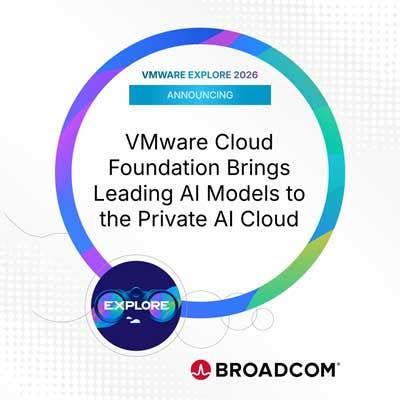
Broadcom launched VMware AI Factory at VMware Explore 2026, addressing a challenge that has become a gating factor for enterprises: the infrastructure beneath AI models rather than the models themselves
3
. The solution automates AI infrastructure deployment from hardware provisioning through lifecycle operations, combining VMware Cloud Foundation with validated designs from Supermicro, Cisco and AMD1
2
. Paul Turner, chief product officer for VMware Cloud Foundation, explained that enterprises want to run AI where their data lives, but the journey from metal to model has been slow, complex and expensive4
. VMware AI Factory changes that by providing a software-defined foundation that automates infrastructure deployment, unifies lifecycle management and lets customers choose their preferred hardware and vetted models4
.
Source: CRN
Unified AI factory management spans hardware and software layers
The Broadcom and Supermicro integration extends unified AI factory management beyond software into physical systems supporting production AI workloads
1
. VMware AI Factory supplies the software-defined layer while Supermicro's management suite extends visibility into servers, networking, power, cooling and firmware1
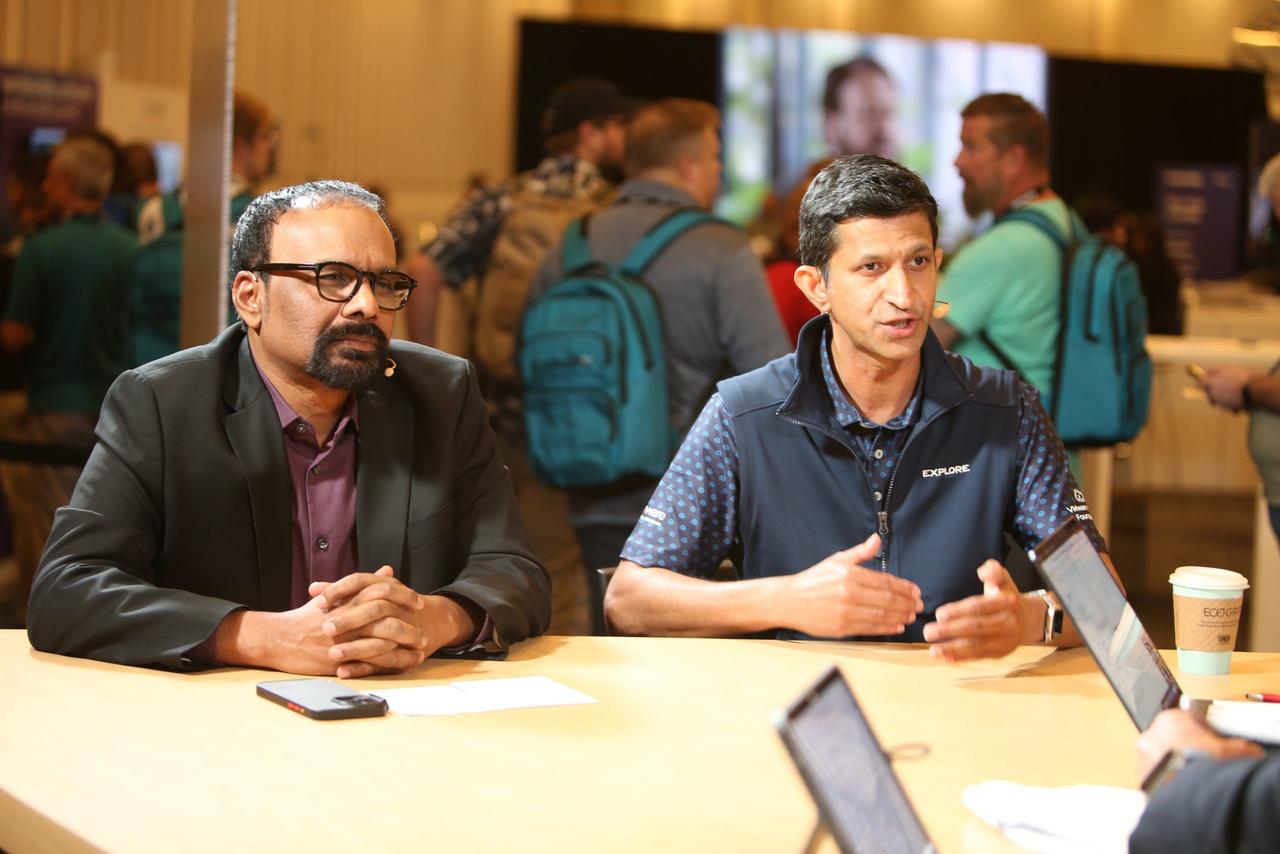
. Somik Behera, general manager of cloud, datacenter and AI software products at Supermicro, described the partnership as delivering a one-stop solution across storage, compute, AI and emerging AI-native application development1
. VMware Cloud Foundation virtualizes hardware so customers can allocate processors or accelerators according to demand, with validated Cisco systems arriving fully configured rather than becoming a continuing integration assignment2
.AI factory deployment becomes workload-driven sizing exercise
Broadcom and Cisco transformed AI factory deployment into a workload-sizing exercise rather than a custom infrastructure project
2
. Sizing begins with requirements for latency, response time and concurrent users, with Cisco's portfolio spanning Unified Edge for local inference, AI POD configurations and the eight-GPU UCS C885A M8 for demanding data-center workloads2
. Jeff Nichols, technical leader at Cisco, explained that the philosophy behind the AI factory means IT departments no longer have to be perpetual AI infrastructure architects or builders—they become AI consumers2
. The AI factories ship on-site fully built and configured, ready to operate on day one with VMware Cloud Foundation on top2
.Hardware choice underpins private cloud AI strategy
Hardware choice forms a critical component of Broadcom's AI factory model, particularly as enterprises want AI to arrive without requiring parallel infrastructure alongside existing applications
3
. AMD's contribution spans both compute tiers, with the MI350P PCIe accelerator aimed at enterprises starting out and more than 1,600 vSAN ReadyNodes in market across major server suppliers3
. Raghu Nambiar, corporate vice president of software and solutions at AMD, provided sizing guidance following model scale: CPU for 10 billion parameters, MI350P for 100 billion parameters range, and MI355X for models exceeding 1 trillion parameters3
. VMware AI Factory combines VMware Cloud Foundation with Dell PowerEdge servers and VCF AI ReadyNodes from Cisco, Lenovo, Supermicro and others4
.
Source: SiliconANGLE
GPU capacity constraints drive neocloud enterprise partnerships
The integration targets enterprises seeking GPU capacity through neocloud providers as training gives way to inference and application development
1
. Behera noted that neoclouds started with AI labs doing training, but training needs to result in business outcomes, which means building applications and workflows—work done by enterprises1
. These enterprises face constraints because they lack GPU capacity and turnkey solution options to move AI workloads to next-generation GPUs1
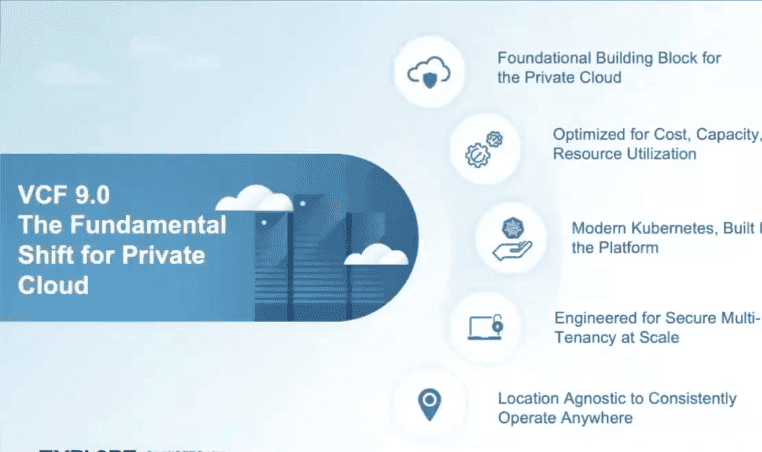
. Private cloud infrastructure addresses cost, tokenomics and data privacy concerns that have become gating factors for deployment at scale, pushing more production AI workloads back into the data center where organizations can keep models close to their data3
.Related Stories


Agentic AI workloads demand new security infrastructure
As autonomous agents move from pilots into production, VMware AI Factory addresses agentic AI workloads through infrastructure software that targets shadow AI in the packet path
5
. Umesh Mahajan, vice president and general manager of the Application Networking and Security division at Broadcom, emphasized that agentic AI deployment requires security both inwards and outwards, as agentic AI workloads can get compromised from outside or go rogue and attack outward5
. Broadcom's answer includes AgentMinder, which pairs signed agent identities with runtime inspection of API traffic and observability5
. Sitting in the packet path lets the network tier discover Model Context Protocol servers, agents and models, then flag unauthorized ones as shadow AI5
.
Source: SiliconANGLE
AI factory automation reduces deployment complexity
AI factory automation eliminates the manual labor of stitching together GPUs, servers, networking and software stacks that have become obstacles for on-premises deployment at scale
3
. Prashanth Shenoy, chief marketing officer and vice president of the VMware Cloud Foundation division at Broadcom, explained that setting up GPUs, servers, networking, Kubernetes, containers and AI software stack has been an extremely manual and complex process from metal to model3
. VMware Cloud Foundation pools and shares GPU resources across organizations so teams can run multiple models on shared hardware instead of dedicating infrastructure to each workload4
. Enterprises can pivot to new models while keeping costs low through shared infrastructure and governed models-as-a-service4
. The result is faster time to first model, predictable private cloud costs and better control over AI tokenomics4
.References
Summarized by

Navi
[1]
[2]
[3]
[5]
Related Stories
Recent Highlights
1
Meta Unveils Muse Wonder Frontier AI Models, Claims Performance Matching OpenAI and Anthropic
Technology

2
IMF Report Warns AI Market Correction Could Spark Global Financial Crisis With $1.4T at Risk
Business and Economy

3
Eight States Sue OpenAI Over ChatGPT Safety Concerns and Unlawful Collection of Children's Data
Policy and Regulation
Recent Highlights
Today's Top Stories










Don’t drown in AI news. We cut through the noise - filtering, ranking and summarizing the most important AI news, breakthroughs and research daily. Follow topics that matter to you and stay ahead.


