Meta Releases Muse Wonder Frontier AI Models to Compete With OpenAI and Anthropic


12 Sources
[1]
Meta releases its first frontier model, Muse Wonder
Meta's Superintelligence Lab released a pair of new state-of-the-art models on Monday, Muse Wonder and Muse Wonder Full, representing the company's first attempt at a frontier model. Where Muse Spark aimed to be a lightweight model that could perform at low latency, the Wonder models are larger
[2]
Muse Wonder Puts Meta Back at the AI Frontier
When Mark Zuckerberg rebooted his company's artificial intelligence efforts last year, it seemed to be a very expensive gamble. Meta's latest AI models, Muse Wonder and Muse Wonder Full, seem to show that the bet is finally paying off by putting the company back at the frontier of AI
[3]
Meta has some Wonder Full new AI models
Meta is making up for lost time in the AI race. After launching Muse Spark, the first model from its revamped Superintelligence Labs division, and buzzy AI agent Muse, it's now launching two new models it claims can go toe-to-toe with the industry's best. The new models, Muse Wonder and Muse
[4]
Meta debuts Muse Wonder AI model in latest test of users' willingness to pay
* Meta debuted its latest AI model, Muse Wonder, and says it's the most advanced option for powering digital assistants. * To access the model, users of the Muse app will need to sign up to for a monthly subscription plan of $20 or $100. * The new model release underscores Meta's efforts to
[5]

Meta says it's caught up to the frontier with its latest Wonder AI models - Engadget
After spending more than a year and tens of billions of dollars rebuilding its AI efforts, Meta says that it has caught up with the frontier. The company introduced its two latest AI models, Muse Wonder and Muse Wonder Full, both of which represent "a major leap toward personal
[6]

Meta Unveils New Series of Advanced A.I. Models
Meta on Monday unveiled a new series of advanced flagship artificial intelligence models, as it tries to catch up to rivals like Anthropic and OpenAI in the A.I. race. The two new models, called Muse Wonder and Muse Wonder Full, scored nearly as well as Anthropic's most advanced models on tests
[7]

Meta says its new Muse model has reached the AI frontier
Whether Muse Wonder ships with open weights decides how Meta files it in Europe, and the company has not said Meta has released Muse Wonder, known internally as Watermelon, and says it matches ChatGPT and Claude on coding and professional work. It has not said whether the weights will be
[8]

Meta claims new Muse Wonder models are world's best at agentic tasks
Meta has introduced two new frontier models designed to carry out complex personal and professional tasks using long-term memory, sustained reasoning, and software tools. The company says the models, Muse Wonder and Muse Wonder Full, deliver state-of-the-art performance across several evaluations
[9]

Meta unveils new frontier-class AI models to compete with OpenAI, Anthropic
Why it matters: Meta has spent heavily to assemble a top AI research team and the computing infrastructure needed to compete. These models are an important test of those investments. Driving the news: Meta on Monday unveiled Muse Wonder and Muse Wonder Full, models it says deliver state-of-the-art
[10]

Meta launches Muse Wonder AI model to rival ChatGPT and Claude
The model, developed over 14 months under a revamped AI unit, is available to developers and will power Muse's subscription tier Meta $META released a new artificial intelligence model on Monday called Muse Wonder, claiming it matches OpenAI's ChatGPT and Anthropic's Claude on tasks such as coding
[11]

Meta releases Muse Wonder AI models to challenge Anthropic and OpenAI
The launch comes after CEO Mark Zuckerberg pledged billions of dollars and aggressively poached researchers over the past year to catch up in Silicon Valley's intensifying AI race. Meta on Monday launched Muse Wonder and Muse Wonder Full, calling them its most capable AI models yet, as the social
[12]

Meta launches Muse Wonder AI models with advanced task capabilities By Investing.com
Investing.com -- Meta Platforms introduced its Muse Wonder and Muse Wonder Full AI models on Monday, describing them as the company's most advanced models designed for personal and professional tasks. The new models can handle tasks including navigating insurance claims, interpreting leases, and
Share
Copy Link
Meta unveiled Muse Wonder and Muse Wonder Full, its first frontier AI models from the restructured Superintelligence Labs. The models rival GPT-6 Astra and Claude Opus 5.5 with advanced active memory capabilities. Access requires paid subscriptions starting at $20 per month for personal agents.
Meta Returns to Frontier AI Competition With Muse Wonder Launch
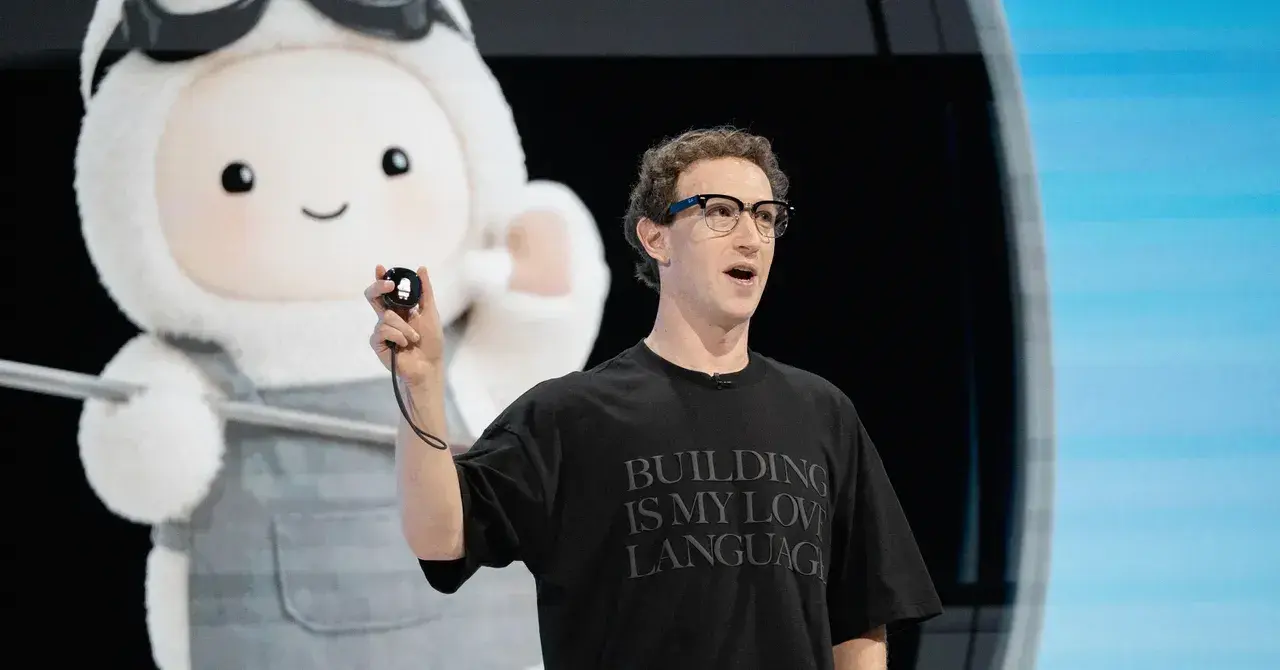
Meta released two state-of-the-art models on Monday—Muse Wonder and Muse Wonder Full—marking the company's first attempt at frontier AI models
1
2
. These releases represent a significant milestone for Meta after Mark Zuckerberg restructured the company's AI efforts last year, sinking billions into the newly formed Meta Superintelligence Labs under the leadership of former Scale AI CEO Alexandr Wang2
. According to Meta's internal testing, Muse Wonder achieves benchmark scores comparable to OpenAI's GPT-6 Astra and Anthropic's Claude Fable 5.11
. The company says Muse Wonder Full even outperforms Claude Fable 5.1 and ranks just below Claude Opus 5.5 on the Artificial Analysis Intelligence Index2
. Meta trained these models at its Prometheus data center in central Ohio, which came online earlier this year1
.
Source: Wired
Paid Subscription Model Signals Revenue Diversification Strategy
Access to Muse Wonder requires paid subscriptions, with Meta positioning the models as premium offerings for digital assistants
4
. Users of the Muse AI agent app must subscribe to monthly plans priced at $20 or $100 to access the new capabilities4
. Through the Meta Model API, Muse Wonder costs $4.00 per million input tokens and $20.00 per million output tokens, making it roughly equivalent in cost to GPT-6 Sol or Claude Opus 5.51
. Muse Wonder Full will only be available to Muse Code subscribers under $50 or $200 monthly subscription tiers4
5
. This pricing strategy underscores Meta's efforts to create AI-derived revenue sources outside its core online advertising business4
.
Source: Interesting Engineering
Active Memory Feature Targets Long-Term Agent Performance
Meta emphasized active memory as a breakthrough capability that allows Muse Wonder to retain and synthesize information over extended periods
1
5
. Research scientist Kavya Kopparapu stated that Meta invested tremendous effort into ensuring the model remembers what matters to users over days, weeks, months and beyond1
. The company highlighted its performance on MemoryBench, a benchmark challenging continual learning and memory construction frameworks, where Muse Wonder now scores higher than Claude Fable, Claude Opus, and GPT-6 Astra1
. Alongside active memory, Meta introduced active focus to keep agents locked into stated goals and prevent confusion during complex tasks like research or large software projects2
5
. Alexandr Wang explained that the model was specifically trained to try alternative approaches when encountering roadblocks instead of stalling and checking back with users4
.Specialized Performance in Coding and Professional Tasks
The Muse Wonder models demonstrate frontier coding performance and excel at navigating legal, financial, and health-related tasks
5
. Meta's testing shows the models outperform GPT-6 Astra, Claude Fable 5.1, and Claude Opus 5.5 on specialized benchmarks measuring legal document analysis and software development capabilities2
. Both models will power the Muse AI agent, with Meta planning to develop specialized variants for broader consumer deployment, though the company hasn't shared specific timelines3
. The models represent a major advancement from Muse Spark, Meta's lightweight model released in April, which prioritized low latency over frontier capabilities1
2
.
Source: ET
Related Stories

Safety Measures and Agent Monitoring Amid Industry Concerns
Meta claims Muse Wonder offers the strongest safeguards to date against cyber misuse, with significant training focused on refusing dangerous outputs like bioweapon recipes or hacking assistance
2
4
. Mark Zuckerberg stated last month that Meta delayed the model release to work on safety improvements2
. The company revealed a framework designed to scale model capabilities safely in a blog post earlier this month2
. Wang said Meta's AI team monitors for agent-related incidents with the Muse app, addressing user complaints about unauthorized message access by educating users on authorization processes4
. However, Meta didn't disclose whether it observed misbehavior during testing or specific mitigation strategies, despite recent incidents involving rogue AI agents from Anthropic and OpenAI2
.Implications for Meta's AI Ambitions and Industry Competition
The Muse Wonder launch validates Meta's massive investment in AI infrastructure, with the company expecting to spend as much as $145 billion this year on AI initiatives
5
. Zuckerberg told the Financial Times that reaching this milestone required both enormous compute resources and rigorous scientific work from the superintelligence team5
. Meta had fallen behind after delivering disappointing Llama model versions while Anthropic, OpenAI, and Google rapidly introduced more capable systems2
. The company's path toward personal superintelligence now appears more credible, though questions remain about how Muse Wonder compares to Google's Gemini 4 Argon, whose capabilities are still emerging3
. Watch for Meta's planned open-weight model releases and how effectively active memory translates to real-world agent performance in booking reservations, managing schedules, and handling complex professional tasks over extended timeframes.References
Summarized by

Navi
[1]
[3]
Related Stories
Meta launches Muse Spark 1.1 to compete with OpenAI and Anthropic on AI coding
03 Jul 2026•Technology

Meta AI's Muse Spark API Delay Leaves Developers Waiting as Competition Intensifies
04 Jun 2026•Technology
Meta unveils Muse Spark AI model as Superintelligence Labs makes its debut
08 Apr 2026•Technology

Recent Highlights
1
Microsoft and Nvidia Launch Surface Laptop Ultra: A $2,599 AI-Ready PC With RTX Spark Chip
Technology

2
Meta Muse AI Agent Surges to 6.6M Downloads Despite Privacy and Security Controversies
Technology

3
Scientists Build AI Model That Reconstructs Images From Brain Scans in Record Time
Science and Research
Recent Highlights
Today's Top Stories









Don’t drown in AI news. We cut through the noise - filtering, ranking and summarizing the most important AI news, breakthroughs and research daily. Follow topics that matter to you and stay ahead.


