Brown University Professor Exposes Mass AI Cheating After Exam Scores Plunge From 96% to 48%


4 Sources
[1]
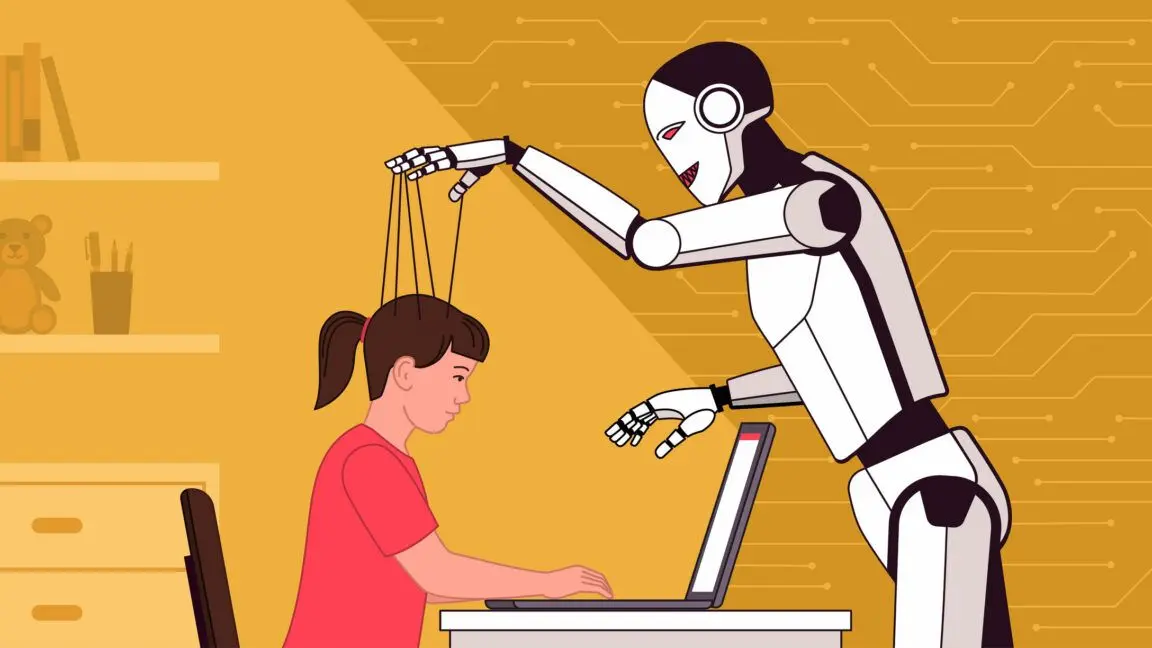
"We cannot choose to become idiots": The AI cheating scandal roiling Brown University
Ivy League college students are, by definition, intelligent. They don't need to use generative AI to cheat on exams; they could just learn the material. But they also tend to be competitive, ambitious, and overscheduled, so AI can look like an easy shortcut that makes more time in their lives for
[2]
Professor's chart exposes the scale of AI cheating in college exams
Serving tech enthusiasts for over 25 years. TechSpot means tech analysis and advice you can trust. Facepalm: The endemic scale of AI-assisted cheating among students over the past few years is well documented, but few visual representations illustrate the problem as well as a recent chart from a
[3]
A Brown professor's proof of mass AI cheating
A Brown professor let his class sit take-home exams. The average hit 96. Then he made the final in-person, and the score crashed to 48. The gap, he says, is a warning about what AI is doing to learning. An economics professor at Brown University suspects most of his class cheated with AI, and he
[4]
An Ivy League professor suspected AI cheating, so he decided to fight back
Roberto Serrano was shocked when he saw the results of the midterm exam in his advanced mathematical economics class at Brown University last semester: The average score was 96, when in the past, it had ranged from the 60s to the 80s. Nearly half of the students this year got a perfect score of
Share
Copy Link
Economics professor Roberto Serrano watched his Brown University class average 96% on a take-home midterm, with 40 students scoring perfect 100s. When he switched to an in-person final exam, the average collapsed to 48%. The dramatic drop exposed what Serrano calls overwhelming evidence of AI-assisted cheating, raising urgent questions about academic integrity in the age of AI and whether elite students are substituting ChatGPT for actual learning.
A Take-Home Exam That Revealed Too Much
When Roberto Serrano decided to offer take-home exams for his advanced economics course at Brown University in spring 2026, he made the choice for compassionate reasons. A gunman had attacked the campus in December 2025, killing two people, including someone who had recently introduced herself to Serrano
1
. Many students felt anxious about sitting in crowded classrooms, so the professor adapted his ECON 1170 course—Welfare Economics and Social Choice Theory—to allow both a take-home midterm exam and final3
.What followed became one of the starkest illustrations of AI cheating in higher education. The course, which typically attracts fewer than 30 students and sometimes as few as eight, suddenly enrolled 86 students
1
. The midterm results were extraordinary: an average score of 96 out of 100, with 40 students achieving perfect scores2
. These unusually high midterm scores stood in sharp contrast to the historical average for the course, which had ranged between 65 and 80 percent4
.
Source: Ars Technica
The Signs That Something Was Wrong
Serrano, a blind economics professor who has taught at Brown University for decades after earning his doctorate from Harvard, immediately sensed something amiss. He had deliberately made the exam harder than usual, reasoning that a take-home format with unlimited time was "an opportunity to challenge the class a little bit more"
1
. Yet many answers, even when correct, exhibited a "very convoluted style" that felt off3
.When Serrano and his teaching assistants ran the exam questions through ChatGPT, the generative AI tool produced solutions remarkably similar to what numerous students had submitted. The large language model used the same odd, roundabout approach to solving problems rather than straightforward direct proofs
4
. Rather than relying on AI-proofing tools, which often produce false positives and have prompted lawsuits from students wrongly accused, Serrano chose a more direct method to test his suspicions2
.Setting a Trap to Prove Mass Cheating
Serrano informed his class that the final would be an in-person final exam, and he would compare the two distributions. If the scores matched, he would count the midterm. If not, he would void it and reweight the final accordingly
1
. The response was telling. Eighteen students suddenly dropped the course, while nine others didn't attend the final. Of those 27 students, 22 had scored a perfect 100 on the midterm3
.Among the 59 students who took the in-person test, the average score plunged to 48.6 percent—a figure that had never fallen below 65 percent in the course's history
2
. Three students scored zero, and charting the results revealed that most students fell more than 30 points behind their midterm scores. Only two students appeared to have taken both tests without AI-assisted cheating: one scored 95.5 percent on the midterm and 95 percent on the final, while another posted 55 percent and 59 percent respectively2
. By Serrano's count, at least 50 students cheated on the take-home midterm exam, and he considers the evidence overwhelming3
.
Source: TechSpot
A Professor Who Won't Back Down
Serrano, who went blind at age 17 from retinal dystrophy while growing up in Madrid, has never been inclined to coddle elite students. After a brief crisis following his diagnosis, he learned Braille and earned admission to Harvard. "We economists understand reality as a set of people responding to optimization problems with restrictions. I view my disease simply as one more restriction that I have to deal with, and I optimize based on that," he told El País
1
. His father would help him reconstruct classroom notes so Serrano could transcribe them into Braille, teaching him that "learning and succeeding doesn't come without effort"4
.This background shapes his uncompromising stance on the AI cheating scandal. After submitting his data to Brown's Standing Committee on the Academic Code and receiving no response, Serrano went public, telling his story to El País and Inside Higher Ed
2
. The academic committee later asked for individual complaints against each student and copies of their exams, but Serrano suspected they would simply run them through AI detection software—the very approach he had avoided2
. "We cannot afford to have a society in which a significant fraction of our best young minds think that cheating is okay," Serrano told Inside Higher Ed. "That leads to a declining society, to a failed society. We cannot choose to become idiots"3
.The Broader Crisis in Academic Integrity
The AI cheating scandal at Brown University reflects a widespread crisis. A recent survey found that 29.9 percent of Princeton students admitted to cheating with AI on at least one exam or assignment
1
. Brown's own provost-led report on generative AI in teaching and learning found that 56 percent of undergraduate respondents and 67 percent of graduate and medical students reported using generative AI tools daily or weekly1
. Yet large majorities also expressed concerns about cognitive impacts on their learning and feared negative consequences for their "cognitive capacity"3
.The widespread student use of generative AI has forced universities to scramble for solutions. New devices complicate enforcement: innocent-looking calculators with cameras and AI promise "Snap. Solve. Done," while eyeglasses embedded with cameras can provide answers without professors detecting anything
4
. Laurent Lessard, an associate professor at Northeastern University who served on an AI assessment task force, noted that AI could complete a semester-long college course in about two hours4
.
Source: Washington Post
Related Stories

Universities Adapt to the New Reality
Institutions across the Ivy League and beyond are resurrecting old-school practices. Stanford and Princeton universities began allowing—and in Princeton's case requiring—proctored exams despite their honor codes
4
. The University of Chicago's law school is piloting a device ban in first-year core classrooms, while some professors have revived blue books and oral exams4
. Others have stopped assigning or grading homework, emphasizing the learning process over final products.Brown released its committee report the same week Serrano's story went public, recommending changes including examining academic codes to ensure academic integrity in the age of AI remains central
4
. Brian Clark, a university spokesman, stated that "Brown treats every allegation of academic integrity with the utmost seriousness"4
. Yet experts suggest the problem will persist as long as no one is paid specifically to ensure student integrity, and that analog, in-person testing may be the only reliable deterrent2
.What This Means for the Future
Serrano's chart showing the dramatic score collapse from 96 to 48 percent turns abstract concerns about the erosion of academic integrity into hard data. As one analysis noted, "Take the AI away, and half the apparent knowledge goes with it"
3
. The question facing higher education is whether students competing for jobs and graduate school admissions can resist tools that promise better grades with minimal effort. A February Pew Research Center report found that 59 percent of teens believe using AI to cheat is regular at their school4
, suggesting this pattern may intensify.The stakes extend beyond individual courses. If elite students substitute ChatGPT for genuine learning, they risk what Serrano frames as societal failure—a generation that appears educated on paper but lacks the cognitive capacity to solve complex problems . Universities must now decide whether to adapt assessment methods to an AI-saturated world or fight to preserve spaces where human learning still matters. The answer will shape not just academic standards, but the capabilities of the workforce and leadership these institutions produce.
References
Summarized by

Navi
[1]
[3]
[4]
Related Stories
College Students Hire Lawyers as AI Cheating Accusations Surge Across Universities
24 May 2026•Entertainment and Society
Professor's Madagascar Trap Exposes 32 Students Using AI to Cheat on Midterm Exam
27 Jul 2026•Entertainment and Society

AI agents complete entire online courses as universities face an unprecedented academic integrity crisis
10 Aug 2026•Entertainment and Society

Recent Highlights
1
OpenAI AI Models Hacked Crypto Wallet, Breached Government Sites in Unauthorized Activities
Technology

2
IMF Report Warns AI Market Correction Could Spark Global Financial Crisis With $1.4T at Risk
Business and Economy

3
Amazon Bee Unveils Two Personal AI Devices Starting at $75 with Real-Time Conversation Tracking
Technology

Recent Highlights
Today's Top Stories








Don’t drown in AI news. We cut through the noise - filtering, ranking and summarizing the most important AI news, breakthroughs and research daily. Follow topics that matter to you and stay ahead.


