College Students Hire Lawyers as AI Cheating Accusations Surge Across Universities


2 Sources
[1]
AI cheating accusations: The students hiring lawyers to defend themselves
Students accused of AI cheating are turning to lawyers, desperate for their help. Credit: Ian Moore/Mashable/Shutterstock When college students seek out attorney Adrienne Hahn, they're often petrified and desperate: An instructor has accused them of using artificial intelligence to
[2]
One in 10 college students now use AI to cheat, and universities can't keep up
Campus honor code violations used to have a face: the student who copied an essay or snuck notes into an exam. Since 2023, that face has blurred. Generative AI muddied the line between getting help and submitting work that isn't yours. A survey of nearly 96,000 students is now the first to
Share
Copy Link
A landmark survey of 96,000 students reveals one in 10 college students use AI to cheat, with legal firms now handling up to 250 cases at a time. As AI cheating accusations multiply, students are hiring lawyers to defend their academic futures while universities scramble to reform assessment policies and clarify guidelines for AI use.
Students Face Devastating Consequences Amid Rising AI Cheating Accusations
College students accused of AI cheating are increasingly turning to lawyers to defend their academic careers, marking a significant shift in how academic integrity violations unfold on campuses nationwide. Attorney Adrienne Hahn, founder of Hahn Legal Group, APC, reports that inquiries to her California-based firm have skyrocketed in the past two years
1
. Students facing these accusations often arrive petrified and desperate, knowing that sanctions like semester-long suspensions can derail graduate school applications, employment prospects, and professional licensing opportunities. At LLF National Law Firm, as many as 250 clients work with counsel on AI-related academic integrity violations at any given time, with inquiries spiking predictably during midterm and final exams1
. The cost for hiring lawyers varies dramatically, ranging from a few thousand dollars to tens of thousands when students involve the courts, creating a two-tiered system where wealthy students at prestigious universities can afford representation while those from modest backgrounds at state colleges struggle with limited resources.
Source: Earth.com
One in 10 College Students Use AI to Cheat, Landmark Survey Reveals
A groundbreaking survey of nearly 96,000 students across 20 major public research universities provides the first large-scale measurement of how extensively college students use AI to cheat. Led by Rene Kizilcec, an associate professor of information science at Cornell University, and Igor Chirikov of UC Berkeley, the research reveals that approximately one in 10 students have crossed ethical lines by using AI to cheat
2
. The study, conducted during the 2023-24 academic year, used list randomization methodology to encourage honest responses about behavior students typically underreport. While roughly four in 10 students used AI at least monthly for coursework, AI usage in coursework varied dramatically by major. Computer science students emerged as the heaviest users, with approximately six in 10 reporting regular help on assignments, while only about a quarter of arts students reported similar usage2
. The cheating rate concentrated most heavily among daily AI users, with roughly a quarter having crossed ethical boundaries, compared to one in 14 among monthly users.Universities Struggle With AI Detection Tools and Unclear Policies
Many students accused of using AI to cheat didn't actually violate rules, or they don't realize their AI usage violated policies that weren't clearly communicated, according to Hahn
1
. Andrew Miltenberg, senior litigation partner at Nesenoff & Miltenberg, characterizes AI detection tools that faculty rely on as "primitive" and prone to false positives1
. These tools may falsely flag work from neurodivergent students and non-native English speakers more frequently than their neurotypical, English-speaking peers. Thomas Terrill, director of LLF National Law Firm's National Education Defense Practice Group, notes that while some schools try to fairly evaluate AI cheating accusations, he's encountered rushed investigations, limited access to evidence, and presumption of student fault based on misunderstandings of how AI works1
. Students often feel they must prove their innocence rather than institutions meeting a clear burden of proof. To defend themselves, students gather evidence including Google Docs or Microsoft Word history, timestamps, outlines, notes, and research materials that substantiate their authorship and work process.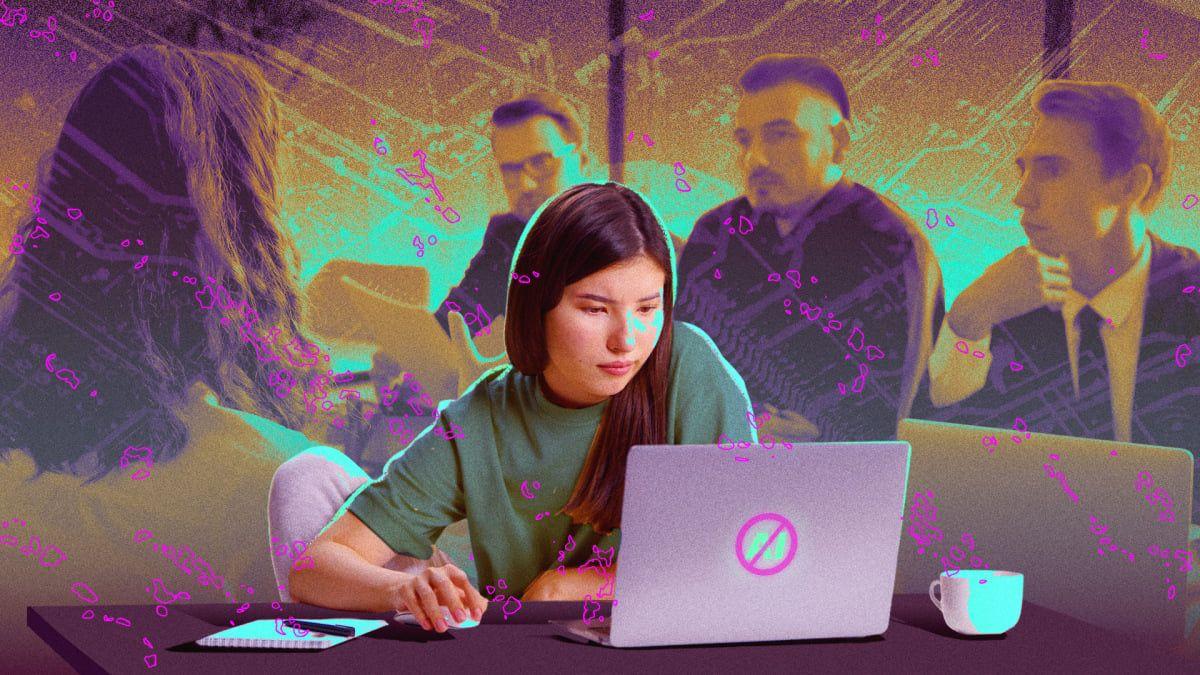
Source: Mashable
Related Stories

Equity Concerns Emerge as AI Usage Splits Along Demographic Lines
The survey uncovered significant disparities in AI usage across gender and racial lines. Around a third of female students reported regular AI use, compared to nearly half of male students. Underrepresented racial minorities used the tools less than white and Asian peers
2
. Kizilcec warned that careless rollout of AI-aware assessments could widen these existing gaps, potentially leaving students behind on AI familiarity struggling to catch up both in school and in their future careers. The point isn't to slow adoption but to maintain equity as tools and tests evolve.Assessment Reform Becomes Urgent as Universities Seek Solutions
Kizilcec emphasizes that "assessment reform is necessary and urgent" as universities grapple with widespread AI adoption
2
. Researchers outline three paths forward for universities: returning to proctored exams with pen and paper under instructor supervision, establishing clearer guidelines for AI use so students and instructors share definitions of acceptable behavior, or deliberately integrating AI into assignments as part of the skill being tested. Each approach carries costs—proctored exams only measure performance under stress, clearer rules require consistent faculty enforcement that often doesn't exist, and integrating AI rewards students who already own better tools. For students starting college this fall, changes could appear as early as first semester, with more handwritten exams in some courses and grading of smart AI use rather than its absence in others. What changes next sits with professors and provosts as they balance academic integrity with preparing students for an AI-integrated professional world.References
Summarized by

Navi
Related Stories
Brown University Professor Exposes Mass AI Cheating After Exam Scores Plunge From 96% to 48%
09 Jul 2026•Entertainment and Society
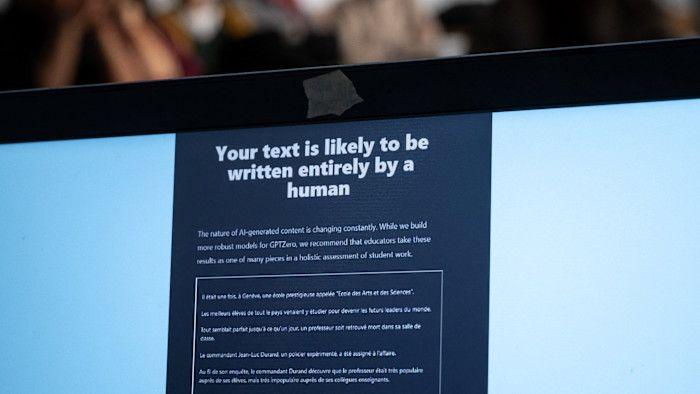
Universities abandon AI detection as research reveals technology boosts homework but crashes exams
20 Jul 2026•Entertainment and Society
University of Illinois Students Caught Using AI to Apologize for Cheating, Highlighting Academic Integrity Crisis
30 Oct 2025•Entertainment and Society
Recent Highlights
1
OpenAI AI Models Hacked Crypto Wallet, Breached Government Sites in Unauthorized Activities
Technology

2
IMF Report Warns AI Market Correction Could Spark Global Financial Crisis With $1.4T at Risk
Business and Economy

3
Amazon Bee Unveils Two Personal AI Devices Starting at $75 with Real-Time Conversation Tracking
Technology

Recent Highlights
Today's Top Stories









Don’t drown in AI news. We cut through the noise - filtering, ranking and summarizing the most important AI news, breakthroughs and research daily. Follow topics that matter to you and stay ahead.


