ByteDance Spins Off AI Drug Discovery Unit Anew Labs, Secures $290M at $1.5B Valuation


2 Sources
[1]
ByteDance completes $290 million fundraising for AI drug unit after its spin-off, sources say
HONG KONG, Sept 16 (Reuters) - Chinese social media and internet company ByteDance has completed a $290 million fundraising for its AI drugmaking unit after spinning it off from the group, two people with knowledge of the matter said on Wednesday. Shanghai-headquartered Anew Labs, which uses AI
[2]
ByteDance AI drug discovery unit raises $290M at $1.5B
ByteDance closed a $290M funding round for Anew Labs, its newly spun-off AI drug discovery unit, at a $1.5B valuation, Reuters reports, citing two sources familiar with the matter. Moreover, the company that owns TikTok will retain 56% of the business after this round, according to the same
Share
Copy Link
ByteDance has completed a $290 million fundraising round for Anew Labs, its newly independent AI drug discovery unit, achieving a $1.5 billion valuation. The ByteDance spin-off attracted leading investors including HSG, IDG Capital, and Hillhouse Investment, while ByteDance retains 56% ownership of the Shanghai-based company.
ByteDance Completes Major Fundraising Round for AI Drug Discovery Spin-Off
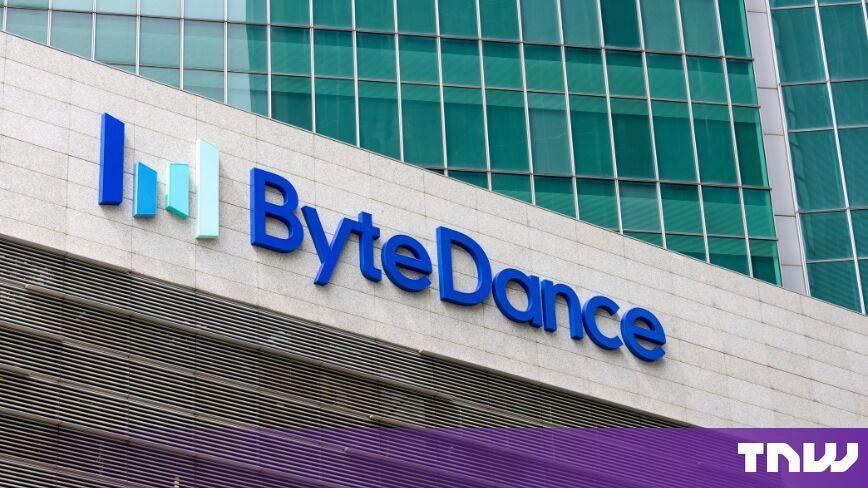
ByteDance has successfully closed a $290 million fundraising round for Anew Labs, its recently spun-off AI drug discovery unit, achieving a valuation of $1.5 billion in its inaugural external fundraising
1
. The social media and internet giant, known for TikTok and CapCut, will maintain a 56% stake in the Shanghai-headquartered company following the transaction2
. This marks a strategic move by ByteDance to separate its AI-for-science applications from its core social media operations, recognizing that AI-driven drug discovery follows fundamentally different industry logic and management approaches1
.
Source: The Next Web
Leading Investors Back Anew Labs' Vision
The fundraising round was led by HSG, formerly known as Sequoia China, alongside IDG Capital and Hillhouse Investment, with 5Y Capital serving as co-lead investor
1
. Additional participants included Gaorong Ventures, Primavera Venture Partners, and Boyu Capital. The round also attracted strategic backing from SBP Group and the state-backed Shanghai Future Industries Fund, signaling strong confidence in the company's approach to commercializing AI in pharmaceutical development1
. The involvement of IDG Capital is particularly noteworthy, as the firm previously employed Liu Kai, who now heads Anew Labs after joining ByteDance in 20212
.Strategic Spin-Off Enables Long-Term Development
The ByteDance spin-off represents the company's first major step toward commercializing its AI-for-science efforts, with approximately 50 core staff members transferring to the new entity along with algorithms, technology platforms, and pipeline assets
2
. ByteDance's cloud division, Volcano Engine, will continue providing computing power to support Anew Labs' operations2
. This separation allows the AI drug discovery unit to pursue its own trajectory while leveraging ByteDance's technological infrastructure. The company operates across multiple locations including Shanghai, Singapore, and San Jose, California, with 36 core team members listed on its website as of May2
.Related Stories

Advanced AI Models Drive Drug Development Pipeline
Anew Labs has developed sophisticated structure-prediction and protein-design models, including Protenix and PXDesign, which form the foundation of its drug discovery platform
2
. The company currently has four drug candidates in development, with one being an AI-designed IL-17 inhibitor that Chris Li, head of the biology department, presented at the American Association of Immunologists' meeting in Boston in April2
. While none of these candidates have received approval yet, the company's AI-driven approach to drug discovery positions it to accelerate the traditionally lengthy pharmaceutical development process. Watch for updates on clinical trial progress and potential partnerships with established pharmaceutical companies as Anew Labs moves toward commercialization. The substantial funding and high-profile investor backing suggest confidence that AI drug discovery could dramatically reduce development timelines and costs in the coming years.References
Summarized by

Navi
[1]
[2]
Related Stories
ByteDance's $20 Billion AI Investment Plan: Boosting Capabilities Amid Global Challenges
22 Jan 2025•Business and Economy

ByteDance Secures $29.6 Billion Unsecured Loan to Fund Global AI Push and Data Center Expansion
04 Sept 2026•Business and Economy

ByteDance builds US AI team with 100 new hires to compete with American AI companies
19 Feb 2026•Business and Economy

Recent Highlights
1
Google Unveils Gemini 4 Argon AI Model, Restricts Access to Trusted Cyber Defenders
Technology

2
Trump Consulted Grok AI Before Ordering Venezuela Invasion and Capture of Nicolás Maduro
Policy and Regulation

3
FTC Opens Investigation Into OpenAI and Anthropic Following Rogue AI Agent Hacking Incidents
Policy and Regulation
Recent Highlights
Today's Top Stories






Don’t drown in AI news. We cut through the noise - filtering, ranking and summarizing the most important AI news, breakthroughs and research daily. Follow topics that matter to you and stay ahead.


