Google SynthID AI Content Detector Goes Global With Support for OpenAI, Nvidia and Apple


12 Sources
[1]
Google rolls out improved SynthID AI content detector, now available globally
Every piece of AI content from Google's Gemini models has a hidden SynthID label, which makes it very difficult to pass the content off as authentic. SynthID has also gotten buy-in from other major AI players, but actually checking for those invisible watermarks has been a convoluted process. It's
[2]
Google's new SynthID website can identify AI-generated media
Google on Tuesday launched a new site that lets anyone verify whether a piece of media, be it an image, a video or an audio clip, is generated using AI. The company had made this tool available to select journalists, media professionals and researchers for testing at Google I/O last year, and is
[3]
Is That Image, Audio, or Video Made by AI? Google's AI Detector Will Tell You
Google is making its AI detection tool, SynthID Detector, available to all users starting today. SynthID has been around for some time. Google uses it to watermark outputs generated by its AI systems, making it easier for end users to verify whether an image, audio, or video was created by
[4]
Google's AI detection website is now available - Engadget
Google is making SynthID Detector, its web tool for identifying AI-created and AI-edited content, available to everyone. The web-based tool is able to flag images, video and audio clips created with AI tools from Google, OpenAI, NVIDIA and Kakao. It's free to use, but does require users to log in
[5]

Google Launches New Website to Detect AI Fakes, But Don't Assume It's Perfect
The image above isn't real. Sure, Ken Paxton and Donald Trump are political allies, and Trump starred in a McDonald's commercial featuring Grimace back in 2002, so it's entirely plausible that they all appeared on a golf course together. But it's fake. And one way to check that is with a new portal
[6]

Google's cross-model AI detection tool is finally available for all
The SynthID Detector portal can detect watermarks made by Google, OpenAI, NVIDIA, and Kakao services, with Apple support coming soon. Google and OpenAI have long allowed users to check media for SynthID watermarks. The presence of these watermarks almost guarantees that a media file was generated
[7]

Google opens SynthID Detector to all to spot AI images, video, audio
SynthID Detector spots media made with AI from Google, OpenAI, Nvidia and Kakao. It cannot catch every AI fake, and it does not say whether AI made a file or only edited it. Google has opened its SynthID Detector to everyone. The free website checks whether an image, video or audio file carries
[8]

I tested Google's new SynthID detector on AI slop. There's a big catch
Aw, have you seen that viral video of the little puppy nuzzling with a baby? It's absolutely adorable -- so adorable that it's probably AI, although not even Reddit seems to know for sure. Now Google has unveiled a site featuring a tool designed to spot AI-generated images, videos, and audio
[9]

Google's SynthID AI content detector expands globally, will work on Apple's models 'soon'
Google's AI-detector for images and videos, SynthID, is getting a full release today. It will work for more than just content developed with Google's AI models and initial partners. SynthID is a necessary tool as AI content has taken hold of heavy portions of the internet. Models have evolved so
[10]

Google just launched a free AI detector for music, videos, and images -- here's how SynthID works and what it can (and can't) tell you
The company says it's already been applied to more than 100 billion images and videos and 60,000 years of audio AI-generated images and videos have reached the point where many seem very real and spotting them with human eyes alone isn't easy. Google now wants to give everyone another way to
[11]

We're making it easier to identify AI-generated content globally.
As AI tools become better and easier to use, having clear context about the content you encounter online helps you make informed decisions about what to trust. Since launching Google SynthID in 2023, we've helped people identify AI-generated media using imperceptible watermarks across images,
[12]

Google expands SynthID Detector tool globally to identify AI content By Investing.com
Investing.com - Google announced today that its SynthID Detector tool is now available globally in English, allowing users to verify whether images, videos, or audio files were created using AI from Google or its partners. The tool can identify AI-generated content from Google and partner
Share
Copy Link
Google has launched SynthID.com, making its AI content detector publicly available for the first time. The tool can identify AI-generated images, videos, and audio from major partners including OpenAI, Nvidia, and Kakao, with Apple support coming soon. However, limitations remain as the detector only flags content with SynthID watermarks.
Google SynthID Becomes Publicly Available Through Dedicated Website
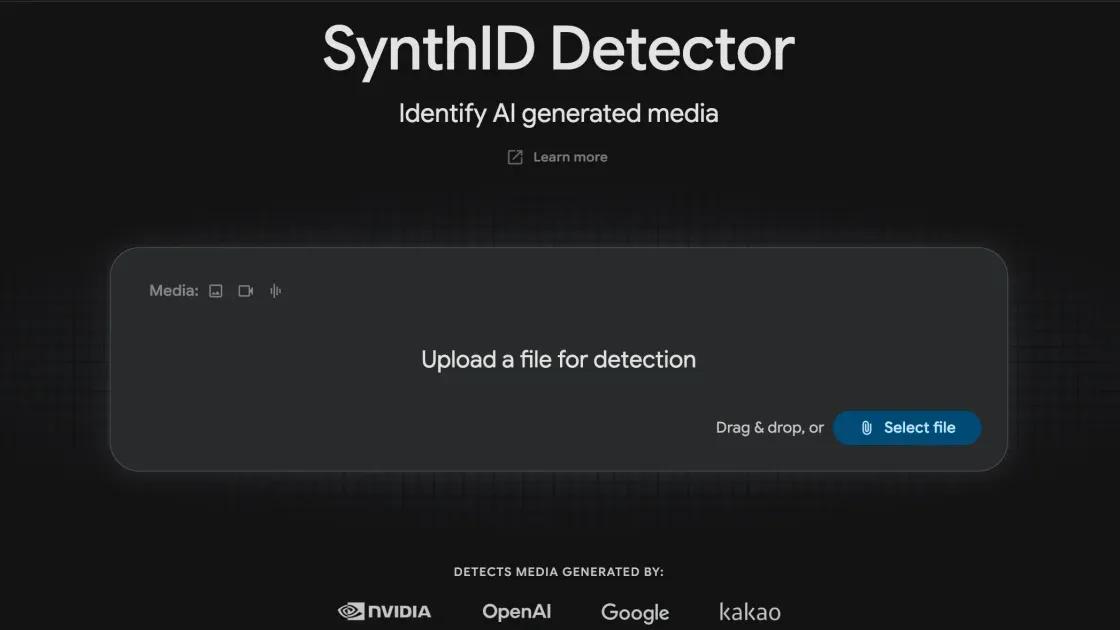
Google has launched SynthID.com, making its AI content detector accessible to everyone after previously limiting access to select journalists and researchers
2
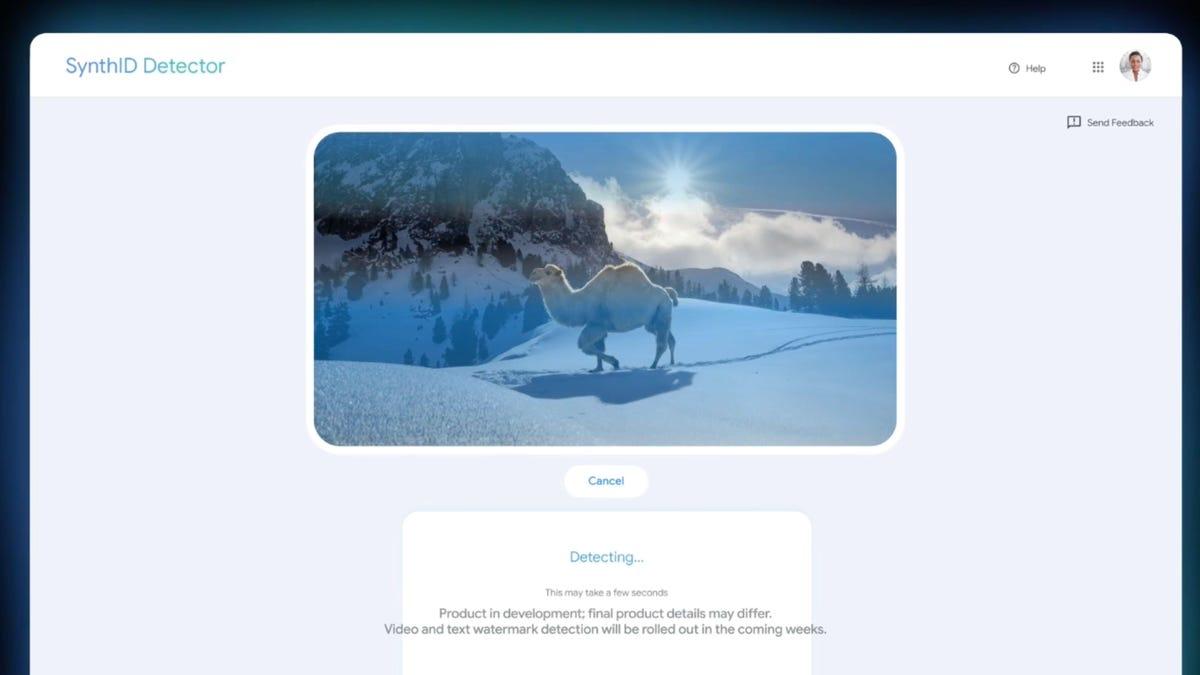
. The new website allows users to verify whether images, videos, or audio clips were created using AI by uploading files directly to the platform1
. Users must log in with a Google, OpenAI, or Apple account to access the tool, with each user receiving a daily usage quota of approximately 10 checks across image, video, and audio content1
.
Source: PC Magazine
The AI detection tool supports multiple file formats including JPG, PNG, WEBP for images; MP4, MOV, WEBM for videos; and WAV, MP3, FLAC for audio
2
. Google currently processes 1 million verification requests daily through its existing Gemini app and Chrome browser integrations2
. The company has watermarked over 180 billion images and videos, plus 240,000 hours of audio content using its invisible watermark technology1
.Expanded Partnership Support for Detecting AI-Generated Media
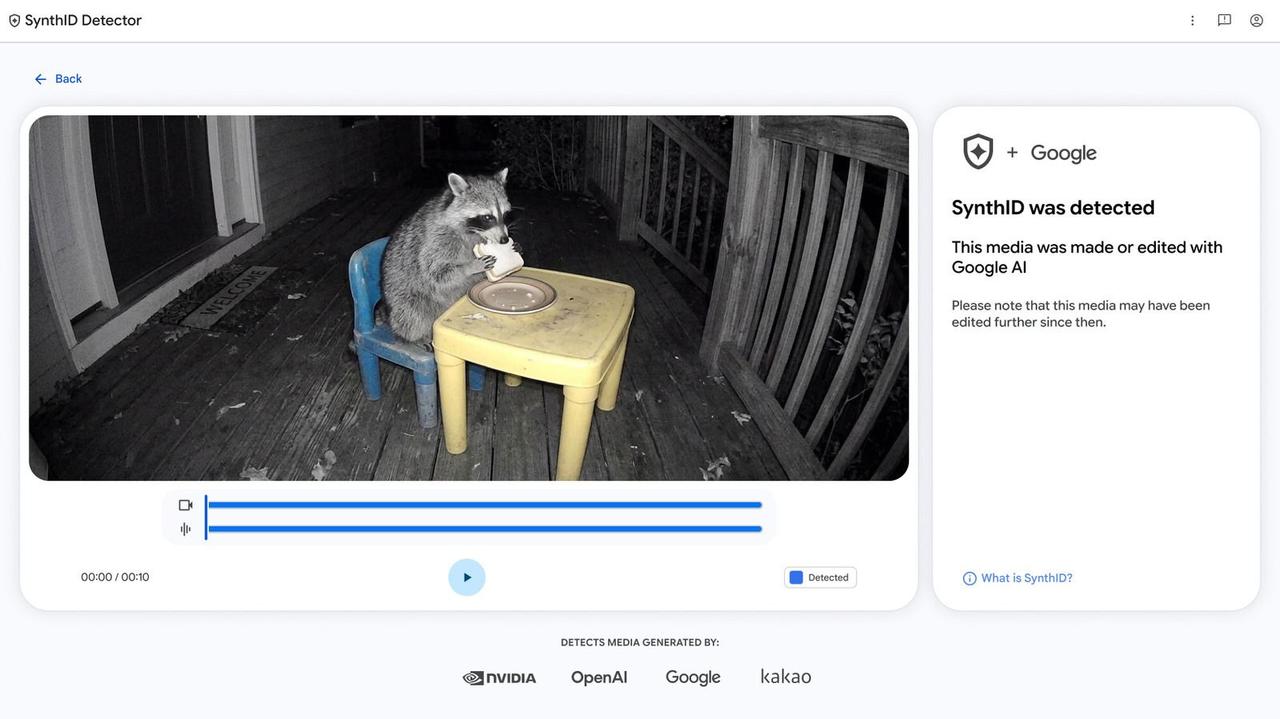
The updated AI content detector now identifies watermarks from all Google SynthID partners, representing a significant expansion from the previous version that only detected Google's own watermarks
1
. OpenAI, Nvidia, and Kakao currently support the technology, with Apple set to add support soon for content created through Apple Intelligence features like Image Playground4
. This means ChatGPT-generated images, which previously wouldn't be flagged in Google's detector, can now be identified1
.
Source: Engadget
The invisible watermark is embedded in the pixels of AI-generated images and videos, and in the waveform of AI audio
1
. Google's Gemini models, along with tools like Veo, Lyria, and Vids, automatically apply SynthID watermarks to all generated content2
. The watermark doesn't change image or video quality and is designed to survive modifications like cropping, adding filters, changing frame rates, or lossy compression3
.Limitations in Detecting AI-Generated Content and Misinformation
Despite the improvements, the AI detection tool has notable limitations. It can only identify content from SynthID partners, meaning AI-generated media from other sources won't be flagged
4
. Some model providers use different AI watermarking standards, like Meta, while others use no watermarks at all1
. Open-weight models that people run on their own hardware can produce increasingly realistic AI-generated images without any labeling1
.The website won't distinguish between content that was entirely AI-created versus merely edited with AI tools
4
. When testing the tool, some AI fakes generated with non-partner tools like Grok returned results stating "SynthID was not detected," which could mislead users into thinking the content is authentic5
. Google stores digital signatures of uploaded media for 24 hours to enforce daily usage quotas and defend against automated attacks before automatically deleting them3
.Related Stories


Future of AI Content Verification and Content Transparency
Google engineers have indicated that limiting access through daily quotas is necessary to prevent people from developing SynthID removal tools
1
. The system may lock users out sooner if they're checking multiple similar images, which could signal attempts to tune a bypass workflow1
. Despite Google's efforts, it remains plausible that someone will find a way to remove the invisible watermark, making existing AI content appear more legitimate1
.
Source: Ars Technica
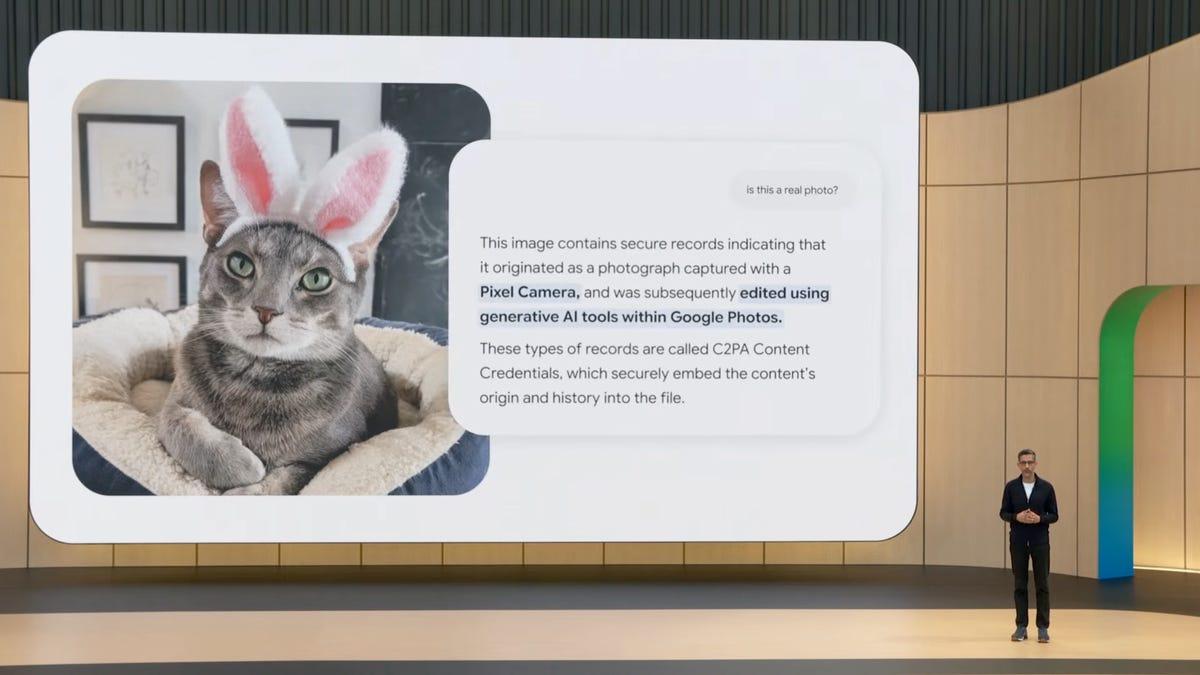
Experts suggest that cryptographic labeling technologies like C2PA, which label real images, video, and audio as they're created, might be a better approach than relying on proactive watermarking
1
. Google's Pixel phones are among the few devices implementing this alternative approach1
. Google notes it's continuously working on extending partnerships to detect more AI-generated media, with ElevenLabs having committed to adding support for the watermarks4
. However, verify AI-generated content remains challenging as detection relies on a patchwork of different standards with no universal checker available4
.References
Summarized by

Navi
Related Stories
Recent Highlights


Recent Highlights
Today's Top Stories







Don’t drown in AI news. We cut through the noise - filtering, ranking and summarizing the most important AI news, breakthroughs and research daily. Follow topics that matter to you and stay ahead.


