Canva Launches Craft, Its First AI Image Model Trained on Design Templates Not Photographs


11 Sources
[1]
Canva Chases AI Domination With a New AI Image Model for Designers - CNET
Canva Craft won't be the company's last AI tool. Will creators jump on board? Canva is going deeper down the AI rabbit hole with the release of its first proprietary AI image model, called Canva Craft. It's now available globally to all Canva users and is made specifically for designers. This
[2]
Canva's first AI image model plans designs before generating them
Canva is diving even deeper into AI with the launch of an image generation model that competes directly with those from OpenAI, Microsoft, and Google. The model, called Canva Craft, uses a two-stage architecture that allows it to plan a design before generating an image, allowing for "greater
[3]
Canva Releases AI Image Generator That Wasn't Trained on Photographs
Canva has released its first image generation model, which was trained on design templates rather than photographs. Canva, the popular online graphic design platform and Adobe competitor used by 95% of Fortune 500 companies, released its first image generation model called Canva Craft. According
[4]
Canva launches Craft -- its first image generation model, trained on human-designed templates
* Craft is Canva's first publicly available AI image generation model * It was trained on existing templates so it understands layers * Developers can access the model via an API Canva has launched its first-ever publicly available AI image generation model, and it's already proving to be hugely
[5]

Canva enters the AI image generation race with Craft, and it's thinking beyond pretty pictures
The new model plans layouts before generating images, with precise editing and support for 30 aspect ratios. AI can generate all kinds of pretty pictures, but getting it to spell a headline correctly or keep a poster's layout intact can be another story. Canva wants to fix that with Canva Craft,
[6]

'Serious competitor:' Does Canva's new AI model match global giants?
Big claims are commonplace in artificial intelligence, so when Australia's biggest tech company, Canva, claimed to have trumped the efforts of global giants such as Google and Microsoft with its image generation model, we decided to put it to the test. Canva released its first in-house model,
[7]

Canva Craft AI Model Debuts With Two-Stage Image Generation Architecture
* Craft generates images at resolutions of up to 2K * Craft can generate text in 55 languages * Developers can access Craft through a public API Canva has launched Craft, its first AI image generation model developed by its in-house research team, Canva Research. It is now available to Canva
[8]
Canva reveals new AI image tool as it races to beat Google, OpenAI
Australian design software giant Canva has revealed the first results of its emergency reworking of its artificial intelligence tools, with an image generation tool it says ranks higher than Google's and second only to OpenAI. The ambitious claims come after the company was forced to abandon the
[9]

Canva Craft AI image generation model with up to 2K resolution, 30+ aspect ratios announced
Canva has announced Canva Craft, its first image generation foundation model developed and trained from scratch by Canva Research, its in-house AI lab. The model is available globally through Canva and to developers through a public API, generating images at up to 2K resolution across more than 30
[10]

What is Canva Craft AI? Key Features of Canva's New Image Generation Model
Canva Craft is the company's first in-house AI image generation model, designed to create visuals with better composition, readable text, and precise object placement. Available through Dream Lab and Canva's public API, it supports up to 2K resolution, more than 30 aspect ratios, and text
[11]
Canva Steps into Generative AI with Design-First Image Model Craft
Canva has launched Canva Craft, its first proprietary AI image generation model, offering design-focused image creation, editable outputs and API access to all users. Canva unveils Canva Craft, its first image generation model developed by its in-house research team. The launch marks a shift for
Share
Copy Link
Canva unveiled Craft, its first proprietary AI image generation model trained on millions of human-designed templates rather than photographs. The model uses a two-stage architecture that plans layouts before generating images, ranking fourth on Design Arena's leaderboard and surpassing models from Google and Microsoft.
Canva Craft Enters Competitive AI Image Generation Market
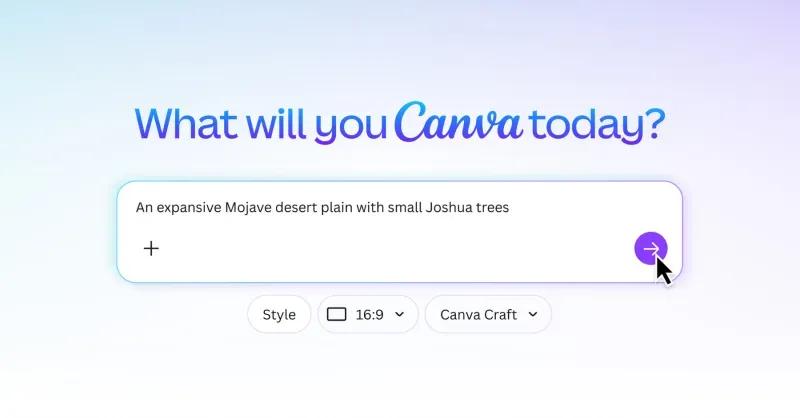
Canva has launched Canva Craft, its first proprietary AI image generation model, marking a strategic shift from relying on third-party AI tools to developing in-house generative AI capabilities
1
. The design platform, used by 95% of Fortune 500 companies, is now competing directly with AI image models from OpenAI, Google, Microsoft, and Meta3
. Available globally to all Canva users through the platform's Dream Lab, Craft represents a fundamental departure from traditional AI image generation approaches by focusing specifically on design workflows rather than photographic realism2
.
Source: Digital Trends
Two-Stage Architecture Plans Before Generating
What sets Canva Craft apart is its two-stage architecture that mimics how human designers work
1
. According to Stefano Corazza, Canva's head of AI research, the model first analyzes prompts and maps out composition, including object placement, scale, visual hierarchy, and typography placement before generating the actual image3
. This design-focused AI approach allows the system to "reason" before creating visuals, resulting in more complex and comprehensive designs with accurate details and readable text5
. The model generates images at up to 2K resolution across more than 30 aspect ratios, making it versatile for social media posts, marketing content, presentations, infographics, and menus2
.Training on Human-Designed Templates Sets New Standard
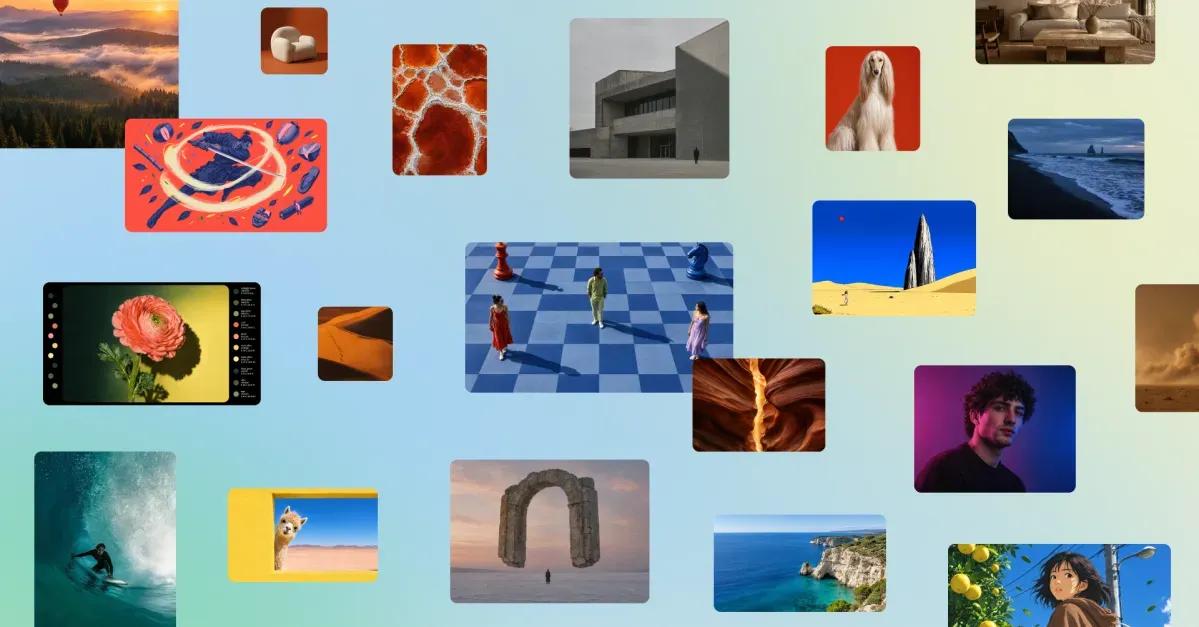
Unlike competing AI image generation models trained primarily on photographs, Craft was developed using millions of human-made templates from Canva's content library
3
. The training data includes professionally designed posters, social posts, presentations, infographics, menus, and typography-rich layouts, teaching the model how layout, composition, and typography work together rather than simply learning what finished images look like3
. Corazza explained that the model was trained on Canva's library, licensed and public databases, and data from Canva users who opted into training1
. This unique training approach gives Craft a deeper understanding of design principles, making it particularly effective for AI for designers who need marketing graphics and social content where accurate text and layout matter as much as imagery5
.
Source: The Verge
Strong Performance on Design Arena Leaderboard
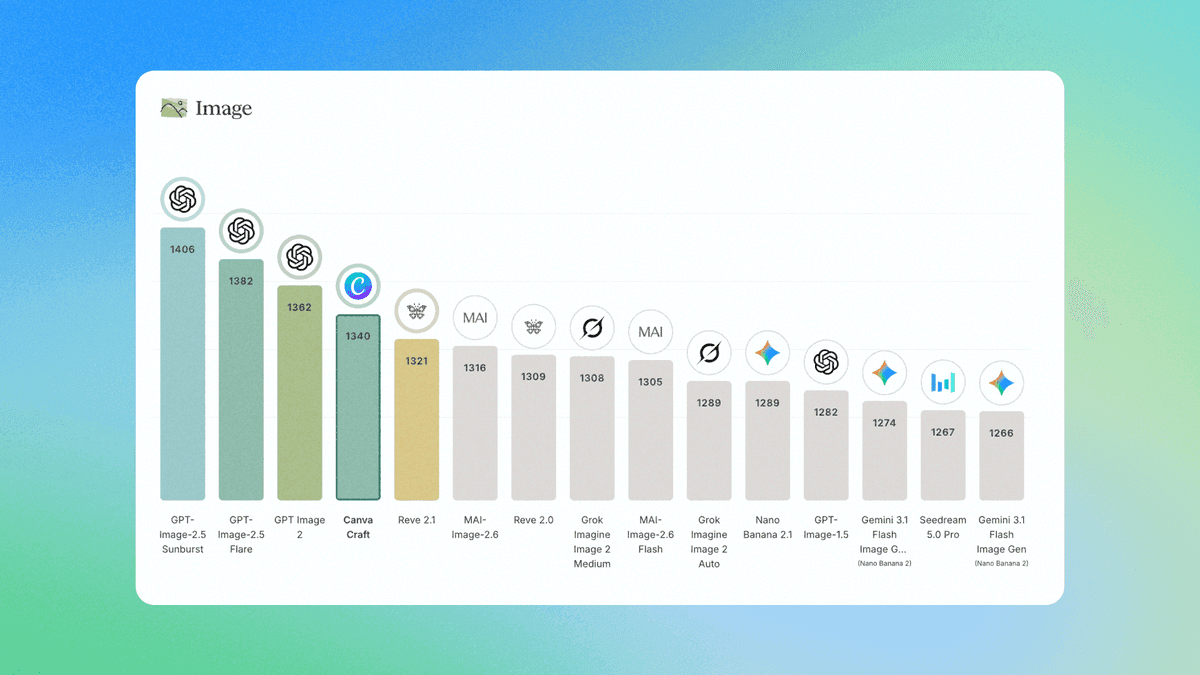
Early benchmarking results show Canva Craft ranking fourth overall on Design Arena's leaderboard for AI image models, trailing only three models from OpenAI while surpassing offerings from Google's Nano Banana and Microsoft's MAI-Image models
1
. The model achieved first place among 87 models for people and portraits, first among 85 models in landscapes and nature, and second for abstract designs and patterns4
. This performance establishes Canva Research, the company's internal research division that has tripled in size over the past year, as the second-highest performing AI lab for image generation models behind OpenAI4
. However, Craft trails in the marketing subcategory, an area where many Canva users focus their efforts1
.
Source: TechRadar
AI Output Editing Through Magic Layers Integration
Canva has prioritized AI output editing capabilities, addressing a common frustration where generative AI produces results that are almost but not quite right
1
. Craft builds on Canva's existing Magic Layers technology, which breaks down AI designs into basic elements for precise adjustments without affecting other parts of the image1
5
. This technologically complex process solves a significant problem for users who need to refine AI-generated content. The ability to edit specific elements while leaving the rest untouched means designers spend less time fixing mistakes and more time on productive work5
.Related Stories

Strategic Move Toward In-House AI Development
Canva's development of Craft follows its acquisition of Leonardo.Ai and a substantial internal ramp-up of AI research capabilities
1
. Corazza noted that keeping AI technology in-house helps the company control cloud costs and reduce inference time, addressing the unpredictable economics of relying on third-party generative AI services1
4
. This represents a significant strategic shift for Canva, which previously integrated third-party AI models and launched its first creative AI tool, Magic Media, in 20231
. The company believes developing proprietary models gives it greater control over AI economics and performance.API Access and Future Model Variants
Canva is making Craft available beyond its own platform through an API, allowing developers to integrate the model into other applications
4
. The company plans to enable AI agents to connect with Canva Craft through the open Model Context Protocol, with integrations planned for third-party AI assistants including ChatGPT and Gemini2
5
. Canva is also developing two more efficient variants called Craft-fast and Craft-ultrafast to provide faster, more cost-effective options for different use cases2
5
. The model includes robust input and output moderation, privacy and safety controls, and reporting tools2
.Ongoing Controversy Around Creative AI Tools
The launch comes amid ongoing controversy surrounding creative AI tools, with photographers, illustrators, and artists raising concerns about AI training on copyrighted work, creation of abusive material, and potential replacement of human creators
1
. Eric Wittman, CEO of photo editing platform VSCO, responded to Canva CEO Melanie Perkins' announcement by asserting that real photographers, not AI, will always rank first for portraits1
. As AI models improve, real creators face increasing pressure to verify their work as human-made, though digital verification methods remain sporadic and inconsistent1
. Creative companies like Canva and Adobe maintain that AI serves as a tool to enhance rather than replace human creativity, though this position remains contested within the creative community.References
Summarized by

Navi
[4]
Related Stories
Canva AI 2.0 transforms design platform with memory, automation, and third-party integrations
16 Apr 2026•Technology

Canva Unveils Dream Lab: A New AI-Powered Image Generation Tool
23 Oct 2024•Technology

Canva Unveils AI-Powered Creative Operating System and Makes Affinity Apps Free
30 Oct 2025•Technology
Recent Highlights



Recent Highlights
Today's Top Stories







Don’t drown in AI news. We cut through the noise - filtering, ranking and summarizing the most important AI news, breakthroughs and research daily. Follow topics that matter to you and stay ahead.


