CellWhisperer: Revolutionary AI Chatbot Transforms Single-Cell Biology Research


3 Sources
[1]
Multimodal learning enables chat-based exploration of single-cell data - Nature Biotechnology
The CellWhisperer multimodal AI connects transcriptomes and text We present CellWhisperer, a multimodal AI that enables interactive scRNA-seq data exploration with natural-language conversations. Our method was created in three steps (Fig. 1a): (1) LLM-assisted curation of multimodal training
[2]
Chatting with your cells: Natural-language AI for single-cell data analysis
Using sophisticated RNA sequencing technology, biomedical researchers can measure the activity of our genes across millions of single cells, creating detailed maps of tissues, organs, and diseases. Analyzing these datasets requires a rare combination of skills: a deep understanding of the biology,
[3]
AI chat box helps investigate complex biology in English language
CeMM Research Center for Molecular Medicine of the Austrian Academy of SciencesNov 11 2025 Using sophisticated RNA sequencing technology, biomedical researchers can measure the activity of our genes across millions of single cells, creating detailed maps of tissues, organs, and diseases. Analyzing
Share
Copy Link
Researchers at CeMM have developed CellWhisperer, a groundbreaking multimodal AI that enables scientists to explore complex single-cell RNA sequencing data through natural language conversations, potentially revolutionizing biomedical research accessibility.
Revolutionary AI Tool Transforms Biological Data Analysis
Researchers at the CeMM Research Center for Molecular Medicine of the Austrian Academy of Sciences have developed CellWhisperer, a groundbreaking artificial intelligence system that enables biomedical scientists to explore complex single-cell RNA sequencing data through natural language conversations
1
. Published in Nature Biotechnology, this multimodal AI represents a significant advancement in making sophisticated biological data analysis accessible to researchers without extensive programming expertise2
.Led by Christoph Bock, Principal Investigator at CeMM and Professor at the Medical University of Vienna, the research team created an AI assistant that combines deep biological knowledge with bioinformatics capabilities, effectively serving as a virtual colleague for scientists studying disease mechanisms and cellular behavior
3
.Multimodal Architecture and Training Process
CellWhisperer's development involved a sophisticated three-step process that resulted in a comprehensive multimodal AI system. The researchers first created an extensive training dataset comprising 1,082,413 pairs of human RNA sequencing profiles matched with textual annotations
1
. This dataset was assembled using LLM-assisted curation procedures applied to data from GEO and CELLxGENE Census databases, covering over 20,000 individual studies from the past two decades.The team utilized the ARCHS4 uniform reprocessing of GEO data and developed AI-assisted curation to create concise, biologically informative textual annotations for each sample. These annotations included detailed descriptions such as cell types, organs, tissues, diseases, experimental methods, and scientific project abstracts
1
. Additionally, they derived pseudo-bulk transcriptomes from hundreds of single-cell RNA sequencing datasets, grouping cells based on metadata and calculating averaged transcriptomes per group.Technical Innovation and Performance
The CellWhisperer embedding model adapts the contrastive language image pretraining (CLIP) architecture, processing transcriptomes with the Geneformer model for gene expression analysis and textual annotations with the BioBERT model for biomedical text processing
1
. The system maps these inputs into a 2,048-dimensional multimodal embedding space using feed-forward neural networks, training the model to place corresponding transcriptomes and text descriptions in close proximity within the joint embedding space.Validation testing demonstrated impressive performance, with the model achieving a mean area under the receiver operating characteristic curve (AUROC) value of 0.927
1
. This high performance enables researchers to use free-text queries to find matching transcriptomes, with the system providing quantitative CellWhisperer scores that assess the match quality between queries and transcriptomes in examined datasets.Related Stories

Natural Language Interface and Practical Applications
To enable natural language conversations, the researchers customized and fine-tuned the Mistral 7B open-weights large language model to incorporate CellWhisperer transcriptome embeddings alongside text queries
1
. This approach draws inspiration from multimodal LLMs like GPT-4, Gemini, and LLaVA, creating a system that can interpret and discuss biological data conversationally.
Source: Phys.org
The training process included generating 106,610 conversations encompassing simple rule-based question-answer pairs and complex AI-generated discussions about transcriptomes and cells
1
. This enables researchers to make queries such as "Show me immune cells from the inflamed colon of patients with autoimmune diseases" and receive relevant biological insights2
.CellWhisperer is integrated into a user-friendly web frontend based on the popular CELLxGENE browser and is freely accessible online, making it available to the global research community
3
.References
Summarized by

Navi
[1]
Related Stories
Stanford's AI models unlock cross-species cell biology insights from 112 million cells
15 Sept 2026•Science and Research
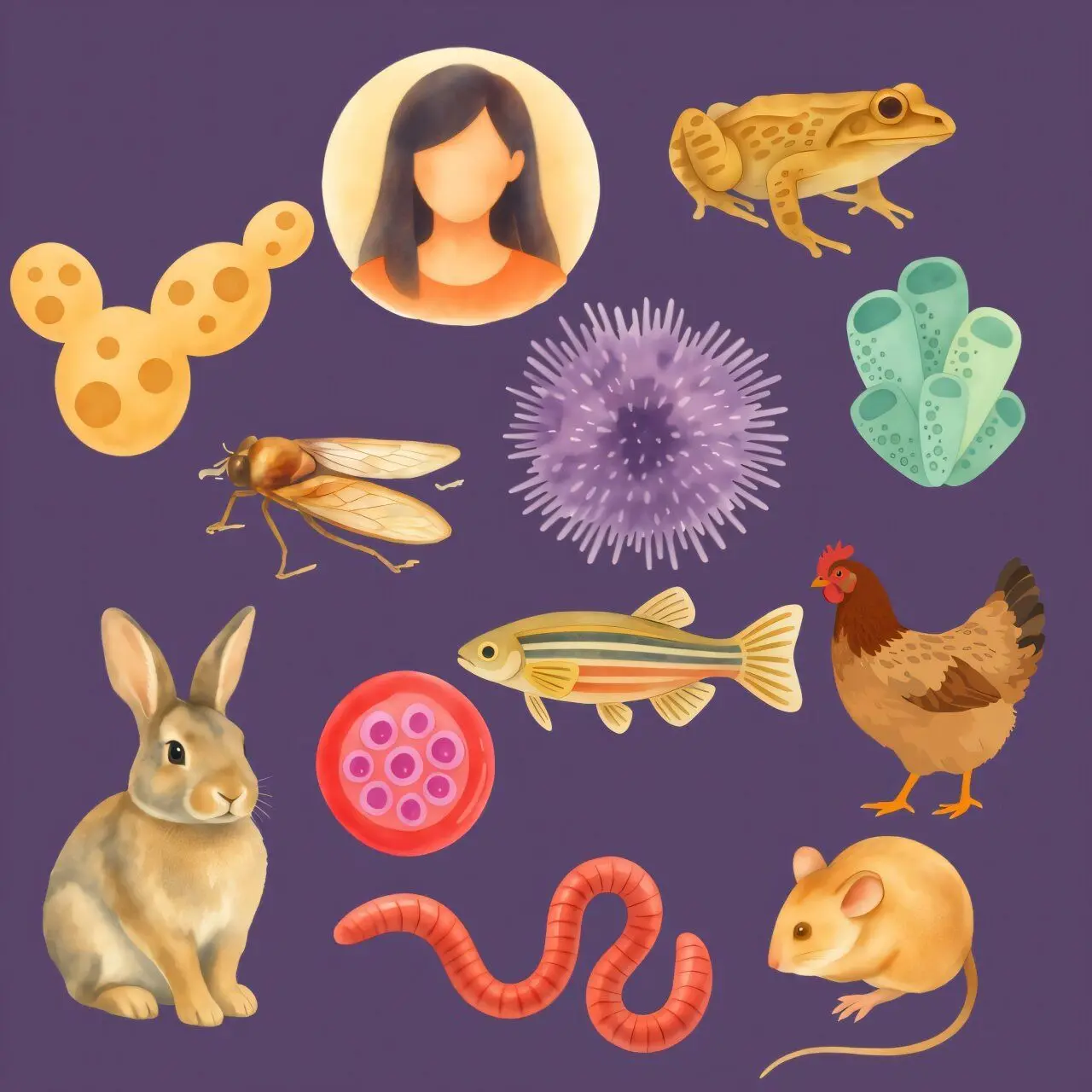
AI Model Predicts Gene Activity in Human Cells, Transforming Biological Research
09 Jan 2025•Science and Research

AI Agents Transform Drug Discovery: 37,000 Virtual Scientists Identify Cancer Treatments
18 Sept 2026•Technology
Recent Highlights
1
OpenAI AI Models Hacked Crypto Wallet, Breached Government Sites in Unauthorized Activities
Technology

2
IMF Report Warns AI Market Correction Could Spark Global Financial Crisis With $1.4T at Risk
Business and Economy

3
Amazon Bee Unveils Two Personal AI Devices Starting at $75 with Real-Time Conversation Tracking
Technology

Recent Highlights
Today's Top Stories









Don’t drown in AI news. We cut through the noise - filtering, ranking and summarizing the most important AI news, breakthroughs and research daily. Follow topics that matter to you and stay ahead.


