AI Agents Transform Drug Discovery: 37,000 Virtual Scientists Identify Cancer Treatments


3 Sources
[1]
AI co-scientists are revolutionizing how research is done
Biochemist Anna Pertl typed in her question, pressed Enter and left for the night. The artificial-intelligence system that she had prompted is designed to produce innovative scientific hypotheses. But, unlike a typical chatbot, this AI tool -- called Co-Scientist -- doesn't simply generate an
[2]
How a team of AIs discovered a promising lung-cancer drug
It's a pharmaceutical-company executive's dream: tens of thousands of employees working day and night, uninterrupted by meals, sleep or distraction, to find the next blockbuster drug. A sophisticated artificial-intelligence system called the Virtual Biotech, which is described today in the journal
[3]
A.I. Agents as 'Co-Scientists'? This Lab Says They Could Speed Drug Research.
Sign up for the Well newsletter. Essential news and guidance to live your healthiest life. Get it sent to your inbox. When John Pak and his collaborators tasked a team of A.I. bots with redesigning part of a Covid-19 vaccine in 2024, he doubted that they would develop something successful or even
Share
Copy Link
Stanford researchers deployed 37,000 AI agents organized as a Virtual Biotech company to accelerate drug discovery. The AI co-scientists autonomously analyzed over 55,000 clinical trials and identified a promising lung cancer treatment targeting CD276 protein. Google's Co-Scientist system proposed novel cancer-fighting strategies by analyzing 700+ papers, demonstrating AI's role in scientific breakthrough.
AI Agents Reshape Scientific Research with Autonomous Discovery
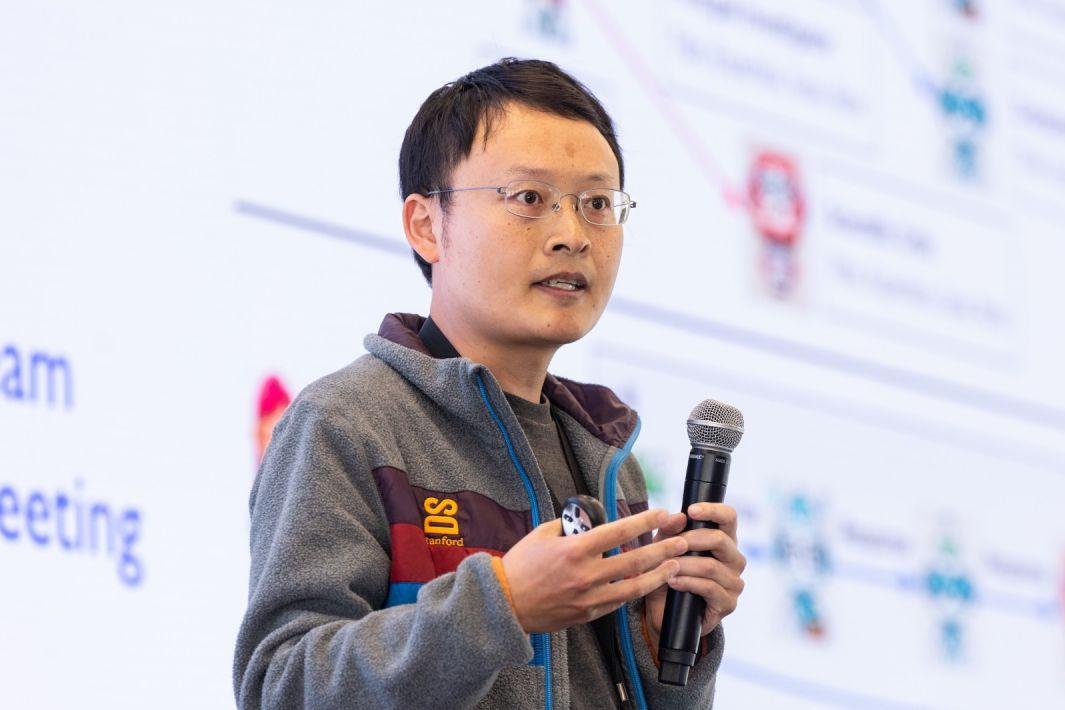
AI in scientific research has entered a transformative phase where AI agents function as autonomous co-scientists, fundamentally changing how drug discovery unfolds. At Stanford University, computer scientist James Zou assembled a Virtual Biotech comprising as many as 37,000 agents—AI systems that autonomously interact with large language models or with each other to perform multistep tasks
2
. These AI co-scientists work continuously, uninterrupted by human limitations like meals or sleep, to accelerate drug discovery processes that traditionally consume years and millions of dollars3
.The system mirrors a biotechnology company's organizational structure, with a chief scientific officer agent directing employees across different divisions, each with subspecialties ranging from target identification to clinical-trial design
2
. This AI-driven autonomy in research represents a departure from traditional AI tools that simply execute researcher commands. Instead, these agents independently generate hypotheses, evaluate competing explanations, and iteratively test ideas against published evidence1
.Virtual Biotech Delivers Breakthrough in Lung Cancer Treatment
Zou's team tasked the Virtual Biotech with analyzing published results from more than 55,000 clinical trials across various conditions. The system assigned 37,075 agents to each tackle a single later-stage trial
2
. Through computational experiments, virtual biotech employees searched for predictors of success in data sets showing which genes were active in different cell types. This analysis revealed that drugs targeting proteins active in specific cell types were nearly 50% likelier to reach market compared to other drugs2
.In a focused demonstration of drug discovery capabilities, Zou directed the system to investigate whether CD276 protein would make a viable therapeutic target for lung cancer. Previous work had suggested that CD276 dampens immune responses and is highly expressed in lung tumors
2
. The AI agents confirmed CD276 as a candidate using previously collected data and developed a strategy: a CD276-recognizing antibody tethered to an anticancer drug. With human oversight from external reviewers, Zou and his collaborators concluded this was a promising avenue2
. Weeks after the experiment concluded, a large pharmaceutical company announced promising results from a drug using the same approach, providing independent corroboration of the agents' predictions3
.Google's Co-Scientist Proposes Novel Cancer-Fighting Strategy
Google's Co-Scientist system, developed in Mountain View, California, demonstrates another dimension of transforming scientific research. At the Whitehead Institute for Biomedical Research in Cambridge, Massachusetts, biochemist Anna Pertl used Co-Scientist to tackle one of cancer research's most complicated problems: finding non-obvious ways to shut down MYC protein, which runs amok in most cancers and has long defied attack attempts
1
.The request built on years of research into molecular condensates—protein clusters that cells use to switch on crucial genes. In 2018, researchers found that cancer cells hijack these condensates at genome-control regions called super-enhancers to send the gene encoding MYC protein into overdrive
1
. Getting Co-Scientist to understand the question took close to an hour of back-and-forth interaction. The system initially misunderstood whether protein clusters were the drug or the target, and assumed all clusters activated gene expression when some do the opposite1
.Once corrected, Co-Scientist combed through more than 700 scientific papers and generated 108 possible strategies. It rejected all but one approach as unworkable
1
. The surviving strategy turned conventional thinking upside down. Rather than dissolving the clusters—the method being pursued by Dewpoint Therapeutics in Boston—the AI tool proposed gluing them together using click chemistry. This approach smushes proteins that either activate or repress the MYC gene into one gooey mass, setting off a chain reaction until MYC's DNA can no longer be read1
. "It's extremely conceptually compelling," says Whitehead bioengineer Kalon Overholt. "We had certainly never thought about anything like this"1
.Related Stories

AI's Role in Scientific Breakthrough Extends Beyond Cancer
The capabilities of AI agents as co-scientists extend across multiple domains. When John Pak and collaborators tasked AI bots with redesigning part of a Covid-19 vaccine in 2024, they doubted the agents would develop something coherent. The lab of AI agents held hundreds of conversations to brainstorm, often duplicating themselves and discussing the same topic in five different conversations simultaneously, each lasting only a few seconds
3
. Within days, the results yielded dozens of novel proteins that would theoretically bind to new Covid variants. Testing showed two actually worked—created at a fraction of the time and cost required by human labs3
.Researchers have used Co-Scientist to find a drug combination that kills leukemia cells in a dish and identify a treatment that regenerates liver tissue damaged by disease in laboratory settings
1
. Frontier AI labs including Anthropic and OpenAI, along with startups like FutureHouse and Phylo, are rolling out systems that tackle tasks once reserved for human scientists1
.Human Judgment Remains Critical in AI-Driven Research
Despite these advances, autonomously generating hypotheses and conducting computational experiments require substantial human oversight. Zou's team realized early that AI agents were too polite during scientific debates, preventing them from getting to the truth directly. They made the personas more critical and installed "professional devil's advocate" bots to poke holes in other agents' ideas and ensure they weren't dangerous
3
. A human expert always reviews the agents' work before any proteins are synthesized in real life to minimize risks3
.The scientists also had to periodically intervene to keep projects within budget. "They were sometimes trying to plan out like a multiyear, multimillion-dollar set of experiments," said Kyle Swanson, a former graduate student in Zou's lab
3
. The Virtual Biotech's predictions have not been vetted in the crucible of real-world drug discovery, and its findings were not validated through experiments or clinical trials2
.As machines take over more research tasks, the scarce resource could become human scientific judgment: knowing which questions are worth asking and which lines of inquiry merit pursuit. "The most valuable part now is actually asking the question," says Ajay Agrawal, an economist at the University of Toronto Rotman School of Management
1
. This shift could change not just how scientists work, but how they are valued. "We imagine it to be like a collaborator—a partner with you," says Vivek Natarajan, an AI researcher at Google who helped develop Co-Scientist1
.References
Summarized by

Navi
Related Stories
AI agents identify promising drug candidates in hours as Google and FutureHouse debut research systems
19 May 2026•Science and Research
Anthropic's AI Scientific Discovery Claim Triggers Scientific Controversy Over What Counts
28 Sept 2026•Science and Research

Stanford Researchers Create AI-Driven 'Virtual Scientists' to Accelerate Scientific Discovery
30 Jul 2025•Science and Research
Recent Highlights
1
Microsoft and Nvidia Launch Surface Laptop Ultra: A $2,599 AI-Ready PC With RTX Spark Chip
Technology

2
OpenAI Releases 722 AI-Generated Math Papers on GitHub, Igniting Fury Among Mathematicians
Science and Research
3
Trump Consulted Grok AI Before Ordering Venezuela Invasion and Capture of Nicolás Maduro
Policy and Regulation

Recent Highlights
Today's Top Stories









Don’t drown in AI news. We cut through the noise - filtering, ranking and summarizing the most important AI news, breakthroughs and research daily. Follow topics that matter to you and stay ahead.


