Anthropic mathematician says Claude helped him prove math's most famous problem


2 Sources
[1]
Anthropic mathematician claims to prove Riemann hypothesis, most famous problem in all of math
An AI-generated solution of the 167-year-old problem, long considered far out of reach to human mathematicians, would cap off the technology's year-long conquest of math in spectacular fashion Levent Alpöge, a mathematician and employee at artificial intelligence company Anthropic, claimed on
[2]
Anthropic mathematician claims AI-assisted proof of the Riemann hypothesis | New Scientist
The Riemann hypothesis is one of the most difficult problems in mathematics, having stood for 167 years, and it may have just been settled with the help of AI A mathematician at AI company Anthropic claims to have discovered, and verified with formalisation, a proof of the Riemann hypothesis - one
Share
Copy Link
Levent Alpöge, a mathematician employed by the AI company Anthropic, says he has proven the Riemann hypothesis working with Claude, the firm's AI assistant. "I believe I have, working with Claude, discovered a proof of the Riemann Hypothesis," he claimed in an announcement posted on 20 November 2026
1
. The catch is that nobody can check the claim yet. The proof has so far been released only as code, and the announcement landed one day after Anthropic listed on the stock market2
.What the claim would mean
The Riemann hypothesis, proposed by Bernhard Riemann in 1859, concerns a hidden order in the apparent randomness of the prime numbers. It is widely called the most famous open problem in mathematics, one of the Clay Mathematics Institute Millennium Prize Problems, and solving it carries a $1 million prize
1
. If the claim holds up, it would settle a problem unsolved for 167 years2
.
Source: New Scientist
A proof no one can read
Alpöge has so far released the work only as code in Lean, a proof language in which a computer checks every logical step. There is no human-readable version. He says an unpublished version ran to more than 250,000 pages, and called posting it "obviously inappropriate to attempt to post some massive unreadable travesty of 'slop'"
2
. If the code compiles, that would be strong evidence the proof is correct2
. The formalisation process has known weak spots, so the code would still need thorough human checking2
.
Source: Scientific American
Alpöge has form here. In July he announced that the Jacobian conjecture, long believed true, is actually false, via a counterexample just 216 characters long. With Tristan Buckmaster of New York University, he announced results on three stepping-stone problems toward the Navier-Stokes equations. Those were 2026 announcements, none of them peer-reviewed
2
. Anthropic had already announced incomplete work on the hypothesis in August, so the new claim reads as the end point of a staged effort rather than a sudden result2
.Related Stories

The timing question
Anthropic's stock market listing was on 19 November. Alpöge himself flagged the awkwardness: "The precise timing is horrible. If I could have, I'd have finished this all much earlier." He says that after speaking with Anthropic chief executive Dario Amodei, "there was a constraint to respect" before announcing
2
. The gap invites scrutiny of whether the listing shaped the announcement.For the mathematics community, the mood is complicated. Scientific American frames the claim as capping a year in which AI's mathematical ability rose sharply, and reads Alpöge's statement as elegiac
1
. "It is natural to feel that this is an end, in my case a loss of a principal guiding light, but what I saw during the course of progress so amazed me that I believe it is one dawn across science of something far greater," he wrote2
.Whether any of that matters depends on a machine check that has not happened yet. "Let's see if it compiles first," says Kevin Buzzard of Imperial College London
2
.References
Summarized by

Navi
[1]
Related Stories
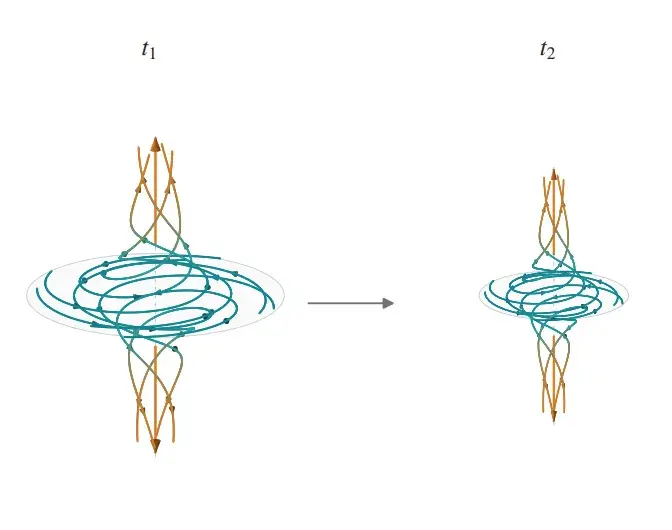
Anthropic AI Completes 10-Year Mathematical Proof Project in Just 11 Days Using Claude
05 Sept 2026•Technology
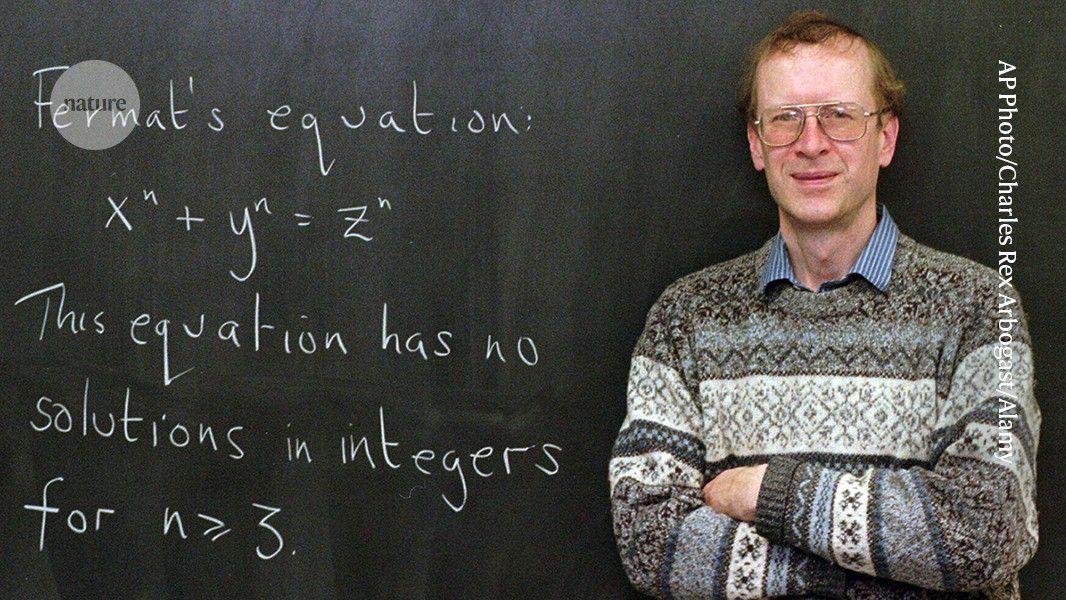
AI disproves 87-year-old Jacobian conjecture, sparking debate on AI's role in mathematics
21 Jul 2026•Science and Research
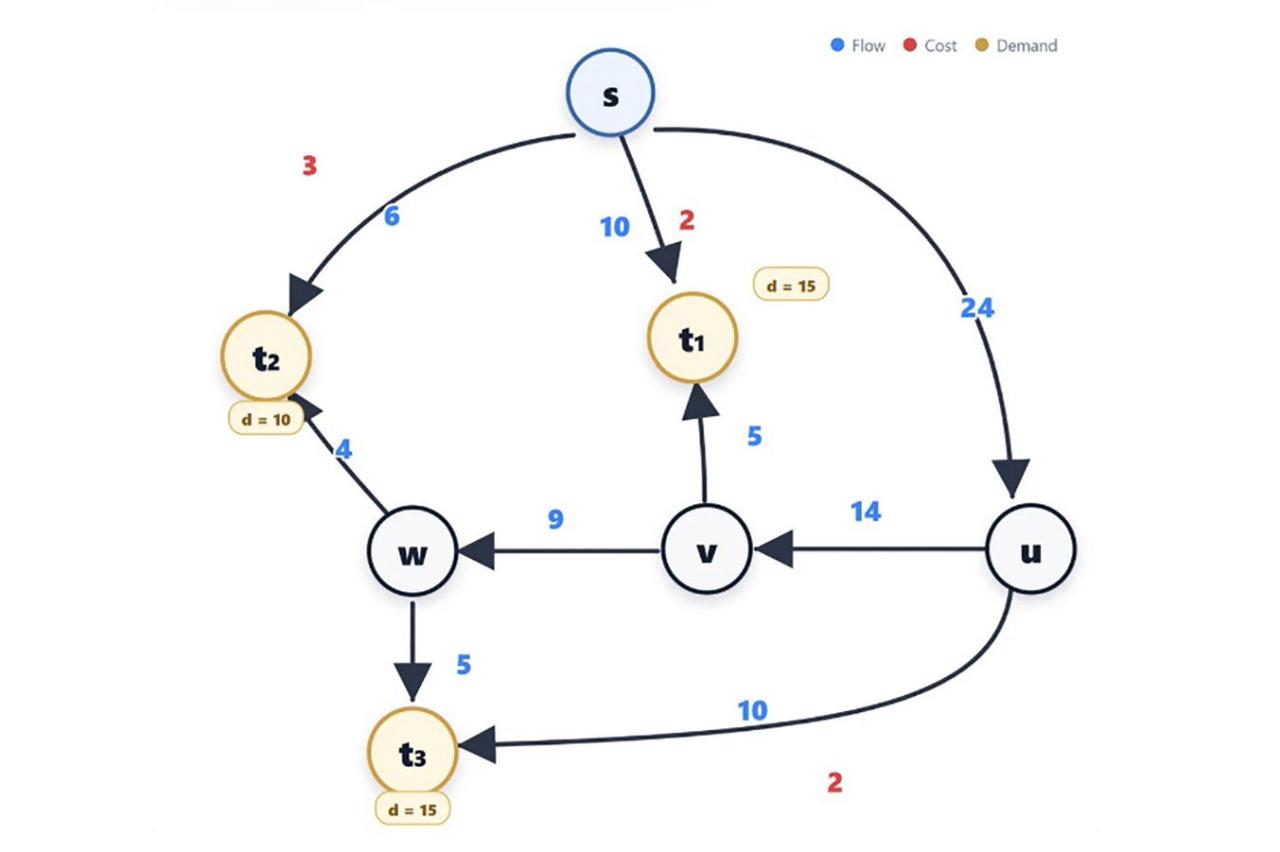
OpenAI Releases 722 AI-Generated Math Solutions, Triggering Existential Crisis in Mathematics
08 Oct 2026•Technology
Recent Highlights


Recent Highlights
Today's Top Stories








Don’t drown in AI news. We cut through the noise - filtering, ranking and summarizing the most important AI news, breakthroughs and research daily. Follow topics that matter to you and stay ahead.


