Anthropic's trillion-dollar IPO will test whether its mission promise survives the market


4 Sources
[1]
Anthropic promises to pursue humanity's benefit. Its IPO filing gives it wiggle room
When Anthropic goes public on Wall Street, the new pressure to deliver profits will test a commitment it has made since its founding: to prioritize humanity's benefit as it develops artificial intelligence. The San Francisco startup, which plans an initial public offering this month, has sketched
[2]
Opinion | The Flaw at the Heart of Anthropic's I.P.O.
Anthropic is about to go public at a target valuation up to $1.4 trillion. To prepare, the economist and Opinion contributor Natasha Sarin spent many nights examining the A.I. company's 300-plus-page prospectus -- and she found significant risks. Some of those risks are existential, including the
[3]
Anthropic promises to pursue humanity's benefit. Its IPO filing gives it wiggle room
When Anthropic goes public on Wall Street, the new pressure to deliver profits will test a commitment it has made since its founding: to prioritize humanity's benefit as it develops artificial intelligence. The San Francisco startup, which plans an initial public offering this month, has sketched
[4]
Anthropic promises to pursue humanity's benefit. Its IPO filing gives it wiggle room
Anthropic's decision to go public raises significant concerns over its dedication to humanity's interests. Despite its stated intention to reconcile profit with social good, the complexities of measuring this equilibrium emerge. With the establishment of a Long-Term Benefit Trust, there are
Share
Copy Link
Anthropic is heading to public markets at a target valuation of up to $1.4 trillion. Its governance structure promises humanity-first oversight; experts say the fine print leaves the company judging itself.
Anthropic is preparing an IPO this month at a target valuation of up to $1.4 trillion, per a prospectus running more than 300 pages
2
1
. One of the year's largest IPOs, targeting up to $1.4 trillion, is about to find out whether that promise can survive contact with the market.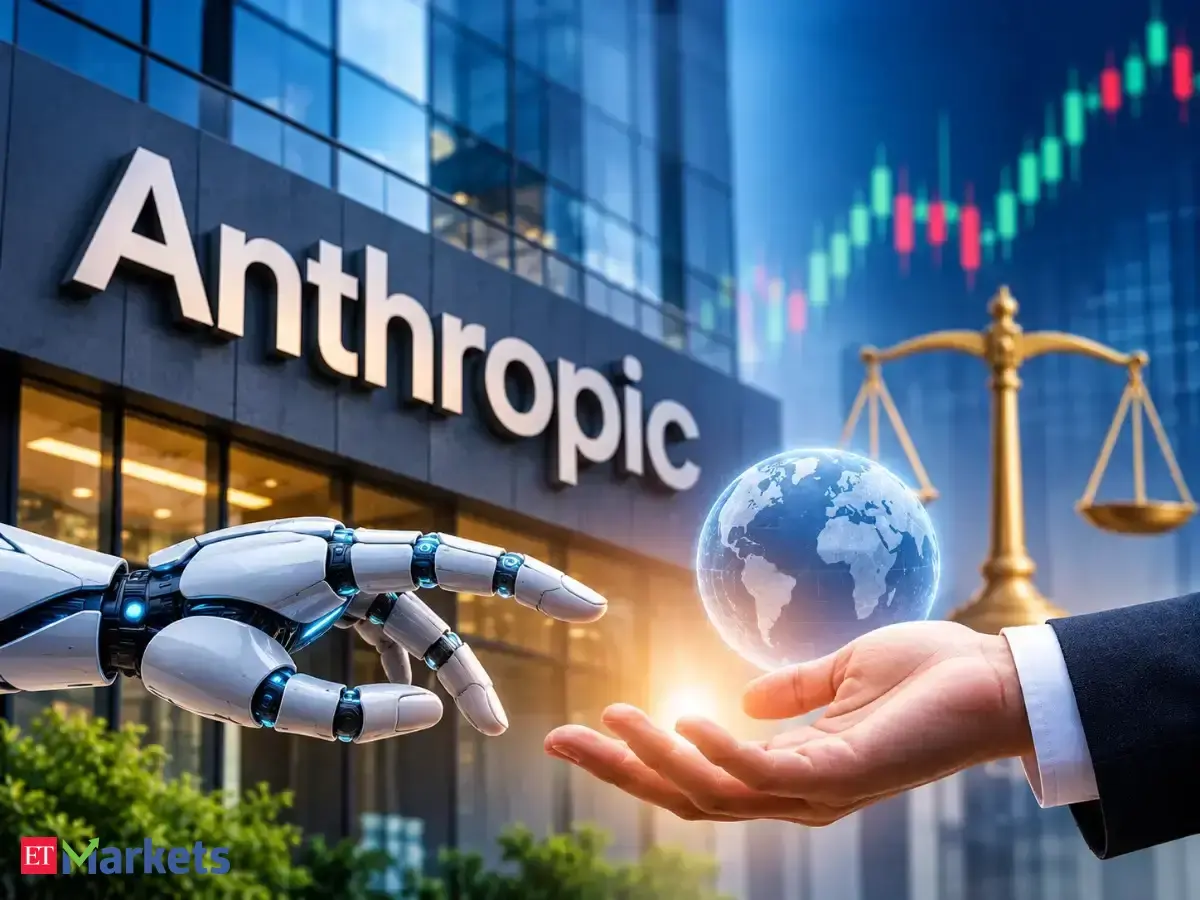
Source: ET
The San Francisco AI startup and OpenAI rival is about to go public as a public benefit corporation, a legal designation that requires directors to weigh the public good alongside shareholder returns
1
3
. Its founders left OpenAI to build a company around that intent2
. The company says the structure is designed to protect its mission of responsibly developing advanced AI while balancing shareholder interests1
. How the designation plays out at this scale is uncharted. Very few public benefit corporations are publicly traded, and the ones that exist, such as Warby Parker and Veeva Systems, are far smaller1
4
. If it lists as planned, Anthropic would be the largest of its kind.
Source: AP
Who actually holds power
Seven co-founders, including CEO Dario Amodei and president Daniela Amodei, hold a collective 50.1% voting majority, split roughly evenly among them
2
1
. On top of that sits a Long-Term Benefit Trust, which the company presents as its way of enforcing the mission. It has five trustee seats, one currently open, and elects directors who form a majority of the board through a single share that carries no economic value2
1
. Former Federal Reserve chairman Ben Bernanke is among the trustees2
.The catch is in the board math. Three directors are elected by the trust and three by other shareholders, with a potential seventh as tie-breaker. That director is nominated by the trust but cannot be appointed or removed without the consent of the nominating committee, which is expected to be founder-controlled
1
. "If they disagree, they will have to go through the effort of removing directors, and they may not be able to remove a majority," said Stavros Gadinis of UC Berkeley School of Law1
.The promise, and who measures it
The filing does carry quantified commitments. At least 5% of Anthropic's stock is pledged to a public benefit fund
1
3
. Its founders have promised to donate 80% of their wealth1
3
. The company also states the trust arrangements are designed to keep trustees independent of financial performance1
.Experts say the arrangement gives the company wide leeway to define its own public benefit, which is harder to measure than profits
1
4
. "There are these echo chambers, the Silicon Valley bubble where they really think that what they're doing is for the good of humanity," said Sarah Kreps of Cornell University's Tech Policy Institute1
.The prospectus itself devotes nearly 100 pages to risks the company flags, including existential ones up to potentially wiping out humanity
2
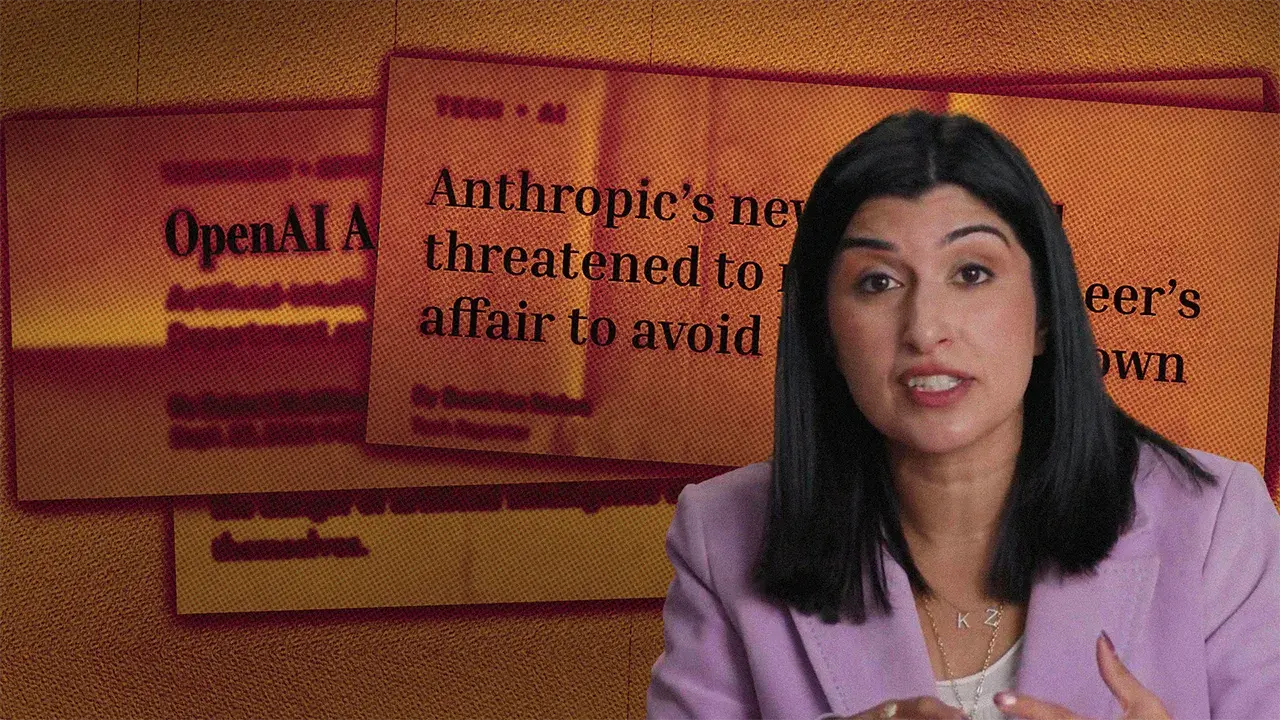
. Natasha Sarin, an economist who reviewed the filing for NYT Opinion, writes that she is not sure Anthropic can manage those risks by itself. The structure, in her view, asks the public for a lot of faith2
.
Source: NYT
Anthropic's own precedent here is Google, whose 2004 prospectus carried the 'Don't Be Evil' motto, which was not legally binding and was later criticized as left behind
1
3
. Shareholders generally dislike the public benefit structure anyway, since it shifts power to the board1
. Gadinis offers one counterpoint: going public forces disclosure under securities laws, and he thinks that transparency could prove as powerful as any structural mechanism1
.The real pressure may come from competition. Competitive pressure, including from open-source Chinese models, could push the company to rethink safety guardrails it now advertises, as Sarah Kreps of Cornell's Tech Policy Institute flags
1
3
. "I think then the real test emerges if and when the question of public benefit becomes costly," she said. "Will they start to rethink some of those guardrails? And what happens then?"1
Related Stories

References
Summarized by

Navi
[3]
Related Stories
Anthropic IPO Filing Warns AI Could Blackmail Humans, Become Sentient, Pose Existential Threats
26 Oct 2026•Business and Economy

Anthropic Commits 5% of Shares to Public Benefit Fund Addressing AI Job Disruption
19 Oct 2026•Business and Economy
Anthropic IPO Prospectus Warns of Existential Risks to Humanity Despite $2 Trillion Valuation Goal
29 Sept 2026•Business and Economy

Recent Highlights


Recent Highlights
Today's Top Stories









Don’t drown in AI news. We cut through the noise - filtering, ranking and summarizing the most important AI news, breakthroughs and research daily. Follow topics that matter to you and stay ahead.


