China Develops AI System to Detect Nuclear Warheads, Potentially Reshaping Arms Control


2 Sources
[1]
China's AI tech detects nukes from decoys, sparking security concern
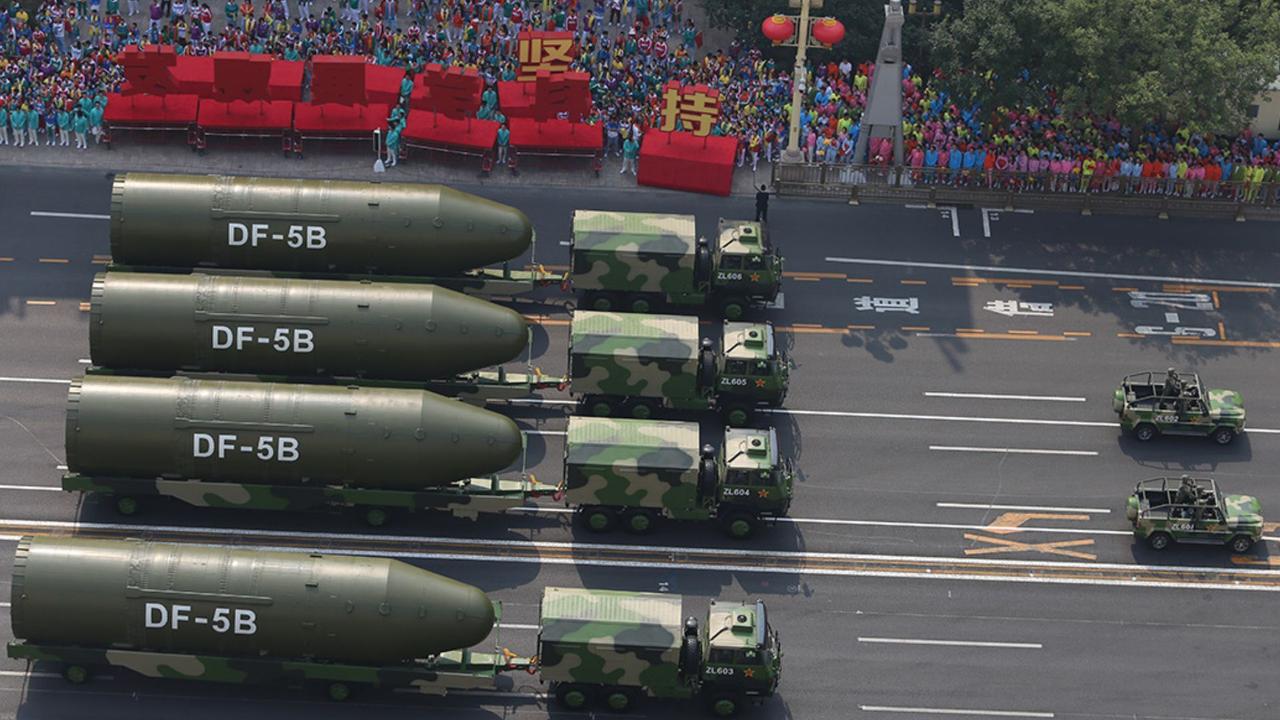
Representative image: The second stage of the DF-5B, disassembled for transport. Chinese scientists have allegedly developed an Artificial Intelligence (AI) system that can tell the difference between real nuclear warheads and fake ones (decoys). This is the first time in the world that AI has
[2]
AI vs Nukes: How China's new tech could shake up global arms control
Chinese researchers have achieved a groundbreaking feat by developing an AI system capable of distinguishing genuine nuclear warheads from decoys. This marks the world's first AI-driven verification tool for arms control, potentially enhancing China's position in international nuclear disarmament
Share
Copy Link
Chinese scientists have created an AI system that can distinguish real nuclear warheads from decoys, marking a significant advancement in arms control technology and potentially influencing global nuclear disarmament talks.
Groundbreaking AI System for Nuclear Warhead Verification
Chinese scientists have developed a revolutionary Artificial Intelligence (AI) system capable of distinguishing genuine nuclear warheads from decoys, marking a significant advancement in arms control technology. This breakthrough, detailed in a peer-reviewed paper published in April by researchers at the China Institute of Atomic Energy (CIAE), represents the world's first AI-driven verification tool for arms control
1
.Technical Innovation and Challenges
Source: Interesting Engineering
The AI system, named "Verification Technical Scheme for Deep Learning Algorithm Based on Interactive Zero Knowledge Protocol," employs a sophisticated multi-stage approach combining cryptography and nuclear physics. Researchers used Monte Carlo simulations to create millions of virtual nuclear components, training a deep learning network on neutron flux patterns
2
.To address security concerns, the system incorporates a 400-hole polythene wall between the inspection apparatus and the warhead, scrambling neutron signals to mask detailed geometry while allowing radiation signatures through. This innovative approach enables the verification of a warhead's chain-reaction capability without exposing sensitive design information.
Implications for Global Arms Control
The development of this AI system could potentially enhance China's position in international nuclear disarmament negotiations, which have been stalled. It addresses three major challenges:
- Training the AI with sensitive nuclear data
- Assuring military officials of data security
- Convincing skeptical nations to adopt new verification methods
The CIAE team emphasized the critical importance of maintaining verification effectiveness while protecting sensitive weapon design information. They propose that the AI system be jointly developed, trained, and verified by both inspecting and inspected parties to ensure trust and transparency
2
.Related Stories



Context and Potential Impact

Source: ET
This technological revelation comes amid stalled US-China nuclear arms talks. China has resisted engaging in these discussions, citing its smaller arsenal (estimated 600 warheads compared to America's 3,748) and distrust of traditional verification methods
2
.The AI system's ability to operate without direct access to sensitive weapon designs could address longstanding concerns about information security in arms control verification. By authenticating warheads using obscured radiation data, it offers a potential solution to the challenge of verifying nuclear arsenals without compromising national security.
Future Prospects and Challenges
While this breakthrough represents a significant step forward in arms control technology, challenges remain. The classified nature of nuclear warhead designs continues to pose obstacles to full scientific transparency. Additionally, convincing other nations, particularly the United States, to move beyond Cold War-era verification methods may require further diplomatic efforts and technological demonstrations.
As AI continues to advance in various fields, its application in managing weapons of mass destruction opens up new possibilities and challenges for global security. The development of this AI system by Chinese scientists may spark wider discussions about the role of artificial intelligence in arms control and international security protocols.
References
Summarized by

Navi
[1]
Related Stories
Recent Highlights
1
Microsoft and Nvidia Launch Surface Laptop Ultra: A $2,599 AI-Ready PC With RTX Spark Chip
Technology

2
Meta Muse AI Agent Surges to 6.6M Downloads Despite Privacy and Security Controversies
Technology

3
Scientists Build AI Model That Reconstructs Images From Brain Scans in Record Time
Science and Research

Recent Highlights
Today's Top Stories









Don’t drown in AI news. We cut through the noise - filtering, ranking and summarizing the most important AI news, breakthroughs and research daily. Follow topics that matter to you and stay ahead.


