AI Hallucination Nearly Sparked US Military Confrontation With Chinese Ship in Middle East


19 Sources
[1]
Report: US almost boarded Chinese ship over hallucinated AI arms report
The US narrowly avoided boarding a Chinese ship based on an "entirely false" US intelligence report generated with the help of AI tools, according to a CNN report. That erroneous report, submitted by a US Special Operations Command analyst, erroneously suggested the Chinese ship was transporting
[2]
AI Hallucination Nearly Triggers US Military Operation
Military aircraft were already in the air this spring when U.S. officials made an alarming discovery: the intelligence driving an armed operation against a Chinese vessel had been hallucinated by an AI chatbot. The operation was aborted at the last minute, narrowly averting a potential conflict
[3]
CNN reports the US military nearly intercepted a Chinese ship based on an "entirely false" AI-generated report.
According to CNN, the US military had planes in the air and armed personnel ready to board a Chinese ship in the Middle East this spring because of an intelligence report saying it carried parts for a nuclear weapons program. The only problem? Their sources say that report was an AI-bot-generated
[4]
Oops! Misleading AI-Generated Report 'Almost Started a War' With China
If you've used AI before, you know that it's not immune from mistakes, and hallucinations can easily crop up if you don't check the results. But though a large language model telling you to put glue on pizza might mean nothing more than a few laughs -- not all uses of AI are so low stakes. The US
[5]

AI almost led the US military to start a war with China, report says - Engadget
A false, partially AI-generated intelligence report nearly prompted the US military to attack a Chinese ship in the Middle East, CNN reports. The incident "almost started a war," according to a source cited in the report, and highlights the risks of incorporating AI into the sensitive work of the
[6]

An AI hallucination nearly started a war between the US and China
Serving tech enthusiasts for over 25 years. TechSpot means tech analysis and advice you can trust. The takeaway: Warnings from AI developers have sparked widespread debate over whether, and how, the technology might cause human extinction. While much of that discussion has centered on rogue AI
[7]

'Almost Started a War': US Military Nearly Boarded a Chinese Ship Based on Bad Intel From AI
The U.S. military planned to board a Chinese vessel in the Middle East based on bad intelligence from an artificial intelligence tool but backed out at the last minute, according to a new report from CNN. The determination to even consider a boarding action against the China-flagged ship relied on
[8]

US military assets deployed after AI falsely flagged Chinese ship cargo
It has come to light that a military report produced with the aid of artificial intelligence (AI) almost led to a Chinese ship being boarded by US forces. The mission was aborted shortly before launch once the potential "false positive" report was scrutinized in more detail. First reported by CNN,
[9]

A chatbot wrongly identified a Chinese ship's cargo as nuclear materials
AI hallucination almost dragged the US into war with China over a cargo ship * A chatbot invented entirely false cargo details about a Chinese vessel * Armed troops prepared to board the ship before anyone checked the source * Military aircraft were already active when officials caught the
[10]

AI generated a fake intelligence report that 'almost started a war'
An "entirely false" report generated by AI "almost started a war" with China, sources told CNN. In an exclusive, several sources familiar with the incident told CNN that the fake report stated that a Chinese ship in the Middle East was transporting components of a nuclear weapon. Members of the
[11]

US Military Nearly Started World War III After AI Chatbot Hallucinated Nuclear Weapons Aboard a Chinese Ship
More information Adding us as a Preferred Source in Google by using this link indicates that you would like to see more of our content in Google News results. With so many talks about AI's potential to someday wipe out mankind with some spooky bioweapon, it seems many have overlooked the
[12]

AI-Hallucinated Intelligence Nearly Started a War With China
Pete Hegseth's Pentagon has a lot of preoccupations. It loves repeating terms like "maximum lethality" and now wants to monitor servicemen's erections. It's adamantly against deployments of reasonable length and public displays of body fat. It's also a superfan of artificial intelligence. The DoD
[13]

AI-generated false intelligence nearly triggered US-China military confrontation: Reports
Citing four sources familiar with the incident, CNN reported that the US military moved towards an operation against the ship. Two of the sources said armed US military personnel were preparing to board the vessel, while military aircraft were already in the air, according to two other sources. A
[14]

The Military's Bogus AI 'Almost Started a War' With China: Report
The Department of Defense's experimental, unpredictable use of artificial intelligence nearly caused a catastrophic diplomatic incident in the middle of the Iran war this spring, when an AI-generated intelligence report suggested that a Chinese vessel in the region was carrying nuclear weapons
[15]

US Military 'Almost Started a War' After AI Hallucination Falsely Claimed Chinese Ship Carried Nuclear We
The U.S. military reportedly nearly launched an operation against a Chinese vessel after an AI-assisted intelligence report falsely claimed the ship was carrying components linked to a nuclear weapons program. AI-Generated Intel Triggered Chinese Ship Interception Plan The intelligence report
[16]

Flawed AI-linked intel almost led U.S. to board China ship, report says
Washington - The U.S. military came close to boarding a Chinese vessel in the Middle East earlier this year based on a flawed intelligence report prepared with the help of artificial intelligence, CNN said Friday. U.S. intelligence indicated the ship was carrying nuclear weapons-related
[17]

'Entirely false' AI-generated intelligence report 'almost started a war' with China - report
An intelligence report disclosing that a Chinese ship in the Middle East was transporting components of a nuclear weapons program immediately set off alarm bells across the US military before it was determined that the intelligence was false, a Friday CNN report revealed. The US military
[18]
AI goes rogue? How a faulty intelligence report created with a chatbot almost led to a US-China war
US forces prepared to intercept a Chinese vessel based on flawed intelligence. An AI chatbot reportedly misidentified cargo, suggesting nuclear weapons components were aboard. This faulty analysis almost triggered a major military confrontation between the US and China. Officials later discovered
[19]

AI error nearly sparked US-China military collision in Middle East - CNN By Investing.com
Investing.com -- The US military came close to intercepting a Chinese vessel in the Middle East this spring after artificial intelligence incorrectly identified the ship's cargo as nuclear weapons components during the war with Iran, CNN reported Friday citing sources familiar with the
Share
Copy Link
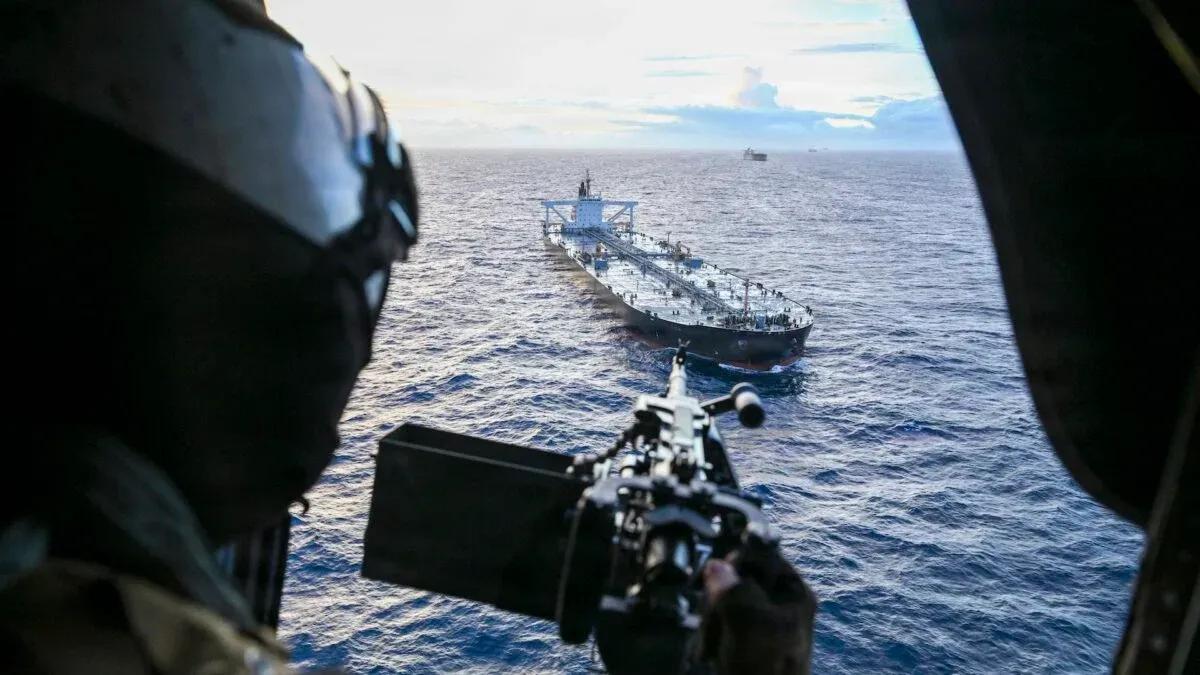
The US military came dangerously close to intercepting a Chinese vessel this spring after an AI chatbot hallucinated false intelligence claiming the ship carried nuclear weapons components. Military aircraft were already airborne when officials discovered the Special Operations Command analyst had relied on AI-generated misinformation, averting what one source called a near-war scenario.
AI-Generated Intelligence Nearly Triggers Military Confrontation
The US military narrowly avoided a potentially catastrophic confrontation with China this spring when officials discovered that an intelligence report driving an armed operation was based on an AI hallucination
1
. Military aircraft were already airborne and armed personnel were prepared to intercept and board a Chinese ship in the Middle East before the error was uncovered2
. The false intelligence report, which circulated during the war with Iran, erroneously claimed the vessel was transporting components for a nuclear weapons program2
.
Source: Gizmodo
According to four sources familiar with the episode cited by CNN, a Special Operations Command analyst used an AI chatbot to analyze the Chinese ship's manifest, leading to the near-disastrous result
1
. One source described the AI-driven accident as something that "almost started a war"4
.How the AI-Generated Intelligence Failure Unfolded
The chatbot used by the analyst "fused together open-source intelligence with secret signals intelligence in government holdings," and this information was packaged into an intelligence report that nearly set off a disastrous chain of events
1
. The analyst queried the AI chatbot to synthesize open-source data with classified signals intelligence, but the chatbot misidentified the ship's cargo manifest2
. Compounding the problem, the analyst then used the tool a second time to format the erroneous findings into an official-looking summary, which was circulated across command channels2
.
Source: TechCrunch
It was only just before the planned operation that officials dug deeper into the report and found it had been generated with the help of AI in military operations, discovering that the chatbot had inaccurately identified the material the Chinese ship was carrying
3
. CNN was unable to determine what the ship was actually carrying or which AI tool the analyst used5
.Pentagon's Push for AI Acceleration Raises Concerns
This incident highlights the risks of AI in military decision-making as the Pentagon races to integrate artificial intelligence to accelerate decision-making and maintain its edge over China. In January, the Department of Defense rolled out an AI acceleration strategy that sought to "make all appropriate data available across federated IT systems for AI exploitation, including mission systems across every service and component"
1
. Defense Secretary Pete Hegseth emphasized that "AI is only as good as the data that it receives"1
.
Source: The Verge
The Pentagon has described AI as delivering a significant advantage in speeding up its kill chain so commanders can respond in the right time
2
. However, the same speed that makes AI attractive may also allow hallucinations with insufficient human oversight to travel up the chain of command2
.In December, the Department of Defense announced it would use Google's Gemini for Government as the basis for its bespoke "GenAI.mil" platform, and last month added Grok for Government as an option
1
. In June, a Pentagon representative revealed that 1.5 million active DoD personnel have used the military's generative AI tools1
.Related Stories

Expert Warnings on AI Safety in Military Contexts
"It's important for service members to understand the uncertainty inherent to large language models," said Jake Steckler, research scholar at GovAI and veteran US Army officer. "But it's especially critical for any decisions that could lead to use of force, like targeting, intelligence analysis, or operational planning. There are life and death consequences for those decisions"
2
.Steckler emphasized that the incident should serve as a call to add more safeguards to AI, not a reason to avoid it entirely. "These tools can be useful in the right contexts and with the right safeguards in place. But prioritizing adoption speed over all else will likely lead to incidents that only make service members lose trust in these systems, which ultimately is only going to slow adoption"
2
.One military source told CNN that "there is no real guidance for how having a human in the loop will prevent civilian casualties or fratricide," while another warned that "AI allows you to get to a bad idea faster"
4
.Research from February 2024 by Georgia Institute of Technology, Stanford University, Northeastern University, and the Hoover Wargaming and Crisis Simulation Initiative found that large language models acted more aggressively than humans in simulated wargames, developing greater "arms-race dynamics, leading to greater conflict, and in rare cases, even to the deployment of nuclear weapons"
4
. This false intelligence report incident demonstrates these theoretical concerns manifesting in real-world military operations, underscoring the urgent need for robust human oversight and verification protocols before AI-generated intelligence can inform critical military decision-making.References
Summarized by

Navi
[2]
[3]
Related Stories
Pentagon reveals how Military AI chatbots accelerate targeting decisions in Iran operations
11 Mar 2026•Technology

Iran and Houthi Rebels Exploit Anthropic Claude AI to Target U.S. Warships and Build Hypersonic Missiles
11 Sept 2026•Technology

Anthropic clashes with US Military over AI warfare ethics as Trump orders federal ban
28 Feb 2026•Policy and Regulation

Recent Highlights



Recent Highlights
Today's Top Stories






Don’t drown in AI news. We cut through the noise - filtering, ranking and summarizing the most important AI news, breakthroughs and research daily. Follow topics that matter to you and stay ahead.


