China is training its AI on America's, and Washington has noticed


8 Sources
[1]
EXCLUSIVE: China taps US AI models to train homegrown rivals as chip curbs bite
BEIJING, Nov 17 (Reuters) - Chinese entities are adopting increasingly sophisticated ways to use output from leading American AI models to train domestic rivals, documents show, as China aims to broaden its AI strategy and offset tightening US curbs on its access to chips. A Reuters review of more
[2]
China uses US AI model outputs to train domestic rivals
Chinese entities are using output from leading U.S. artificial intelligence models to train domestic systems, as Beijing seeks to expand AI deployment while facing tighter U.S. controls on advanced chip access. More than 300 Chinese academic papers, patents, corporate disclosures, recruitment
[3]
China AI: China taps US AI models to train homegrown rivals as chip curbs bite
Chinese entities are adopting increasingly sophisticated ways to use output from leading American AI models to train domestic rivals, documents show, as China aims to broaden its AI strategy and offset tightening US curbs on its access to chips. A Reuters review of more than 300 Chinese academic
[4]
Chinese AI Firms Have Cracked The Code For Training LLMs While Dealing With U.S. Chip Tightening Measures; Using OpenAI's Models For "Industrial-Scale Distillation
As the U.S. continues to tighten the export control noose, Chinese AI developers and researchers have been forced to resort to more creative ways to bypass these trade limitations. According to the latest review that includes more than 300 Chinese academic papers, patents, corporate disclosures,
[5]
China takes a page from US AI playbook to build cheaper domestic rivals as chip curbs bite: Report
Chinese companies and researchers are increasingly using output from leading US AI models to train domestic alternatives through a technique known as distillation, a Reuters review of more than 300 documents found. The practice is gaining industrial traction as Beijing seeks cheaper AI systems and
[6]

China Uses US AI Models to Train Homegrown Rivals Amid Chip Curbs
China is increasingly using American AI models to train domestic alternatives as US chip restrictions tighten. Chinese developers are using distillation to build competitive AI systems with fewer resources. China is increasingly using artificial intelligence models developed by American companies
[7]

Chinese AI firms now turn to distillation despite chip curbs
Reuters reports that Chinese AI companies in 2025 and 2026 shifted large language model training toward what U.S. officials describe as industrial-scale distillation, relying on outputs from foreign models to keep development moving despite U.S. restrictions on advanced chips. Its review of 300
[8]

China taps US AI models to train homegrown rivals as chip curbs bite
BEIJING, Nov 17 (Reuters) - Chinese entities are adopting increasingly sophisticated ways to use output from leading American AI models to train domestic rivals, documents show, as China aims to broaden its AI strategy and offset tightening US curbs on its access to chips. A Reuters review of more
Share
Copy Link
Chinese AI companies have made distilling American models routine industrial practice, a Reuters review finds. The technique is legal, and it lands just as Washington tightens chip curbs again.
Chinese AI companies have turned a quiet training shortcut into mainstream industrial practice, according to a Reuters review of more than 300 Chinese papers, patents, company filings and government records
8
1
. The technique, called distillation, means using the output of leading American models to train smaller domestic ones. It is not illegal. It also lands the day after Washington said it would tighten China's access to advanced chips from firms like Nvidia8
1
. Reuters' assessment is that broad distillation could undercut the effect of the newly announced curbs8
1
.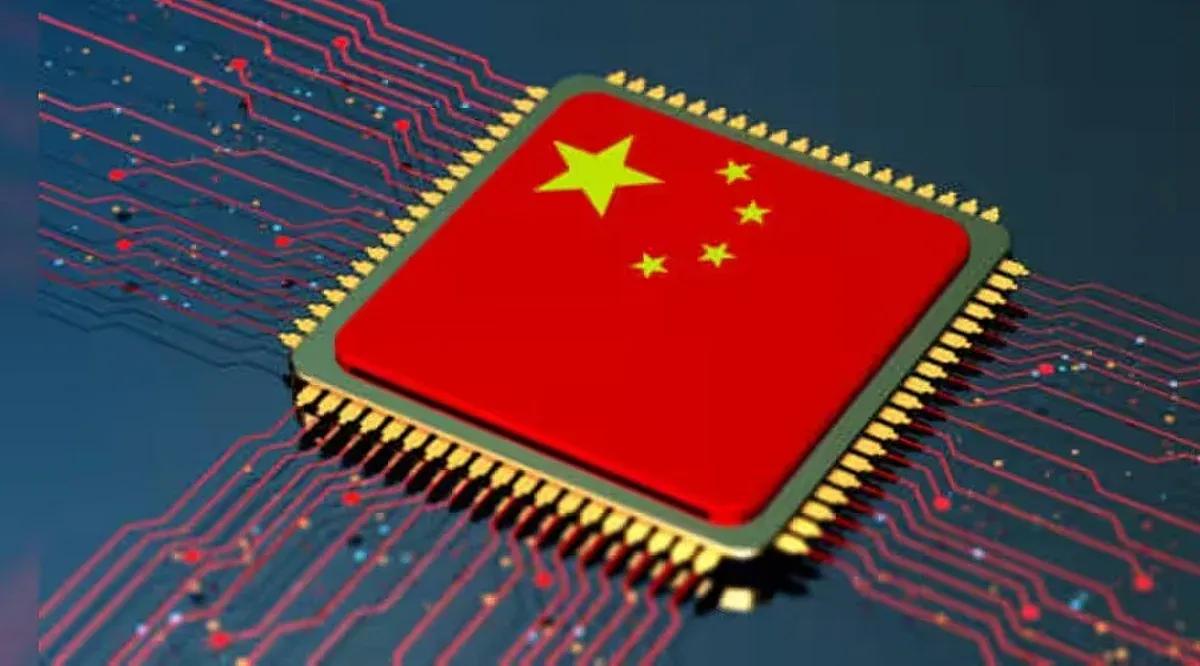
Source: Analytics Insight
How the workaround works
Distillation is straightforward in principle. A team asks a powerful US model hard questions, keeps the answers, and uses them as training material for a smaller local model. For a developer priced out of hardware, the appeal is simple: one expensive query to an American model does repeated work. The team keeps the examples to train a local system around, as a former Alibaba engineer explained to Reuters
8
5
. The hardware alternative has gotten expensive. An eight-GPU Nvidia H200 server runs to roughly $900,000 on China's gray market4
7
.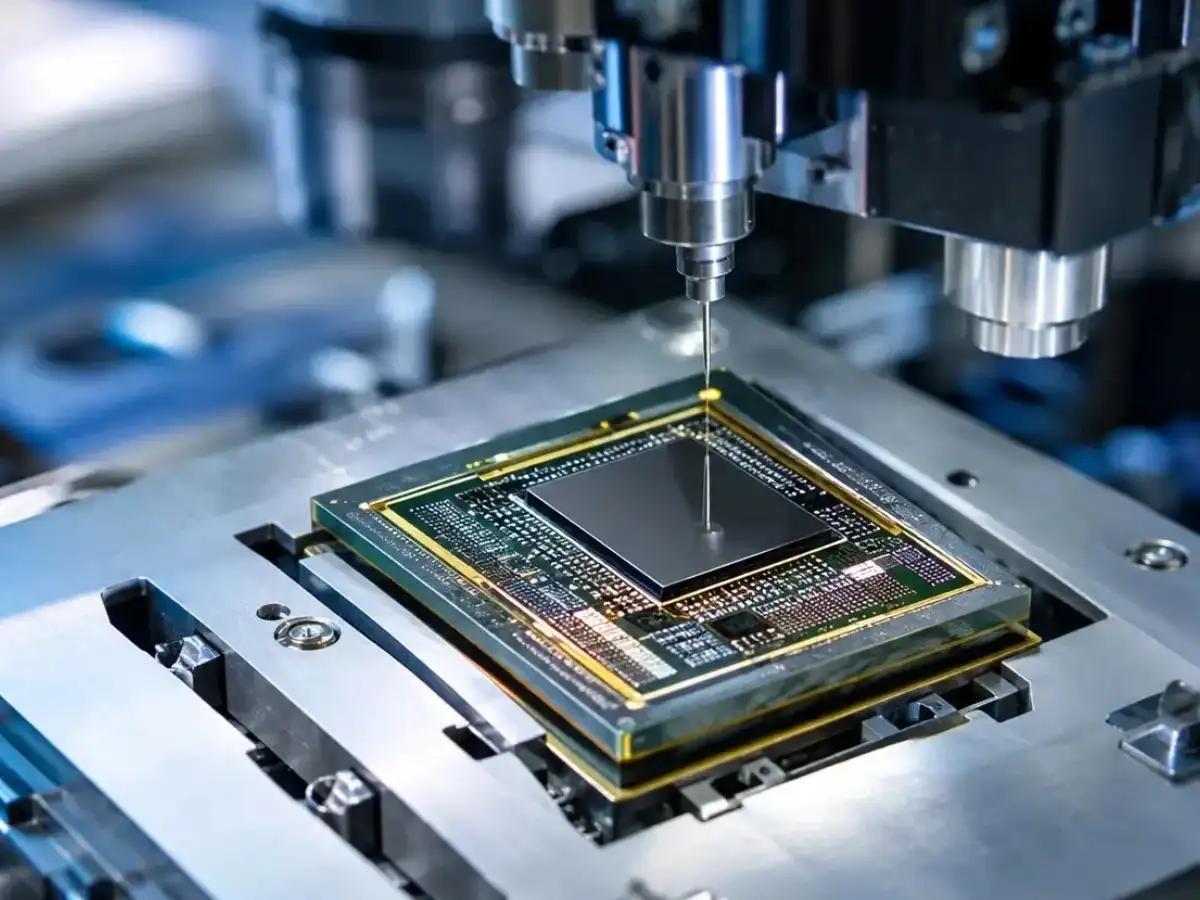
Source: ET
The reviewed documents show the practice at every stage of the last two years. In November 2024, researchers at Shanghai Jiao Tong University took about 5,000 answers from OpenAI's o1, translated them with GPT-4o mini, and assembled 10,750 bilingual examples to retrain Alibaba's Qwen2.5-72B
8
1
. In an April 2025 paper, Alibaba researchers described drawing on GPT-4 and GPT-4o to produce training data in languages beyond Chinese. The responses were then refined and scored before training smaller Qwen models8
2
. This February, researchers from the same university and from Meituan, the food-delivery company, described having GPT-4o draft plans for how AI agents coordinate on programming problems8
4
. Companies have built software to automate the process and employ specialist workers to prepare the training material8
1
.Beijing has encouraged the technique: a national AI and manufacturing policy package from eight government agencies in January backs model training, fine-tuning and distillation for industrial use
8
1
. Shanghai and Shenzhen have backed ways to cut computing requirements8
1
. Those documents encourage distillation; they stop short of telling companies to distil American models specifically.A dispute that went public
US Commerce Department officials raised the practice with Chinese regulators at meetings in Chengdu in July, warning that collecting output from leading American models could amount to intellectual-property theft
8
1
. Chinese officials called distillation a standard technique in AI development, said they were willing to act where conduct amounted to theft of intellectual property, and made no concrete commitments8
1
. In September, US authorities publicly accused Chinese companies of aggressive, targeted distillation of American models on what officials call "industrial-scale distillation"8
1
.How much credit the technique deserves is itself contested. A US official familiar with those talks said Washington believes distillation is the main reason Chinese models have narrowed the gap with American ones
8
1
. Two people familiar with Chinese developers' operations dispute that, pointing instead to engineering, algorithms, data and model design8
1
.The technique has real limits: it cannot copy a leading model's full range of abilities, and it does not remove the need for advanced computing power
8
1
. It may breach contracts, though. OpenAI's terms restrict using its output to build competing models, with some exceptions, and Anthropic likewise requires permission before its models train rivals8
1
. Chinese developers themselves see the ambiguity. In recent months they have asked the industry regulator, the Ministry of Industry and Information Technology, for guidance on where ordinary use of foreign models ends and organized collection for training begins. That is according to one person familiar with the requests8
3
. Even the researchers behind the 2024 project cautioned that leaning too hard on distillation could choke original innovation, leaving developers waiting on whoever builds the more advanced model8
1
.The report lands two days before the Asia-Pacific Economic Cooperation summit in Shenzhen. Donald Trump and Xi Jinping are expected to meet there on November 18 and 19, with distillation now among the frictions between them
8
3
.
Source: Reuters
References
Summarized by

Navi
[2]
Related Stories
Chinese Military Taps OpenAI and Anthropic Models to Train Defence Systems via AI Model Distillation
31 Jul 2026•Policy and Regulation

Chinese AI companies accused of stealing US tech through distillation, threatening national security
13 Jul 2026•Policy and Regulation

Chinese AI Firms Bypass US Chip Restrictions by Exporting Data to Malaysia
15 Jun 2025•Technology
Recent Highlights


Recent Highlights
Today's Top Stories








Don’t drown in AI news. We cut through the noise - filtering, ranking and summarizing the most important AI news, breakthroughs and research daily. Follow topics that matter to you and stay ahead.


