China's Five-Year Plan Bets on AI and Tech Independence as US-China Rivalry Intensifies


3 Sources
[1]
China's New 5-Year Plan: More AI, Less US
For whatever reasonâ€"maybe it was the 145% tariffs, maybe it was the kidnapping of a foreign leader, or the sudden and undeclared rush to war with Iranâ€"China's President Xi Jinping doesn't seem to think relying on America is going to be the best idea for his nation going forward. On Thursday,
[2]
What China's latest economic plans say about its tech ambitions and rivalry with US
China's new economic blueprints focus on strengthening its home market and accelerating tech progress. This strategy aims to shift the nation from low-cost manufacturing to a tech-driven economy. The plans also address current economic slowdowns. These decisions will significantly impact global
[3]
China ramps up 'high stakes' tech race with US as economic imbalances deepen
In its 15th strategic plan since adopting Soviet-style quinquennial policy cycles in the 1950s, Beijing has outlined a bet that technology - not consumption - will drive its next phase of development despite growing structural pressures. China on Thursday set out a five-year roadmap to turbocharge
Share
Copy Link
China unveiled its 15th five-year plan at the National People's Congress, prioritizing artificial intelligence, quantum computing, and semiconductors to reduce reliance on US technology. President Xi Jinping aims to transform China into a tech-driven economy despite a lower growth target of 4.5%-5% and mounting economic pressures from tariffs and trade tensions.
China Five-Year Plan Shifts Focus to Technological Dominance
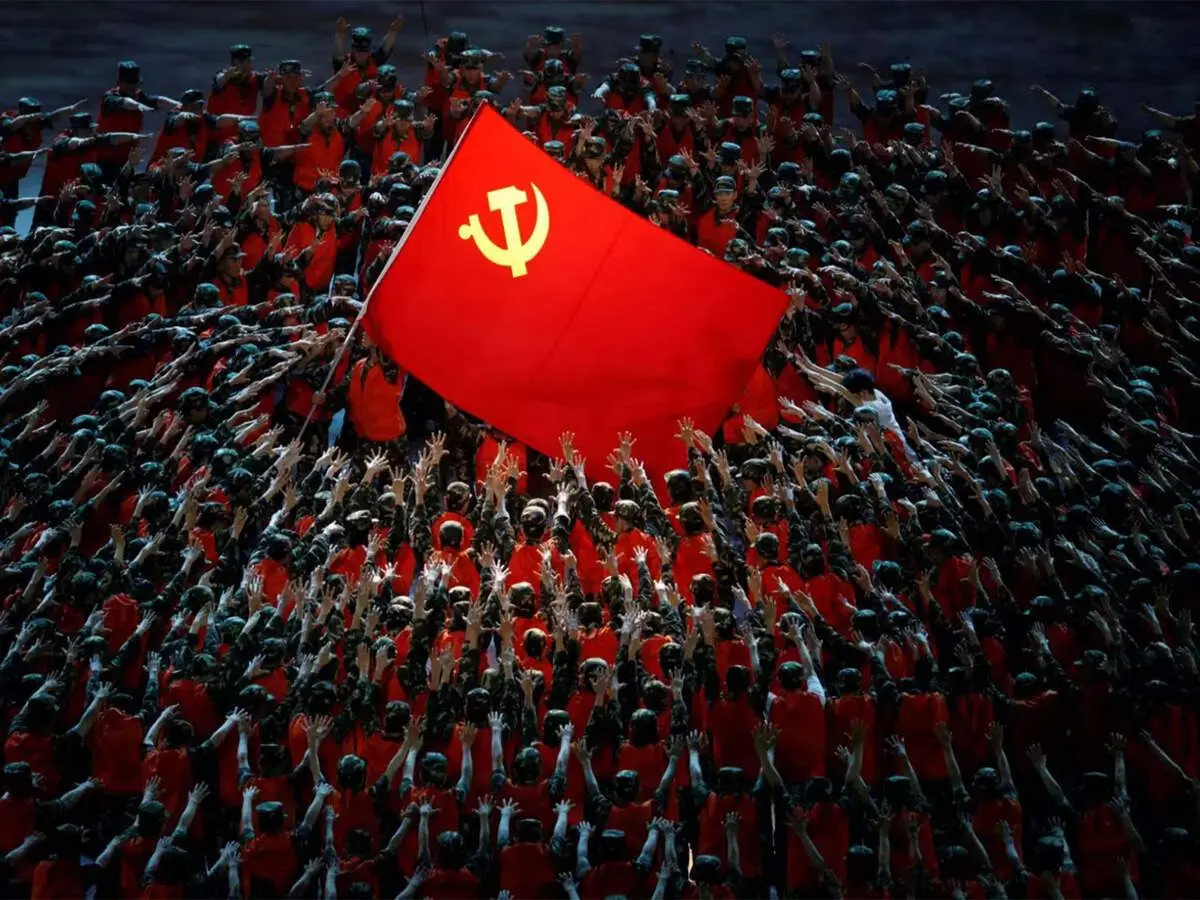
China has unveiled an ambitious strategy to reduce its technological independence from the US while accelerating technological progress across critical sectors. At the annual meeting of the National People's Congress, President Xi Jinping introduced the nation's 15th five-year plan, framing technological supremacy as essential to national security amid intensifying US-China tech rivalry
1
.
Source: ET
1
. This strategic pivot comes as the country faces 145% tariffs and mounting pressure to achieve self-reliance in semiconductors, artificial intelligence, and other advanced technologies.The timing reflects Beijing's calculation that depending on American technology and markets has become increasingly risky. Premier Li Qiang acknowledged that "multilateralism and free trade are under severe threat," while announcing 7% increases in both defense and research and development budgets
3
. The plan aims to transform China from a low-cost manufacturing hub into a tech-driven economy, though this transition occurs against a backdrop of economic headwinds including a lower growth target of 4.5%-5% for 2026, down from last year's 5%3
.
Source: ET
Artificial Intelligence Takes Center Stage in Development Strategy
Artificial intelligence emerges as the cornerstone of China's development vision, with the 141-page plan mentioning AI over 50 times
3
. The document includes an "AI+ action plan" that envisions deploying robotics to address labor shortages and establishing factories operating with minimal human oversight1
3
. The plan also calls for rapid expansion of AI agents capable of performing autonomous tasks across industries. China's state-planning body has issued reports claiming the country already outpaces others in AI research and development, pointing to breakthroughs like the open-source DeepSeek model as evidence of rapid progress1
.The five-year plan sets a specific target to raise the value-added of "core digital economy industries" to 12.5% of GDP
3
. Investment in key technologies extends beyond AI to encompass quantum computing, quantum tech, biomedicine, brain-computer interfaces, nuclear fusion, and even commercializing AI-powered humanoid robots2
3
. Fred Neumann, chief Asia economist at HSBC, observed that "China's government remains laser-focused on spurring technological breakthroughs and high-tech investment," motivated partly by competition with the United States for control over future technologies3
.Breaking Free from US Technology Dependence
Despite recent innovation breakthroughs, China continues to rely on American technology, particularly Nvidia GPUs for training AI models including DeepSeek
1
. The country has struggled to develop viable alternatives but is now making a concentrated effort to eliminate US-based tech from its supply chain. The plan pledges to "fight the battle for key core technologies," with specific goals in semiconductors, batteries, 6G mobile networks, and advanced manufacturing2
. State-owned enterprises have been enrolled to create demand for made-in-China semiconductors and drones3
.The strategy also emphasizes maintaining supply chain dominance in critical areas where China already leads. The plan vows to preserve competitive advantages in rare earths, where China controls global supply of materials vital to AI chips and defense systems
1
3
. The US and allies remain years away from breaking their reliance on China for these critical elements. Last year's trade war with the Trump administration, which briefly escalated to embargo-like conditions with triple-digit tariffs, demonstrated the strategic importance of this supply chain leverage3
.
Source: Gizmodo
2
.Related Stories

Balancing Ambition with Economic Reality
The plan reveals a delicate balancing act between long-term technological ambitions and immediate economic pressures. While the five-year plan prioritizes tech advancement, the annual government plan for 2026 lists "building a robust domestic market" as the top priority, followed by accelerating technological progress
2
. Premier Li acknowledged "acute" imbalances between strong supply and weak demand, along with risks from a worsening property sector crisis and high local government debt3
. China invests 20 percentage points of GDP more than the global average while households spend roughly 20 points less, creating industrial overcapacity that fuels trade tensions abroad and deflationary pressures at home3
.Despite pledging a "notable" increase in household consumption without specifying figures, analysts remain skeptical about demand-side reforms materializing. Andy Ji, Asian FX & rates analyst at ITC Markets, characterized the approach as "a high-stakes rebalancing where the government is betting the house on AI and advanced manufacturing"
3
. The strategy reflects Xi Jinping's vision of developing "new productive forces" to escape the middle-income trap, counter demographic decline, and build self-sufficiency against US pressure3
. With China's record trade surplus of nearly $1.2 trillion raising alarm globally about threats to factory jobs, and recent trade deals between China-Canada and EU-South America excluding the US, the geopolitical landscape appears to be shifting as dealing with China may seem more predictable than navigating Trump administration policies1
2
.References
Summarized by

Navi
[1]
Related Stories
China's 2025 Policy Priorities: Balancing Consumer Spending and Technological Advancement
05 Mar 2025•Business and Economy

China declares itself world leader in AI R&D, pledges to accelerate tech self-reliance
05 Mar 2026•Policy and Regulation
China Unveils Ambitious 10-Year Plan for Nationwide AI Integration
29 Aug 2025•Technology
Recent Highlights



Recent Highlights
Today's Top Stories






Don’t drown in AI news. We cut through the noise - filtering, ranking and summarizing the most important AI news, breakthroughs and research daily. Follow topics that matter to you and stay ahead.


