4 Sources
[1]
Core Scientific latest to jump crypto-to-AI bandwagon
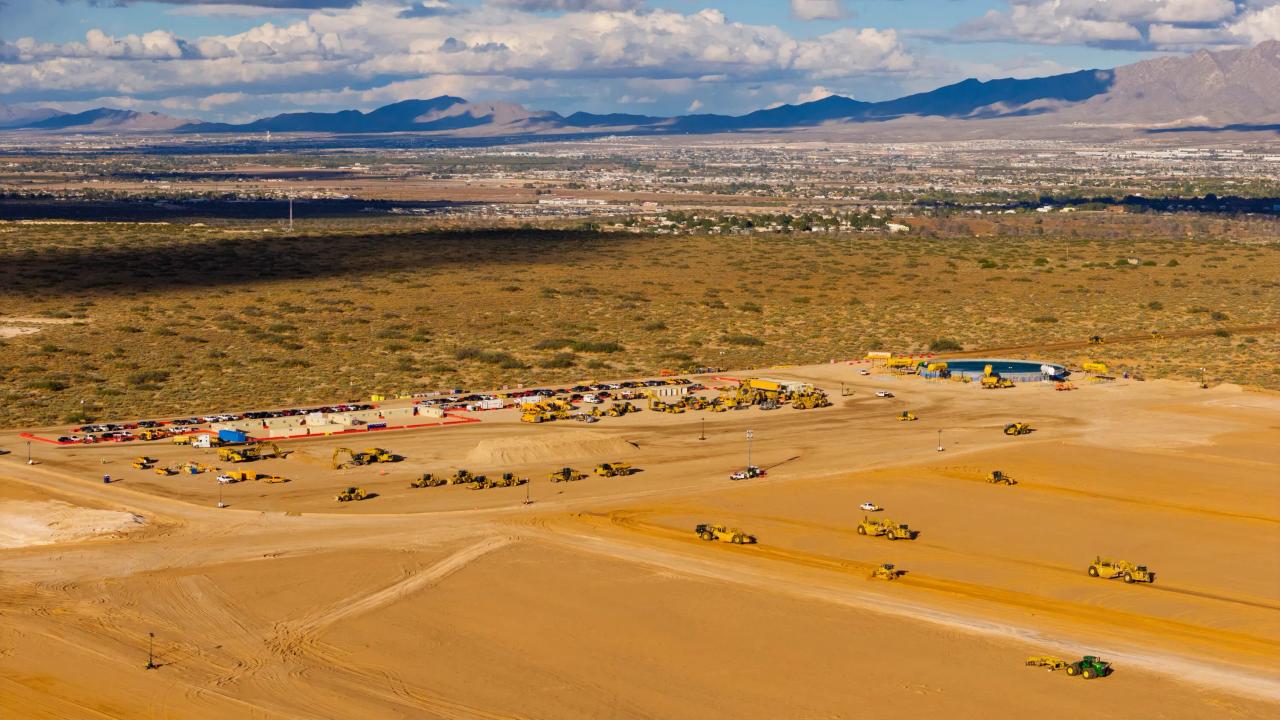
Core Scientific is trading coins for tokens, revealing plans on Monday to convert a 300-megawatt bitcoin mining operation in Pecos, Texas, to an 1.5 gigawatt AI datacenter campus. Core Scientific is one of several companies racing to switch from crypto mining to token farming before the bubble bursts, and recently announced plans to sell $3.3 billion of junk bonds to help facilitate the move. CoreWeave, which has previously contracted with Core Scientific to use capacity at its datacenter in Denton, Texas, and Crusoe are two of the most recognizable converts in the field. The bitcoin miner turned AI bit barn builder began construction of the new facility earlier this year, with the first new data hall expected to come online in early 2027. When complete, Core Scientific estimates that the facility will offer about a gigawatt of leasable capacity, roughly the equivalent to the output of a large nuclear reactor. But all of that's assuming the company can secure adequate power. Core Scientific says that it's already secured an additional 300 megawatts of power from the local utility and plans to supplement that with some kind of "scalable behind-the-meter solution." What exactly that will entail Core Scientific hasn't said. The company certainly wouldn't be the first bit barn builder to embrace on-site power generation to keep the lights on and the GPUs churning out tokens. Over the past year, all of the major hyperscalers have embraced some kind of non-traditional energy storage or generation tech, some more exotic than others. Google, Oracle, AWS, and others are all betting on small modular reactors (SMRs), tiny nuclear power plants, that can be deployed on site to fuel their AI ambitions. Meanwhile Meta this week signed an agreement with Overview Energy to beam a gigawatt of solar power down from orbit, just as soon as they can lob the arrays into orbit. But, just like SMRs, that won't happen until at least 2030. Power constraints have become such a limiting factor that major model builders like AWS, Google, and xAI are now talking about building orbital datacenters. However, the economics of such a deployment remain dubious to say the least. That leaves technologies like Bloom Energy's fuel-cells tech, which convert hydrogen or natural gas into power, water, and Co2, or portable gas generators like those deployed by xAI's Colossus bit barn as the likely candidates. We've reached out to Core Scientific for comment on how exactly it intends to power the facility; we'll let you know if we hear back. ®
[2]
Core Scientific Adds to AI Junk-Bond Wave With $3.3 Billion Deal
Core Scientific Inc. is looking to raise $3.3 billionBloomberg Terminal from a junk-bond sale, joining a wave of high-yield issuers tapping debt markets to fund artificial intelligence infrastructure. The firm is developing six data center facilities that have been fully contracted with CoreWeave Inc. under a 12-year contract that could generate about $10 billion in revenue, a person with direct knowledge of the matter said. Morgan Stanley and JPMorgan Chase & Co. are running the debt offering, the person added, asking not to be identified as discussions are private. The bond sale is expected to price later this week. The rapid expansion of AI has strained supplies of data-center space, graphics-processing chips and power -- pushing companies to tap every corner of the US debt market to finance new capacity. Companies tied to the buildout have raised $17.9 billion from riskier bonds so far this year, according to data compiled by Bloomberg. Click here to see Bloomberg's AI Infrastructure Debt Monitor Core Scientific's offering comes days after a record junk-bond transaction just days ago involving Google-backed data centers and an add-on offering by CoreWeave that together raised $6.7 billion. Edged Compute LLC on Monday kicked off a $1.3 billion bond sale to fund AI infrastructure to be leased to CoreWeave and a subsidiary of Alibaba Group Holding Ltd. Investors have so far been eager to buy junk bonds tied to projects backed by investment-grade hyperscalers such as Alphabet Inc.'s Google and Amazon.com Inc., while demanding a juicer premium from offerings lacking such backstop. Last week's Google-linked offering had Bloomberg Terminala 6.25% yield, versus 9.19%Bloomberg Terminal for speculative-rated CoreWeave's latest offering. Core Scientific Finance I LLC -- as the unit selling the bonds is formally known -- will use the proceeds from the $3.3 billion offering to fund a debt service reserve account and make a distribution to its parent company, which intends to repay in full its outstanding delayed draw term loan, the company said in a statementBloomberg Terminal. Core Scientific, which is publicly traded and has a market value of $6.27 billion, added it will fund its subsidiary as necessary to ensure the timely completion of data center projects in Georgia, Texas, North Carolina and Oklahoma "in the event that the proceeds of the notes and other available funds are insufficient to do so."
[3]
Core Scientific Reveals $3.3 Billion Junk-Bond Sale to Pivot Further from Bitcoin Mining to AI - Decrypt
The company said last month that it is willing to sell the entirety of its Bitcoin holdings in order to fund its ongoing pivot. Core Scientific, a Bitcoin miner turned data center operator, said on Tuesday that it plans to offer $3.3 billion worth of speculative-grade debt to fund its massive pivot into AI infrastructure. In an announcement, the company valued around $6.55 billion said that it would use a portion of proceeds from the raise to refinance debt. The firm did not say what the notes due in 2031 would pay in terms of an interest, nor when they would be offered to investors. Under a 12-year agreement with cloud-computing firm CoreWeave, which could generate roughly $10 billion in revenue, Core Scientific is currently building six data center facilities, Bloomberg reported on Tuesday, citing a person with direct knowledge of the matter. Core Scientific shares rose 4.5% on Tuesday to $20.77, according to Yahoo Finance. As the AI boom has continued to drive demand for high-density data centers across the U.S., the company's shares have surged 42% year-to-date. The junk-bond sale would capitalize the firm with additional funding after it secured up to $1 billion in financing from Morgan Stanley. Core Scientific CEO Adam Sullivan said the firm would be deploying capital to accelerate service timelines associated with its projects. Days before, the Austin, Texas-based firm indicated that it would continue offloading Bitcoin in order to finance its pivot. At the time, CFO Jim Nygaard estimated that the company currently owns less than 1,000 Bitcoin after selling 1,900 Bitcoin for $175 million in January. Billing itself now as a leader in digital infrastructure and high-density colocation, the company concluded 2025 with 2,537 Bitcoin on its balance sheet that would be worth $192 million today, with Bitcoin recently changing hands around $75,800, according CoinGecko. Although the company is distancing itself from the leading digital asset, Bitcoin mining has remained the firm's biggest money-maker. In the fourth quarter, Core Scientific earned $41.1 million from mining Bitcoin for itself compared to $31.3 million from colocation. The firm is among several that have historically mined Bitcoin but are now prioritizing AI, including Hut 8, TeraWulf, Riot Platforms, MARA Holdings, and Bitfarms. When Core Scientific emerged from Chapter 11 bankruptcy in 2024, the company described itself as one of the largest Bitcoin miners in North America. And the previous year, its fleet of miners produced 13,762 Bitcoin, a sum valued at roughly $1 billion today.
[4]
Core Scientific Plans $3.3B Debt Raise to Expand AI Data Centers
Core Scientific is seeking to raise $3.3 billion in debt to support its expanding data center operations across the United States, as crypto miners increasingly pivot toward high-performance computing and artificial intelligence workloads amid tighter conditions in the mining sector. The financing will come through senior secured notes due in 2031, the company disclosed Tuesday. The notes will be backed by Core Scientific's assets, giving investors priority claims in the event of default. Unlike an equity raise, the offering allows the company to access capital without diluting existing shareholders. Proceeds from the offering are expected to fund ongoing data center development and refinance existing short-term debt. In particular, Core Scientific plans to repay borrowings under its 364-day credit facility, effectively extending its debt maturities as it scales infrastructure. The company has identified expansion projects in Georgia, Texas, North Carolina and Oklahoma. The proposed raise follows a separate $1 billion credit agreement with Morgan Stanley announced in March, underscoring Core Scientific's push to secure long-term financing for its data center buildout. Core Scientific is among several crypto miners that have turned to leverage to expand beyond traditional bitcoin mining, particularly into high-performance computing and AI-focused data center services. Peers, including MARA Holdings, Riot Platforms and Hut 8 have pursued similar strategies, investing in infrastructure and partnerships to diversify revenue streams. Meanwhile, IREN has pursued one of the most aggressive expansion strategies in the sector, spending roughly $800 million on data centers and related infrastructure in its most recent quarter. Related: CoreWeave shows how crypto-era infrastructure quietly became AI's backbone The crypto mining industry is increasingly turning to partnerships to finance and expand its footprint in AI and data center workloads. On Tuesday, Soluna Holdings, a publicly traded developer of renewable-powered data centers, announced an expanded partnership with Bitcoin mining infrastructure provider Blockware. The deal is expected to add 3.3 megawatts of capacity at Soluna's West Texas colocation facility, which primarily hosts third-party mining operations. The agreement marks Blockware's fourth expansion with Soluna. As Cointelegraph recently reported, Soluna is also expanding into AI workloads, including a $53 million investment in a wind farm to support those operations as mining revenues come under pressure.
Share
Copy Link
Former Bitcoin miner Core Scientific plans a $3.3 billion junk-bond sale to fund its transformation into an AI infrastructure provider. The company is converting a 300-megawatt crypto mining facility in Texas into a 1.5-gigawatt AI datacenter campus under a 12-year, $10 billion contract with CoreWeave, reflecting the broader industry shift from cryptocurrency to artificial intelligence.
Core Scientific announced plans to raise $3.3 billion through a speculative-grade debt offering, marking one of the largest financing moves in the ongoing pivot from Bitcoin mining to artificial intelligence infrastructure
2
. The senior secured notes, due in 2031, will help the publicly traded company—valued at approximately $6.27 billion—fund its transformation into a data center operator focused on high-performance computing and AI workloads4
.
Source: Bloomberg
The junk-bond wave sweeping through the AI infrastructure sector has already seen companies raise $17.9 billion in high-yield bonds this year, according to Bloomberg data
2
. Core Scientific's offering follows a record-breaking $6.7 billion transaction involving Google-backed data centers and CoreWeave just days earlier, underscoring investor appetite for projects tied to investment-grade hyperscalers like Google, AWS, Oracle, and Meta.Core Scientific revealed plans to convert a 300-megawatt Bitcoin mining operation in Pecos, Texas, into a 1.5-gigawatt AI datacenter campus
1
. Construction began earlier this year, with the first data hall expected online in early 2027. When complete, the facility will offer roughly one gigawatt of leasable capacity—equivalent to the output of a large nuclear reactor.
Source: The Register
The company is developing six data center facilities across Georgia, Texas, North Carolina, and Oklahoma under a 12-year contract with cloud-computing firm CoreWeave that could generate approximately $10 billion in revenue
2
. Morgan Stanley and JPMorgan Chase are managing the debt offering, which is expected to price this week2
.Securing adequate power remains a critical challenge for AI data centers. Core Scientific has already secured an additional 300 megawatts from local utilities and plans to supplement this with a "scalable behind-the-meter solution," though specifics haven't been disclosed
1
. Power constraints have become such a limiting factor that major hyperscalers are exploring unconventional energy sources, from small modular reactors to Meta's recent agreement with Overview Energy to beam a gigawatt of solar power from orbit by 20301
.Related Stories

Core Scientific has signaled its willingness to sell its entire Bitcoin holdings to finance its transformation
3
. After selling 1,900 Bitcoin for $175 million in January, the company now holds less than 1,000 Bitcoin, down from 2,537 at the end of 20253
. Despite the strategic shift, Bitcoin mining remains the firm's biggest revenue generator, earning $41.1 million in Q4 compared to $31.3 million from colocation services3
.The Austin-based firm emerged from Chapter 11 bankruptcy in 2024, having previously described itself as one of North America's largest Bitcoin miners
3
. The company's shares have surged 42% year-to-date, reflecting investor confidence in the surging demand for AI computing power3
.Core Scientific joins several former crypto miners pursuing similar strategies, including Hut 8, TeraWulf, Riot Platforms, MARA Holdings, and Bitfarms
3
. IREN has pursued one of the most aggressive expansion strategies, spending roughly $800 million on data centers and related infrastructure in its most recent quarter4
.

Source: Cointelegraph
The $3.3 billion deal follows a separate $1 billion credit agreement with Morgan Stanley announced in March, demonstrating Core Scientific's commitment to securing long-term financing for its buildout
4
. Proceeds will fund ongoing development and refinance existing short-term debt, including repayment of the company's 364-day credit facility4
. Investors should watch how the company navigates power procurement challenges and whether the CoreWeave contract delivers projected revenues as competition intensifies for AI infrastructure capacity.Summarized by
Navi
[1]
[4]
05 Mar 2026•Business and Economy

18 Jul 2024

04 Nov 2025•Business and Economy

1
Technology

2
Technology

3
Policy and Regulation