OpenAI acquires Weights.gg, a voice AI startup known for hyper-realistic celebrity voice cloning


2 Sources
[1]
OpenAI Adds Voice AI Startup Weights.gg to Its Stable | PYMNTS.com
By completing this form, you agree to receive marketing communications from PYMNTS and to the sharing of your information with our sponsor, if applicable, in accordance with our Privacy Policy and Terms and Conditions. The acquisition happened earlier this year and covers the company's small staff
[2]
OpenAI Snaps Up AI Startup Famous for Hyper-Real Celebrity Voices
OpenAI has bought Weights.gg, a startup known for creating realistic AI celebrity voices. The deal shows that OpenAI is now looking beyond chatbots and moving deeper into AI audio tools. OpenAI has acquired Weights.gg, a startup that's well known for AI . The platform became popular online after
Share
Copy Link
OpenAI has acquired Weights.gg, a voice AI startup that gained attention for creating hyper-real celebrity voices through its Replay app. The deal, completed earlier this year, includes the company's small staff and intellectual property. While OpenAI developed voice replication technology two years ago, it chose not to release it publicly due to safety concerns, raising questions about its plans for this acquisition.
OpenAI Acquisition Expands Voice AI Capabilities
OpenAI has quietly acquired Weights.gg, a voice AI startup that made waves for its ability to create hyper-real celebrity voices. The deal, which closed earlier this year, includes the company's small team and intellectual property, according to sources familiar with the matter cited by The New York Times
1
. This OpenAI acquisition signals a strategic move beyond chatbots and into more sophisticated AI audio tools, even as the company maintains its cautious public stance on voice replication technology.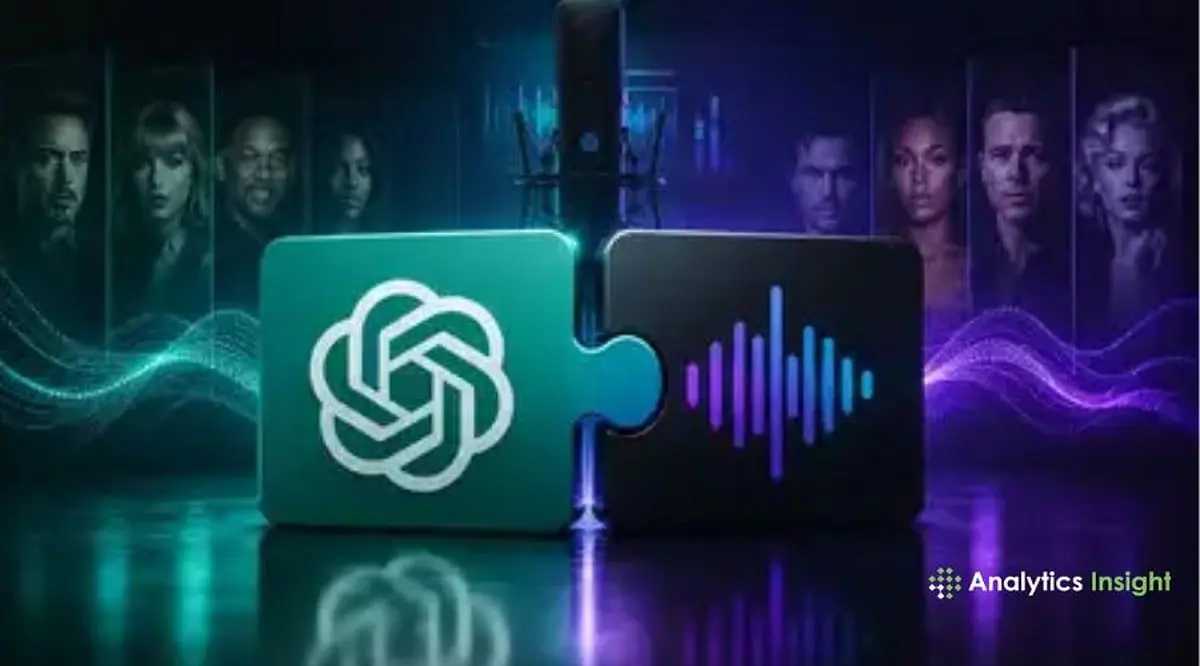
Source: Analytics Insight
Voice Cloning Technology Raises New Questions
Before joining OpenAI, Weights.gg operated a consumer app called Replay that allowed users to clone voices, including those of celebrities like Taylor Swift and Samuel L. Jackson
1
. Both celebrities have publicly opposed the use of AI to clone their voices, with Swift going as far as applying to the U.S. Patent and Trademark Office to trademark her voice and likeness. The platform became popular online as users created realistic voice clips, songs, and memes using AI-generated versions of celebrity and internet personalities2
. The acquisition has reignited discussions about legal issues surrounding AI-made audio and the rapid advancement of voice cloning capabilities.OpenAI's Cautious Approach to Advanced AI Audio Tools
Two years ago, OpenAI revealed it had developed the ability to replicate human voices with AI but chose not to release the technology as a precaution due to its advanced nature
1
. The Weights.gg deal demonstrates that the company has continued its work on voice AI behind the scenes, even as its public position remains unchanged. Sources indicate that OpenAI is unlikely to release a product similar to Weights.gg's consumer-facing app. Instead, employees from the acquired team have been reassigned to work across different parts of the company, suggesting the technology will be integrated into existing offerings rather than launched as a standalone product.Related Stories


Integration into Developer Tools and AI Agent Interaction
OpenAI has focused on weaving voice tech into other parts of its ecosystem. The company recently began offering third-party developers information on how to use OpenAI's application programming interface (API) to incorporate voice technology into their apps and services
1
. These applications include providing real-time translation services and enabling voice commands for AI agent interaction. In the last year alone, AI voice tools have become increasingly common across YouTube, gaming streams, podcasts, and music content creation2
. Some creators use these tools for entertainment, while others leverage them to accelerate content creation workflows.
Source: PYMNTS
The Indistinguishable Reality of AI-Generated Voices
Research reported by PYMNTS.com shows that AI has reached a point where AI-generated voices and genuine ones are indistinguishable
1
. "AI-generated voices are all around us now," said Nadine Lavan, senior lecturer at Queen Mary University of London. "We've all spoken to Alexa or Siri, or had our calls taken by automated customer service systems. Those things don't quite sound like real human voices, but it was only a matter of time until AI technology began to produce naturalistic, human-sounding speech." This technical milestone raises important questions about authentication, consent, and the potential for misuse as voice replication technology becomes more accessible. OpenAI's history with copyright issues, including those that arose from its now-shuttered video generation tool Sora, adds another layer of complexity to how the company will navigate the deployment of these advanced capabilities.References
Summarized by

Navi
[2]
Related Stories
Recent Highlights
1
Meta Unveils Muse Wonder Frontier AI Models, Claims Performance Matching OpenAI and Anthropic
Technology

2
IMF Report Warns AI Market Correction Could Spark Global Financial Crisis With $1.4T at Risk
Business and Economy

3
Eight States Sue OpenAI Over ChatGPT Safety Concerns and Unlawful Collection of Children's Data
Policy and Regulation
Recent Highlights
Today's Top Stories








Don’t drown in AI news. We cut through the noise - filtering, ranking and summarizing the most important AI news, breakthroughs and research daily. Follow topics that matter to you and stay ahead.


