58 Sources
[1]
Elon Musk has lost his lawsuit against Sam Altman and OpenAI | TechCrunch
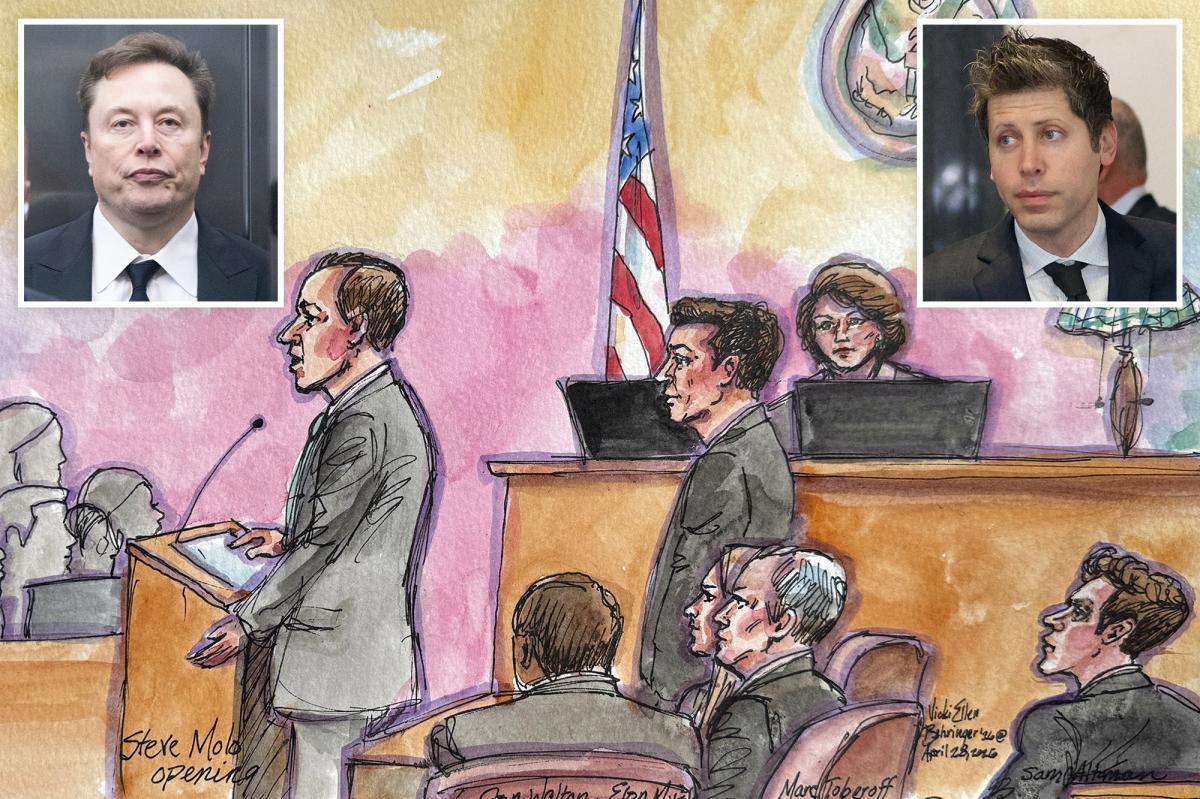
Elon Musk's claim that he was mistreated by his OpenAI cofounders failed after nine California jurors decided in a unanimous verdict that his lawsuits had been filed too late. Musk took Sam Altman, Greg Brockman, OpenAI and Microsoft to of "stealing a charity" by creating a for-profit affiliate to the frontier AI lab. Jurors, however, found that any harms that Musk suffered came before the deadline for filing his claims under the law. While the trial delved deeply into the melodramatic history of OpenAI and featured testimony from leading figures in Silicon Valley, it ultimately turned on fairly narrow questions of the law. The trial focused on whether and when Altman and the other defendants had made and broken promises to Musk, but the examination failed to convince jurors that he had a valid claim. "There was a substantial amount of evidence to support the jury's finding, which is why I was prepared to dismiss it on the spot," Judge Yvonne Gonzalez Rogers said after the verdict was delivered. The end of the case means that one major threat to OpenAI -- a potential restructuring -- is now off the table ahead of its reported IPO.
[2]
Elon Musk Loses Landmark Lawsuit Against OpenAI
Elon Musk suffered the worst defeat possible in his legal battle against OpenAI as a federal jury and a judge ruled he waited too long to bring his claims against the AI startup and its top executives, Sam Altman and Greg Brockman. The jury's decision was a nonbinding recommendation sent to US district judge Yvonne Gonzalez Rogers, though she immediately accepted it on Monday as her own, making it final. The nine-member panel delivered the unanimous verdict in an Oakland, California courtroom on Monday after deliberating for under two hours. They found that statutes of limitations expired well before Musk filed his lawsuit in 2024. Musk had hoped to persuade the jury that Altman and Brockman, with the help of Microsoft's cash, transformed OpenAI into an enormous company well beyond what was envisioned when the three of them and others founded it as a nonprofit nearly 11 years ago. Because the jury found the case wasn't filed on time, it didn't weigh in on Musk's three claims, including breach of charitable trust, unjust enrichment, and, against Microsoft, aiding and abetting. Musk, Altman, and Brockman were not present as the jury presented its verdict in Gonzalez Rogers' courtroom in Oakland, California. Attorneys for Musk and OpenAI were not immediately available for comment. But William Savitt, an attorney for OpenAI, had said last week that Musk's lawsuit and the ensuing trial had been a "gloriously" played out "pageant of hypocrisy." Musk, under court order not to tweet during the trial, has said little about it in recent weeks. Despite the disappointing semifinal result for Musk, the trial appears to have tarnished the public image of OpenAI and its top executives. New details emerged about Brockman's wealth and Altman's alleged history of dishonesty. Both were also pulled away from their day-to-day work for tens, if not hundreds, of hours to conduct depositions, prepare to testify, sit on the witness stand, and show face in court. Musk spent much less time in the courtroom than the OpenAI executives, about three days before never returning again. He even flew to China for President Donald Trump's state visit last week, though he technically could have been called to testify again on short notice. "I will say that it was a surprise to us to see that," Savitt told the media last week. "Instead of being in the jurisdiction where he filed the lawsuit ready to come in front of the jurors who he has caused to be impaneled, [he] decided to get on Air Force One and go to China." Though the case carried financial and emotional stakes, it was also a competition of bravado between two tech billionaires who broke up a brief partnership of convenience over an alleged leadership dispute, only to end up pursuing remarkably similar visions about the future of generative AI. Musk's bid to settle the lawsuit just before the trial started was rebuffed.
[3]
Elon Musk sued OpenAI and lost. But the core question of the case remains unanswered
On Monday, a nine-member federal jury in Oakland, California took less than two hours to dismiss Elon Musk's lawsuit against OpenAI and its chief executive Sam Altman. Crucially, the jury did not rule on the core claims of the case. These included whether OpenAI, the company behind the popular artificial intelligence (AI) chatbot ChatGPT, strayed from its founding mission and whether Altman and OpenAI's co-founder Greg Brockman enriched themselves at the expense of a charitable purpose. It decided only that Musk had waited too long to sue in relation to his core claims about breaches of a founding contract or breach of charitable trust. A victory for Musk could have neutered OpenAI, which in turn would have probably sent shockwaves through the entire AI sector given the company's dominant position developing the technology. Now, however, OpenAI has a clear path to take its next big step in the AI race, even though the key question at the core of the case remains unanswered: is OpenAI a nonprofit dedicated to humanity or a corporation dedicated to its shareholders? How it all started OpenAI was founded in December 2015 as a nonprofit entity - an AI research lab. Musk and a group of prominent entrepreneurs pledged US$1 billion to develop AI for the benefit of humanity, free of commercial pressure. Alongside Musk, the founding group included Altman, Brockman and computer scientist Ilya Sutskever. The organisation's charter committed to two key principles. First, developing artificial general intelligence safely and for the benefit of all of humanity. Second, developing the technology openly, meaning it would be open source. This would allow others to use their underlying models, code, and research freely. This was the deal Musk says he signed up for. And OpenAI claims it continues to honour this deal even today, despite more than US$20 billion in revenue in 2025. Since 2015, a lot has happened. And understanding these events is key to interpreting the jury's verdict. A very different deal By 2019, the original deal looked different. Given that training frontier AI models was extraordinarily expensive, Altman started to seek more cash. OpenAI created a capped-profit subsidiary where investors could earn up to 100 times their initial investment, with any extra money flowing back to the nonprofit parent. One of the first investors was Microsoft, which initially invested US$1 billion and more than US$13 billion over time. The nonprofit retained formal governance, the usual nonprofit rules applied, but the commercial subsidiary became the decision-maker. That same year, OpenAI released GPT-2. The model was released partially, in stages, rather than published as open source. This was the moment the "open" in OpenAI began to read differently. GPT-3 followed in 2020, and it was available only via a paid subscription. The inner workings of the model also remained secret. ChatGPT launched in November 2022, and reached 100 million users in a few days. Twelve months later, OpenAI's nonprofit board fired Sam Altman, citing a loss of confidence in his candour. This was what the governance structure was meant for: to protect the organisation's humanity-first mission, the board had the power to remove the chief executive. Yet, within five days, after pressure from Microsoft and the employees, Altman was back and the board was out. A new board that aligned with the commercially-driven enterprise took their seats. The mechanism built to keep OpenAI accountable to its charter was the one that lost. Whatever the "humanity claim" of the founding mission was supposed to mean, commercial interests prevailed. A sweeping reorganisation In October 2025, after nearly a year of negotiation with the attorneys general of California (where OpenAI is headquartered) and Delaware (where it is incorporated), the organisation completed a sweeping reorganisation. The nonprofit became the OpenAI Foundation, with the same mission: "to ensure artificial general intelligence benefits all of humanity". The for-profit became a public benefit corporation, called OpenAI Group PBC. Unlike a conventional corporation, it is required to advance its stated mission and consider the broader interests of all stakeholders. The OpenAI Foundation holds a 26% stake in the new public benefit corporation and retains some contractual and special shareholder governance rights. Microsoft owns 27% and the remaining 47% is owned by other investors and employees. Thus the Foundation controls the public benefit corporation in form. Yet in practice, OpenAI is now a profit-seeking enterprise with a charitable shareholder. So while a number of nonprofit governance guardrails are in place, significant deficiencies remain. The unanswered question OpenAI is now openly preparing for a public listing at the end of 2026, at an expected valuation at up to US$1 trillion, even as it defends dozens of pending lawsuits, ranging from intellectual property infringement and consumer protection claims to a wrongful death suit. This is the part the jury did not address. A verdict on a statute of limitations is a statement about timing, not purpose. It tells us when a complaint can be heard. It does not tell us whether the complaint was right. And in this particular case, it demonstrates the difficulty in relying on private individuals to enforce non-profit governance norms. Musk has said he will appeal the verdict. The appeal court will almost certainly limit itself to a narrow legal question - perhaps when a reasonable plaintiff should have understood OpenAI had changed. The larger question about whether OpenAI is a nonprofit dedicated to humanity or a corporation dedicated to its shareholders, has now been deferred indefinitely - at least in a legal context. The public, however, will no doubt make up its own mind about a company now worth hundreds of billions of dollars.
[4]
Musk's failed court attack on OpenAI could leave lasting scars on CEO's reputation
OAKLAND, California, May 19 (Reuters) - OpenAI Chief Executive Sam Altman beat Elon Musk in federal court on Monday, but the win came at the cost of hearing his former colleagues call him a liar - repeatedly - under oath. A federal jury threw out former OpenAI co-founder Musk's case that the nonprofit was improperly turned into a for-profit corporation, ruling that the world's richest person waited too long to sue in a verdict that could be difficult to appeal. That simplifies the path to an initial public offering by OpenAI. The lawsuit risked the company's being forced to pay out about $150 billion and oust its leadership. Still, the portrait of Altman could undermine the trust of investors being asked to pony up for a potential $1 trillion initial public offering. Altman, the public face of the ChatGPT maker, endured days of testimony from former colleagues and other witnesses who described him as an untrustworthy leader. During his cross-examination of Altman, Musk's lawyer cited comments from eight witnesses, including Musk, who said Altman misled or lied to others. Altman defended himself in response, testifying, "I believe I am an honest and trustworthy businessperson." "This verdict removes the single largest legal threat to a public offering," said James Rubinowitz, a trial lawyer and AI specialist. "That said, even in victory, OpenAI walks away with the worst documentary evidence about its governance now permanently in the public record. Every institutional investor reading this trial transcript is doing their own credibility analysis on Altman before they buy in." HONESTY AT CENTER OF CASE During the trial, OpenAI's lead lawyer told reporters that the Musk team had resorted to a "character assassination" of Altman rather than show evidence of their claims. One OpenAI official, Joshua Achiam, testified of Altman: "In all of my direct experiences with him, I feel that he's been honest with me." Musk claimed that OpenAI's leaders broke their agreement to keep OpenAI a nonprofit working for the benefit of humanity. Testimony at trial was a faceoff between billionaires. Musk was one of several former colleagues and associates to call Altman a liar, and the theme of honesty was core to his case. OpenAI went much further, portraying Musk as desiring control of the enterprise. "Sam Altman's credibility is directly at issue in this case," Musk's lawyer, Steven Molo, said in his closing argument. "If you don't believe him, they cannot win." Jurors needed less than two hours to reach a verdict, focusing on the timing of Musk's lawsuit. Item 1 of 2 CEO of OpenAI Sam Altman arrives at the courthouse on the day of the trial in Elon Musk's lawsuit over OpenAI for-profit conversion at a federal courthouse in Oakland, California, U.S., May 12, 2026. REUTERS/Manuel Orbegozo/File Photo [1/2]CEO of OpenAI Sam Altman arrives at the courthouse on the day of the trial in Elon Musk's lawsuit over OpenAI for-profit conversion at a federal courthouse in Oakland, California, U.S., May 12,... Purchase Licensing Rights, opens new tab Read more LEADERSHIP DOUBTS NOT NEW While the trial was Altman's biggest, most sustained moment in the spotlight, some of the accusations were not new. OpenAI's board ousted him in 2023, questioning his ability to lead, only to bring him back less than a week later after much of the company threatened to exit. During the trial, OpenAI's lawyers noted that the vast majority of the company signed a letter supporting his reinstatement. Much of the trial evidence, though, was unflattering. This included reams of documents that showed he had billions of dollars of investments in companies that worked with OpenAI, drawing questions of conflict of interest. Altman said generally he recused himself when there might be conflicts, and that he did not believe he misled people in business. OpenAI Chairman Bret Taylor, who joined the board in late 2023 after Altman had been reinstated, testified that Altman had been forthright about his conflicts. Taylor said Altman sent a note detailing his conflicts before the board updated its conflicts of interest policy. INTERNAL MEMOS REVEALED In September 2022, former OpenAI Chief Technology Officer Mira Murati detailed several problems with Altman's leadership style, according to a memo, opens new tab released as part of the trial. "The constant panic around our projects, people, goals etc generates chaos and churn," Murati wrote in a memo called "Feedback from Mira to Sam (only Sam had access to this)." "We talk about focus, but in practice our approach is do-everything and do it fast." In a video deposition shown to jurors, Murati paused for a long time when asked whether by the autumn of 2023 she thought Altman was honest. "Not always," she said. Murati added that Altman undermined her work and pitted other OpenAI executives against one another. OpenAI co-founder and former board member Ilya Sutskever testified he had collected examples of Altman's leadership shortfalls for more than a year. OpenAI avoided the worst outcome, Wedbush analyst Dan Ives wrote after the verdict was reached. He called the verdict a "huge win" for Altman and OpenAI "despite the scrapes and bruises on Altman's persona and leadership." Reporting by Deepa Setharama in Oakland, California; Additional reporting by Juby Babu in Mexico City; Editing by Peter Henderson and Matthew Lewis Our Standards: The Thomson Reuters Trust Principles., opens new tab
[5]
Could anything but profit steer AI? The OpenAI trial offered clues but no verdict
The trial pitting Elon Musk against OpenAI CEO Sam Altman made clear the two billionaires agreed on one thing: building artificial intelligence would require significant resources -- and enormous amounts of money. It may seem obvious now, as an AI-obsessed stock market helps finance a global construction boom of chipmaking factories and energy-hogging data centers to keep chatbots running, but testimony and evidence showed how people with outsized control of the AI industry were privately debating its costs nearly a decade ago. "Even raising several hundred million won't be enough," Musk said in a 2018 email to Altman and other OpenAI co-founders about what he increasingly saw as a futile attempt to compete with Google. "This needs billions per year immediately or forget it." The soaring costs factored into the trajectory of OpenAI, which began in 2015 as a nonprofit dedicated to developing AI for the common good and is now a capitalistic enterprise valued at $852 billion. As San Francisco-based OpenAI and other AI companies move toward historically large Wall Street debuts, the trial also raised questions about whether anything but commercial interests can steer AI's future. It is possible to build big things only with nonprofit money, but in the case of OpenAI's early years, the uncertainty around AI also made it a risky investment, said Karan Girotra, a professor of operations, technology, and innovation at Cornell Tech. Now, he said, investment in AI is no longer speculative. "Now it's traditional investment in something we know works," Girotra said. "People want your car, you need to build the factory ahead of demand." In his lawsuit, Musk accused OpenAI of betraying its charitable mission for building AI, saying Altman and fellow co-founder Greg Brockman went behind his back and unjustly enriched themselves. OpenAI, in turn, has said Musk supported plans to form a for-profit company and filed his 2024 lawsuit to undercut the ChatGPT maker's success as he built his own AI company, xAI. The federal jury in Oakland, California, never got to deliver a verdict on the merits of the case, determining Musk's lawsuit missed a statutory deadline and dismissing it Monday after a three-week trial. But the trial put on record details of internal battles that presaged today's societal and political debates over AI's impacts and costs. "It's sort of hard to imagine at this point, given where AI has gotten," testified Kevin Scott, Microsoft's chief technology officer, as he explained to jurors why his company opted to invest billions of dollars to help build OpenAI's technology after founding donor Musk quit OpenAI's board in 2018. "It was before ChatGPT," Scott said. "It was before these remarkable things that are happening right now and so most of the people at Microsoft were very skeptical about whether or not all of these claims were going to materialize into reality." Microsoft, a defendant in the lawsuit, at the time was also looking for a way to compete with Google in AI research. OpenAI told Microsoft what they needed was more data and more computing resources -- and if they had that, their AI systems would grow far more powerful. "The things that they wanted and ultimately that we helped them do were very capital-intensive projects like building giant data centers, full of very expensive computers and networks," Scott said. It remains in dispute how much profit was the prime motivator for the shift to OpenAI's capitalistic enterprise, which is not yet profitable but likely headed for an initial public offering as soon as later this year. What is clear, however, is how the costs involved constrained the company's options. More than five years before OpenAI introduced ChatGPT, the company had a breakthrough when it taught an AI system to beat professional players of Dota 2, a multiplayer video game featuring ogres, centaurs and other fantastical creatures. "Honestly, the world reacted to it somewhat less than I thought they should have, but to us internally, it really felt like a moment where we had shown that our technology, using something called reinforcement learning, could take on an enormously complex task," Altman testified. OpenAI's livestreamed victory against a top Dota 2 player at a Seattle competition in 2017 made the tiny nonprofit a major contender against Google, which was then seen as the leader in AI research. It also led to some soul-searching about how OpenAI could compete when it was a nonprofit, largely dependent on Musk and other donors. "He was impressed," Altman said of Musk. "And then immediately after the Dota win, Mr. Musk said he thought we really need to get more serious and figure out how to get way more capital." For another co-founder and OpenAI's former chief scientist, Ilya Sutskever, the Dota victory was the beginning of discussion about whether OpenAI should create a for-profit company to more easily raise money. "The realization is that to make progress in AI, you need a big computer," Sutskever told jurors. "And you need the big computer because the brain is a big computer. You have a hundred billion neurons and a hundred trillion synapses in the brain." What followed was a battle of wills -- with Altman and Musk vying for leadership of OpenAI and Musk later trying to fold the AI laboratory into his car company Tesla. The other OpenAI leaders resisted, and Musk eventually quit. ___ AP Technology Writer Barbara Ortutay contributed to this story.
[6]
Elon Musk loses OpenAI trial after jury says he waited too long to sue
Serving tech enthusiasts for over 25 years. TechSpot means tech analysis and advice you can trust. What just happened? Elon Musk isn't accustomed to losing, but the world's richest man just felt the sting of defeat in his trial against OpenAI, CEO Sam Altman, and President Greg Brockman. A federal jury said that Musk had waited too long to file his suit, which accused the defendants of violating an agreement to keep OpenAI as a charitable non-profit organization. Musk was one of the co-founders, backers, and initial board members of OpenAI. He claims that when he was approached by Altman and Brockman to help fund the startup in 2015, he was promised that it would be an open-source, not-for-profit company focused on safely creating artificial general intelligence (AGI) and countering the competitive threat from Google. Musk's 2024 lawsuit alleged that Altman and Brockman turned OpenAI into a profit-driven, closed-source AI firm whose relationship with Microsoft helped enrich its executives and partners. Musk was seeking damages and wanted Altman and Brockman removed from OpenAI. As the lawsuit stated: "OpenAI, Inc. has been transformed into a closed-source de facto subsidiary of the largest technology company in the world: Microsoft." The jury, which had been serving in an "advisory" capacity, took less than two hours to rule against Musk after a three-week trial in Oakland. US District Judge Yvonne Gonzalez Rogers agreed with the verdict and dismissed Musk's claims of breach of charitable trust and unjust enrichment as untimely. Musk's problem was the three-year statute of limitations. The jury didn't have to decide whether OpenAI really abandoned its founding mission, but only whether Musk knew enough about the company's move toward a for-profit structure more than three years before he sued in 2024. Jurors decided he did. Microsoft also emphasized the timing issue after the verdict. "The timeline in this case has long been clear," the company said, welcoming the decision to dismiss Musk's claims as "untimely." That timing problem was especially damaging because Musk left OpenAI in 2018, the company created its capped-profit arm in 2019, and Microsoft's multibillion-dollar relationship with the ChatGPT maker was hardly a secret by the time he filed. Musk is not taking the loss quietly, of course. Writing on X, he said the judge and jury "never actually ruled on the merits of the case," calling the decision "a calendar technicality." He added that he would appeal. OpenAI has long argued that Musk's claims are baseless and part of a campaign against the company after he launched his rival AI startup, xAI. The ruling removes a legal headache for Altman's firm, though Musk's reputation for holding a grudge means this feud is unlikely to disappear soon.
[7]
The Altman-Musk Trial Was a Waste of Everyone's Time
Sam Altman did not seem to be having a good time. During the many days that he spent inside an Oakland courtroom, the normally cheery CEO of OpenAI -- a guy who tends to be chipper even when declaring AI's existential risks to humanity -- appeared anxious, even distraught. When he listened to the proceedings in Elon Musk's lawsuit against him, a weekslong trial that threatened to remove Altman from OpenAI's board and functionally destroy the company, he frequently concealed his mouth with his palm, fidgeted with a water bottle, and leaned forward and stared at the floor. He kept looking back at the rows of reporters behind him. On the witness stand Tuesday, Altman repeatedly noted how Musk's actions had "annoyed" him. Musk, who helped form OpenAI as a non-profit in 2015, alleged that Altman and OpenAI had violated the organization's founding principles by seeking profits. He was requesting, among other remedies, more than $150 billion in damages, which Musk said he would donate to the OpenAI nonprofit. This morning, a nine-person jury delivered a unanimous verdict after less than two hours of deliberation: Whether or not OpenAI had done something wrong, Musk sued outside the statute of limitations, two to three years depending on the charge. And Musk could have known of any alleged wrongdoing, the jury found, well before. Altman has been granted some respite: OpenAI and the AI industry will continue along, unphased, at least until Musk appeals the decision. (A second portion of the case, related to claims that Musk made under antitrust law, remains unresolved, although the presiding judge has said that his are "not very good claims." Musk's lawyers and OpenAI did not immediately respond to a request for comment.) OpenAI swept the legal argument. But in another sense, basically everybody involved in Musk v. Altman came away looking petty, short-sighted, deceptive, or ignorant. During the dozens of hours I spent in the courtroom, sometimes lining up as early as 5 a.m. to secure a seat, there wasn't much substance to be found. Frankly, at the end of it all, everyone had good reason to be annoyed. Musk came off the worst in this trial, by far. The question before the jury was whether OpenAI's for-profit arm had somehow broken a legal promise the organization made to Musk at the organization's founding: "It's not okay to steal a charity," as Musk told the jury on the first day. This was a farcical notion based on any number of pieces of evidence and testimony presented at trial, not least of which being that in 2017, Musk himself was involved in discussions for OpenAI to raise more money by making a parallel for-profit arm. Coming into the trial, this was already an uphill battle for Musk and his lawyers. But even by those low expectations, the entire affair was a debacle. As a witness, Musk was impish. When asked simple questions by William Savitt, one of the attorneys representing OpenAI, Musk rambled and avoided the issue at hand. When the lawyers asked for a yes or no, he bristled: "The classic reason why you cannot always answer a yes-or-no question," Musk said from the witness stand, "is if you ask a question, 'Have you stopped beating your wife?'" ("We're not going to go there," U.S. District Judge Yvonne Gonzalez Rogers interjected.) Later, Musk accused Savitt of asking improper questions, after which Gonzalez Rogers sharply cut in, telling the world's richest man, "You're not a lawyer." Musk conceded but, after a pause, grinned and added, "Well, technically I did take Law 101." When Musk answered questions, he argued that OpenAI had sacrificed safe and responsible AI development by prioritizing profits. But when cross-examined about AI safety, Musk was unable to articulate any coherent arguments. Savitt noted that Musk's xAI, a competitor to OpenAI, is a for-profit company, and asked if xAI presents identical dangers. "Yes," Musk said, "I think it creates some safety risk." Savitt then asked about basic AI-safety measures. Musk, who earlier had testified that he wants to avoid an AI "Terminator outcome," was clueless. Asked about safety cards, for instance, Musk responded, "Safety card? Why would it be a card?" These are years-old, widely used, industry-standard documents that anybody who has worked at an AI company in the past five years should be intimately familiar with. The following day, in a particularly withering exchange, Savitt went down the list of Musk's other enterprises. Did he think that Tesla was making the world better? "Yes," Musk said. And is Tesla a for-profit company? "Yes." Savitt then asked these two questions about SpaceX, Neuralink, and X. For each of his businesses, Musk responded yes and yes. The same man who has a trillion-dollar compensation package from Tesla and may receive another from SpaceX was suing OpenAI for trying to make a lot of money. I wondered to myself, What are we doing in this courtroom again? Despite winning in court, Altman didn't come off all that much better. The first question from Steven Molo, one of Musk's lawyers, to Altman was "Are you completely trustworthy?" With a puzzled look, the OpenAI CEO responded, "I believe so." Molo asked if he had misled business partners, and Altman, after a pause, said, "I believe I am an honest and trustworthy business person." Altman's evasive answers were significant because he has a long history of being accused by colleagues and business partners of being deceptive. Ilya Sutskever, a co-founder and former chief scientist of OpenAI, testified that during his time at the company, he had felt that Altman created an "environment where executives don't have the correct information," which is not conducive to AI safety. Multiple former OpenAI board members testified to similar effect in explaining why, in late 2023, they briefly fired Altman. (For his part, Altman wrote in a recent blog post that he is "not proud of handling myself badly in a conflict with our previous board that led to a huge mess for the company.") When the judge excoriated OpenAI's legal team for making contradictory arguments in separate lawsuits that she is hearing, Musk smiled and nodded. Musk's legal team essentially hung its case on impugning Altman's integrity, and Molo told the jury in his closing argument to imagine that they were walking over a bridge: "The bridge is built on Sam Altman's version of the truth," he said. "Would you walk across that bridge?" The many texts, emails, and internal documents released because of the lawsuit, and the sworn testimony of current and former OpenAI executives, were hardly flattering for the firm -- depicting a treacherous company culture that has nonetheless made its staff fantastically rich. Sutskever said that his stake in the company is worth some $7 billion, and Greg Brockman, OpenAI's president and another defendant in the lawsuit, said that his equity is worth some $30 billion. Altman, who previously told the Senate that he has no direct equity in OpenAI, testified that through an investment fund run by the start-up incubator Y Combinator (which Altman used to be president of), he has an indirect financial stake in the firm. The trial surfaced and produced countless other shenanigans: Musk apparently called an OpenAI employee a "jackass" for wanting to prioritize safety over speed, after which that employee was given a satirical trophy depicting a donkey's butt. (During his own testimony, Musk denied yelling at someone and said he would have used such a word only in jest.) In a diary entry, Brockman had written that it would be "wrong to steal the nonprofit from" Musk and that doing so would "be pretty morally bankrupt, and he's really not an idiot." Sutskever, a Yoda-like figure in the AI world, described AI progress from 2018 to now as "the difference between an ant and a cat." At the beginning of the trial, the judge had asked Musk to refrain from posting on social media about the trial as it unfolded, and he did show restraint. Immediately after the verdict, though, Musk posted on X: "The ruling by the terrible activist Oakland judge, who simply used the jury as a fig leaf, creates such a terrible precedent." To the extent that the trial could have actually been about the best way to develop AI for the benefit of humanity, and about whether OpenAI is honoring its founding pledge to do so -- well, it simply wasn't. For the most part, Musk and Altman -- billionaires who are perhaps the two most influential tech CEOs in the world -- were in essence asking their attorneys to debate whether making ungodly sums of money was acceptable. In a remarkable exchange during closing arguments, Gonzalez Rogers excoriated one of Musk's lawyers for misleading the jury: Molo, after attacking the bridge "built on Sam Altman's version of the truth," said that Musk is not asking for money from OpenAI. The district judge pointed out that he, in fact, was asking for money. "You need to retract that statement, or you need to drop your claim for billions of dollars," the judge said. Musk's lawyers did not drop the demand.
[8]
Jury tosses Elon Musk's lawsuit against OpenAI and its boss Sam Altman
A California jury has tossed out Elon Musk's high-profile lawsuit against OpenAI and its boss Sam Altman. In a unanimous verdiect, the case was thrown out because Musk filed his lawsuit after a statute of limitations to bring such claims had expired. Musk had accused Altman of breaching a non-profit contract by shifting the ChatGPT-maker to a for-profit company after Musk donated $38m (£28.5m). Musk had argued Altman deceived him by accepting his charity and then reneging on OpenAI's original non-profit mission to develop artificial intelligence (AI) technology for the benefit of humanity. Those witnesses included Musk and Altman themselves, plus Satya Nadella, the chief executive of Microsoft, which Musk accused of helping in the scheme. Musk's claims against Microsoft were dismissed as a matter of law given the jury's findings on the two claims against OpenAI. The pair started OpenAI in 2015 but Musk left in 2018 after his co-founders denied him control. Sign up for our Tech Decoded newsletter to follow the world's top tech stories and trends. Outside the UK? Sign up here.
[9]
Elon Musk loses lawsuit against Sam Altman and OpenAI as jury finds claims were filed too late
Elon Musk has lost his lawsuit against Sam Altman, Greg Brockman, OpenAI, and Microsoft. A nine-person jury in Oakland returned a unanimous verdict on Sunday finding that Musk's claims had been filed too late under the statute of limitations, ending the most consequential corporate governance trial in the history of artificial intelligence without reaching the merits of whether OpenAI's leaders had "stolen a charity." The verdict is advisory, meaning Judge Yvonne Gonzalez Rogers of the Northern District of California will make the final determination on liability. But she indicated before deliberations began that she would very likely follow the jury's recommendation. If she does, Musk's bid to remove Altman from OpenAI, unwind the company's $852 billion restructuring, and direct up to $134 billion in disgorgement to OpenAI's nonprofit foundation is effectively over. The jury's task was not to determine whether Altman and Brockman had betrayed OpenAI's founding mission. It was to answer a narrower question first: did Musk file his lawsuit within the statutory time limit? Musk departed OpenAI's board in 2018. He did not file suit until February 2024, a six-year gap that his legal team struggled to explain across three weeks of trial. Musk testified that he only discovered the full extent of OpenAI's departure from its nonprofit mission in 2022, when Microsoft was preparing to invest $10 billion. OpenAI's attorneys argued that the relevant events, including the creation of a for-profit subsidiary in 2019 and Microsoft's initial $1 billion investment that same year, were public knowledge well within the filing window. The jury agreed with OpenAI. All nine jurors found that the harms Musk alleged occurred before the deadline for filing his claims, making the lawsuit untimely regardless of its substance. The unanimous nature of the verdict is notable: not a single juror accepted Musk's argument that the statute of limitations clock should start from his later discovery of the alleged misconduct. The trial had been framed by both sides as a case that would define AI governance for a decade. Musk's lead counsel Steven Molo opened the trial by telling jurors that Altman and Brockman "stole a charity," while OpenAI attorney William Savitt countered that Musk "didn't get his way at OpenAI" and filed suit only after founding his own competing AI company, xAI, in 2023. Had the case reached the merits, the jury would have weighed two civil claims: breach of charitable trust and unjust enrichment. Musk donated approximately $44 million to OpenAI between 2015 and 2017, and argued that those contributions were effectively misappropriated when the company converted from a nonprofit research lab into a for-profit entity now valued at hundreds of billions of dollars. He was seeking Altman's removal from leadership, the unwinding of OpenAI's October 2025 recapitalisation into a public benefit corporation, and up to $134 billion in disgorgement from OpenAI and Microsoft. Musk testified over three days that the case would set a precedent for charitable giving in America, renouncing any personal financial benefit and asking that damages be directed to OpenAI's nonprofit arm. OpenAI's defence argued that Musk himself had pushed to create a for-profit subsidiary as early as 2017, on the condition that he control it, and that when that demand was refused, he left the board. Three weeks of testimony produced a parade of Silicon Valley figures. Altman, Brockman, Microsoft CEO Satya Nadella, former OpenAI chief scientist Ilya Sutskever, and Musk himself all took the stand. The most damaging piece of evidence for OpenAI was a personal journal entry by Brockman, written in November 2017, in which he acknowledged that the company could not credibly claim commitment to a nonprofit structure if it was planning to become a benefit corporation months later. Judge Gonzalez Rogers had cited that entry directly in her January 2026 ruling allowing the case to proceed to trial. Sutskever's testimony complicated both sides. The former chief scientist, who played a central role in Altman's brief ouster from the CEO position in November 2023, testified that he had spent months gathering evidence of what he called Altman's pattern of deception, then later reversed course and said he regretted reinstating Altman. Altman, under cross-examination, acknowledged he had "told the occasional lie," while five witnesses described him as dishonest. OpenAI also called Shivon Zilis, the mother of four of Musk's children, whose testimony did not corroborate Musk's account of the founding commitments. And Musk himself was absent for closing arguments on 14 May, having joined President Trump's delegation to Beijing, a fact OpenAI's attorneys used pointedly before the jury. The statute of limitations verdict, if adopted by Gonzalez Rogers, clears a significant legal obstacle for OpenAI at a critical moment. The company completed its conversion to a public benefit corporation in October 2025, with the original nonprofit retaining approximately 26 per cent ownership and Microsoft holding 27 per cent. It is preparing for a public market debut at a valuation approaching $1 trillion. A ruling that unwound that restructuring would have introduced immediate uncertainty over the company's governance, its ability to raise capital, and the enforceability of safety conditions that California Attorney General Rob Bonta extracted as part of approving the conversion. The verdict also sets a practical precedent, even if a narrow one. By finding that Musk's claims were time-barred, the jury avoided establishing whether donors to nonprofit AI labs have standing to challenge for-profit conversions under charitable trust law. That question, which legal scholars had described as the central governance issue of the case, remains unanswered. The California attorney general had already declined to join Musk's suit, and the conventional legal position is that enforcement of charitable trust obligations rests with state authorities, not individual donors. The loss is a significant setback for Musk, who invested considerable personal capital, both financial and reputational, in the trial. He spent three days on the stand, called himself "a fool" for funding OpenAI, and framed the case as a defence of charitable institutions against corporate looting. The jury's rejection was not on the merits of that argument but on the procedural ground that he waited too long to make it. Musk's own AI company, xAI, which he founded in 2023, has been valued at approximately $97 billion and recently merged with SpaceX. OpenAI's attorneys argued throughout the trial that the lawsuit was a competitive tactic designed to slow a rival, a characterisation Musk denied but that the timing of his legal filings did little to dispel. Whether Musk appeals the verdict or accepts it will depend on his legal team's assessment of whether the statute of limitations finding can be challenged on appeal, a question that turns on whether the jury's factual determination about when Musk knew of the alleged harms is reviewable. For now, the outcome is clear. The most expensive and most watched AI trial in history ended not with a ruling on whether OpenAI betrayed its mission, but with a finding that the man who helped create that mission waited too long to complain about it.
[10]
Jury finds Musk waited too long to sue OpenAI and Microsoft, clearing defendants in landmark AI case
A jury ruled unanimously Monday that Elon Musk waited too long to file his lawsuit against OpenAI, Sam Altman, and Microsoft, finding the defendants not liable on all claims after less than two hours of deliberation. The nine-person jury found Altman, co-founder Greg Brockman, and OpenAI not liable on the breach of charitable trust and unjust enrichment claims. On the same statute-of-limitations grounds, the jury rejected Musk's claim that Microsoft aided and abetted a breach of OpenAI's charitable trust. The verdict, reached on the first morning of deliberations, caps a three-week trial in federal court in Oakland that drew testimony from some of the most prominent figures in the tech industry and threatened to reshape the AI landscape. Steven Molo, a lawyer for Musk, reportedly said in court that he was preserving the right to appeal but had not yet decided how to proceed. Musk co-founded OpenAI in 2015 as a nonprofit dedicated to the safe development of artificial intelligence, contributing an estimated $38 million before leaving the board in 2018. He filed suit in 2024, claiming Altman, Brockman, and others had transformed OpenAI into a for-profit venture, betraying the mission he helped fund. Microsoft, which has invested more than $13 billion in OpenAI since 2019, was later added as a defendant. The three claims that went to trial are breach of charitable trust and unjust enrichment against OpenAI, Altman, and Brockman, and aiding and abetting breach of charitable trust against Microsoft. The nine-person jury's verdict is advisory; U.S. District Judge Yvonne Gonzalez Rogers will make the final determination on liability. The trial ran for three weeks in federal court in Oakland, with testimony from Musk, Altman, Brockman, former OpenAI chief scientist Ilya Sutskever, Microsoft CEO Satya Nadella, and Microsoft CTO Kevin Scott, among many other witnesses called by the parties in the case. Internal emails, text messages, and deposition transcripts revealed the inner workings of the Microsoft-OpenAI partnership, including Nadella and other Microsoft executives weighing in on the composition of OpenAI's board during the crisis that briefly ousted Altman as CEO in November 2023. A central exhibit for Musk's case was a March 2018 email in which Scott questioned whether OpenAI's donors knew about its commercial plans, writing that he couldn't imagine they had funded an open effort "so that they could then go build a closed, for profit thing on its back." Microsoft went on to invest billions anyway. Scott testified that he wrote the email as a skeptic evaluating the deal, not raising an alarm about its mission -- and that he had donor Reid Hoffman, not Musk, in mind. In closing arguments, Microsoft's attorney Russell Cohen of Dechert told jurors the email showed only that "Microsoft took time to get answers to those questions before entering a risky and important partnership." A key defense argument across both closing days centered on a September 24, 2020 tweet in which Musk wrote that OpenAI had come to "seem like the opposite of open" and appeared "essentially captured by Microsoft." Cohen argued the post proved Musk believed his alleged promises were broken years before he filed suit -- potentially putting his claims outside the three-year statute of limitations. He closed his argument by urging jurors to find the claims time-barred. "We just ask you to remember one thing, the tweet," Cohen said, asking them to find that the statute of limitations prevents Musk from making the claims against Microsoft. On the opening day of trial, Microsoft and OpenAI announced an amended partnership, making Microsoft's IP license non-exclusive, freeing OpenAI to serve products on any cloud provider, and ending Microsoft's revenue-share payments to OpenAI. Amazon moved the next day to bring OpenAI's models to its cloud platform. Musk has asked the judge to remove Altman and Brockman from their roles at OpenAI, unwind the company's 2025 conversion to a for-profit public benefit corporation, and return what he calls wrongful gains to the OpenAI nonprofit. His damages expert initially put the combined figure as high as $134 billion. The judge questioned those numbers, and the remedies phase is being heard separately.
[11]
Key moments in the Musk vs OpenAI trial
May 18 (Reuters) - Elon Musk failed to convince a jury on Monday that OpenAI's CEO Sam Altman and President Greg Brockman broke their agreement to maintain the maker of ChatGPT as a nonprofit to benefit humanity. The jury decided Musk waited too long to sue. Musk had sought about $150 billion in damages from OpenAI and Microsoft, a major investor, to be paid to OpenAI's nonprofit. Musk also sought the removal of Altman and Brockman. Below are key moments from the three-week trial: OLD CLAIMS The OpenAI defendants had argued that Musk knew years ago about plans to create a for-profit entity to help raise investment and funding needed to develop artificial intelligence. Musk had a three-year statute of limitations to sue, and OpenAI's lawyers said his August 2024 lawsuit came too late because he knew several years earlier about OpenAI's growth plans. Sarah Eddy, a lawyer for the OpenAI defendants, said Musk should have filed the lawsuit in August 2021. On Monday, the jury unanimously sided with OpenAI, ending the trial. CAN'T STEAL A CHARITY Musk repeatedly described OpenAI as a charity and accused Altman and Brockman of abandoning the company's mission to be a benevolent steward of AI for humanity and transforming the nonprofit into a profit-seeking juggernaut. "It was specifically meant to be for a charity that does not benefit any individual person. I could've started it as a for-profit and I specifically chose not to," Musk testified. "There's nothing wrong with having a for-profit organization, you just can't steal a charity." "If we make it OK to loot a charity, the entire foundation of charitable giving in America will be destroyed," Musk testified on the first day of the trial. "That's my concern." BATTLE FOR CONTROL The OpenAI defendants disputed Musk's claim that he wanted OpenAI to remain a nonprofit and tried to portray Musk as motivated by a desire to take control of OpenAI. "What he cares about is Elon Musk being on top," William Savitt, a lawyer for OpenAI and Altman, said in his opening statement. "We are here because Mr. Musk didn't get his way." Altman recalled Musk once demanding a 90% stake in OpenAI and also proposing a merger between OpenAI and Musk's electric car company Tesla (TSLA.O), opens new tab, which Musk said would have provided the massive funding OpenAI needed. OpenAI's chairman, Bret Taylor, testified that the company received a formal takeover offer from a consortium led by Musk's rival company xAI in February 2025, six months after Musk sued. "I was surprised," Taylor said. "This proposal was to acquire this nonprofit by a group of for-profit investors, which felt contradictory to the spirit of the lawsuit." MONEY FOR MARS Brockman testified that Musk's real aim was control of OpenAI to help him raise the enormous sums he needed to establish a colony on Mars. "He said he needed $80 billion to create a city" on the red planet, Brockman said. The board of SpaceX, which Musk founded, approved in January a plan to award Musk 200 million super-voting restricted shares if its market value reaches $7.5 trillion and it creates a permanent colony on Mars with at least 1 million people, according to a securities filing. 'WE ALL COULD DIE' Musk testified that he learned from discussions with Larry Page that the Google founder lacked concern about AI safety, which led to the creation of OpenAI. Musk testified that he asked Page what would happen if AI wiped out humans. "He said that would be fine so long as artificial intelligence survives. I said that was insane, that's just crazy." The two legal teams sparred before the trial over Musk's interest in questioning an expert witness about extinction risk of AI, something OpenAI opposed. "Extinction risk is a real problem. This is a real risk. We all could die," said Musk's lawyer Steven Molo. U.S. District Judge Yvonne Gonzalez Rogers limited the scope of the expert's testimony and said that she thought "it's ironic that your client, despite these risks, is creating a company that's in the exact space." ATTACKS ON CREDIBILITY In his closing argument, Musk's lawyer Steven Molo told jurors that five witnesses, including Musk, former OpenAI board members and former OpenAI Chief Scientist Ilya Sutskever, testified that Altman was a liar. Molo also noted that during cross-examination, Altman did not say yes unequivocally when asked if he was completely trustworthy and did not mislead people in business. "Sam Altman's credibility is directly at issue in this case," Molo said. The OpenAI defendants attacked Musk's claims that his early role and contributions were essential to the company's success. "Mr. Musk may have the Midas touch in some areas, but not in AI," said William Savitt, a lawyer for OpenAI. "To succeed in AI, as it turns out, all Mr. Musk can do is come to court." The OpenAI defendants argued that what Musk wanted was control and he was told in 2017 that OpenAI would need financing that came with being a for-profit. Savitt accused Musk of having "selective amnesia." Reporting by Kenrick Cai, Deepa Seetharaman, Jonathan Stempel; writing by Tom Hals; Editing by Noeleen Walder, Nick Zieminski, and Peter Henderson Our Standards: The Thomson Reuters Trust Principles., opens new tab
[12]
OpenAI defeats Elon Musk after jury rules lawsuit came too late
A federal jury in California on Monday rejected Elon Musk's lawsuit against OpenAI, ruling that the billionaire entrepreneur waited too long to file claims against the artificial intelligence company he helped create. The unanimous verdict cleared Elon Musk, Sam Altman, Greg Brockman, OpenAI, and Microsoft of liability after a three-week trial in Oakland, California. Jurors reached a decision in less than two hours after deliberations began Monday morning. The panel found that Musk filed the lawsuit after the statute of limitations had expired, according to reports from the courtroom.
[13]
Jury dismisses all claims in Elon Musk's lawsuit against OpenAI CEO Sam Altman
OAKLAND, Calif. - A jury in California took less than two hours to decide that Elon Musk waited too long to file a lawsuit against his one-time business partner Sam Altman over the direction he's steered the artificial intelligence company OpenAI since the two had a falling out nearly a decade ago. In a unanimous decision, the nine-member advisory jury said Musk was beyond the statute of limitations when he launched his case in 2024. Judge Yvonne Gonzalez Rogers, of the U.S. District Court for the Northern District of California, agreed, tossing the case out. "I've always said I would accept the jury's verdict," Gonzalez Rogers said after issuing her decision. "I think there's a substantial amount of evidence to support the jury's finding." The decision brings a swift end to a three-week trial that laid bare the fears and ambitions that led two of Silicon Valley's biggest personalities to team up 11 years ago to launch OpenAI, the maker of ChatGPT, and then to part ways after a dispute over how to run it. In determining that the suit was filed too late, the jury sidestepped questions at the heart of Musk's case accusing Altman and co-founder Greg Brockman of committing a "breach of charitable trust" by allegedly jettisoning OpenAI's founding mission, and then profiting from the decision -- claims they disputed in court. OpenAI was established in 2015 as a nonprofit aiming to create advanced AI for the benefit of humanity -- a mission born out of a shared concern among the founders about the potentially negative consequences of AI being controlled by any one person or for-profit company. But by 2017, the founders were convinced they needed to set up a for-profit arm of OpenAI to raise money and attract researchers in order to be competitive. Musk wanted control, but the others disagreed, and he left the board in 2018. In court, he claimed that Altman "stole a charity" by creating a for-profit entity that became, in his words, "the main thing" at OpenAI. Lawyers for OpenAI argued that Musk in fact supported the creation of a for-profit subsidiary with the goal of attracting big investments. They argued that, rather than being motivated by a commitment to OpenAI's original mission, Musk was unhappy that it did so well without him. A year and a half before suing, Musk launched xAI, a for-profit AI company, and OpenAI's lawyers said his lawsuit was an attempt to hurt a competitor. Musk also sued Microsoft for aiding OpenAI through investments totaling $13 billion between 2019 and 2023. That claim was also dismissed. Musk's lead lawyer had argued that Altman and his colleagues treated the nonprofit like a "shell" after the founding of the for-profit subsidiary in 2019, shifting employees and intellectual property into the for-profit. After OpenAI made a $10 billion deal with Microsoft in 2023, Musk attorney Steven Molo argued last week in court, the company abandoned its commitment to open sourcing and safety, and instead "enriched investors and insiders." In addition to helping found OpenAI, Musk was an early source of funds, providing $38 million over the course of several years to help get it off the ground. But Sarah Eddy, an attorney for OpenAI's defendants, argued in closing statements last week that that money came with no strings attached, meaning Musk "does not have a charitable trust to enforce." Whether OpenAI breached a charitable trust or not, the jury's decision indicated that they believed that Musk took note of the actions that he claims were a breach of trust more than three years before filing his suit. If the jury sided with Musk -- and the judge agreed with them -- OpenAI and Microsoft could have been forced to "disgorge" into OpenAI's nonprofit foundation up to $150 billion in damages. Musk also sought the dismissal of Altman and Brockman from their posts, as well as the dismantling of the for-profit entity. The verdict interrupted a hearing on possible remedies. But at 10:23 am Pacific time, Edwin Cuenco, the designated courtroom deputy, handed Judge Gonzalez Rogers a note, after which she declared: "We have a verdict." The jury had started deliberations at 8:30 am.
[14]
Elon Musk loses OpenAI lawsuit in major win for Sam Altman
Musk's lose against OpenAI raises bigger questions for the future of AI Elon Musk has officially lost his high-profile lawsuit against OpenAI and CEO Sam Altman -- marking one of the biggest legal moments in the modern AI race so far. According to Reuters, a California jury unanimously ruled in favor of OpenAI after Musk accused the company of abandoning its original nonprofit mission and prioritizing profit over humanity. The verdict reportedly came after less than two hours of deliberation. The case centered around Musk's claim that OpenAI's transformation from a nonprofit research lab into a commercial AI powerhouse violated the company's founding principles. Musk had also challenged OpenAI's deep partnership with Microsoft and sought enormous financial damages. Instead, the jury concluded Musk waited too long to file the lawsuit, effectively ending one of the most closely watched legal battles in tech. But the real story here may be much bigger than the courtroom itself. Beyond the lawsuit -- a battle over who controls AI At its core, this case represented two completely different visions of artificial intelligence. Musk has repeatedly warned that advanced AI could become dangerous if controlled by profit-driven companies. OpenAI, meanwhile, argues that building cutting-edge models requires enormous amounts of capital, infrastructure and commercial partnerships. The trial reportedly included testimony from major Silicon Valley figures, including Altman, OpenAI President Greg Brockman and Microsoft CEO Satya Nadella. It also exposed years of internal disagreements, failed takeover attempts and power struggles dating back to OpenAI's earliest days. Ironically, Musk is no longer just an outsider criticizing OpenAI. Through his own company, xAI, he's now competing directly in the same AI arms race he once warned about. Why this matters more than ever right now This ruling arrives during one of the most aggressive periods of AI expansion the tech industry has ever seen. Companies are pouring billions into data centers, AI assistants, reasoning models and agentic software. OpenAI itself is reportedly exploring a future valuation approaching $1 trillion. A Musk victory could have dramatically disrupted that momentum. Instead, this outcome removes a major cloud hanging over OpenAI. It gives Altman a significant public win at a time when the company is rapidly expanding ChatGPT into everything from search to personal finance tools. It also sends a message to the rest of Silicon Valley: the courts may not slow the AI race down anytime soon. The bottom line and bigger issue nobody solved Even though Musk lost, the trial surfaced questions that the AI industry still hasn't answered. Who should control superintelligent AI systems? Can nonprofit ideals survive once billions of dollars are involved? And perhaps the even bigger question is, is it even possible to build frontier AI safely without becoming one of the most powerful corporations on Earth? The jury may have decided the legal fight for now, but the philosophical one is just beginning. Follow Tom's Guide on Google News and add us as a preferred source to get our up-to-date news, analysis, and reviews in your feeds. Subscribe to Tom's Guide on YouTube and follow us on TikTok.
[15]
Elon Musk's legal war with OpenAI ends in utter defeat
* Elon Musk lost his lawsuit against OpenAI * A federal jury ruled he waited too long to file the case * The jury never considered Musk's core accusations about OpenAI abandoning its nonprofit mission Elon Musk's long-running legal battle against OpenAI ended Monday with the kind of defeat that leaves very little room for interpretation. A federal jury in California ruled that Musk simply waited too long to sue the company he once helped create, and Judge Yvonne Gonzalez Rogers immediately adopted that recommendation as a final ruling. Despite Terminator-based accusations and claims of AI dynasty plans, the case ended not with a dramatic finding about artificial intelligence or corporate betrayal, but with a procedural clock running out. The jury reached its unanimous decision in under two hours. Because they determined the statute of limitations had expired before Musk filed the lawsuit in 2024, they never evaluated the actual substance of his claims against OpenAI, Sam Altman, Greg Brockman, or Microsoft. Musk claimed the lawsuit would define OpenAI as a company that abandoned its founding ideals and transformed into something far more commercial than originally promised. Instead, the case closed without any legal ruling on whether those accusations were true. AI fight gets personal The courtroom battle often resembled an ugly founder breakup stretched across the entire modern AI industry. Musk portrayed himself as someone who helped establish OpenAI as a nonprofit research lab intended to develop artificial intelligence safely and openly for humanity's benefit. OpenAI argued that Musk understood years ago that the organization would eventually need enormous amounts of money and a more aggressive corporate structure to survive. Musk regularly criticizes OpenAI's pursuit of power and money, yet his own AI company, xAI, is competing for the same customers, talent, influence, and computing resources. Both companies talk about building transformative systems. Both frame their work as essential to humanity's future. Both are spending extraordinary amounts of money to stay ahead. That similarity gave the trial an unmistakably personal edge. It often sounded less like a battle between opposite visions for AI and more like a dispute between former partners arguing over who deserves credit for the same idea. The courtroom also forced some of the AI industry's most recognizable executives into an uncomfortable spotlight. Altman and Brockman spent days preparing testimony, sitting through depositions, and answering questions under oath while OpenAI continues operating in one of the most competitive moments in the company's history. Future AI control Even people with little interest in the finer points of AI governance could understand the basic tension underneath it all. Former allies had become rivals in one of the most lucrative industries on Earth. Musk's attorney promised there would be an appeal. That means the legal conflict may continue, at least in some form. But Monday's ruling still landed as a major symbolic victory for OpenAI and a sharp setback for Musk's effort to reshape the public narrative around the company. The trial ultimately failed to answer the biggest philosophical questions surrounding OpenAI's transformation from a nonprofit lab to an AI powerhouse. What it did reveal very clearly is that the future of artificial intelligence is still being shaped by very human qualities. Follow TechRadar on Google News and add us as a preferred source to get our expert news, reviews, and opinion in your feeds.
[16]
In Musk v. Altman trial, the entire AI industry lost
Why it matters: The trial cemented a growing public fear about AI: that the people racing to control the world's most powerful technology are driven less by humanity-saving ideals than by money, power and personal rivalries. The big picture: OpenAI's founders originally positioned themselves as an alternative to Google DeepMind, fearing a single tech giant would monopolize transformative AI systems. * But testimony and internal documents showed the organization's leaders quickly became consumed by power struggles. * OpenAI executives worried in 2017 that Elon Musk "could become a dictator" and sent him an email with the subject line "honest thoughts." Musk responded saying "I've had enough" and later suggested the company be folded into Tesla. * Among the court documents were texts Sam Altman sent during his brief 2023 ouster, including him pleading repeatedly to attend board meetings and being rejected. The trial also confirmed reports that OpenAI met with Anthropic to discuss a potential merger at that time. What they're saying: "Does anybody really believe that love of humanity is driving any of this? It's power," Anthony Aguirre, CEO of the Future of Life Institute, which focuses on AI governance, told Axios. * The trial "may be over, but the real choice is still ahead of us: whether AI becomes infrastructure that serves the public, or a set of products that lock us in," Raffi Krikorian, chief technology officer at Mozilla, said in an email. Catch up quick: Jurors unanimously ruled that Musk's lawsuit against OpenAI, Altman, co-founder Greg Brockman and Microsoft was barred by the statute of limitations. * Musk's side argued OpenAI abandoned its founding nonprofit mission by accepting billions of dollars in backing from Microsoft and creating a for-profit arm. (Musk originally provided funding, but left the company after founding members refused to give him more control.) * The trial ended with "a predictable whimper" over procedure, Ray Seilie, a trial attorney with expertise in tech and corporate law, told Axios. He added that the central question posed by the lawsuit went unanswered: how much freedom nonprofits have to restructure after making commitments to donors and the public. * Musk vowed to appeal, writing on X that the verdict creates "a precedent to loot charities." Between the lines: The trial exposed how far the industry's leaders have drifted from their original rhetoric about building AI for humanity's sake -- for example, by prioritizing the safety and best use cases for AI models over the ability to profit from them. * The figures in the trial underline the need to pursue alternatives to the current concentration of power among a handful of AI companies and executives, Krikorian added. * This comes as public trust in AI is nosediving. Public approval of AI now trails that of both the war in Iran and Immigration and Customs Enforcement. Yes, but: Even if neither side came out looking good, Altman still emerges on stronger footing. * Had Musk won, Altman could have been pushed out of OpenAI again, just as he was in 2023, PitchBook analyst Harrison Rolfes told Axios. * Instead, OpenAI can keep expanding without the immediate threat of Musk forcing changes through the courts. The bottom line: The trial showed AI critics another example of "the corrupting influence of large piles of money," Aguirre said.
[17]
How Sam Altman's victory over Elon Musk clears way for OpenAI's trillion-dollar ambitions
OpenAI's plans now seem all but guaranteed, given that the world's richest man couldn't put a stop to them On Monday morning, a jury in Oakland, California, handed a resounding victory to Sam Altman and OpenAI in their long, bitter courtroom battle with Elon Musk. The federal jury found Altman, OpenAI and its president, Greg Brockman, not liable for Elon Musk's claims that they unjustly enriched themselves and broke a founding contract made with Musk when founding the startup. The unanimous verdict, delivered after less than two hours of deliberation, is a stark rebuke of Musk and his lawyer's claims that Altman "stole a charity" through his leadership of OpenAI. The jury's decision, affirmed immediately by the judge's dismissal of all charges, provides the AI firm with a stamp of approval for its for-profit plans, already in motion, and a clear path ahead to go public later this year at around a $1tn valuation. Musk's demands that Altman be removed as CEO and that the for-profit arm of the company transfer some $150bn to the non-profit arm would have jeopardized the blockbuster initial public offering. A delay to OpenAI's financial bonanza may have been one of Musk's goals. SpaceX - the centibillionaire's mega-business that combines a titular rocket launching business, the satellite internet service Starlink and OpenAI competitor xAI - is reportedly planning to go public in June. OpenAI's plans now seem all but guaranteed, given that the world's richest man couldn't put a stop to them. Wall Street, ever wary of upheaval and uncertainty, is likely breathing a sigh of relief, said professor Sarah Kreps, director of the Tech Policy Institute at Cornell University. She called the ruling a reflection of the tough reality that developing frontier AI is expensive and that maintaining non-profit status is not viable in the face of fierce, capital-intensive competition. "The decision is likely to reassure investors and the broader AI sector because it avoids a potentially chaotic outcome that could have challenged OpenAI's commercial structure, Microsoft partnership, and future fundraising plans," she said. "Purely nonprofit models are difficult to sustain at the cutting edge." What the trial did not deliver, though, were answers to major questions of the AI boom about safety, governance and labor. Musk had little claim to the mantle of champion of AI safety, given his own company's many egregious lapses in reining in its chatbot's offenses. "Let's not confuse the jury's verdict with justice or accountability for the people of California," said Catherine Bracy, CEO of the organization Tech Equity. She said Musk lost "on a technicality", referencing the lawsuit's statute of limitations and called for the state's attorney general to revisit his agreement with OpenAI that allowed for its conversion to a for-profit enterprise. The jury found that Musk's suit, which was filed in 2024, did not fall within the statute of limitations to bring his case. One of the key legal arguments in the trial surrounded whether the harms that Musk alleged took place - including his breach of charitable trust claim - occurred before certain dates. OpenAI argued that Musk was well aware of the company's plans to pursue a for-profit structure as early as 2017 and therefore his case was filed outside the three-year limit. Kreps echoed Bracy's point: "That the trial turned on a procedural issue about timing leaves a lot of questions and debates unresolved, like how these systems should be governed, and who benefits from them economically, and whether the pace of deployment is becoming disconnected from broader public comfort with the technology." Musk's lawyers said he would appeal the case. Despite their loss, they claimed they had achieved their goal of exposing Sam Altman's deceptions. Attorney Steve Molo claimed that the testimony was "valuable for the world to see" and that the jury's decision was a "technical" one. OpenAI's statement was a more straightforward proclamation of victory: "Mr Musk can tell his stories," said attorney William Savitt. "What the jury found today is just that: stories, not facts." He added that the jury's verdict was "not a technical decision; it's a substantive one". Whoever the victor, the trial demonstrated that a small cabal, mostly men, rules the AI industry. As I wrote in April, this trial's central element was not a fight over AI's benefit to humanity as it was the hateful vendetta that Musk brought against Altman. "The trial also served as a reminder of how much the future of AI still depends on a remarkably small group of powerful tech figures and their personal rivalries," said Kreps. "It highlighted a broader disconnect between the people building these systems and many of the people increasingly expected to live and work alongside them."
[18]
Elon Musk loses lawsuit against OpenAI
OAKLAND, California, May 18 (Reuters) - A U.S. jury on Monday ruled against Elon Musk in his lawsuit against OpenAI, finding the artificial intelligence company not liable to the world's richest person for having allegedly strayed from its original mission to benefit humanity. In a unanimous verdict, the jury in Oakland, California, federal court said Musk had brought his case too late. The jury deliberated less than two hours. The trial had widely been seen as a critical moment for the future of OpenAI and artificial intelligence generally, both in how it should be used and who should benefit from it. Following the verdict, Musk's lawyer said he reserved the right to appeal, but the judge suggested he may have an uphill battle because whether the statute of limitations ran out before Musk sued was a factual issue. "There's a substantial amount of evidence to support the jury's finding, which is why I was prepared to dismiss on the spot," U.S. District Judge Yvonne Gonzalez Rogers said. MUSK INVESTED EARLY IN OPENAI In his 2024 lawsuit, Musk accused OpenAI, its Chief Executive Sam Altman and its President Greg Brockman of manipulating him into giving $38 million, then going behind his back by attaching a for-profit business to its original nonprofit and accepting tens of billions of dollars from Microsoft (MSFT.O), opens new tab and other investors. Musk called the OpenAI defendants' conduct "stealing a charity." OpenAI was founded by Altman, Musk and several others in 2015. Musk left its board in 2018, and OpenAI set up a for-profit business the next year. OpenAI countered that it was Musk who saw dollar signs, and that he waited too long to claim OpenAI breached its founding agreement to build safe artificial intelligence to benefit humanity. "Mr. Musk may have the Midas touch in some areas, but not in AI," William Savitt, a lawyer for OpenAI, said in his closing argument. The verdict followed 11 days of testimony and arguments where Musk's and Altman's credibility came under repeated attack. Lawyers for OpenAI embraced each other after the verdict was announced. Microsoft faced an aiding and abetting claim. In a statement, a Microsoft spokesperson said, "The facts and the timeline in this case have long been clear and we welcome the jury's decision to dismiss these claims as untimely." OPENAI PREPARES FOR IPO People use AI for myriad purposes such as education, facial recognition, financial advice, journalism, legal research, medical diagnoses, and harmful deep-fakes. Many people express distrust of the technology and worry it could displace people from their jobs. Each side accused the other of being more interested in money than serving the public. In his closing argument, Musk's lawyer Steven Molo reminded jurors that several witnesses questioned Altman's candor or branded him a liar, and that Altman did not give an unqualified yes when asked during the trial if he was completely trustworthy. "Sam Altman's credibility is directly at issue," Molo said. "If you don't believe him, they cannot win." Musk accused OpenAI of wrongfully trying to enrich investors and insiders at the nonprofit's expense, and failing to prioritize AI's safety. He also contended that Microsoft knew all along that OpenAI cared more about money than being altruistic. OpenAI competes with AI companies such as Anthropic and xAI, and is preparing for a possible initial public offering that could value the business at $1 trillion. Microsoft has spent more than $100 billion on its partnership with OpenAI, a Microsoft executive testified. Musk's xAI is now part of his space and rocket company SpaceX, which is preparing an IPO that could exceed OpenAI's in size. Reporting by Kenrick Cai and Deepa Seetharaman in Oakland, California; Additional reporting by Jonathan Stempel and Luc Cohen in New York; Editing by Noeleen Walder and Nick Zieminski Our Standards: The Thomson Reuters Trust Principles., opens new tab * Suggested Topics: * Society & Equity * Consumer Protection * Sustainable Markets * Social Impact * Corporate Structure Greg Bensinger Thomson Reuters Greg Bensinger joined Reuters as a technology correspondent in 2022 focusing on the world's largest technology companies. He was previously a member of The New York Times editorial board and a technology beat reporter for The Washington Post and The Wall Street Journal. He also worked for Bloomberg News writing about the auto and telecommunications industries. He studied English literature at The University of Virginia and graduate journalism at Columbia University. Greg lives in San Francisco with his wife and two children.
[19]
Musk vs. Altman: AI safety cannot be one man's job | Fortune
A federal jury ruled this morning that Elon Musk waited too long to sue Sam Altman over OpenAI's broken nonprofit promise. The case was thrown out on statute of limitations grounds. The judge said she would have dismissed it herself. Whatever happens on appeal, the trial we just watched asked the wrong question. Strip away the feud, the damages claim, the dueling charisma. What these two men were offering, each in his own way, was a promise that their personal stewardship would keep artificial intelligence safe for the rest of us. Musk said Altman had stolen a charity. Altman said Musk was a wounded co-founder who could not stand losing control. Both arguments rested on the same hidden assumption. The future of AI depends on having the right billionaire in the room. That assumption is the real problem, and the court in Oakland cannot solve it. Consider what the trial obscured. OpenAI began as a nonprofit. It layered on a capped-profit subsidiary. It converted to a public benefit corporation. It may soon test public markets. Each form was sold as a guarantee that mission would constrain capital. Each form collapsed under the weight of the capital it needed to function. The clearest evidence is the November 2023 firing of Altman by his own nonprofit board. The board fired him on a Friday. By Monday, Microsoft and seven hundred employees had reversed the decision. The board's charter said one thing. The capital said another. The capital won. This is the world we live in now. The most consequential decisions about how artificial intelligence is developed, deployed, and constrained are being made inside a handful of private companies. Congress and the executive branch cannot keep pace with this technology. Even at peak form, neither could write laws fast enough to govern it. And neither is at peak form. Regulators are years behind. Into that vacuum, corporations have moved. They write safety policies, publish model cards, build red teams and disclosure frameworks. This is where the real rules of AI are being drafted. The trial offered us a choice between two versions of the same flawed answer. Musk wanted to dismantle OpenAI's for-profit arm and remove Altman, restoring a nonprofit purity the technology's capital requirements had already rendered impossible. Altman wanted vindication for the path that produced the most valuable AI company on earth and also produced the very governance failures the nonprofit was designed to prevent. Pick one, and you still have a system where the safety of a transformative technology turns on whether the right individual has good judgment on a particular Tuesday. Good intentions are not a governance structure. We can do better, and the answer is not to pretend Congress will arrive in time. Corporations are now the primary forum in which the rules of AI are being written. The task is to demand they write those rules properly. That is what AI governance needs. Three things, specifically. First, policy choice. AI companies should set their safety policies through a structured, transparent process, with documented expert input, identified decision-makers, and reasoned justifications, not through unbridled discretion exercised case by case. Second, organized action. Those policies should be implemented through clearly assigned operational responsibility, with senior officers accountable when capability thresholds are crossed. Third, monitoring. Companies should audit their own compliance and report results to a board committee with the independence and expertise to act. None of this requires Congress to decide what AI should or should not do. It requires the law to ensure that the people deciding inside the company do so through a process worthy of the stakes. Call it a social business judgment standard. Courts already evaluate whether a board took its job seriously when it sold the company or fired the CEO. They can learn to do the same for the decisions that will define the next generation of technology. Corporate form, on its own, will not save us. A nonprofit charter did not save OpenAI's mission. A public benefit corporation will not save the next one. The Oakland jury asked whether Elon Musk had been wronged. The better question is whether the rest of us have been. Two billionaires offered themselves as the guarantors of AI safety. We were never going to be safer that way. Corporations are writing the rules of AI. The law's job is to discipline how they write.
[20]
Elon Musk Loses $150 Billion AI Lawsuit Against OpenAI and Sam Altman - Decrypt
Add Decrypt as your preferred source to see more of our stories on Google. Elon Musk's latest legal challenge against OpenAI has collapsed in court, clearing one of the biggest legal threats facing the ChatGPT maker as competition in artificial intelligence intensifies. A California jury on Monday rejected Musk's $150 billion lawsuit against OpenAI, CEO Sam Altman, and co-founder Greg Brockman, according to NBC News. Jurors ultimately decided that Musk waited too long to bring claims accusing OpenAI's leadership of improperly profiting from the organization that Musk helped found.
[21]
Elon Musk's loses OpenAI case after he waited too long to sue
Musk left OpenAI's board in 2018 after clashing with Altman. A year earlier, he reportedly made a failed bid to get more control over the company. A US court has thrown out claims filed against OpenAI and its top executives by Elon Musk, who accused them of betraying a shared vision for it to remain a nonprofit dedicated to guiding artificial intelligence's development for the good of humanity. The nine-person jury found Musk waited too long to file his lawsuit and missed a statutory deadline. After a three-week trial, the jury deliberated for less than two hours. Billionaire Musk, an early investor in the artificial intelligence company, sued OpenAI's CEO, Altman, its president, Greg Brockman, and Microsoft for allegedly betraying an agreement about keeping OpenAI as a nonprofit that benefits humanity. Musk alleges he was misled when Altman transformed the company from a nonprofit into a for-profit enterprise. The company now has a valuation of almost $1 trillion and is expected to go public. The jury served in an advisory role, but Judge Yvonne Gonzalez Rogers accepted the verdict Monday as the court's own and dismissed Musk's claims. Musk posted on his social media platform X that he would file an appeal. He said the judge and jury never weighed in on the merits of the case, just "a calendar technicality". "There is no question to anyone following the case in detail that Altman & Brockman did, in fact, enrich themselves by stealing from a charity. The only question is WHEN they did it!" he wrote. Musk's lawyer, Steven Molo, said Musk's feud with OpenAI was far from resolved. He compared Monday's verdict to moments in US history like the Siege of Charleston and the Battle of Bunker Hill, which were "major losses for Americans, but who won the war?" The trial in Oakland, California, shed light on the bitter falling-out between the two Silicon Valley titans and the beginnings of OpenAI, now a company valued at $852 billion (€733 billion) and moving toward potentially one of the largest initial public offerings in history. Altman and OpenAI claimed there was never a promise to keep OpenAI a nonprofit forever. In fact, they argued, Musk knew this and filed his lawsuit because he couldn't have unilateral control over the fast-growing AI developer. OpenAI argued the lawsuit aimed to undercut the company's rapid growth and bolster Musk's xAI, which he launched in 2023 as a competitor. Outside the court on Monday, OpenAI lawyer William Savitt told reporters that jurors determined the lawsuit was an "after-the-fact contrivance" that amounted to Musk trying to sabotage a competitor and "to overcome a long history of very bad predictions about what OpenAI has been and will become." What did Microsoft say? Microsoft, an OpenAI investor and a co-defendant in Musk's lawsuit, said it welcomed the decision and remains "committed to our work with OpenAI to advance and scale AI for people and organisations around the world." Musk was seeking damages to be paid to the altruistic efforts of OpenAI's charitable arm, as well as Altman's ouster from OpenAI's board. Musk's decision to stop funding the company contributed to the rift between the former allies. Musk says he was responding to deceptive conduct that OpenAI's board picked up on when it fired Altman as CEO in 2023, before he got his job back days later. The trial saw testimony from Musk, Altman and his top lieutenant Greg Brockman, along with Microsoft CEO Satya Nadella and a slew of others in the tech titans' orbit. Musk told jurors on his first of three days on the stand that, fundamentally, "I think they're going to try to make this lawsuit ... very complicated, but it's actually very simple," Musk said. "Which is that it's not OK to steal a charity." Musk's lawsuit claimed that, in addition to "breach of charitable trust," Altman and Brockman unjustly enriched themselves from the windfall as the ChatGPT maker soared in valuation. Brockman revealed during the trial that his stake in OpenAI is worth about $30 billion. 'Extremely painful' Altman and Musk both vied to be OpenAI's CEO in its early years. In his testimony, Altman said he had concerns about Musk's attempts to gain more control over OpenAI, which was aiming to safely build a better-than-human form of AI called artificial general intelligence. "Part of the reason we started OpenAI is we didn't think AGI could be under the control of any one person, no matter how good their intentions are," Altman said. The trial also shed light on Altman's removal from the OpenAI board in 2023, before he returned to his role a few days later. Several witnesses, including two ex-board members, Helen Toner and Tasha McCauley, said there were concerns about Altman's truthfulness. Near the end of his testimony, Altman said that before things turned sour, he had thought very highly of Musk. "I felt like he had abandoned us, not come through on his promises, put the company in a very difficult place, jeopardised the mission, didn't really care about the things I thought he cared about," Altman said. "It's been an extremely painful thing for me... to have someone that I respected so much not acknowledge that and continue to publicly attack us."
[22]
Jury unanimously dismisses Elon Musk's lawsuit against OpenAI due to statute of limitations
Mary Cunningham is a reporter for CBS MoneyWatch. She previously worked at "60 Minutes," CBSNews.com and CBS News 24/7 as part of the CBS News Associate Program. A California jury voted unanimously to dismiss claims against OpenAI and Sam Altman on Monday due to the statute of limitations, dealing a victory to the AI company and its founder in a high-stakes case brought by Elon Musk. The trial took place in an Oakland courtroom over about three weeks, pitting Altman and Musk, the founder of Tesla and SpaceX, against each other. Both Altman and Musk testified during the trial, along with OpenAI and Microsoft executives and legal experts. Judge Yvonne Gonzalez Rogers presided over the case, with the jury serving in an advisory role.
[23]
Jury tosses Elon Musk's lawsuit against OpenAI and Sam Altman
OAKLAND, Calif. -- A jury on Monday found that tech billionaire Elon Musk waited too long to bring his lawsuit against OpenAI CEO Sam Altman, throwing out the suit that claimed Altman had unlawfully enriched himself from the organization they helped to create. The jury found Altman, co-founder Greg Brockman and OpenAI not liable on all claims after a blockbuster three-week trial that has captured the attention of the tech industry and that threatened to reshape the race to develop artificial intelligence. On the same statute-of-limitations grounds, the jury also rejected Musk's claim that Microsoft aided and abetted Altman and Brockman in allegedly breaching their duty to OpenAI. Microsoft was an early and large investor in OpenAI's for-profit operation. The question of whether Musk dragged his feet before suing was a primary topic of questions when Musk was on the witness stand for three days. The statute of limitations were strict in the case: three years for a claim that Altman and Brockman breached a duty of charitable trust that they owed to OpenAI as a nonprofit organization, and two years for a claim that they unlawfully enriched themselves from the organization. OpenAI co-founders including Musk, Altman and Brockman discussed a for-profit conversion as early 2017, and OpenAI created a for-profit arm initially in 2019. Musk sued in 2024. Musk said during the trial that he waited to sue because he believed reassurances from Altman over the years. He said he finally became fed up in 2023 after Microsoft invested $10 billion in OpenAI's for-profit arm in exchange for intellectual property rights and a share of future profits.
[24]
Musk loses lawsuit against OpenAI after jury finds he filed his claim too late
The world's richest man Elon Musk lost his blockbuster lawsuit against artificial intelligence giant OpenAI on Monday, with a federal jury finding that the tycoon had waited too long to bring his case forward. The trial saw some of the most powerful figures in Silicon Valley go head-to-head with their competing ambitions for the rapidly changing technology. A US jury on Monday ruled against Elon Musk in his lawsuit against OpenAI, finding the artificial intelligence company not liable to the world's richest person for having allegedly strayed from its original mission to benefit humanity. In a unanimous verdict, the jury in Oakland, California federal court said Musk had brought his case too late. The jury deliberated less than two hours. The trial had widely been seen as a critical moment for the future of OpenAI and artificial intelligence generally, both in how it should be used and who should benefit from it. Watch moreMusk vs Altman: Beyond battle of egos, who gets final say on AI? The outcome spares OpenAI from a potentially existential legal threat. Had Musk prevailed, he was seeking to force the company to revert to its nonprofit structure - a move that would have derailed its planned IPO and unwound ties to major investors including Microsoft, Amazon and SoftBank, who have poured billions into the company amid the global AI race. Following the verdict, Musk's lawyer said he reserved the right to appeal, but the judge suggested he may have an uphill battle because whether the statute of limitations ran out before Musk sued was a factual issue. "There's a substantial amount of evidence to support the jury's finding, which is why I was prepared to dismiss on the spot," US District Judge Yvonne Gonzalez Rogers said. In his 2024 lawsuit, Musk accused OpenAI, its chief executive Sam Altman and its president Greg Brockman of manipulating him into giving $38 million, then going behind his back by attaching a for-profit business to its original nonprofit and accepting tens of billions of dollars from Microsoft and other investors. Musk called the OpenAI defendants' conduct "stealing a charity". OpenAI was founded by Altman, Musk and several others in 2015. Musk left its board in 2018, and OpenAI set up a for-profit business the next year. Many people have begun using AI for as a digital aid for education, facial recognition, financial advice, journalism, legal research, medical diagnoses and producing harmful deep-fakes. Many more express deep distrust of the technology and worry it could be used to displace people from their jobs. The verdict followed 11 days of testimony and arguments where Musk's and Altman's credibility came under repeated attack. Each side accused the other of being more interested in money than serving the public. In his closing argument, Musk's lawyer Steven Molo reminded jurors that several witnesses questioned Altman's candor or branded him a liar, and that Altman did not give an unqualified yes when asked during the trial if he was completely trustworthy. "Sam Altman's credibility is directly at issue," Molo said. "If you don't believe him, they cannot win." Musk accused OpenAI of wrongfully trying to enrich investors and insiders at the nonprofit's expense, and failing to prioritise AI's safety. He also contended that Microsoft knew all along that OpenAI cared more about money than being altruistic. OpenAI countered that Musk was the one driven by profit, and that the billionaire had waited too long to claim OpenAI breached its founding agreement to build safe artificial intelligence to benefit humanity. Watch moreMusk vs. OpenAI trial: Shivon Zilis testifies Musk wanted Tesla to take over OpenAI "Mr. Musk may have the Midas touch in some areas, but not in AI," William Savitt, a lawyer for OpenAI, said in his closing argument. OpenAI competes with AI companies such as Anthropic and xAI, and is preparing for a possible initial public offering that could value the business at $1 trillion. Microsoft has spent more than $100 billion on its partnership with OpenAI, a Microsoft executive testified. Musk's xAI is now part of his space and rocket company SpaceX, which is preparing a IPO that could exceed OpenAI's in size. (FRANCE 24 with Reuters and AFP)
[25]
Took too long now your case is gone: Elon Musk loses trial against Sam Altman and OpenAI
The jury and judge have decided that Musk's complaint was not timely enough to count. Elon Musk has lost his case against OpenAI CEO Sam Altman for the very boring reason that he took too long to file the complaint. Musk sued over OpenAI's pivot from nonprofit to for-profit (via a complicated restructuring scheme that has still technically kept a nonprofit in play), claiming that its leaders committed unjust enrichment by straying from the company's founding mission. Musk was a co-founder and donor to OpenAI, but split with the company in 2018 -- because the board refused to hand him total control, according to OpenAI president Greg Brockman -- and sued in 2024. An advisory jury briefly deliberated on Monday before deciding that the statute of limitations prevented a verdict in Musk's favor. District Judge Yvonne Gonzalez Rogers agreed with the jury and found in favor of Altman and company. "Claims of breach of charitable trust and unjust enrichment are dismissed as untimely," the judge stated, as reported by CNBC. Microsoft, which has invested heavily in OpenAI, was also targeted by Musk's complaint. "The facts and the timeline in this case have long been clear, and we welcome the jury's decision to dismiss these claims as untimely," a Microsoft spokesperson said in a statement provided to PC Gamer. It was all for nought for Musk, but we did learn some interesting things from this conference of powerful rich people, including that Gabe Newell helped Hideo Kojima get a tour of SpaceX, and that the AI moguls involved have been obsessed with Google AI head and former game developer Demis Hassabis.
[26]
What will the court of public opinion think about Musk's loss against OpenAI?
Yesterday, a jury in Oakland, California threw out Elon Musk's lawsuit against OpenAI. Musk had sued the company for over $150 billion in damages, claiming that its leadership had "stolen a charity" when they converted OpenAI from a nonprofit AI lab to a for-profit company. It's a huge win for OpenAI, to be sure. But although many people will doubtless see this as a vindication of OpenAI's bizarre corporate structure and breakneck growth, the way the case was resolved actually says almost nothing about the company's underlying issues.
[27]
Federal jury rules against Elon Musk in closely watched OpenAI trial - SiliconANGLE
Federal jury rules against Elon Musk in closely watched OpenAI trial A federal jury today voted to dismiss Elon Musk's high-profile lawsuit against OpenAI Group PBC. The nine jurors found that the complaint, which Musk filed in 2024, was brought after the statute of limitations had expired. The non-binding advisory decision was immediately accepted by the judge presiding over the case. Musk originally brought the lawsuit in March 2024 and refiled it with the US District Court for the Northern District of California (pictured) a few months later. The complaint revolved around a $38 million donation he had made to OpenAI at the time of its 2015 launch. According to the lawsuit, the ChatGPT developer breached a set of understandings that its leadership team reached with Musk. OpenAI was founded as a nonprofit research lab. According to Musk, the artificial intelligence provider pledged to continue operating as a non-profit but broke the promise when it launched a for-profit arm in 2019. Furthermore, the complaint accused OpenAI of breaching a commitment to open-source its large language models. The lawsuit referred to the commitments allegedly made by the AI developer as a "founding agreement". OpenAI, for its part, argued that there was no formal founding agreement and that it spent Musk's $38 million donation properly. The trial began on April 28. During the hearing, attorneys for OpenAI told the jury that Musk's lawsuit was an attempt to harm a rival. Musk launched a competing AI startup called xAI a few months before filing the complaint and folded it into SpaceX Corp. this past February. Both SpaceX and OpenAI are reportedly seeking to go public by year's end. The ChatGPT developer can list its shares because it restructured its for-profit arm, the focus of the lawsuit, as a public benefit corporation in 2025. Musk asked the court to undo the reorganization. In addition, the lawsuit called for OpenAI CEO Sam Altman and President Greg Brockman to be dismissed from their roles. The complaint named Microsoft Corp. as a plaintiff alongside the ChatGPT developer. Musk accused the tech giant of aiding and abetting OpenAI's effort to breach the founding agreement it had allegedly pledged to uphold. According to CNBC, Musk sought a court order that would have forced OpenAI and Microsoft to give up to $180 billion in "ill-gotten gains." The trial lasted about three weeks. The jurors reached their decision today after less than two hours of deliberation. Judge Yvonne Gonzalez Rogers stated in the courtroom that "I think there's a substantial amount of evidence to support the jury's finding, which is why I was prepared to dismiss on the spot."
[28]
Jury rules against Elon Musk in suit against OpenAI | Fortune
An Oakland, California jury rejected Elon Musk's claims against OpenAI and its CEO Sam Altman, after just two hours of deliberation on Monday and three weeks of testimony. According to CNBC, the court, led by U.S. District Judge Yvonne Gonzalez Rogers, agreed with the jury's determination that Altman and OpenAI were not liable, and that "claims of breach of charitable trust and unjust enrichment are dismissed as untimely." Musk's lawyer said he reserved the right to appeal, Reuters reported, but the judge suggested he may have an uphill battle because the question of whether the statute of limitations ran out before Musk sued was a factual issue. "There's a substantial amount of evidence to support the jury's finding, which is why I was prepared to dismiss on the spot," U.S. District Judge Yvonne Gonzalez Rogers said. The jury's rapid, unanimous decision follows a high profile, bitter courtroom battle between two of the tech industry's most powerful players, and could clear the way for OpenAI to move forward with a highly anticipated initial public stock offering. Lawyers for OpenAI erupted in cheers and clapping after the verdict was announced, according to Wired reporter Max Zeff. The decision deals a blow to Musk, the world's richest person, who sued Altman and OpenAI in 2024, alleging they violated their commitment to keep the AI research lab as a nonprofit. Musk helped start OpenAI in 2015, but left the board three years later. Musk's lawsuit has asked for $150 billion in damages to be redirected to a charitable trust, and requested an unwinding OpenAI's for-profit corporate structure. Microsoft, which invested in OpenAI as early as 2019, was also named as a defendant in the suit, with Musk claiming the software giant aided and abetted the AI startup in its alleged breach of the charitable trust. The court said the claim against Microsoft was also dismissed. As Fortune's Jeremy Kahn wrote in an analysis during the trial's first week, the judge and jurors in the case (the jury's verdict was merely advisory) needed to decide whether Altman's and Brockman's communications with Musk around the formation of OpenAI established a formal "charitable trust" and whether Altman and Brockman subsequently violated that trust when they restructured OpenAI so that its non-profit board no longer had sole control over its for-profit arm. They also had to decide on Musk's allegations that Altman and Brockman unjustly enriched themselves as OpenAI re-oriented from a research-oriented lab to being primarily a commercial entity. "Most legal analysts say Musk's case is weak and that he's likely to lose," Kahn worte. "In fact, I'm surprised the case has even come to trial. I thought that Musk would opt to settle at the last minute. I had long-assumed that this was one of those legal cases where the lawsuit itself was the whole point, not whether Musk ultimately prevailed."
[29]
Elon Musk loses OpenAI trial: statute of limitations prevented a Musk victory
Elon Musk has lost his lawsuit against OpenAI and its CEO Sam Altman after a jury unanimously ruled he waited too long to file his claim, meaning the statute of limitations prevented a ruling in Musk's favor. The verdict dismisses Musk's allegations that OpenAI's pivot to for-profit violated its founding mission and committed unjust enrichment. Musk alleged that OpenAI strayed from its original mission of being a non-profit company to a profit-driven model that prioritized commercial success. The trial centered around Musk's 2024 lawsuit, which made the aforementioned accusations. However, a nine-person jury found that the statute of limitations had expired, with Musk having left the company in 2018. District Judge Yvonne Gonzalez Rogers agreed, dismissing all claims as "untimely." "Claims of breach of charitable trust and unjust enrichment are dismissed as untimely," said the judge The case, while high-profile, lacked the explosive revelations many had anticipated. Witnesses included Microsoft's Satya Nadella and OpenAI's Mira Murati, but seemingly the core issue remained the timeline. Musk, known for his legal battles, vowed to appeal, claiming the ruling could harm charitable giving. Microsoft, a major backer of OpenAI, welcomed the decision and called the timeline "clear." Now, Musk has announced he will be turning to the Ninth Circuit for an appeal, as the Tesla CEO wrote, "the judge & jury never actually ruled on the merits of the case, just on a calendar technicality." Additionally, Musk said that anyone who is "following the case closely" will be able to see that "Altman & Brockman did in fact enrich themselves by stealing a charity." Adding, "The only question is WHEN they did it!" Furthermore, Musk has said a part of the reason he is appearing in the Ninth Circuit is because creating a precedent "to loot charities is incredibly destructive to charitable giving in America." Notably, this isn't the only lawsuit that involves Musk, OpenAI, and Altman, as the Tesla CEO's AI company xAI, filed in 2024 to prevent the company transitioning from a non-profit to a for-profit company. Furthermore, OpenAI has sued Elon Musk over what it describes as a pattern of harassment. While we have reached a conclusion for one of the legal disputes between Musk and Altman, one thing is for certain, the war between the two tech titans will continue.
[30]
Elon Musk loses case against Sam Altman to force OpenAI overhaul
A jury rejected Elon Musk's claims that OpenAI under Sam Altman's leadership betrayed its mission to benefit the public by morphing into a for-profit business, finding that he waited too long to bring his claims against the company. The verdict reached on Monday (Tuesday AEST) in federal court in Oakland, California, follows a trial over the bitter feud between the entrepreneurs who worked together to launch the startup in 2015. OpenAI has since evolved into one of the world's most valuable and powerful artificial intelligence companies.
[31]
Jury to decide fate of Musk's blockbuster suit against OpenAI
Oakland (United States) (AFP) - Deliberations begin Monday in the blockbuster trial pitting Elon Musk against AI giant OpenAI and its CEO Sam Altman, whom Musk accuses of abandoning the company's founding mission. The three-week trial in Oakland, outside San Francisco, has seen a parade of Silicon Valley titans take the stand, with Musk arguing that OpenAI's pivot to a profit-driven business betrayed its original nonprofit mandate. The world's richest person is suing OpenAI over its transformation from a scrappy nonprofit into the $850 billion juggernaut behind ChatGPT. If successful, Musk's lawsuit could deal a lethal blow to OpenAI, which helped trigger the AI revolution with its release of ChatGPT in 2022 and is now one of the world's most valuable private companies. Musk claims Altman and co-founder Greg Brockman improperly used a $38 million donation he had intended to sustain OpenAI as a research lab devoted to developing AI for the benefit of humanity. For the nine-person jury, as Judge Yvonne Gonzalez Rogers noted, the decision may come down to a simple question: who to believe among the bickering billionaires? "A non-profit devoted to the safe development of artificial intelligence, open sourced as practical, for the benefit of humanity. You know, we're supposed to buy that," Musk attorney Steven Molo said in his closing argument Thursday, slamming Altman's integrity. OpenAI attorney Sarah Eddy countered with an attack on Musk himself. "Even the people who work for him, even the mother of his children, can't back his story," she said, referring to Shivon Zilis -- a business associate of Musk with whom he has four children -- who testified about her role as an intermediary between the tech executives. Musk left OpenAI in 2018 and has since pursued AI projects through his rocket company SpaceX, while his AI startup xAI has struggled to gain traction against OpenAI and Anthropic, another prominent California-based AI company. Closing arguments centered heavily on Altman's integrity and behind-the-scenes maneuvering that rankled colleagues. Fired unexpectedly in November 2023 by OpenAI's board for a lack of candor, he was reinstated under pressure from employees, but allegations of manipulation and a toxic culture dogged him throughout the trial. Too late? The jury must first resolve a threshold issue: whether Musk, who filed suit in 2024 -- four years after his last contribution -- did so within the statutory time limit. If not, the case ends there. The judge ruled that the jury's verdict on this point would be advisory, but said she would likely follow its recommendation. Should the case proceed, jurors -- and ultimately the judge -- will determine whether OpenAI's co-founders misappropriated Musk's $38 million in donations and broke a promise to him in order to pursue a commercial path and enrich themselves. Musk is demanding that OpenAI revert to its nonprofit structure, which would force the company to abandon its planned IPO and unwind ties to major investors -- Microsoft, Amazon and SoftBank -- who have poured billions into the company amid the global AI race. The jury will also weigh whether Microsoft, OpenAI's largest private backer with $13 billion committed, knowingly facilitated the shift away from the nonprofit model.
[32]
OpenAI Avoided a Costly Court Loss to Elon Musk, but Neither Side Is Unscathed
OAKLAND, Calif. (AP) -- After prevailing in its court fight with Elon Musk, OpenAI -- the ChatGPT maker valued at $852 billion -- remains on track for what could be one of the largest initial public offerings in history. Musk had been seeking the ouster of his fellow OpenAI co-founder, CEO Sam Altman, among other changes to the company. But with testimony from witnesses who called Altman dishonest, he's hardly emerged unscathed. At a time of growing concern about artificial intelligence's impacts, the landmark trial also shed new light on the flaws and outsize ambitions of the small number of billionaires steering the development of the breakthrough technology. The trial was a reminder, said Sarah Kreps, director of Cornell University's Tech Policy Institute, "of how much the future of AI still depends on a remarkably small group of powerful tech figures and their personal rivalries." "The trial highlighted not just a dispute between Musk and Altman, but a broader disconnect between the people building these systems and many of the people increasingly expected to live and work alongside them," Kreps said. Musk had accused OpenAI, Altman and his top lieutenant Greg Brockman of betraying a shared vision for it to remain a nonprofit dedicated to guiding AI's development for the good of humanity. Altman, in turn, accused Musk of trying to hobble the ChatGPT maker for the benefit of his own AI company. On Monday, the nine-person federal jury in Oakland, California, found that Musk waited too long to file his lawsuit and missed a statutory deadline. After a three-week trial that included hundreds of pieces of evidence and some of tech's biggest names on the stand, the jury deliberated less than two hours before returning a verdict essentially on a technicality. Musk said he will appeal and called Judge Yvonne Gonzalez Rogers, who oversaw the trial, a "terrible activist Oakland judge, who simply used the jury as a fig leaf" to create a bad precedent. "She just handed out a free license to loot charities if you can keep the looting quiet for a few years!" Musk wrote on his social media platform X. It was the second major courtroom loss for Musk in less than two months. Gonzalez Rogers made it clear early on in the trial that she did not want it to become a debate over AI's dangers. But the unresolved questions about the risks AI poses for job losses, mental health issues and even humanity's extinction served as a backdrop for the proceedings, with protesters decrying both Musk and Altman becoming a regular presence outside the federal courthouse. Demonstrators' signs declared the real losers were regular people whose lives are being upended by an industry controlled by out-of-touch billionaires who can't get along. "This is a funny microcosm of this moment where we have this hugely important technology that's being developed by for-profit corporations run by people like Musk and Altman and not as the part of some government-led initiative," said Columbia Law School professor Dorothy Lund. The trial laid bare some of Silicon Valley's messy inner workings, with emails, diary entries and sometimes embarrassing text message exchanges shown as evidence. Texts between Altman and a former OpenAI executive became meme fodder and the subject of parody songs. The trial shed light on Altman's removal from the OpenAI board in 2023, before he returned to his role a few days later. Several witnesses including two ex-board members, Helen Toner and Tasha McCauley, said there were concerns about Altman's truthfulness. Throughout the trial, OpenAI brushed off Musk's allegations of betrayal as an unfounded case of sour grapes aimed at undercutting the company's rapid growth and bolstering Musk's own artificial intelligence company, xAI, which is now part of SpaceX. Both Musk's SpaceX and OpenAI are planning massive initial public offerings, as is Anthropic, which was formed by a group of seven ex-OpenAI leaders. "It's a lot of dirty laundry that doesn't look very appealing, I suppose, and so that may hurt their reputation and may have downstream effects on all kinds of things that you can't even anticipate," said University of Richmond Law School professor Carl Tobias. "But you know, AI is likely to come forward and continue even if it isn't OpenAI."
[33]
Elon Musk loses lawsuit against OpenAI
A jury on May 18 ruled against Elon Musk in his lawsuit against OpenAI, finding the artificial intelligence company not liable to the world's richest person for having allegedly strayed from its original mission to benefit humanity. In a unanimous verdict, the jury in Oakland, California, federal court said Musk had brought his case too late. The jury deliberated less than two hours. The trial had widely been seen as a critical moment for the future of OpenAI and artificial intelligence generally, both in how it should be used and who should benefit from it. Following the verdict, Musk's lawyer said he reserved the right to appeal, but the judge suggested he may have an uphill battle because whether the statute of limitations ran out before Musk sued was a factual issue. "There's a substantial amount of evidence to support the jury's finding, which is why I was prepared to dismiss on the spot," U.S. District Judge Yvonne Gonzalez Rogers said. In his 2024 lawsuit, Musk accused OpenAI, its Chief Executive Sam Altman and its President Greg Brockman of manipulating him into giving $38 million, then going behind his back by attaching a for-profit business to its original nonprofit and accepting tens of billions of dollars from Microsoft and other investors. Musk called the OpenAI defendants' conduct "stealing a charity." OpenAI was founded by Altman, Musk and several others in 2015. Musk left its board in 2018, and OpenAI set up a for-profit business the next year. People use AI for myriad purposes such as education, facial recognition, financial advice, journalism, legal research, medical diagnoses and harmful deep-fakes. Many people express distrust of the technology and worry it could displace people from their jobs. The verdict followed 11 days of testimony and arguments where Musk's and Altman's credibility came under repeated attack. Each side accused the other of being more interested in money than serving the public. In his closing argument, Musk's lawyer Steven Molo reminded jurors that several witnesses questioned Altman's candor or branded him a liar, and that Musk did not give an unqualified yes when asked during the trial if he was completely trustworthy. "Sam Altman's credibility is directly at issue," Molo said. "If you don't believe him, they cannot win." Musk accused OpenAI of wrongfully trying to enrich investors and insiders at the nonprofit's expense, and failing to prioritize AI's safety. He also contended that Microsoft knew all along that OpenAI cared more about money than being altruistic. OpenAI countered that it was Musk who saw dollar signs, and that he waited too long to claim OpenAI breached its founding agreement to build safe artificial intelligence to benefit humanity. "Mr. Musk may have the Midas touch in some areas, but not in AI," William Savitt, a lawyer for OpenAI, said in his closing argument. OpenAI competes with AI companies such as Anthropic and xAI, and is preparing for a possible initial public offering that could value the business at $1 trillion. Microsoft has spent more than $100 billion on its partnership with OpenAI, a Microsoft executive testified. Musk's xAI is now part of his space and rocket company SpaceX, which is preparing a IPO that could exceed OpenAI's in size.
[34]
Jury rejects Musk's lawsuit against OpenAI, Sam Altman
A California federal jury unanimously rejected Elon Musk's claims against OpenAI and its co-founder Sam Altman, ending the latest chapter in a nearly decade-long feud between the two technology moguls over the artificial intelligence firm's non-profit structure. The advisory verdict took less than two hours of deliberation from the jury, which listened to three weeks of testimony, including from both Musk, Altman, OpenAI co-founder Greg Brockman, and Microsoft CEO Satya Nadella. Judge Yvonne Gonzalez Rogers agreed with the jury, throwing out all of Musk's claims. The trial deals a major blow to Musk, who ratcheted up the dispute in 2024 by suing over OpenAI's alleged shift away from its founding mission.
[35]
Poof! Elon Musk's Case Against Sam Altman Meets Abrupt End.
It took a nine-member jury less than two hours to unanimously rule against Elon Musk in his $134 billion lawsuit against OpenAI co-founders Sam Altman and Greg Brockman, ending a three-week-long trial that highlighted the rancor between two of the tech world's most powerful players and the "chaos" inside an industry leader. Musk accused the pair of deceptively pivoting to a for-profit enterprise and essentially stealing a charity, while OpenAI lawyers characterized the world's richest man as bitter over the AI company's success since his 2018 departure. In addition to monetary damages, Musk sought that Altman and Brockman be removed from their positions and OpenAI unwind its for-profit structure, moves that would have upended the AI giant. One of the key questions the jury had to consider was whether Musk filed his suit within the three-year statute of limitations, and indeed they found that he did not. While Musk filed his suit in 2024, the "jury found that he was aware of the behavior discussed in his complaint against OpenAI as far back as 2021," according to the New York Times, and therefore Altman and Brockman are not liable for his claims as well as those against OpenAI backer Microsoft. Though the jury's decision was advisory, Judge Yvonne Gonzalez Rogers agreed on Monday with its determination that "claims of breach of charitable trust and unjust enrichment are dismissed as untimely," CNBC reports. "There's a substantial amount of evidence to support the jury's finding," the judge said. Meanwhile, Wired's Max Zeff noted that Musk's lawyer Marc Toberoff offered reporters a one-word statement as he left the courtroom: "Appeal."
[36]
Elon Musk Was Just Handed a Big Loss by a Judge and Jury in Major AI Trial
The verdict brings a close to one chapter in a multi-year saga between Altman and Musk, who cofounded OpenAI together in 2015, but over the ensuing decade developed an acrimonious relationship that eventually spilled over into a full-blown rivalry. Musk sued Altman in mid-2024 for allegedly breaking OpenAI's founding agreement to develop artificial general intelligence for the good of humanity -- he held that OpenAI had done so by transitioning from a nonprofit to a for-profit enterprise. He also brought Microsoft into the lawsuit, claiming that they aided and abetted Altman's breach of the founding agreement. The trial began in Oakland, California, on April 28 and lasted under three weeks, with the jury only beginning deliberations earlier today. Within 90 minutes, the jury returned with a unanimous decision that Musk's claim is barred by the statute of limitations. The New York Times reports that according to the jury, Musk was aware of the behavior discussed in his complaint as far back as early 2021, meaning by the time he filed the lawsuit in summer 2024, the three-year limit had already passed.
[37]
OpenAI's courtroom win over Elon Musk clears a major obstacle to an IPO
A jury on Monday found that Musk did not file his lawsuit against the AI giant within the statute of limitations. The judge quickly agreed with the jury, making the ruling final. The win for OpenAI came after less than two hours of jury deliberation. Within 20 minutes, the judge, who could have taken up to a month to issue a final ruling in the case, agreed with the advisory jury and issues the final say. Musk had alleged that OpenAI "stole a charity" when it converted into a for-profit company. With the case now behind it, a major obstacle in OpenAI's path toward becoming a publicly traded company has been cleared. "We're in and out in under a month and now OpenAI has a road to IPO," Alex Kantrowitz, host of the Big Technology podcast told CNBC.
[38]
Elon Musk Just Lost His $150 Billion Lawsuit Against Sam Altman and OpenAI -- Here's What Happens Next
That was quick. After less than two hours of deliberations, a jury handed Sam Altman a decisive victory over Elon Musk -- and cleared the way for OpenAI's massive IPO later this year. The nine-person jury found that Musk filed his lawsuit in 2024 but knew about the alleged misconduct back in 2021, meaning he blew past the three-year statute of limitations. Musk accused Sam Altman and OpenAI of violating the company's founding mission as a charitable organization by converting it into a for-profit operation. He sought $150 billion in damages. The three-week trial turned ugly. Musk openly clashed with OpenAI's lawyer and accused him of lying, while Musk's attorney grilled Sam Altman about accusations from former board members alleging dishonesty and poor management. Despite the bad blood, the verdict frees Altman to pursue what could be one of the largest IPOs in history. OpenAI raised $122 billion in March at an $850 billion valuation, and the company now faces no legal obstacles to its public debut. For Musk, who launched rival AI lab xAI in 2023, the loss represents a costly strategic miscalculation -- waiting three years to challenge a deal he claims violated OpenAI's founding mission.
[39]
OpenAI avoided a costly court loss to Elon Musk, but neither side is unscathed
OpenAI has won its legal battle with Elon Musk. This victory paves the way for a massive stock market debut. The trial revealed internal conflicts among tech leaders shaping artificial intelligence. It also highlighted public worries about AI's impact on jobs and society. The future of this powerful technology rests with a small group of influential individuals. After prevailing in its court fight with Elon Musk, OpenAI - the ChatGPT maker valued at $852 billion - remains on track for what could be one of the largest initial public offerings in history. Musk had been seeking the ouster of his fellow OpenAI co-founder, CEO Sam Altman, among other changes to the company. But with testimony from witnesses who called Altman dishonest, he's hardly emerged unscathed. At a time of growing concern about artificial intelligence's impacts, the landmark trial also shed new light on the flaws and outsize ambitions of the small number of billionaires steering the development of the breakthrough technology. The trial was a reminder, said Sarah Kreps, director of Cornell University's Tech Policy Institute, "of how much the future of AI still depends on a remarkably small group of powerful tech figures and their personal rivalries." "The trial highlighted not just a dispute between Musk and Altman, but a broader disconnect between the people building these systems and many of the people increasingly expected to live and work alongside them," Kreps said. Musk had accused OpenAI, Altman and his top lieutenant Greg Brockman of betraying a shared vision for it to remain a nonprofit dedicated to guiding AI's development for the good of humanity. Altman, in turn, accused Musk of trying to hobble the ChatGPT maker for the benefit of his own AI company. On Monday, the nine-person federal jury in Oakland, California, found that Musk waited too long to file his lawsuit and missed a statutory deadline. After a three-week trial that included hundreds of pieces of evidence and some of tech's biggest names on the stand, the jury deliberated less than two hours before returning a verdict essentially on a technicality. Musk said he will appeal and called Judge Yvonne Gonzalez Rogers, who oversaw the trial, a "terrible activist Oakland judge, who simply used the jury as a fig leaf" to create a bad precedent. "She just handed out a free license to loot charities if you can keep the looting quiet for a few years!" Musk wrote on his social media platform X. It was the second major courtroom loss for Musk in less than two months. Gonzalez Rogers made it clear early on in the trial that she did not want it to become a debate over AI's dangers. But the unresolved questions about the risks AI poses for job losses, mental health issues and even humanity's extinction served as a backdrop for the proceedings, with protesters decrying both Musk and Altman becoming a regular presence outside the federal courthouse. Demonstrators' signs declared the real losers were regular people whose lives are being upended by an industry controlled by out-of-touch billionaires who can't get along. "This is a funny microcosm of this moment where we have this hugely important technology that's being developed by for-profit corporations run by people like Musk and Altman and not as the part of some government-led initiative," said Columbia Law School professor Dorothy Lund. The trial laid bare some of Silicon Valley's messy inner workings, with emails, diary entries and sometimes embarrassing text message exchanges shown as evidence. Texts between Altman and a former OpenAI executive became meme fodder and the subject of parody songs. The trial shed light on Altman's removal from the OpenAI board in 2023, before he returned to his role a few days later. Several witnesses including two ex-board members, Helen Toner and Tasha McCauley, said there were concerns about Altman's truthfulness. Throughout the trial, OpenAI brushed off Musk's allegations of betrayal as an unfounded case of sour grapes aimed at undercutting the company's rapid growth and bolstering Musk's own artificial intelligence company, xAI, which is now part of SpaceX. Both Musk's SpaceX and OpenAI are planning massive initial public offerings, as is Anthropic, which was formed by a group of seven ex-OpenAI leaders. "It's a lot of dirty laundry that doesn't look very appealing, I suppose, and so that may hurt their reputation and may have downstream effects on all kinds of things that you can't even anticipate," said University of Richmond Law School professor Carl Tobias. "But you know, AI is likely to come forward and continue even if it isn't OpenAI."
[40]
Elon Musk Loses Lawsuit Against OpenAI
OAKLAND, California May 18 (Reuters) - A U.S. jury on Monday ruled against Elon Musk in his lawsuit against OpenAI, finding the artificial intelligence company not liable to the world's richest person for having allegedly strayed from its original mission to benefit humanity. In a unanimous verdict, the jury in Oakland, California federal court said Musk had brought his case too late. The trial began on April 28. It has widely been seen as a critical moment for the future of OpenAI and artificial intelligence generally, both in how it should be used and who should benefit from it, including financially. People use AI for myriad purposes such as education, facial recognition, financial advice, journalism, legal research, medical diagnoses, and harmful deep-fakes. Many people express distrust of the technology and worry it could displace people from their jobs. The verdict followed 11 days of testimony and arguments where Musk's and Altman's credibility came under repeated attack. Each side accused the other of being more interested in money than serving the public. In his closing argument, Musk's lawyer Steven Molo reminded jurors that several witnesses questioned Altman's candor or branded him a liar, and that Musk did not give an unqualified yes when asked during the trial if he was completely trustworthy. "Sam Altman's credibility is directly at issue," Molo said. "If you don't believe him, they cannot win." Musk accused OpenAI of wrongfully trying to enrich investors and insiders at the nonprofit's expense, and failing to prioritize AI's safety. He also contended that Microsoft knew all along that OpenAI cared more about money than being altruistic. OpenAI countered that it was Musk who saw dollar signs, and that he waited too long to claim OpenAI breached its founding agreement to build safe artificial intelligence to benefit humanity. "Mr. Musk may have the Midas touch in some areas, but not in AI," William Savitt, a lawyer for OpenAI, said in his closing argument. OpenAI competes with AI companies such as Anthropic and xAI, and is preparing for a possible initial public offering that could value the business at $1 trillion. Microsoft has spent more than $100 billion on its partnership with OpenAI, a Microsoft executive testified. Musk's xAI is now part of his space and rocket company SpaceX, which is preparing a IPO that could exceed OpenAI's in size. (Reporting by Kenrick Cai and Deepa Seetharaman in Oakland, California Additional reporting by Jonathan Stempel and Luc Cohen in New York)
[41]
Elon Musk Waited Too Long to Sue OpenAI and Sam Altman, Jury Rules
Elon Musk lost his high-profile lawsuit against Sam Altman and OpenAI after a jury ruled that the Tesla founder waited too long to file the lawsuit in the first place, The New York Times reports. Musk filed his lawsuit in 2024, accusing Altman and OpenAI co-founder Greg Brockman of unjustly enriching themselves, and OpenAI of breaching its duty as a nonprofit by starting a for-profit wing and taking billions in investment from Microsoft (also named as a defendant). Musk helped Altman found OpenAI as a nonprofit in 2015, but left the board of directors in 2018 and no longer has a stake in the company. The jury took less than two hours to decide the high-profile, three-week trial. And before even getting to the veracity of Musk's claims, they ruled that he brought them after the statute of limitations had expired. For the breach of contract part of the suit, the jury found that Musk failed to prove he had no way of knowing about OpenAI's pursuit of a for-profit model before 2021. (The jury heard evidence he was involved in such discussions as early as 2017, per NBC News.). The jury also found Musk missed the two-year statute of limitations for the unjust enrichment claims. Additionally, this decision meant Microsoft could not be held liable for allegedly aiding and abetting OpenAI. Per The Times, Musk's lawyer, Marc Toberoff, indicated his client would appeal the ruling. It's also possible Musk's antitrust claims against OpenAI and Microsoft could head to a separate trial. The judge is set to discuss the matter with both sides later today, though he's previously indicated a second trial would be unlikely due to robust competition in the AI market. Meanwhile, OpenAI and Microsoft celebrated the victory. OpenAI's lead lawyer, William Savitt, told reporters outside the courthouse he was "delighted" with the verdict, adding, if Musk appeals, "We are very, very confident in our case." Microsoft also issued a statement: "The facts and the timeline in this case have long been clear and we welcome the jury's the decision to dismiss these claims as untimely." The decision will help further solidify OpenAI's dominant position in tech and AI. Had Musk won, a victory could've won him up to $150 billion in damages, and led to Altman's ouster from the OpenAI board. That would've been a massive boon to OpenAI's competitors, including Musk's own xAI. Now, however, Altman will retain significant control over OpenAI as it heads towards a likely historic initial public offering and pursues massive data center expansion.
[42]
Key Moments in the Musk Vs OpenAI Trial
May 18 (Reuters) - Elon Musk failed to convince a jury on Monday that OpenAI's CEO Sam Altman and President Greg Brockman broke their agreement to maintain the maker of ChatGPT as a nonprofit to benefit humanity. The jury decided Musk waited too long to sue. Musk had sought about $150 billion in damages from OpenAI and Microsoft, a major investor, to be paid to OpenAI's nonprofit. Musk also sought the removal of Altman and Brockman. Below are key moments from the three-week trial: OLD CLAIMS The OpenAI defendants had argued that Musk knew years ago about plans to create a for-profit entity to help raise investment and funding needed to develop artificial intelligence. Musk had a three-year statute of limitations to sue, and OpenAI's lawyers said his August 2024 lawsuit came too late because he knew several years earlier about OpenAI's growth plans. Sarah Eddy, a lawyer for the OpenAI defendants, said Musk should have filed the lawsuit in August 2021. On Monday, the jury unanimously sided with OpenAI, ending the trial. CAN'T STEAL A CHARITY Musk repeatedly described OpenAI as a charity and accused Altman and Brockman of abandoning the company's mission to be a benevolent steward of AI for humanity and transforming the nonprofit into a profit-seeking juggernaut. "It was specifically meant to be for a charity that does not benefit any individual person. I could've started it as a for-profit and I specifically chose not to," Musk testified. "There's nothing wrong with having a for-profit organization, you just can't steal a charity." "If we make it OK to loot a charity, the entire foundation of charitable giving in America will be destroyed," Musk testified on the first day of the trial. "That's my concern." BATTLE FOR CONTROL The OpenAI defendants disputed Musk's claim that he wanted OpenAI to remain a nonprofit and tried to portray Musk as motivated by a desire to take control of OpenAI. "What he cares about is Elon Musk being on top," William Savitt, a lawyer for OpenAI and Altman, said in his opening statement. "We are here because Mr. Musk didn't get his way." Altman recalled Musk once demanding a 90% stake in OpenAI and also proposing a merger between OpenAI and Musk's electric car company Tesla, which Musk said would have provided the massive funding OpenAI needed. OpenAI's chairman, Bret Taylor, testified that the company received a formal takeover offer from a consortium led by Musk's rival company xAI in February 2025, six months after Musk sued. "I was surprised," Taylor said. "This proposal was to acquire this nonprofit by a group of for-profit investors, which felt contradictory to the spirit of the lawsuit." MONEY FOR MARS Brockman testified that Musk's real aim was control of OpenAI to help him raise the enormous sums he needed to establish a colony on Mars. "He said he needed $80 billion to create a city" on the red planet, Brockman said. The board of SpaceX, which Musk founded, approved in January a plan to award Musk 200 million super-voting restricted shares if its market value reaches $7.5 trillion and it creates a permanent colony on Mars with at least 1 million people, according to a securities filing. 'WE ALL COULD DIE' Musk testified that he learned from discussions with Larry Page that the Google founder lacked concern about AI safety, which led to the creation of OpenAI. Musk testified that he asked Page what would happen if AI wiped out humans. "He said that would be fine so long as artificial intelligence survives. I said that was insane, that's just crazy." The two legal teams sparred before the trial over Musk's interest in questioning an expert witness about extinction risk of AI, something OpenAI opposed. "Extinction risk is a real problem. This is a real risk. We all could die," said Musk's lawyer Steven Molo. U.S. District Judge Yvonne Gonzalez Rogers limited the scope of the expert's testimony and said that she thought "it's ironic that your client, despite these risks, is creating a company that's in the exact space." ATTACKS ON CREDIBILITY In his closing argument, Musk's lawyer Steven Molo told jurors that five witnesses, including Musk, former OpenAI board members and former OpenAI Chief Scientist Ilya Sutskever, testified that Altman was a liar. Molo also noted that during cross-examination, Altman did not say yes unequivocally when asked if he was completely trustworthy and did not mislead people in business. "Sam Altman's credibility is directly at issue in this case," Molo said. The OpenAI defendants attacked Musk's claims that his early role and contributions were essential to the company's success. "Mr. Musk may have the Midas touch in some areas, but not in AI," said William Savitt, a lawyer for OpenAI. "To succeed in AI, as it turns out, all Mr. Musk can do is come to court." The OpenAI defendants argued that what Musk wanted was control and he was told in 2017 that OpenAI would need financing that came with being a for-profit. Savitt accused Musk of having "selective amnesia." (Reporting by Kenrick Cai, Deepa Seetharaman, Jonathan Stempel; writing by Tom Hals;Editing by Noeleen Walder, Nick Zieminski, and Peter Henderson)
[43]
Musk v. Altman: Federal jury sides with OpenAI in legal battle between the 2 tech billionaires
A federal jury has sided with OpenAI and its top executives in a feud with Elon Musk, who accused them of betraying a shared vision for it to guide artificial intelligence's development as a nonprofit dedicated to humanity's benefit. The nine-person jury unanimously found that Musk waited too long to file his lawsuit (Musk v. Altman et al.) and missed the deadline for the statute of limitations. Musk, the world's richest man, was a co-founder of OpenAI, the company that launched in 2015 and went on to create ChatGPT. After investing $38 million in its first years, Musk accused OpenAI CEO Sam Altman and his top deputy of shifting into a moneymaking mode behind his back. The jury served in an advisory role, but Judge Yvonne Gonzalez Rogers accepted the verdict Monday as the court's own and dismissed Musk's claims.
[44]
Musk Insists Sam Altman 'Stole A Charity:' Here's What Prediction Markets Say About OpenAI's IPO Now - Mi
Elon Musk lost his lawsuit against Sam Altman and OpenAI on Monday in under two hours, removing the last major legal overhang before one of the most anticipated tech IPOs in years. A federal jury in Oakland, California ruled that Musk's claims were filed too late under the three-year statute of limitations. The jury determined Musk knew about OpenAI's pivot to a commercial structure years before he filed in 2024. Judge Yvonne Gonzalez Rogers adopted the verdict on the spot. "The only question is WHEN they did it," Musk wrote, vowing to file an appeal with the Ninth Circuit. A Three-Week Trial That Got Personal OpenAI's lawyers framed the suit as a bitter competitor using the courts to slow them down while his own startup, xAI, plays catch-up, a point underscored by Altman's testimony that Musk originally demanded 90% equity and full corporate control before jumping ship in 2018. The trial itself was a media circus. OpenAI Co-founder Ilya Sutskever testified that Altman "exhibits a consistent pattern of lying." Altman said Musk's 2018 departure from the OpenAI board was "a morale boost in some ways" because researchers thought, "we're not going to have to work this way anymore." Microsoft's $228 Billion OpenAI Stake Just Got Safer The jury also rejected Musk's separate claim that Microsoft aided and abetted OpenAI's alleged breach, on the same statute-of-limitations grounds. Microsoft holds a 26.79% fully diluted stake in OpenAI, worth roughly $228 billion at the AI lab's $852 billion recent valuation. That is around 8% of Microsoft's market cap. Polymarket Isn't Buying The 2026 IPO Timeline Prediction markets barely moved on the verdict. Polymarket's OpenAI IPO market still prices "No IPO by December 31, 2026" at 74%. The flatline reaction tells its own story. Traders had long since priced in a Musk loss, and the lawsuit was never the real obstacle. OpenAI CFO Sarah Friar has reportedly pushed back on Altman's year-end timeline, with the company on the hook for roughly $600 billion in compute commitments and behind on financial reporting readiness. Musk is headed to the Ninth Circuit. OpenAI's real fight is with Anthropic. Image: Shutterstock Market News and Data brought to you by Benzinga APIs To add Benzinga News as your preferred source on Google, click here.
[45]
Elon Musk loses case against Sam Altman over OpenAI's overhaul
A jury rejected Elon Musk's claims that OpenAI under Sam Altman's leadership betrayed its mission to benefit the public by morphing into a for-profit business, finding that he waited too long to sue the company. The verdict reached Monday in federal court in Oakland, California, follows a trial over the bitter feud between the entrepreneurs who worked together to launch the startup in 2015. OpenAI has since evolved into one of the world's most valuable and powerful artificial intelligence companies. "I think there is a substantial amount of evidence to support the jury's findings," U.S. District Judge Yvonne Gonzalez Rogers said when she accepted the nine-member jury's unanimous conclusion after about two hours of deliberations.
[46]
Elon Musk vows to appeal after losing bid to hold OpenAI liable for straying from founding mission
The verdict simplifies the path for OpenAI to proceed with a possible initial public offering that could value the business at $1 trillion. A US jury on Monday ruled against Elon Musk in his lawsuit against OpenAI, finding the artificial intelligence company not liable to the world's richest person for having allegedly strayed from its original mission to benefit humanity. In a unanimous verdict, the jury in Oakland, California, federal court said Musk brought his case too late. The jury deliberated for less than two hours. The three-week trial had widely been seen as a critical moment for the future of OpenAI and artificial intelligence generally, both in how it should be used and who should benefit from it. The verdict simplifies the path for OpenAI to proceed with a possible initial public offering that could value the business at $1 trillion. But OpenAI's public face, Chief Executive Sam Altman, must also address the challenges to his reputation from some extremely personal testimony during the trial, including multiple witnesses describing him as a liar. Musk said he will appeal, repeating his claim that Altman and OpenAI President Greg Brockman viewed OpenAI as a means to great wealth. "Altman & Brockman did in fact enrich themselves by stealing a charity. The only question is WHEN they did it!" Musk posted on X. "Creating a precedent to loot charities is incredibly destructive to charitable giving in America." US District Judge Yvonne Gonzalez Rogers, who oversaw the trial, said in court after the verdict that Musk may face an uphill battle in an appeal, because whether the statute of limitations ran out before he sued was a factual issue. "There's a substantial amount of evidence to support the jury's finding, which is why I was prepared to dismiss on the spot," the judge said. Musk was an early investor in OpenAI In his lawsuit, Musk accused OpenAI, Altman, and Brockman of manipulating him into giving $38 million, then going behind his back by attaching a for-profit business to its original nonprofit and accepting tens of billions of dollars from Microsoft and other investors. Marc Toberoff, a lawyer for Musk, said the verdict could encourage other startups that begin as nonprofits but have greater ambitions to raise money, create for-profit entities to scale, and make their officers and directors rich. "It's a brand new formula for Silicon Valley," he told reporters. OpenAI was founded by Altman, Musk and several others in 2015. Musk left its board in 2018, and OpenAI set up a for-profit business the next year. Musk has since founded his own artificial intelligence startup, xAI, which is now part of his SpaceX rocket and satellite company. OpenAI countered that it was Musk who saw dollar signs, and waited too long to claim OpenAI breached its founding agreement to build safe artificial intelligence to benefit humanity. Musk had a three-year statute of limitations to sue, and OpenAI's lawyers said his August 2024 lawsuit came too late because he knew several years earlier about OpenAI's growth plans. Bill Savitt, a lawyer for OpenAI, told reporters after the verdict that Musk's lawsuit was an "after-the-fact contrivance that bears no relationship to reality," and a "hypocritical attempt to sabotage a competitor." Jurors, he said, "kicked it exactly where it belongs, which is to the side." Dan Ives, an analyst at Wedbush, said the verdict removed a significant overhang to a potential OpenAI IPO. "This is a huge win for Altman and OpenAI despite the scrapes and bruises on Altman's persona and leadership," he said. Monday's verdict followed 11 days of testimony and arguments where Musk's and Altman's credibility came under repeated attack. Microsoft had faced an aiding-and-abetting claim. A Microsoft executive testified that the company has spent more than $100 billion on its partnership with OpenAI. "The facts and the timeline in this case have long been clear and we welcome the jury's decision to dismiss these claims as untimely," a Microsoft spokesperson said. AI integrated in education, technology, legal resarch, and more People use AI for myriad purposes such as education, facial recognition, financial advice, journalism, legal research, medical diagnoses, and harmful deepfakes. Many people express distrust of the technology and worry it could displace people from their jobs. Each side accused the other of being more interested in money than serving the public. Musk said OpenAI failed to prioritize AI's safety, and wrongfully tried to enrich investors and insiders at the nonprofit's expense. He also said Microsoft knew all along that OpenAI cared more about money than being altruistic. Steven Molo, another Musk lawyer, reminded jurors in his closing argument that several witnesses questioned Altman's candor or branded him a liar, and that Altman did not give an unqualified yes when asked during the trial if he was completely trustworthy. "Sam Altman's credibility is directly at issue," Molo said. "If you don't believe him, they cannot win." Sarah Eddy, another lawyer for the OpenAI defendants, accused Musk and his legal team in her closing argument of resorting to "sound bites and irrelevant false accusations." SpaceX is preparing an IPO that could exceed OpenAI's in size.
[47]
Key moments in the Musk vs OpenAI trial
A jury ruled Elon Musk waited too long to sue OpenAI, rejecting his claims that CEOs Sam Altman and Greg Brockman broke their nonprofit agreement. Musk sought $150 billion in damages and the removal of the executives, but the jury sided with OpenAI, ending the three-week trial. Elon Musk failed to convince a jury on Monday that OpenAI's CEO Sam Altman and President Greg Brockman broke their agreement to maintain the maker of ChatGPT as a nonprofit to benefit humanity. The jury decided Musk waited too long to sue. Musk had sought about $150 billion in damages from OpenAI and Microsoft, a major investor, to be paid to OpenAI's nonprofit. Musk also sought the removal of Altman and Brockman. Below are key moments from the three-week trial: Old claims The OpenAI defendants had argued that Musk knew years ago about plans to create a for-profit entity to help raise investment and funding needed to develop artificial intelligence. Musk had a three-year statute of limitations to sue, and OpenAI's lawyers said his August 2024 lawsuit came too late because he knew several years earlier about OpenAI's growth plans. Sarah Eddy, a lawyer for the OpenAI defendants, said Musk should have filed the lawsuit in August 2021. On Monday, the jury unanimously sided with OpenAI, ending the trial. Can't steal a charity Musk repeatedly described OpenAI as a charity and accused Altman and Brockman of abandoning the company's mission to be a benevolent steward of AI for humanity and transforming the nonprofit into a profit-seeking juggernaut. "It was specifically meant to be for a charity that does not benefit any individual person. I could've started it as a for-profit and I specifically chose not to," Musk testified. "There's nothing wrong with having a for-profit organization, you just can't steal a charity." "If we make it OK to loot a charity, the entire foundation of charitable giving in America will be destroyed," Musk testified on the first day of the trial. "That's my concern." Battle for control The OpenAI defendants disputed Musk's claim that he wanted OpenAI to remain a nonprofit and tried to portray Musk as motivated by a desire to take control of OpenAI. "What he cares about is Elon Musk being on top," William Savitt, a lawyer for OpenAI and Altman, said in his opening statement. "We are here because Mr. Musk didn't get his way." Altman recalled Musk once demanding a 90% stake in OpenAI and also proposing a merger between OpenAI and Musk's electric car company Tesla, which Musk said would have provided the massive funding OpenAI needed. OpenAI's chairman, Bret Taylor, testified that the company received a formal takeover offer from a consortium led by Musk's rival company xAI in February 2025, six months after Musk sued. "I was surprised," Taylor said. "This proposal was to acquire this nonprofit by a group of for-profit investors, which felt contradictory to the spirit of the lawsuit." Money for Mars Brockman testified that Musk's real aim was control of OpenAI to help him raise the enormous sums he needed to establish a colony on Mars. "He said he needed $80 billion to create a city" on the red planet, Brockman said. The board of SpaceX, which Musk founded, approved in January a plan to award Musk 200 million super-voting restricted shares if its market value reaches $7.5 trillion and it creates a permanent colony on Mars with at least 1 million people, according to a securities filing. 'We all could die' Musk testified that he learned from discussions with Larry Page that the Google founder lacked concern about AI safety, which led to the creation of OpenAI. Musk testified that he asked Page what would happen if AI wiped out humans. "He said that would be fine so long as artificial intelligence survives. I said that was insane, that's just crazy." The two legal teams sparred before the trial over Musk's interest in questioning an expert witness about extinction risk of AI, something OpenAI opposed. "Extinction risk is a real problem. This is a real risk. We all could die," said Musk's lawyer Steven Molo. U.S. District Judge Yvonne Gonzalez Rogers limited the scope of the expert's testimony and said that she thought "it's ironic that your client, despite these risks, is creating a company that's in the exact space." Attacks on credibility In his closing argument, Musk's lawyer Steven Molo told jurors that five witnesses, including Musk, former OpenAI board members and former OpenAI Chief Scientist Ilya Sutskever, testified that Altman was a liar. Molo also noted that during cross-examination, Altman did not say yes unequivocally when asked if he was completely trustworthy and did not mislead people in business. "Sam Altman's credibility is directly at issue in this case," Molo said. The OpenAI defendants attacked Musk's claims that his early role and contributions were essential to the company's success. "Mr. Musk may have the Midas touch in some areas, but not in AI," said William Savitt, a lawyer for OpenAI. "To succeed in AI, as it turns out, all Mr. Musk can do is come to court." The OpenAI defendants argued that what Musk wanted was control and he was told in 2017 that OpenAI would need financing that came with being a for-profit. Savitt accused Musk of having "selective amnesia."
[48]
Federal Jury Sides With OpenAI in Feud With Elon Musk
OAKLAND, Calif. (AP) -- A federal jury has sided with OpenAI and its top executives in a feud with Elon Musk, who accused them of betraying a shared vision for it to guide artificial intelligence's development as a nonprofit dedicated to humanity's benefit. The nine-person jury unanimously found that Musk waited too long to file his lawsuit and missed the deadline for the statute of limitations. Musk, the world's richest man, was a co-founder of OpenAI, the company that launched in 2015 and went on to create ChatGPT. After investing $38 million in its first years, Musk accused OpenAI CEO Sam Altman and his top deputy of shifting into a moneymaking mode behind his back. The jury served in an advisory role, but Judge Yvonne Gonzalez Rogers accepted the verdict Monday as the court's own and dismissed Musk's claims. The trial that began April 27 in Oakland, California shed light on the bitter falling-out between the two Silicon Valley titans and the beginnings of OpenAI, now a company valued at $852 billion and moving toward potentially one of the largest initial public offerings in history.
[49]
Elon Musk Says ChatGPT-Parent Created Precedent To 'Loot Charities' As Judge Throws Out Case Against Micr
Elon Musk Vows Appeal After OpenAI Court Loss In a post on X, Musk argued that the court never ruled on the substance of his allegations against OpenAI CEO Sam Altman and President Greg Brockman. "Regarding the OpenAI case, the judge & jury never actually ruled on the merits of the case, just on a calendar technicality," Musk wrote. He added that he "will be filing an appeal" to the Ninth Circuit because "creating a precedent to loot charities is incredibly destructive to charitable giving in America." "There is no question to anyone following the case in detail that Altman & Brockman did in fact enrich themselves by stealing a charity. The only question is WHEN they did it," he wrote. OpenAI did not immediately respond to Benzinga's request for comments. Notably, Musk's lawyer, Steven Molo, preserved the tech mogul's right to appeal directly before the judge, who responded skeptically and said she was ready to reject the appeal "on the spot." OpenAI And Microsoft Defend The Verdict Musk's comments came after a federal jury in Oakland determined that he filed his claims too late under California's three-year statute of limitations. District Judge Yvonne Gonzalez Rogers adopted the jury's advisory verdict after less than two hours of deliberation. He sought up to $180 billion in damages and wanted Altman and Brockman removed from leadership. Musk also launched rival AI startup xAI in 2023. Price Action: MSFT shares closed Monday at $423.54, up 0.38% and slipped 0.08% to $423.20 in after-hours trading, according to Benzinga Pro. According to Benzinga Edge Stock Rankings, MSFT ranks in the 93rd percentile for Quality, with the stock showing a strong positive price trend over the short and medium term, though its long-term trend remains negative. Disclaimer: This content was partially produced with the help of AI tools and was reviewed and published by Benzinga editors. Photo Courtesy: IAB Studio on Shutterstock.com Market News and Data brought to you by Benzinga APIs To add Benzinga News as your preferred source on Google, click here.
[50]
Musk loses blockbuster OpenAI suit as jury says too late - The Korea Times
OAKLAND -- A federal jury ruled Monday that Elon Musk waited too long to sue OpenAI and its co-founders, delivering a decisive victory to OpenAI CEO Sam Altman and ending one of Silicon Valley's most closely watched courtroom battles. The jury in Oakland federal court found that Musk's claims against Altman, OpenAI President Greg Brockman, The OpenAI Foundation and Microsoft were barred by relevant statutes of limitations, rejecting the billionaire's core arguments. Judge Yvonne Gonzalez Rogers, who had asked the jury to advise her on the matter, accepted and confirmed the verdict. The three-week trial saw a parade of tech titans take the stand, with Musk arguing that OpenAI's pivot to a profit-driven business betrayed its original nonprofit mandate. The outcome spares OpenAI from a potentially existential legal threat. Had Musk prevailed, he was seeking to force the company to revert to its nonprofit structure -- a move that would have derailed its planned IPO and unwound ties to major investors including Microsoft, Amazon and SoftBank, who have poured billions into the company amid the global AI race. Musk, the world's richest person, had sued OpenAI over its transformation from a scrappy nonprofit into the $850 billion juggernaut behind ChatGPT, claiming Altman and Brockman improperly used a $38 million donation he had intended to sustain OpenAI as a research lab devoted to developing AI for the benefit of humanity. The jury first had to resolve a threshold issue: whether Musk, who filed suit in 2024 -- four years after his last contribution -- had done so within the statutory time limit. It found he had not, ending the case before jurors could weigh the underlying merits. The judge had ruled ahead of deliberations that the jury's verdict on the statute of limitations would be advisory, but said she would likely follow its recommendation. Had the case proceeded, jurors -- and ultimately the judge -- would have determined whether OpenAI's co-founders misappropriated Musk's donations and broke promises to him in order to pursue a commercial path and enrich themselves. Dueling billionaires Closing arguments had centered heavily on Altman's integrity and behind-the-scenes maneuvering that rankled colleagues. Musk attorney Steven Molo attacked Altman's credibility, invoking OpenAI's founding vision. "A non-profit devoted to the safe development of artificial intelligence, open sourced as practical, for the benefit of humanity. You know, we're supposed to buy that," Molo said Thursday. OpenAI attorney Sarah Eddy countered with an attack on Musk himself, pointing to testimony from Shivon Zilis -- a business associate of Musk with whom he has four children -- who had served as an intermediary between the tech executives. "Even the people who work for him, even the mother of his children, can't back his story," Eddy said. As Judge Gonzalez Rogers noted during the trial, the case had in many ways come down to a simple question: who to believe among the bickering billionaires. Musk left OpenAI in 2018 and has since pursued AI projects through his rocket company SpaceX, while his AI startup xAI has struggled to gain traction against OpenAI and Anthropic, another prominent California-based company. Altman, who was fired unexpectedly by OpenAI's board in November 2023 for a lack of candor before being reinstated under pressure from employees, emerged from the trial with allegations of manipulation and a toxic work culture largely unresolved by the verdict. Microsoft, OpenAI's largest private backer with $13 billion committed, was also spared. Musk's accusation that the Windows-making giant was liable for aiding and abetting the alleged breach of charitable trust fell away once the underlying case was ruled invalid.
[51]
Elon Musk loses lawsuit against OpenAI - The Economic Times
A significant verdict has emerged from the courtroom as a jury rejected Elon Musk's lawsuit against OpenAI, finding the company not liable for any wrongdoing. Musk contended that OpenAI had lost sight of its core mission to serve humanity's best interests, but the jury ruled that Musk's claims were untimely.A US jury on Monday ruled against Elon Musk in his lawsuit against OpenAI, finding the artificial intelligence company not liable to the world's richest person for having allegedly strayed from its original mission to benefit humanity. In a unanimous verdict, the jury in Oakland, California federal court said Musk had brought his case too late. The trial began on April 28. It has widely been seen as a critical moment for the future of OpenAI and artificial intelligence generally, both in how it should be used and who should benefit from it, including financially. People use AI for myriad purposes such as education, facial recognition, financial advice, journalism, legal research, medical diagnoses, and harmful deep-fakes. Many people express distrust of the technology and worry it could displace people from their jobs. The verdict followed 11 days of testimony and arguments where Musk's and Altman's credibility came under repeated attack. Each side accused the other of being more interested in money than serving the public. In his closing argument, Musk's lawyer Steven Molo reminded jurors that several witnesses questioned Altman's candor or branded him a liar, and that Musk did not give an unqualified yes when asked during the trial if he was completely trustworthy. "Sam Altman's credibility is directly at issue," Molo said. "If you don't believe him, they cannot win." Musk accused OpenAI of wrongfully trying to enrich investors and insiders at the nonprofit's expense, and failing to prioritize AI's safety. He also contended that Microsoft knew all along that OpenAI cared more about money than being altruistic. OpenAI countered that it was Musk who saw dollar signs, and that he waited too long to claim OpenAI breached its founding agreement to build safe artificial intelligence to benefit humanity. "Mr. Musk may have the Midas touch in some areas, but not in AI," William Savitt, a lawyer for OpenAI, said in his closing argument. OpenAI competes with AI companies such as Anthropic and xAI, and is preparing for a possible initial public offering that could value the business at $1 trillion. Microsoft has spent more than $100 billion on its partnership with OpenAI, a Microsoft executive testified. Musk's xAI is now part of his space and rocket company SpaceX, which is preparing a IPO that could exceed OpenAI's in size.
[52]
Elon Musk loses lawsuit against OpenAI
OAKLAND, Calif. -- A U.S. jury on Monday ruled against Elon Musk in his lawsuit against OpenAI, finding the artificial intelligence company not liable to the world's richest person for having allegedly strayed from its original mission to benefit humanity. In a unanimous verdict, the jury in Oakland, Calif., federal court said Musk had brought his case too late. The trial began on April 28. It has widely been seen as a critical moment for the future of OpenAI and artificial intelligence generally, both in how it should be used and who should benefit from it, including financially. People use AI for myriad purposes such as education, facial recognition, financial advice, journalism, legal research, medical diagnoses, and harmful deep-fakes. Many people express distrust of the technology and worry it could displace people from their jobs. The verdict followed 11 days of testimony and arguments where Musk's and Altman's credibility came under repeated attack. Each side accused the other of being more interested in money than serving the public. In his closing argument, Musk's lawyer Steven Molo reminded jurors that several witnesses questioned Altman's candor or branded him a liar, and that Musk did not give an unqualified yes when asked during the trial if he was completely trustworthy. "Sam Altman's credibility is directly at issue," Molo said. "If you don't believe him, they cannot win." Musk accused OpenAI of wrongfully trying to enrich investors and insiders at the non-profit's expense, and failing to prioritize AI's safety. He also contended that Microsoft knew all along that OpenAI cared more about money than being altruistic. OpenAI countered that it was Musk who saw dollar signs, and that he waited too long to claim OpenAI breached its founding agreement to build safe artificial intelligence to benefit humanity. "Mr. Musk may have the Midas touch in some areas, but not in AI," William Savitt, a lawyer for OpenAI, said in his closing argument. OpenAI competes with AI companies such as Anthropic and xAI, and is preparing for a possible initial public offering that could value the business at US$1 trillion. Microsoft has spent more than $100 billion on its partnership with OpenAI, a Microsoft executive testified. Musk's xAI is now part of his space and rocket company SpaceX, which is preparing a IPO that could exceed OpenAI's in size. By Kenrick Cai and Deepa Seetharaman
[53]
Elon Musk loses lawsuit against OpenAI in unanimous verdict
OAKLAND, Calif. -- Jurors on Monday handed Elon Musk a loss in the landmark trial over the future of OpenAI - deeming the artificial intelligence giant not liable to the world's richest person for having allegedly abandoned its mission to benefit humanity. In a unanimous verdict that was reached just hours after it began deliberations, the nine-member, federal jury said Musk had brought his case too late. The verdict caps three weeks of proceedings that captivated Silicon Valley and beyond and featured some of the biggest names in tech. Along with Altman, Brockman and Musk, the trial featured testimony from Musk advisor and romantic partner Shivon Zillis, OpenAI co-founder Ilya Sutskever and Microsoft CEO Satya Nadella. Musk -- who donated $38 million to OpenAI years before launching his own high-profile artificial intelligence project, xAI -- sought about $150 billion in damages and a court order unwinding OpenAI's for-profit status. Musk's lawsuit, which alleges that Brockman, Altman and OpenAI violated the company's charitable mission when it launched a for-profit entity and raised billions to help it grow into the juggernaut it is today. The suit also accused Microsoft of aiding and abetting the scheme by pumping some $13 billion into OpenAI's for-profit arm. In his testimony during the trial's first week, Musk said "This lawsuit is very simple: It is not OK to steal a charity." Musk repeated the versions of the phrase throughout his time on the witness stand. Musk also at one point texted Altman after news of one of Microsoft's investments into OpenAI became public, calling the agreement a "bait and switch." Altman and the other defendants said throughout the trial that Musk was well aware of and even supported OpenAI's for-profit endeavors. Altman's lawyers provided evidence that appeared to show Musk agreeing that an entity that could raise traditional venture style funding in exchange for equity was the only way they could pay for the massive amounts of computing power to compete with the likes of Google. OpenAI President Greg Brockman detailed a 2017 meeting in a Musk mansion where him and other OpenAI top brass including Altman, Murati and Zilis showed up and it was "clear there was a party there the night before," littered with "confetti and cups." Whiskey was served, Brockman testified, and the OpenAI group discussed a for-profit entity and the conversation was "celebratory." An attorney who has represented large tech companies but is not involved in the OpenAI suit said he believed Musk's case grew stronger throughout the trial. He specifically cited Altman's time on the stand getting hammered by Musk's lawyer about whether he was trustworthy. "Musk has more of a case here than previously thought," said the expert, who attended most of the proceedings. "The first 15 minutes of Altman's cross-examination were devastating." Altman's trustworthiness was central to Musk's case. Musk's legal team leaned heavily on testimony from key OpenAI figures - including former board members Tasha McCauley and Helen Toner as well as former head of technology Mira Murati - who said Altman didn't always tell the truth. "My concern was about Sam saying one thing to one person and completely the opposite to another person," Murati said in taped testimony played in a packed Oakland, Calif., federal courtroom. Musk lawyer Steven Molo sought to hammer the point home when addressing the jurors in his closing arguments last week: "Imagine that you're on a hike, and you come upon one of those wooden bridges that you see on a trail and it's over a gorge," Molo said inside the federal courtroom. "There's a river that's 100 feet below and it looks a little scary, but a woman standing by the entry to the bridge says, 'Don't worry, the bridge is built on Sam Altman's version of the truth.' "Would you walk across that bridge? I don't think many people would," the lawyer added. Altman addressed Musk's "steal a charity" line in his testimony, last week, "It feels difficult to even wrap my head around that framing."
[54]
Elon Musk-OpenAI Lawsuit: Jury Verdict Could Rewrite Rules for AI Profit vs Public Good
A jury is set to decide the outcome of the lawsuit Elon Musk filed against OpenAI. The case gained worldwide attention, as it raises major questions about how leading AI firms now operate. The final verdict is also expected to influence the broader trend in market competition, shaping the industry. Musk claims that is drifting away from the original non-profit mission. In his view, the company has favored commercial interests over building AI for the benefit of everyone, not just specific customers. The lawsuit is aimed at how OpenAI operates behind the scenes, especially its partnership arrangement and the governance setup. Judge Yvonne Gonzalez Rogers noted that the decision may come down to a simple question: "Who to believe among the bickering billionaires?" Additionally, Musk's attorney, Steven Molo, said in his closing argument Thursday, "A non-profit devoted to the safe development of artificial intelligence, open sourced as practical, for the benefit of humanity. You know, we're supposed to buy that," slamming Altman's integrity. Sarah Eddy, OpenAI attorney, countered with an attack on himself, "Even the people who work for him, even the mother of his children, can't back his story." Eddy was referring to Shivon Zilis, a business associate of Musk with whom he has four children. She had testified about her role as an intermediary between the tech executives.
[55]
US Court Rejects Elon Musk's Claims Against OpenAI
A US federal jury has ruled in favor of OpenAI in the lawsuit brought by Elon Musk, finding that the company was not liable for allegations that it abandoned its original mission to serve humanity. The decision, handed down in Oakland, California, concluded that Musk had filed his legal action too late. Jurors deliberated for less than two hours before returning a unanimous verdict. Musk's attorney said that an appeal is under consideration. In his complaint filed in 2024, Elon Musk accused OpenAI, Sam Altman and Greg Brockman of inducing him to invest $38m before quietly transforming the non-profit organization into a for-profit enterprise backed by Microsoft and other investors. Musk denounced a "theft of a charitable work" and criticized the group for prioritizing profits over artificial intelligence safety. OpenAI countered that Musk was aware of the company's transformation plans prior to his departure from the board in 2018 and that he was acting out of his own financial interests. The trial highlighted growing tensions surrounding the development of artificial intelligence and the economic stakes tied to the sector. During the hearings, each side attacked the other's credibility, with Musk's lawyers notably seeking to portray Sam Altman as an unreliable executive. OpenAI, which is preparing for a potential IPO that could value the company at a trillion dollars, currently competes with groups such as Anthropic and xAI, the latter now integrated into SpaceX.
[56]
Elon Musk loses his lawsuit against OpenAI
STORY: Elon Musk lost his lawsuit against ChatGPT maker OpenAI on Monday, after a jury in California said he waited too long to bring his lawsuit against the AI company. Stavros Gadinis is a law professor at UC Berkeley: "The statute of limitations in this case is the general statute of those limitations that California applies, which is three years. And here he had a really kind of difficult task because he had to show, to convince the jury to exercise an equitable power, the power to correct a wrong. And it's very hard to convince the jury to correct this wrong, this mistake. If there is a lot of time that has passed since that mistake was first known and he didn't bring a lawsuit earlier." The Oakland jury found OpenAI was not liable to the world's richest person for having allegedly strayed from its original mission to benefit humanity. "Very little about how parties understood OpenAI's mission was actually written down and codified. And I think the biggest takeaway message as far as the governance of AI is that some key expectations ought to have been explicitly expressed. And therefore, and this would have made a ruling much easier, and a claim much easier to bring." After the unanimous verdict, Musk's lawyer said he reserved the right to appeal but the judge suggested he may have an uphill battle. The trial had been widely seen as a critical moment, not only for the future of OpenAI, but that of artificial intelligence in general, both how it should be used and who should benefit. The verdict followed 11 days of testimony and arguments, with each side accusing the other of being more interested in profits than serving the public. Musk accused OpenAI and its CEO Sam Altman of wrongfully trying to enrich investors at the expense of the nonprofit arm, while OpenAI countered that it was Musk that saw dollar signs, and that he waited too long to claim it breached its founding agreement to build safe, beneficial AI. OpenAI competes with artificial intelligence companies such as Anthropic and Musk's own xAI, and is preparing for a possible initial public offering that could value it at $1 trillion. Meanwhile xAI is now part of Musk's space and rocket company SpaceX, which is gearing up for an IPO that could be even bigger than OpenAI's.
[57]
Elon Musk loses lawsuit against OpenAI
OAKLAND, California May 18 (Reuters) - A U.S. jury on Monday ruled against Elon Musk in his lawsuit against OpenAI, finding the artificial intelligence company not liable to the world's richest person for having allegedly strayed from its original mission to benefit humanity. In a unanimous verdict, the jury in Oakland, California federal court said Musk had brought his case too late. The trial began on April 28. It has widely been seen as a critical moment for the future of OpenAI and artificial intelligence generally, both in how it should be used and who should benefit from it, including financially. People use AI for myriad purposes such as education, facial recognition, financial advice, journalism, legal research, medical diagnoses, and harmful deep-fakes. Many people express distrust of the technology and worry it could displace people from their jobs. The verdict followed 11 days of testimony and arguments where Musk's and Altman's credibility came under repeated attack. Each side accused the other of being more interested in money than serving the public. In his closing argument, Musk's lawyer Steven Molo reminded jurors that several witnesses questioned Altman's candor or branded him a liar, and that Musk did not give an unqualified yes when asked during the trial if he was completely trustworthy. "Sam Altman's credibility is directly at issue," Molo said. "If you don't believe him, they cannot win." Musk accused OpenAI of wrongfully trying to enrich investors and insiders at the nonprofit's expense, and failing to prioritize AI's safety. He also contended that Microsoft knew all along that OpenAI cared more about money than being altruistic. OpenAI countered that it was Musk who saw dollar signs, and that he waited too long to claim OpenAI breached its founding agreement to build safe artificial intelligence to benefit humanity. "Mr. Musk may have the Midas touch in some areas, but not in AI," William Savitt, a lawyer for OpenAI, said in his closing argument. OpenAI competes with AI companies such as Anthropic and xAI, and is preparing for a possible initial public offering that could value the business at $1 trillion. Microsoft has spent more than $100 billion on its partnership with OpenAI, a Microsoft executive testified. Musk's xAI is now part of his space and rocket company SpaceX, which is preparing a IPO that could exceed OpenAI's in size. (Reporting by Kenrick Cai and Deepa Seetharaman in Oakland, California Additional reporting by Jonathan Stempel and Luc Cohen in New York) By Kenrick Cai and Deepa Seetharaman
[58]
The Musk vs OpenAI verdict answered nothing about AI governance
Less than two hours. That's how much time the jury took to dismiss the Elon Musk lawsuit against OpenAI. A decisive victory for Sam Altman but for the rest of the world, it seemed like arguably one of the more important questions in tech right now was just left unanswered. Also read: Elon Musk loses legal battle against Sam Altman and OpenAI, here is what he said Seemingly, the breach of charitable trust and unjust enrichment claim that Musk had filed was a little too late which places them beyond the statute of limitations. The jury gave this verdict and Judge Yvonne Gonzalez Rogers adopted it promptly and the case was tossed. OpenAI lawyers celebrated their victory and as for Altman and Brockman, they walk away squeaky clean. On face value this seems like another court ruling but the trial never actually ended up ruling on whether OpenAI betrayed its founding mission. As Oren Etzioni from GeekWire and founding CEO of the Allen Institute for AI put it plainly, "Can a charity, funded by tax-deductible donations, be converted into a corporation? If your answer is yes, then American charity law is a tax-advantaged staging ground for whichever venture later proves lucrative, and the word "nonprofit" means whatever the founders decide it means once the asset gets valuable enough. If your answer is no, then someone should stop this." The governance issue isn't theoretical either. There exists a precedent. The nonprofit board of OpenAI used its most important privilege in November 2023 when they dismissed the CEO, Sam Altman. However, it was compelled to rescind this action only five days later due to pressure from investors. The board lost all its power the moment it started exercising it. This is not governance. It is the myth of governance. Also read: US vs China: Anthropic warns how America wins or loses AI race OpenAI's restructuring to a Public Benefit Company saw the nonprofit foundation retain its influence through a share in the for-profit arm. It sounds good until you peek at the fineprint. The nonprofit OpenAI Foundation currently holds a 26% stake in the for-profit OpenAI Group. Basically that means that the nonprofit board has given up almost three quarters of their control over the company to Microsoft, which has invested $13.8 billion in the venture and now holds 27% of its shares. The original mission now has a minority shareholding in its own organisation. While reviewing OpenAI's latest IRS disclosure, scholars noticed the company had quietly removed the word "safely" from its mission statement, a change that coincided with its transformation into an increasingly profit-focused business. That one word doing a lot of work. The ruling on the statute of limitations means that none of this will be litigated. The legal team for Musk says that he will be appealing this, but even if the 9th Circuit rules against the time limitation decision, we're still years away from getting to the real point of it. In the meantime, the transformation of OpenAI into a Public Benefit Corporation is complete. They have already converted. The issue of whether the transformation should ever have been made is not yet decided anywhere in court. OpenAI won Monday. What nobody won is clarity on how the most powerful AI companies in the world should actually be governed, and who gets to enforce it when they aren't.
Share
Copy Link
A federal jury unanimously dismissed Elon Musk's lawsuit against OpenAI, Sam Altman, and Microsoft after deliberating less than two hours. The verdict clears a major obstacle to OpenAI's anticipated $1 trillion IPO, though the trial exposed internal conflicts and raised questions about Sam Altman's credibility that could affect investor confidence.

Source: New York Post
A nine-member federal jury in Oakland, California took less than two hours to unanimously dismiss Elon Musk's lawsuit against OpenAI, Sam Altman, Greg Brockman, and Microsoft on Monday. US District Judge Yvonne Gonzalez Rogers immediately accepted the jury's nonbinding recommendation, making it final. The jury determined that statutes of limitations expired well before Elon Musk filed his lawsuit in 2024, meaning any harms he suffered came before the deadline for filing claims under the law
1
2
.The lawsuit centered on accusations that OpenAI's transition from a nonprofit dedicated to humanity's benefit into a for-profit entity constituted "stealing a charity." Musk claimed Altman and Brockman broke their founding agreement and unjustly enriched themselves at the expense of a charitable purpose. Because the jury found the case wasn't filed on time, it didn't weigh in on Musk's three claims, including breach of charitable trust, unjust enrichment, and aiding and abetting against Microsoft
2
3
.
Source: Market Screener
The verdict removes a major threat to OpenAI's anticipated IPO, expected later in 2026 at a valuation of up to $1 trillion. The lawsuit risked forcing the company to pay out approximately $150 billion and potentially oust its leadership. "This verdict removes the single largest legal threat to a public offering," said James Rubinowitz, a trial lawyer and AI specialist .
OpenAI completed a sweeping reorganization in October 2025 after nearly a year of negotiation with attorneys general in California and Delaware. The nonprofit became the OpenAI Foundation, while the for-profit became OpenAI Group PBC, a public benefit corporation required to advance its stated mission and consider broader stakeholder interests. The Foundation holds a 26% stake in the new entity, Microsoft owns 27%, and the remaining 47% is owned by other investors and employees
3
.While OpenAI won the case, Sam Altman endured days of testimony from former colleagues who described him as an untrustworthy leader. During cross-examination, Musk's lawyer cited comments from eight witnesses who said Altman misled or lied to others. Former Chief Technology Officer Mira Murati paused for a long time when asked whether she thought Altman was honest by autumn 2023, ultimately responding "Not always" .
A September 2022 memo from Murati detailed problems with Altman's leadership style, stating "The constant panic around our projects, people, goals etc generates chaos and churn." The trial also revealed that OpenAI's board ousted Altman in 2023, questioning his ability to lead, only to reinstate him less than a week later after employee pressure. William Savitt, an attorney for OpenAI, called Musk's lawsuit a "gloriously" played out "pageant of hypocrisy"
2
.Related Stories
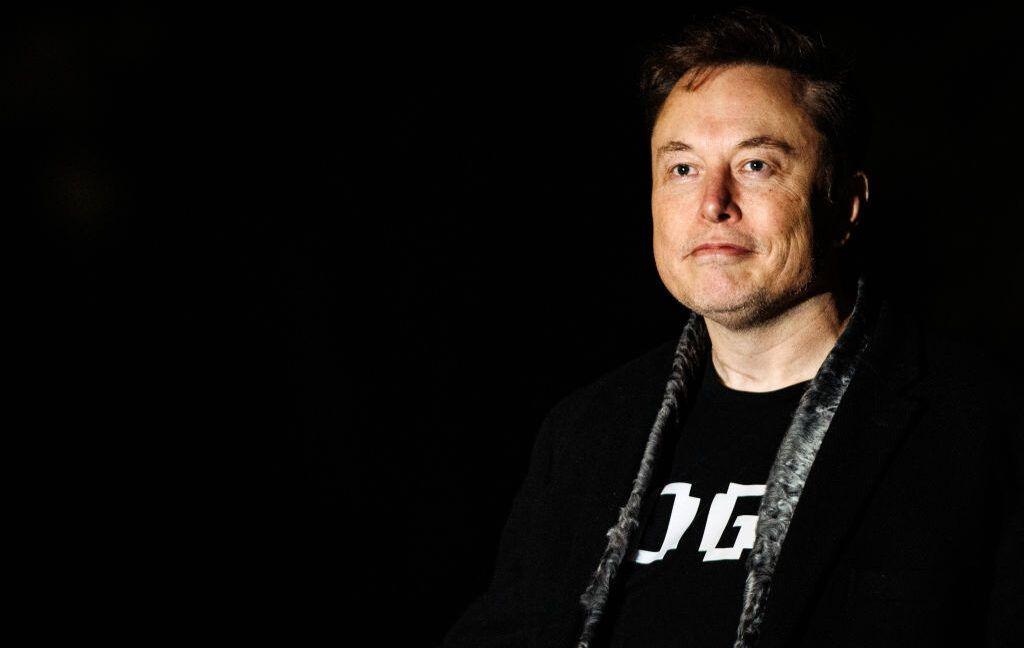
Source: Rolling Stone
The jury's decision based on timing means the core question remains unresolved: is OpenAI a nonprofit dedicated to humanity or a corporation dedicated to its shareholders? OpenAI was founded in December 2015 as a nonprofit AI research lab, with Musk and prominent entrepreneurs pledging $1 billion to develop AI for humanity's benefit, free from commercial pressure. The organization's charter committed to developing artificial general intelligence safely and openly, meaning it would be open source
3
.By 2019, that vision shifted dramatically. Given that training frontier AI models was extraordinarily expensive, Altman created a capped-profit subsidiary where investors could earn up to 100 times their initial investment. Microsoft initially invested $1 billion and more than $13 billion over time. Testimony showed how the soaring costs of AI development factored into OpenAI's trajectory. "Even raising several hundred million won't be enough," Musk said in a 2018 email to Altman and other co-founders. "This needs billions per year immediately or forget it"
5
.While the verdict simplifies OpenAI's path forward, institutional investors reviewing trial transcripts will conduct their own credibility analysis on Altman before committing capital. "Even in victory, OpenAI walks away with the worst documentary evidence about its governance structures now permanently in the public record," Rubinowitz noted .
The trial raised broader questions about whether anything but commercial interests can steer generative AI's future. As San Francisco-based OpenAI and other AI companies move toward historically large Wall Street debuts, the case exposed how people with outsized control of the AI industry were privately debating costs and governance nearly a decade ago. OpenAI, currently valued at $852 billion, generated more than $20 billion in revenue in 2025, yet the company is not yet profitable
3
5
.Summarized by
Navi
[3]
08 May 2026•Business and Economy

23 Apr 2026•Policy and Regulation

15 Mar 2025•Business and Economy

1
Policy and Regulation

2
Technology

3
Health