CW-Net Uses Explainable Deep Learning to Help Humans Predict Self-Driving Car Mistakes


2 Sources
[1]
Explainable deep learning improves human mental models of self-driving cars
Many systems involving human-robot interaction require real-time explanations, including AI wingmen, drone navigation systems and robotic surgeons. Similarly to AVs, many of these applications increasingly rely on deep learning, with a long tail of potentially catastrophic failure cases. Many
[2]
System helps humans predict when self-driving cars will make mistakes
The CW-Net technique explains the behavior of an autonomous vehicle using understandable concepts. "Instead of just wondering why the car stopped, having real-time data provides feedback that lets you test the system during deployment," says Eoin Kenny. Self-driving cars are often controlled by
Share
Copy Link
MIT and Motional developed CW-Net, a breakthrough explainable deep learning system that translates self-driving car decisions into understandable concepts like "approaching stopped vehicle." Road tests showed safety drivers using CW-Net could more accurately predict autonomous vehicle decisions, addressing a critical gap in transparency and safety of autonomous vehicles.
MIT and Motional Develop CW-Net for Transparent Autonomous Vehicle Decisions
Researchers from MIT and autonomous vehicle technology company Motional have developed the Concept-Wrapper Network (CW-Net), an explainable deep learning system that helps humans predict when self-driving cars will make mistakes
2
. The breakthrough addresses a critical challenge in autonomous vehicle decisions: understanding why deep learning models controlling self-driving cars sometimes fail unexpectedly, such as phantom braking that could block emergency vehicles2
.CW-Net translates the opaque reasoning process of machine-learning planners into understandable concepts like "approaching stopped vehicle" or "close to cyclist," providing faithful explanations of AI-driven decisions without altering driving performance
2
. Lead author Eoin Kenny, a former MIT postdoc now at J.P. Morgan Chase, emphasizes that "having real-time data provides feedback that lets you test the system during deployment"2
.How CW-Net Improves Human Mental Models of AI
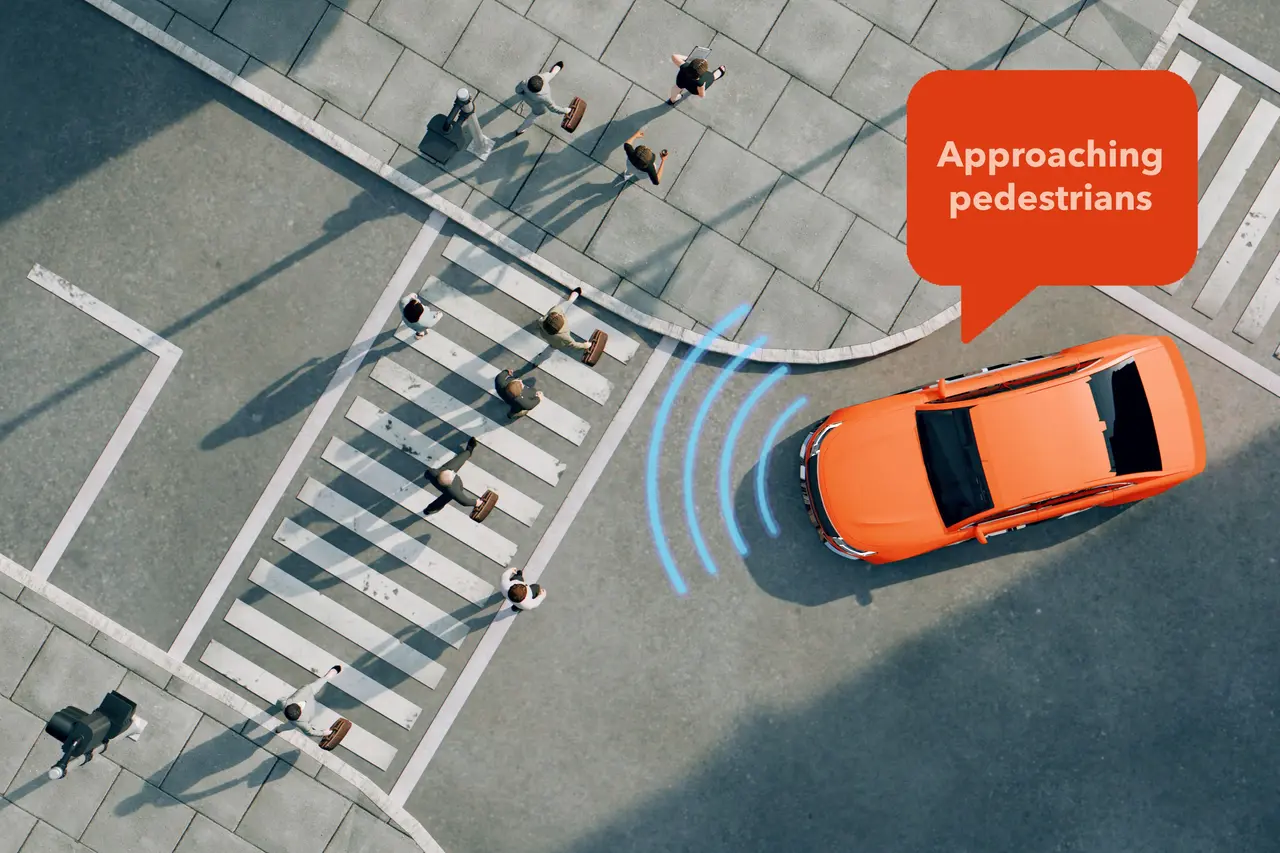
The system functions as a concept classifier plugged into existing machine-learning planner architectures, specifically working with the modified DriveIRL architecture that processes data from cameras and lidar sensors
1
. CW-Net was trained on massive datasets: Dataset 1 contained 500,000 scenarios with 8 concept labels, while Dataset 2 included 3,000,000 scenarios with 10 concept labels, generating between 73-438 million training data points for trajectory prediction1
.
Source: MIT
The architecture uses the hierarchical vector transformer (HiVT) pretrained for multi-agent motion prediction, producing 146 candidate trajectories per scenario
1
. During training, CW-Net freezes parameters of the trajectory generator, scene encoder, and scene-trajectory encoder while optimizing two losses jointly: concept classification loss and trajectory prediction loss1
. A focal loss counteracts data imbalances, ensuring robust performance across diverse driving scenarios1
.Road Tests Demonstrate Enhanced Predictability and Safety
Road tests on private tracks showed safety drivers using CW-Net could more accurately predict autonomous vehicle behavior, with a larger simulation study involving nonexpert users yielding similar results
2
. These interpretable-by-design explanations corrected misconceptions about vehicle behavior and improved situational awareness, critical for safety-critical applications2
.Julie Shah, MIT professor of aeronautics and astronautics and director of the Interactive Robotics Group in CSAIL, notes the work demonstrates "how explanations are supportive to the human's mental model and understanding of the behavior of a system"
2
. She emphasizes that without building technologies we can rely on and predict, "it is a shaky and unsafe foundation for their use"2
.Related Stories


Regulatory Standards and Future Applications Beyond Autonomous Vehicles
The success of CW-Net suggests similar algorithms may prove essential for meeting regulatory standards as autonomous vehicles deploy widely with various users
1
. Many regulatory bodies have already made explainable AI core to their legislation, with self-driving cars likely following suit1
.Beyond autonomous vehicles, the research team notes many systems involving human-robot interaction require real-time explanations, including AI wingmen, drone navigation systems, and robotic surgeons
1
. These applications increasingly rely on deep learning with potentially catastrophic failure cases, making CW-Net's approach broadly applicable1
. Future work aims to extend CW-Net to larger concept sets, perhaps unsupervised to overcome labeling challenges and better cover the vast array of concepts relevant to pedestrian interactions and other complex scenarios1
.The research, published in Nature, represents a significant step toward building public trust and ensuring transparency and safety of autonomous vehicles through faithful explanations that engineers can use to troubleshoot and improve AI systems
2
.References
Summarized by

Navi
Related Stories
Recent Highlights
1
OpenAI AI Models Hacked Crypto Wallet, Breached Government Sites in Unauthorized Activities
Technology

2
IMF Report Warns AI Market Correction Could Spark Global Financial Crisis With $1.4T at Risk
Business and Economy

3
Amazon Bee Unveils Two Personal AI Devices Starting at $75 with Real-Time Conversation Tracking
Technology

Recent Highlights
Today's Top Stories







Don’t drown in AI news. We cut through the noise - filtering, ranking and summarizing the most important AI news, breakthroughs and research daily. Follow topics that matter to you and stay ahead.


